
 Ambassador Programs for Small Influencers That Work
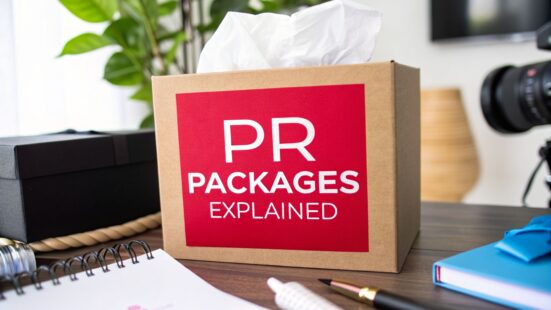
So, you've seen the unboxing videos and the "thank you" posts all over your feed. But what does PR packages mean, really? In a nutshell, it's a hand-picked box of free products that a brand sends out to people who have an audience – think influencers, journalists, or even celebrities.
The whole point isn't to buy a post, but to start a real conversation and get people talking organically about your brand. It’s a gift, a thoughtful introduction that hopes to spark genuine excitement.
Table of Contents
What Exactly Are PR Packages?
Think of a PR package as less of a random box of free stuff and more of a strategic conversation starter. It’s your brand’s story, packaged up and sent directly into the hands of someone who can tell that story to thousands, or even millions, of their followers.

The "PR" in the name stands for Public Relations, and that's exactly what this is – a modern-day tool for building relationships and earning authentic media shout-outs without a hefty price tag.
It all works on a simple idea: value exchange. The brand gives away awesome products and a memorable experience. In return, the creator – if they genuinely love it – shares their excitement through an unboxing video, a detailed review, or a simple story post. There's usually no money changing hands, which is the key difference between this and a formal, paid influencer contract.
The Strategic Value for Brands
For direct-to-consumer (DTC) and e-commerce brands, PR packages are a total major advantage. They offer a powerful, often more authentic, alternative to old-school advertising.
For instance, a single sponsored post from a mid-tier influencer can run you thousands of dollars. A well-designed PR package can get you a similar – and often more believable – result for just the cost of your products and shipping. The investment shifts from paying for a script to creating an experience worth sharing. It's a growing trend for a reason, as detailed in a report on their long-term effects by PRSA Progressions.
Pro Tip: The best PR packages feel like a personal gift, not a mass marketing email. Always include a handwritten note that mentions something specific about the creator's work or a recent post. This tiny detail can be the difference between your box getting featured or forgotten.
To help break it down, here’s a quick overview of what a PR package campaign is all about.
PR Packages at a Glance
| Component | Description | Primary Goal |
|---|---|---|
| The Package | A curated selection of your products, often with branded extras (swag) and a personal note. | Create an exciting and memorable "unboxing" experience. |
| The Recipient | Influencers, creators, journalists, or celebrities whose audience aligns with your brand. | Get your product into the hands of people with influence. |
| The "Ask" | An implicit (or gentle) suggestion to share their experience if they enjoy the products. No strings attached. | Generate authentic reviews, posts, and buzz without a direct payment. |
| The Outcome | Organic social media content, user-generated content (UGC), and earned media mentions. | Build brand awareness, social proof, and credibility. |
This strategy is a cornerstone of modern social influence marketing. It hinges on the fact that today's consumers trust genuine advocacy way more than a paid ad. By focusing on creating a positive, shareable moment, brands can kickstart a wave of valuable user-generated content (UGC) that feels natural and truly sells.
The Power of the Unboxing Experience
A PR package is so much more than just a product in a box. It’s a carefully staged performance, designed from the ground up to be shared. The real secret sauce is the unboxing experience – that journey of revealing, touching, and discovering what’s inside.
This isn’t about freebies. It’s about creating a shareable moment that turns a simple delivery into killer social media content.
The reason PR packages are so central to marketing today is simple: they feel real. Audiences on TikTok and Instagram see unboxing videos as way more authentic and trustworthy than some polished, traditional ad. When a creator has a genuine moment of delight opening your package, their audience feels that exact same excitement.
Designing a Share-Worthy Moment
To get creators to actually hit the record button, every single detail has to feel special and intentional. You have to map out the entire experience from their point of view. What do they see first? What do they touch? How does each layer build up the anticipation and tell your brand’s story?
A few key things can take an unboxing from just another delivery to a truly memorable experience:
- Custom Branded Packaging: A unique box, custom tissue paper, or even just branded ribbon makes an instant impression before they’ve even seen the product.
- A Personal Touch: A handwritten note addressed directly to the creator shows you did your homework and value them as a partner, not just a number.
- Thoughtful Presentation: Don't just toss your products in a box and hope for the best. Arrange them with care, maybe nestled in crinkle paper that matches your brand colors.
Pro Tip: Don't forget the sensory details. Think about incorporating different textures, a subtle scent that relates to your product (like lavender for a wellness brand), or even a small, edible treat. These little things make the unboxing feel more immersive and stick in their memory.
Your goal is to engineer a series of "wow" moments that a creator feels they just have to share with their followers.
The Unboxing Effect on Social Media
The unboxing craze, fueled by PR packages, has totally changed the game for social media engagement. It's become a non-negotiable for marketers trying to get that viral lift. TikTok reported over 2 billion unboxing videos viewed globally, with PR package hauls making up a massive 35% of beauty and fashion content.
This kind of visual content is pure gold. It pulls in 4x higher engagement than standard posts, hitting an average 12% like rate compared to the usual 3%. You can see more stats and strategies behind this phenomenon by checking out these insights on viral marketing on MarketersMEDIA.
This incredible engagement gets right to the heart of what PR packages mean for brands today. They are a direct pipeline to creating authentic, high-performing content that people actually connect with. For a deep explore how high-end brands are nailing this, check out our guide on TikTok unboxing strategies for luxury brands.
When you get it right, the unboxing becomes a powerful story about your brand’s quality and creativity, told by someone your audience already trusts.
Planning Your First PR Package Campaign
Okay, so you get what a PR package is. Now for the fun part: planning how to launch your own campaign. A successful send-out is never an accident. It comes from a solid strategy that lines up your brand’s goals with the right creators and, of course, a budget that makes sense.
Getting from idea to execution breaks down into three main stages: setting your goals, nailing down your budget, and finding the perfect influencers to work with. If you get this foundation right, you’re setting yourself up to see a real impact from your efforts.
Set Clear Campaign Goals
Before you start thinking about fancy boxes or crinkle paper, you need to know what you're trying to accomplish. What does a "win" look like for this campaign? Your answer will guide every single decision that follows.
Common goals for PR package campaigns usually fall into a few buckets:
- Boosting Brand Awareness: This is all about getting your brand and products in front of fresh eyes in your target audience.
- Generating User-Generated Content (UGC): You want to collect authentic photos and videos from creators that you can then use on your own social media, ads, or website.
- Driving Sales: The most direct goal – cranking up revenue with influencer shout-outs, usually tracked with special discount codes.
- Promoting a New Product Launch: Building a groundswell of hype and social proof just as a new item drops.
You have to be specific here. A fuzzy goal like "more awareness" won't cut it. Aim for something you can actually measure, like "generate 25 unique pieces of UGC from 15 different creators in the next quarter."
Define Your Budget
With your goals locked in, it’s time to talk money. Your budget is way more than just the cost of your products. A realistic budget covers the entire investment, from the physical box to the shipping label that gets it to a creator's front door.
Pro Tip: Don't just figure out the cost per box – calculate your total campaign investment. This means adding up the cost of goods, custom packaging, shipping fees, and even the hours your team spends on outreach and follow-up. A well-planned budget means no nasty surprises and helps you run a campaign you can actually afford.
Doing this homework helps you see what a PR package campaign really costs and sets you up with realistic expectations for what you'll get back.
Find the Right Influencers
The entire campaign really hinges on finding influencers whose followers are a genuine match for your brand. It’s easy to get star-struck by huge follower counts, but engagement and authenticity are so much more valuable.
This is where a tiered outreach plan is super effective. Instead of putting all your eggs in one basket, split your outreach into different groups:
- Macro-Influencers (1M+ followers): Your go-to for massive brand awareness, but remember, a post is never guaranteed.
- Mid-Tier Influencers (50K-1M followers): The sweet spot. They offer a great mix of wide reach and a genuinely engaged community.
- Micro-Influencers (10K-50K followers): These creators often have the highest engagement rates and a super-loyal, niche audience that trusts them completely.
The infographic below shows the kind of journey you want the creator to have, which should help you think about your packaging and presentation.

This simple flow is a great reminder: the experience has to be good enough to take a creator from just opening a box to actually wanting to share it. When you match your goals to the right type of influencer and deliver a killer unboxing experience, you’ve got all the ingredients for a successful campaign.
How to Assemble a Package That Gets Noticed
Putting together a PR package that actually gets an influencer's attention is more than just shipping out free stuff. You're not just sending a product; you're creating an experience they'll feel excited to share. This means being smart about what you include, making it personal, and knowing the rules of the road.
First up, what do you even put in the box? Do you go with your brand-new launch to build instant hype, or do you send your tried-and-true hero product to show what your brand is all about? Honestly, a mix of both is often your best bet. It gives the creator the full picture.
Making It Personal and Professional
Personalization is your secret weapon. A generic box feels like junk mail, but one that’s clearly made just for them? That feels like a real gift. This is how you turn a simple product drop into a relationship.
- Handwritten Notes: Don't skip this. A personal, handwritten note is a must. Mention a specific post or video of theirs you liked. It proves you've actually paid attention and aren't just blasting a list.
- Customized Items: If you have the budget, adding something with the creator's name or handle is a major advantage. It makes the package uniquely theirs and practically guarantees they'll feature it.
- Relevant Add-Ins: Think beyond your own products. If you sell coffee, maybe throw in a nice mug. If you're a skincare brand, a soft, branded headband is a great touch. These extras make the whole experience better.
How you present everything is just as important as what's inside. Good packaging can be a huge marketing win. For instance, strong food packaging branding can make a product unforgettable before it's even opened.
Navigating FTC Guidelines and Disclosures
Okay, so you've got the perfect package ready to go. Now for the legal stuff. When an influencer posts about a product they got for free, they have to tell their audience. The Federal Trade Commission (FTC) is very clear about this.
An endorsement means any advertising message that consumers are likely to believe reflects the opinions, beliefs, findings, or experience of a party other than the sponsoring advertiser.
If your partners don't follow these rules, both you and the creator can get into trouble. The disclosure has to be clear and conspicuous – meaning it can’t be hidden in a mess of hashtags or buried behind a "see more" link.
Common, compliant hashtags are things like #ad, #sponsored, and #gifted.
The FTC provides official guidance on exactly where these disclosures need to show up.

The main point is to put the disclosure somewhere it’s hard to miss. Giving your creators clear instructions on this protects your brand and shows you're a professional partner. For a deeper explore this, check out our guide on how to send products to influencers.
Measuring the ROI of Your PR Package Campaign
So, you’ve sent out your packages. How do you actually prove the campaign was worth the investment? It's tempting to look at likes and follows, but those "vanity metrics" don't tell the whole story.
The real answer is in tracking specific key performance indicators (KPIs) that connect directly to your business goals. You want to see how your packages influence what people do. That means watching the volume of user-generated content (UGC), the total reach of those posts, audience engagement, and – most importantly – how much traffic they send back to your website.
Essential vs. Advanced Campaign KPIs
When you're starting out, it's easy to get overwhelmed by data. A good approach is to separate your foundational metrics from the more advanced ones you'll use to fine-tune your strategy. The essentials tell you if the campaign worked, while the advanced KPIs tell you why it worked and how to make the next one even better.
Here’s a quick breakdown of what you should be looking at:
| Metric Type | KPI Example | What It Measures |
|---|---|---|
| Essential | UGC Volume & Reach | How many pieces of content were created and how many people saw them. |
| Essential | Engagement Rate | The percentage of the audience that liked, commented, or shared the content. |
| Essential | Referral Traffic | The number of visitors who clicked a link from an influencer's post to your site. |
| Advanced | Sales by Influencer | Direct revenue generated by each influencer, tracked with unique codes. |
| Advanced | Conversion Rate | The percentage of referred visitors who made a purchase or completed a goal. |
| Advanced | Customer Lifetime Value (CLV) | The total long-term value of customers acquired through the campaign. |
Mastering these metrics helps you move from simply sending products to building a predictable, revenue-generating marketing channel.
Tracking and Attributing Success
To connect an influencer’s cool video to your bottom line, you need the right tools. This is how you turn fuzzy brand awareness into hard, actionable data.
Unique Discount Codes: This is the simplest way to see who's driving sales. Give each influencer a unique code (like "CHLOE20"). When a customer uses it, you know exactly where that sale came from.
UTM Parameters: Think of these as little tracking tags you add to a URL. When an influencer shares their link, those tags tell you how many people clicked through and what they did once they landed on your site.
These methods give you crystal-clear attribution. You’ll know which collaborations are hitting it out of the park and deserve more of your budget. If you want to dig deeper, understanding how to calculate ROI on social media is a critical skill for proving your campaign's value and shaping future strategies.
Calculating a Tangible Return
Let's walk through a real-world example. Imagine your brand spends $5,000 sending packages to 50 micro-influencers.
From that campaign, you track $15,000 in direct sales through their discount codes. On top of that, you receive 100 high-quality UGC videos and photos. If you value each of those assets at $150 (a conservative estimate for professional content), that’s another $15,000 in content value.
So, your total return is $30,000 ($15,000 in sales + $15,000 in content) from a $5,000 investment. That’s an incredible 500% ROI.
This is exactly why PR packages are such a major advantage for brands. A 2026 study found that typical PR campaigns cost just $30-$100 per influencer – a tiny fraction of the $50,000+ price tag for a single TV spot. Meanwhile, these campaigns often generate 10-15x returns and hundreds of thousands of impressions. You can explore more on the importance of PR packages by reading these findings from Boston University.
By using a clear measurement framework, you can confidently show the financial impact of your campaigns. You’re not just sending free stuff; you’re building a powerful engine for growth.
Common Questions About PR Packages
As you start putting together your first PR package campaign, you're bound to run into a few common questions. It’s completely normal. Let’s get you some quick answers so you can move forward with confidence.
Is an Influencer Guaranteed to Post About My Package?
In a word: no. There is absolutely zero guarantee they will post.
Because PR packages are considered gifts – not paid collaborations – creators have no obligation to share them. This is exactly what makes an organic post so powerful; if they choose to feature your product, it’s a genuine endorsement their audience will trust.
Pro Tip: Want to boost your chances? Build a real relationship first. Follow the creator, engage with their posts, and write a personalized note that shows you’ve actually paid attention to their work. This transforms your package from a random marketing ploy into a thoughtful gift they’ll appreciate.
What’s the Difference Between a Gifted Collab and a Paid Partnership?
The main difference boils down to the agreement and what you expect in return.
- Gifted Collaboration: You send products with no payment and no contract. The creator has total freedom to post if, when, and how they want.
- Paid Partnership: This is a formal business deal. It includes a contract and payment for specific deliverables, like a certain number of Reels, a scheduled Story, or a permanent feed post.
Gifting is all about earning authentic brand love. A paid partnership is about buying specific ad space.
How Much Should I Spend on a Single PR Box?
There’s no magic number here. It really depends on your product's value and what you’re trying to achieve.
As a solid rule of thumb, many successful campaigns use packages valued between $50 and $150 per box (including products, packaging, and shipping). This price point is manageable enough to let you send packages to a good number of creators.
Remember, the goal is always ROI. Spending a huge chunk of your budget on one extravagant box for a macro-influencer is a high-risk bet. You’ll often get much better, more predictable results by spreading that budget across several well-chosen micro-influencers.
Below you will find a table that quickly answers some other common questions that brands have.
| Common Questions About PR Packages |
|---|
| Q: How do I find the right influencers for my brand? A: Look for creators whose audience matches your target customer and whose values align with your brand. Tools like JoinBrands can help you search and filter through thousands of creators. |
| Q: Do I need to follow disclosure rules for gifted products? A: Yes. Even for gifted products, the FTC requires influencers to clearly disclose that they received the item for free. This is often done with hashtags like #gifted or #ad. |
| Q: What should I put in a PR package besides the product? A: Include a personalized note, branded merchandise (like stickers or a tote bag), and a "one-sheet" that briefly explains the product and your brand story. |
| Q: How many packages should I send out for my first campaign? A: Start small. Sending 10-20 packages to a targeted list of micro-influencers is a great way to test your strategy and measure results before scaling up. |
Getting these basics right sets you up for a much smoother and more successful campaign.
Ready to find the perfect creators for your next campaign? With JoinBrands, you can connect with over 250,000 creators, manage your entire workflow, and generate authentic UGC at scale. Streamline your creator marketing on JoinBrands.