 What Is Performance Marketing and How It Works
An AI avatar is a digital character powered by artificial intelligence. But that’s a pretty dry definition. Think of them as digital actors who can interact, speak, and even show emotion just like a real person. They aren't just digital puppets; for brands, they're becoming a massive strategic asset for creating consistent and engaging stories across social media.
Table of Contents
The New Face of Digital Marketing
AI avatars are quickly shifting from a sci-fi concept into a real-world marketing powerhouse. They represent a fundamental change in how brands can communicate, blending a human-like connection with the raw efficiency of technology. If you're a marketer or run an e-commerce business, getting a handle on this tech is becoming essential for growing your social presence.
An AI avatar is way more than a static image. It's a dynamic, digital representative for your brand. It can be a virtual spokesperson, a customer service agent, or even a digital influencer, delivering your message with perfect consistency every single time. This ability to create personalized interactions at scale is already starting to shake up how we think about creator collaborations and user-generated content.
Why AI Avatars Matter Now
This technology is spreading fast, and the market growth is pretty telling. There are a few key reasons they're becoming so important:
- Content Creation at Scale: You can spin up dozens of ad variations or social media posts from a single script without booking another photoshoot.
- Rock-Solid Brand Consistency: You can guarantee your brand's voice, tone, and look are identical across every single platform and campaign. No exceptions.
- Next-Level Engagement: Avatars let you create new, interactive experiences that actually grab people's attention in a space that’s more crowded than ever.
The market's growth really highlights the potential here. An AI avatar is more than just a cool new toy; it's a tool for creating deeper, more authentic digital interactions that actually drive business results.
This isn't just hype; it's backed by serious investment and adoption. The global AI avatar market was valued somewhere between $2.5 billion and $9.78 billion, with some forecasts projecting it will rocket up to $118.55 billion by 2034. That explosive growth shows just how big the opportunity is for brands to start weaving this tech into their creator and influencer campaigns. You can explore more about these market projections and get a feel for where the industry is headed. With that groundwork laid, let's dive into how they actually work and how you can put them to use.
What's Going On Under The Hood Of An AI Avatar?
To really get why an AI avatar is such a game-changer, you have to look under the hood. It’s not some digital puppet on a string; think of it more like a high-performance engine built from a few key pieces of technology working in perfect sync. Each part has a job to do, and together they create a character that can see, speak, and interact just like a person.
First up, you have the avatar's looks, which are brought to life by generative AI. This is the digital sculptor of the operation. Using incredibly complex algorithms, this tech can create stunning visuals completely from scratch—anything from a photorealistic human face to a funky, stylized brand mascot. It can spin up thousands of different looks, making sure your avatar is a perfect match for your brand's vibe.
But a face is nothing without a voice, and that’s where Natural Language Processing (NLP) steps in. NLP is the magic translator between human language and computer code. It’s what lets the avatar understand what you’re saying—whether typed or spoken—and fire back a response that sounds genuinely human, not like a clunky robot reading a script.
This diagram shows how these core technologies come together to power real marketing results.
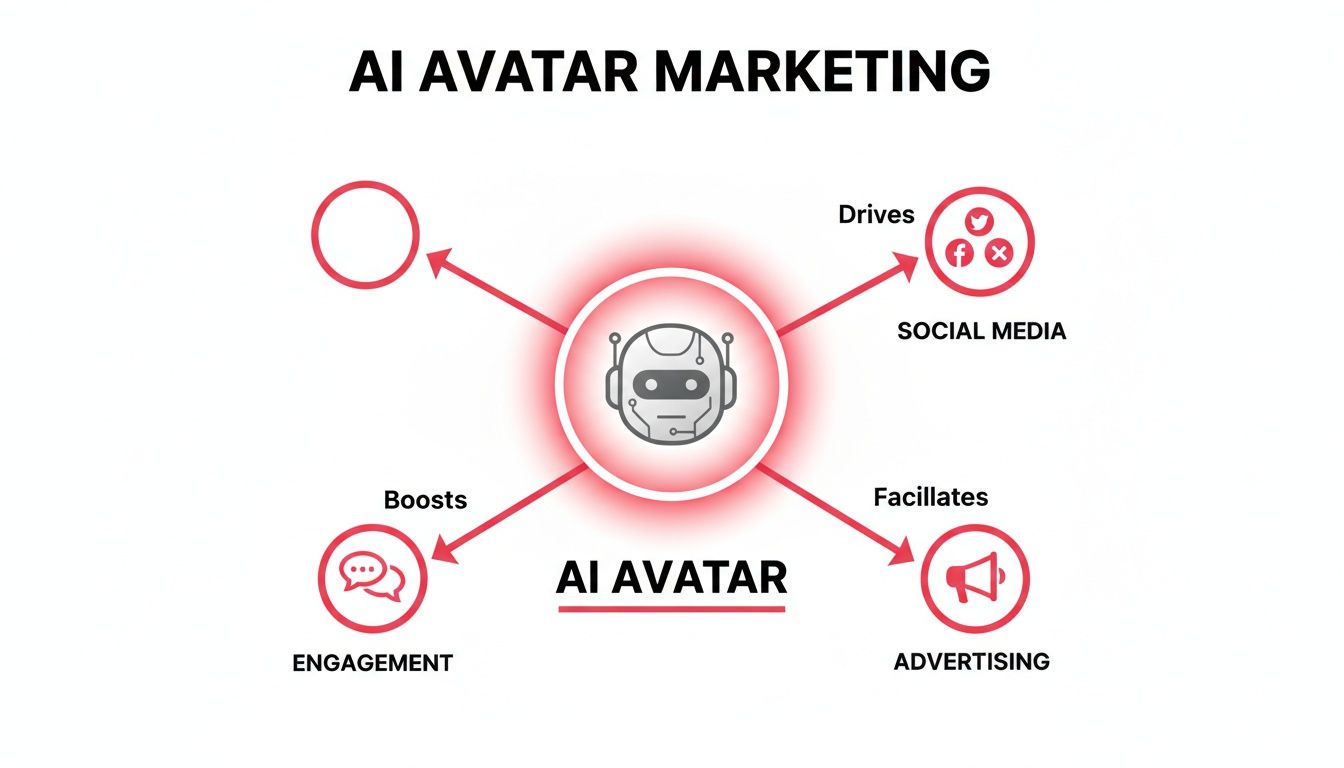
As you can see, the AI avatar is the central hub that directly fuels social media content, creative ad campaigns, and all kinds of customer engagement.
The Brains of the Operation: Machine Learning
The last, and maybe most important, piece of the puzzle is machine learning (ML). This is the avatar’s brain. ML algorithms are what allow the avatar to actually learn and get better over time. It can analyze which conversations lead to the best engagement and tweak its own behavior, essentially becoming a smarter, more effective communicator for your brand with every interaction.
This constant learning is what makes AI avatars so dynamic. They aren't just stuck on a pre-written script. They’re actively refining their performance based on real-world data and user feedback.
Think of it like this: Generative AI is the actor’s face and body, NLP is their voice and ability to understand lines, and Machine Learning is their ability to improve their performance after every show.
This powerful combination of tech opens up a huge range of possibilities. For instance, to get a better sense of how realistic these digital models can be, it's worth checking out how AI clothing try-on technology works. These systems use similar rendering principles to place apparel on a virtual person.
The kind of avatar you choose really depends on your goals. For a brand that wants to build a genuine connection with its audience, learning to use an AI influencer generator like the one at https://joinbrands.com/blog/ai-influencer-generator/ is a great way to start creating relatable digital personalities.
Here's a quick look at the main types of avatars and where they shine.
Types of AI Avatars and Their Best Use Cases
| Avatar Type | Key Characteristics | Best Marketing Use Case |
|---|---|---|
| Photorealistic | Hyper-realistic, lifelike human appearance. | Ideal for corporate training, virtual spokespeople, and customer service roles where credibility and a human touch are critical. |
| Stylized | Non-realistic, often cartoonish or artistic. | Perfect for social media, brand mascots, and gaming, where creativity and memorability are key. |
| V-Tubers | Anime-style characters controlled by a human in real-time. | Great for live streaming on platforms like Twitch and YouTube to build a dedicated community with a unique personality. |
| Brand Mascots | Animated characters that embody a brand’s personality. | Excellent for building brand recognition and creating a friendly, approachable image across all marketing channels. |
Ultimately, knowing how these technologies work together moves you from just using an AI avatar to strategically directing it as a powerful marketing tool. You're no longer just pressing buttons; you're in the driver's seat.
How to Use AI Avatars in Your Marketing Campaigns
Alright, let's move from the "what" to the "how." Brands are quickly realizing that an ai avatar isn't just a cool piece of tech; it's a serious tool for overhauling marketing workflows. The real magic happens when you use them to solve real-world problems—like scaling up content, personalizing ads, and keeping your brand voice consistent everywhere.
Think about what it takes to launch a new product. You'd typically need multiple photoshoots, models, and hours of editing just to get a handful of ad variations. That's a massive drain on time and money. With an AI avatar, you can spin up a huge library of high-quality images and videos from a single script, and you can do it in a fraction of the time.
This kind of speed and flexibility is a total game-changer, especially for performance marketing where you need to be A/B testing constantly to find what works.
Supercharge Ad Creative and Testing
The most obvious win of using an ai avatar in your marketing is the ability to create ads at scale without letting quality slip. You're no longer stuck with a single creative asset. Instead, you can generate endless variations to figure out what truly connects with different parts of your audience.
- Test different backgrounds: Swap a boring studio setup for a beach scene or a cozy living room with just a few clicks.
- Adjust messaging on the fly: Whip up unique scripts for every platform, whether it's a snappy TikTok video or a more in-depth YouTube ad.
- Localize content effortlessly: Generate marketing videos in multiple languages using the exact same avatar. This opens up entire international markets without the headache and cost of reshooting everything.
This approach doesn't just cut your production costs; it dramatically shrinks your time to market. You can jump on trends and launch campaigns way faster than your competitors. For a deeper look at this, our guide on using AI for content creation has more strategies to automate your workflow.
Amplify Influencer and Creator Partnerships
AI avatars are also completely changing how brands work with influencers. Creators can now scale their own content production and even explore new partnership models that just weren't possible before. For instance, an influencer can license a digital version of themselves to a brand for ongoing campaigns.
This lets the brand use their likeness in marketing materials long after the initial project is over, giving their audience a consistent, familiar face. At the same time, the creator can take on more campaigns without burning out. It’s a true win-win.
This digital licensing model offers a powerful solution for long-term brand ambassadorships. It ensures the brand gets consistent, high-quality content, while the creator gains a recurring revenue stream from their digital likeness.
This also solves one of the biggest headaches in influencer marketing: inconsistency. Every piece of content made with the creator’s AI avatar will perfectly match your brand guidelines, from the message to the visual style. The end result is a polished, unified brand presence that builds trust and recognition with your audience, campaign after campaign.
Integrating AI Avatars into Your Creator Workflow
Successfully using an AI avatar isn't just about generating a cool digital character. It’s about weaving it thoughtfully into your existing creator marketing strategy. This means tweaking your current processes—from the initial brief to the final campaign launch—to make room for AI-driven content. The goal is a smooth, seamless workflow where AI makes things better, not more complicated.
The first move is finding the right talent. You'll want to look for creators who are not only popular but also comfortable and skilled with AI tools. A growing number of creators now specialize in producing AI-generated content, bringing a valuable mix of technical know-how and a sharp creative eye to the table.
Crafting the Perfect AI Creative Brief
A standard creative brief just won’t cut it for an AI avatar campaign. You need to get way more specific about the digital elements. Think of your brief as a detailed blueprint for both the creator and the AI.
Here are a few things you absolutely must include:
- Avatar Persona Details: Really define the avatar’s personality, its tone of voice, and visual style. Is it friendly and casual for a TikTok video, or are you going for a professional and polished vibe for a corporate announcement?
- Script and Dialogue: Provide the exact scripts. An AI avatar can’t improvise like a human can; it relies entirely on the text you give it to generate speech and nail the lip-syncing.
- Visual Guidelines: Get granular. Specify the backgrounds, camera angles, and even the avatar's virtual "wardrobe" to make sure every single asset clicks with your brand’s aesthetic.
This level of detail takes the guesswork out of the equation and helps ensure the final output is exactly what you had in mind. It gives creators the power to direct the AI effectively, producing on-brand content right from the get-go.
Managing Approvals and Brand Safety
The approval process for AI-generated assets is a crucial checkpoint. Because you can churn out content at such a high volume, having a clear system in place is non-negotiable for maintaining quality and brand safety. Set up a multi-stage review where you sign off on the script, the initial avatar design, and the final video output.
With AI avatars, you have an unprecedented level of control over the final product. This allows you to enforce brand safety protocols with near-perfect precision, ensuring every word and visual element is approved before it ever goes live.
Using a creator marketing platform like JoinBrands can help you manage this entire process from one place. This screenshot shows a typical dashboard where you can manage your campaigns and creators without jumping between different tools.
A unified interface like this gives you a central hub to communicate with creators, send out briefs, and handle asset approvals efficiently. By organizing your workflow this way, you can go from a fresh campaign idea to launching high-performing AI avatar content on Instagram or TikTok with both confidence and speed.
Navigating the Legal and Ethical Waters of AI
Using an AI avatar responsibly is crucial—it's how you build and keep your audience's trust. As you start bringing these digital personalities into your marketing, you’re stepping into a whole new world of legal and ethical questions that you just can’t afford to ignore.
It really boils down to two main pillars: ownership and transparency.
So, who actually owns the AI avatar? That’s where things can get complicated. When an avatar is based on a real person, like an influencer, the lines around intellectual property and likeness rights get blurry fast. This makes having ironclad agreements an absolute must.
Securing Rights and Defining Ownership
Before you even think about launching a campaign, you need clear, written contracts that spell out exactly who owns what. No gray areas. These agreements should explicitly cover how the creator’s likeness can be used, for how long, and on which channels.
Without this, you're just inviting serious legal headaches down the road.
Your creator agreements need to cover these key points:
- Likeness Rights: Get it in writing that you have permission to use the creator's digital likeness.
- Content Ownership: Define who owns the final videos, images, and other assets the AI avatar generates.
- Usage Scope: Detail precisely where and how the content will be used—from social media ads to website banners and beyond.
- Exclusivity and Duration: Specify the timeframe for the partnership and whether the creator is barred from working with your competitors during that period.
As AI technology weaves its way more and more into our daily lives, understanding the legal boundaries is more important than ever. For example, the emergence of new AI voice call laws shows just how fast regulations are moving to keep up and protect everyone involved.
Promoting Transparency and Brand Safety
Beyond the legal paperwork, you have a huge ethical responsibility to be upfront with your audience. People have a right to know if they're interacting with an AI or a real human. Being deceptive, even if you don't mean to be, can permanently wreck your brand’s reputation.
Authenticity is the currency of modern marketing. Failing to disclose that an avatar is AI-generated isn't just a missed opportunity for transparency—it's a breach of trust with the very audience you're trying to connect with.
This is especially critical when you're working with creators. Consumers care about the difference between authentic user-generated content (UGC) and AI-generated content (AIGC). We break this down in detail in our guide on UGC vs. AIGC.
Finally, putting strong brand safety protocols in place is non-negotiable. You need systems to make sure your AI avatar isn't misused or starts pumping out off-brand messages. This ensures your digital spokesperson always reflects your company's values, protecting your brand while you explore new frontiers.
Measuring the ROI of Your AI Avatar Campaigns
A campaign isn't a success unless you can prove it. When you’re rolling out an AI avatar strategy, you have to look past the vanity metrics and dig into the data that actually hits your bottom line. It’s not enough to just launch an avatar and hope for the best; you need to track its performance to justify the investment and figure out how to make it even better.
This all starts with picking the right key performance indicators (KPIs) before you even begin. Sure, likes and shares are nice to see, but they don't really tell you if your campaign is working. You need to zero in on the hard data that shows real business results.

Key Metrics to Track
Figuring out your return on investment requires a healthy mix of engagement and conversion metrics. You need a balanced view to understand not just how your audience is reacting, but how those reactions are turning into actual sales.
- Engagement Rate: Don't just glance at likes. Track comments, shares, and saves to see if your AI avatar content is truly hitting the mark.
- Click-Through Rate (CTR): This is where the rubber meets the road. How many people are actually taking the next step, like clicking a link to your product page?
- Cost Per Acquisition (CPA): Here's the ultimate efficiency test. CPA tells you exactly how much you're spending to bring in each new customer through your avatar campaigns.
- Return on Ad Spend (ROAS): For any paid campaigns, ROAS is your North Star. It calculates the revenue you're generating for every single dollar you put into advertising your avatar content.
This data-first approach is catching on fast, especially in North America, which has become a major player in the AI avatar scene. The region already commands over 39.2% of the global market share. The U.S. market alone was worth $0.8 billion and is expected to explode to $18.1 billion by 2034. That kind of growth is a clear signal that brands are adopting this tech because they're seeing a tangible return. You can discover more about AI avatar market trends to get the full picture.
The most effective way to optimize performance is through relentless A/B testing. Pit different avatars, scripts, and visual styles against each other to discover what truly drives action from your audience.
By keeping a close eye on these KPIs and constantly testing new ideas, you can make smart, informed decisions. This ensures every AI avatar you deploy is working as hard as possible to deliver maximum impact and a solid, provable return on your investment.
Got Questions About AI Avatars? We've Got Answers.
As brands and marketers start digging into what AI avatars can do, a lot of practical questions pop up. It's a new frontier, after all. Let's tackle some of the most common ones so you can move forward with confidence.
Can an AI Avatar Replace Human Creators?
Absolutely not. The goal here isn’t replacement—it’s collaboration. Think of an AI avatar as a powerful tool that makes a creator even more effective.
It lets them scale their content, show up in multiple campaigns at once, and try out new ideas without hitting burnout. It's a force multiplier, not a substitute for the real human creativity, strategy, and personality that audiences connect with. Creators are still the essential spark, providing the vision and performance that an AI model learns from.
How Much Does It Cost to Create an AI Avatar?
The price tag can swing wildly depending on what you're after. Simple, cartoon-style avatars from template platforms can be incredibly affordable, with some even offering free starting points.
But if you want a custom, photorealistic "digital twin" of a specific person, you're looking at a serious investment. That process involves 3D scanning, motion capture, and heavy-duty AI training, which can run into thousands of dollars.
For most marketing campaigns, the sweet spot is a subscription-based AI avatar platform. These give you access to high-quality avatars and video tools for a predictable monthly fee. It's a cost-effective way to get in the game without a huge upfront cost.
Is It Difficult to Get Started with AI Avatars?
It's way more accessible than you might think. Many of the best platforms are built for marketers, not developers, with user-friendly interfaces that don't require a single line of code.
You can often jump right in, pick a stock avatar, paste your script, and generate your first video in minutes. The learning curve for basic stuff is surprisingly gentle, which means your team can start experimenting and folding an AI avatar into your workflow almost immediately.
Ready to connect with creators who can bring your AI avatar campaigns to life? JoinBrands is an all-in-one platform where you can find and collaborate with over 250,000 talented UGC, AI, and influencer marketing experts. Find the perfect creator for your brand today.