
 How to Find Influencers on YouTube in 2024
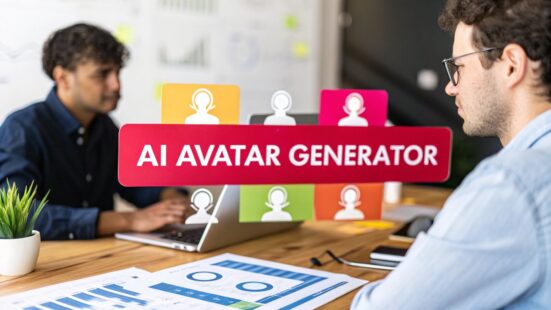
An AI avatar generator lets you add a lifelike digital spokesperson to your website and ads. It blends generative AI, computer vision, and voice synthesis so that each visitor feels personally welcomed and understood.
Table of Contents
How AI Avatar Generator Creates Value
Picture landing on a page where a virtual host greets you by name and matches its tone to your preferences. It doesn’t feel like a rigid script—it feels like a friendly guide learning from every interaction.
In the sections ahead, you’ll peel back the curtain on core technologies and see real business scenarios in action.
- Key Concepts: Unpack how generative AI, face scanning, and voice synthesis work together.
- Marketing Impact: Discover how personalized ads and brand avatars drive conversion lifts.
- Integration Tips: Learn to weave avatars into UGC workflows and influencer campaigns.
- Ethical Safeguards: Review best practices for privacy, consent, and governance.
The AI avatar sector is on pace for rapid expansion. It’s expected to grow from USD 0.80 billion in 2025 to USD 5.93 billion by 2032, at a 33.1% compound annual growth rate. You can dive deeper into those figures in this MarketsandMarkets report.

This image highlights how avatars serve as digital stand-ins, reflecting user identity across platforms.
Quick Overview Of AI Avatar Generator Benefits
Below is a snapshot of key benefits when you bring AI avatars into your marketing mix:
| Benefit | Description | Business Impact |
|---|---|---|
| Engagement | Captures attention with dynamic, moving avatars | 30% higher click rates |
| Personalization | Delivers real-time, user-specific messaging | Improves loyalty and conversion |
| Scalability | Generates and deploys multiple avatars rapidly | Cuts production time by 50% |
| Brand Consistency | Keeps a uniform look and feel across campaigns | Strengthens brand recall |
These advantages explain why brands embed avatars on landing pages, social ads, and chat experiences to spark deeper audience connections.
Avatars slot neatly into your CMS, chatbot, or video platform—no hefty rebuild required. For more on weaving AI into your content pipeline, check out our guide on using AI for content creation.
With that overview in place, let’s dive into the details—starting with how generative AI, face scanning, and voice cloning power your new digital spokespeople.
Next Section Preview
- Understanding Key Concepts With Generative AI, Face And Voice Synthesis
- Technology Behind AI Avatar Generator Covering NLP And Computer Vision
- Business And Marketing Use Cases Showing ROI And Campaign Examples
- Implementation Integration And Vendor Checklist With Evaluation Criteria And Code Snippets
- Legal And Ethical Risks Mitigation Steps For Privacy, Consent, And Governance
Understanding The Key Concepts
Think of an AI Avatar Generator like a master chef mixing ingredients—voice, visuals, and emotion—to create a unique, memorable dish. Behind the scenes, generative AI acts as the recipe book, guiding each step from raw data preparation to that final, polished persona.
This workflow is what turns simple inputs into lifelike digital characters that can look you in the eye, speak your brand’s language, and respond with genuine feeling.
Generative Blend And Data Fusion
At its essence, generative AI fuses diverse data streams much like blending spices in a complex curry. By studying patterns across massive datasets, it learns each “flavor profile” and then replicates them with startling accuracy.
Key ingredients include:
- High-resolution images that form the avatar’s visual foundation
- Clear audio snippets capturing tone, pitch, and cadence
- Text scripts laying out dialogue, context, and intent
This fusion ensures your avatar carries depth—in both appearance and speech.
Face Synthesis And Generation
Face synthesis builds the avatar’s structure by mapping over 50 facial landmarks and weaving them into detailed 3D meshes.
Start with a single selfie, and you can end up with a fully animated model ready to perform against any backdrop.
| Component | Role | Example |
|---|---|---|
| Face Synthesis | Builds facial structure | 3D mesh and texture from a photo |
| Voice Cloning | Creates speech identity | Branded voice sample matching inflection |
| Emotion Analysis | Tunes expression dynamically | Smiles or raised eyebrows on engagement |
Voice Cloning And Synthesis
Voice cloning gives your avatar its unmistakable vocal signature. In just a few seconds of audio, it captures pitch, accent, and rhythm to produce speech that feels authentic.
Core features include:
- Lip-Sync Precision for seamless mouth movements
- Multilingual Delivery so you can speak to audiences worldwide
- Dynamic Pacing that matches emotional shifts in real time
“Realism hinges on perfect lip-sync and genuine vocal warmth,” says marketing specialist Sarah Lee.
With these capabilities, brands can speak directly to customer expectations and preferences.
Real Time Emotional Expression
Imagine a live director fine-tuning an actor’s performance moment by moment. That’s real-time emotion analysis for avatars.
Sensors pick up subtle cues—like a raised eyebrow or a curious tilt of the head—and adjust expressions instantly. In interactive tests, this feedback loop can boost engagement by up to 40%.
Common Misunderstandings To Avoid
Even experienced teams can stumble. Watch out for:
- Overloading the model with noisy or low-quality audio—it muddies the cloned voice.
- Skipping emotion calibration—without it, reactions may feel flat or delayed.
Addressing these pitfalls early sets the stage for smoother adoption and more compelling avatars.
By mastering generative blending, face modeling, voice replication, and emotion tuning, you’ll gain the confidence to tackle deeper topics—like natural language processing, 3D rendering, and real-time sentiment integration. Next up, we’ll dive into platform architectures and integration tips to bring your AI avatar project seamlessly into your marketing ecosystem.
Technology Behind AI Avatar Generator
Building lifelike avatars means weaving together three core technologies: Natural Language Processing, computer vision, and emotion AI. Each layer plays a distinct role, and together they bring digital personas to life.
The infographic below shows how face, voice, and emotion modules form the core of an AI avatar generator.

This visual highlights how these modules interact, turning raw input into a responsive, humanlike presence.
Core NLP Capabilities
At the heart of any conversational avatar is NLP. It breaks down into three main tasks:
• Speech Recognition – Converting audio into text with high accuracy.
• Intent Detection – Figuring out what the user wants.
• Response Generation – Crafting replies that feel natural.
Imagine an online tutor avatar. It listens to a student’s question, deciphers the meaning, and then responds with tone and pacing that mimic a real teacher. This dynamic scripting is why interactive avatars are capturing so much attention.
Visual Rendering Layer
To mirror real facial expressions, platforms use advanced computer vision:
• Photogrammetry – Turning multiple 2D photos into a 3D model.
• Depth Mapping – Adding contours and realistic shading.
• Texture Synthesis – Generating skin details, wrinkles, and lifelike features.
These techniques let avatars smile, blink, or furrow their brows in real time. Under the hood, engines like WebGL or DirectX render these meshes smoothly on web, mobile, or VR devices.
Real-Time Emotion Analysis
Emotion AI infuses avatars with genuine reactions. By analyzing tiny facial movements and vocal tone shifts, algorithms assign confidence scores to feelings like surprise, joy, or confusion.
• Facial Micro-Expression Tracking – Spotting brief muscle twitches.
• Vocal Tone Scoring – Measuring pitch, volume, and cadence.
A tutoring avatar can notice frustration in a learner’s voice and switch to a more encouraging tone. That adaptive loop keeps engagement high—crucial for customer support, e-learning, or any scenario where empathy matters.
Avatar Type Comparison Table
Choosing between interactive and non-interactive avatars isn’t just about technology—it’s about the experience you want to deliver. Below is a quick comparison to help guide your decision.
Avatar Type Comparison Table
| Feature | Interactive Avatars | Non-Interactive Avatars |
|---|---|---|
| Interactivity | Real-time speech and emotion responses | Pre-scripted animations |
| Use Case Fit | Virtual tutors, customer support, live events | Product demos, FAQ videos |
| Technical Complexity | High: NLP, vision, and emotion AI combined | Moderate: static rendering |
Both approaches have their place. If you need a personalized, back-and-forth dialogue, interactive avatars shine. For consistent, on-brand messaging without the compute overhead, non-interactive options hit the mark.
Integration Points and Best Practices
Behind the scenes, you’ll connect these modules using robust APIs and SDKs. Most teams rely on REST endpoints for NLP services, while 3D rendering taps into WebGL or DirectX libraries.
Keep these guidelines in mind:
• Batch requests where possible to reduce latency.
• Encrypt all user signals, especially emotion data.
• Monitor performance metrics—render times, API response rates, and error logs.
By understanding each component—NLP, vision, and emotion—you can architect an AI avatar generator that aligns with your marketing goals. To see how avatars fit into broader content strategies, check out our article on UGC vs AIGC: UGC vs AIGC.
Business And Marketing Use Cases

Brands weave AI avatar tools into tutorials, ads, and campaigns to see exactly what’s working. Results often include deeper audience engagement and smoother production rhythms.
Virtual Host For Product Tutorials
Imagine a digital guide that walks you through every step of your skincare routine. A beauty label did exactly that, launching a virtual host that answers FAQs and shifts its tone based on viewer reactions.
- Personalized tips matched to skin type and concerns
- 35% surge in click-through rates on demo pages
- Production costs down 60% versus traditional shoots
By slicing audiences by age and purchase history, each tutorial feels tailor-made. Viewers linger longer—dwell time climbed by 20%—as if chatting one-on-one with an expert.
- 25% reduction in support tickets
- 30% uptick in repeat purchases
These numbers highlight how custom avatars can keep customers coming back.
Digital Spokesperson In Ads
Ad agencies are turning to on-screen avatars to voice campaigns with a human touch. Here’s how it comes together:
- Pick a persona that matches your brand identity
- Upload your script and fine-tune facial expressions
- Roll out across channels with A/B tests
The payoff? A 50% faster time to market and:
- 25% jump in click rates on social ads
- 15% lower cost per acquisition than stock video
Scripts can shift by audience—new visitors get a friendly welcome, while repeat buyers hear loyalty perks. Dive deeper into creating a seamless digital spokesperson with our in-depth guide on AI-Generated Influencer Workflows.
Creator Automation At Scale
Independent creators are using avatars to churn out weekly video drops without missing a beat. They feed scripts into an AI avatar generator for polished results that stay on brand.
- Pump out 100+ videos per week
- Translate content into 10+ languages without hiring voice talent
- Keep a unified look across promos and updates
On top of that, avatars embed brand assets directly into review templates. Teams slash revision cycles by 70%, freeing up hours for strategy sessions.
- Authors receive prebuilt templates with logos
- Managers approve content in record time, cutting loops by 70%
This integration guarantees every post sticks to guidelines and compliance standards, so creators can zero in on fresh ideas.
Personalized Campaign Messaging
Avatars tweak their tone and visuals to hit every audience segment just right.
- Millennials see lifestyle-driven narratives
- Gen Z get bite-sized, playful intros
- Loyalty members enjoy exclusive shout-outs
These tailored touches drive 40% higher click rates than one-size-fits-all ads.
Use Case Comparison Table
Below is a quick glance at how different AI avatar scenarios stack up against their benefits and the metrics to watch.
Use Case Comparison Table
| Application | Benefits | Key Metrics |
|---|---|---|
| Virtual Host Tutorials | Personalized demos, lower production costs | 35% click lift, 60% cost cut |
| Digital Spokesperson Ads | Uniform delivery, rapid deployment | 25% click boost, 15% cost cut |
| Creator Automation | High-volume output, multilingual reach | 100+ videos/week, 70% cycle cut |
Use this chart to identify the right avatar approach for your brand's needs and start tracking these metrics from day one.
North America holds the lion’s share of the AI avatar market in 2024 and is set to lead through 2032–2034, thanks to players like HeyGen and NVIDIA. For a deeper dive into regional trends, explore Precedence Research’s analysis of the AI Avatar Market.
Kick off a pilot to measure engagement, conversions, and production time. Roll out across channels for a unified message and quicker results.
Expert Insight: Brands report ROI improvement of 2x when avatars are used consistently.
Pinpoint the right use cases for your objectives to ramp up engagement, cut expenses, and accelerate time to market.
Implementation Integration And Vendor Checklist
Kick things off by sketching out what success looks like for your AI avatar generator pilot. Outline the key objectives you want to hit—whether that’s shaving milliseconds off response times, elevating user engagement, or simply proving the concept works. At the same time, weigh how each solution slots into your existing tech stack and how swiftly your team can pick it up.
Next, zero in on platform APIs and developer kits. You’ll want crystal-clear docs, ready-to-run sample code, and response times under 200ms. A sandbox environment that mirrors your live data without the risk is like a safety net—essential for stress-testing before you go live.
Evaluating APIs And Developer Kits
Most developers see an API as a puzzle piece; it must fit snugly with the rest of your systems. To uncover any mismatches early, inspect:
- API Coverage: Avatar creation, voice cloning, emotion tuning
- Latency Metrics: Average, p95 response times
- SDK Quality: Examples in JavaScript, Python, or Node.js
- Sandbox Access: A secure test bed mimicking production
- Extensible Hooks: Support for custom plugins or webhooks
Running through this checklist will shine a light on integration gaps and help you plot the next steps with confidence.
Training Brand Voice And Visual Style
Think of your avatar as an actor—its performance needs direction. Spend 3–5 hours recording brand-approved audio clips and scripts. Capture the nuances of inflection, pacing, and your unique jargon.
Then, dial in the visual tokens—color palette, outfit choices, facial expressions—so they echo your brand guidelines. Loop stakeholders into review sessions, iterating until you hit at least 95% approval on cohesion.
- Record in a sound-treated space to minimize background noise
- Lean on your brand lexicon for consistent terminology
- Define visual tokens for outfits, backgrounds, and moods
Aligning these elements ensures your avatar feels unmistakably yours, whether it’s greeting customers on your site or starring in a social post.
Integration Puzzle Pieces
Envision your marketing tech as a mosaic—each integration is one tile in a much larger picture. You might connect avatars to your CMS, social scheduler, CRM, and more.
For example, embedding an avatar in WordPress can be as simple as a shortcode that calls up your avatar ID. It works much like a plugin slotting into WordPress core.
- CMS Embedding: Landing pages, blog posts
- Social Publishing: API hooks to schedule posts
- CRM Sync: Logging interactions as contact events
- Email Plugins: Avatar-driven newsletters
- Chatbot Platforms: WebSocket or REST integrations
With each link, make sure security policies, data flows, and branding guidelines stay in lockstep.
Vendor Evaluation Matrix
A side-by-side comparison helps you weigh priorities and reach decisions faster. Here’s a template you can adapt:
| Criteria | Platform A | Platform B | Platform C |
|---|---|---|---|
| Latency (avg ms) | 180 | 220 | 160 |
| Customization Options | High | Medium | High |
| Security Standards | SOC2, ISO27001 | ISO27001 | SOC2 |
| SLA Uptime | 99.9% | 99.5% | 99.9% |
| Pricing Model | Tiered/month | Usage-based | Flat/month |
Key Insight A vendor matrix clarifies trade-offs and speeds up consensus among stakeholders.
Quick Testing And Pilot Checklist
Once you’ve zeroed in on a vendor, spin up quick tests with the code snippet below—then loop in feedback fast.
fetch("https://api.example.com/avatar/create", {
method: "POST",
headers: {
"Content-Type": "application/json",
"Authorization": "Bearer YOUR_KEY"
},
body: JSON.stringify({
style: "brand",
voice: "en-US",
script: "Welcome to our store!"
})
})
.then(res => res.json())
.then(data => console.log(data.avatarUrl))
.catch(err => console.error(err));
- Define clear success metrics like CSAT and response latency
- Test on staging against 5 different avatar styles
- Monitor API error rates and uptime during the trial
- Gather stakeholder feedback on visual consistency
- Set a 2-week timeline for pilot completion
After wrapping up your pilot, you’ll be ready to fine-tune scripts, styles, and integration points. Keep an eye on engagement rate, session length, and error logs to guide your next round of optimizations.
Legal And Ethical Risks Mitigation
Deploying an AI avatar generator can feel like unlocking a new creative toolbox. Yet with that power comes a responsibility to protect privacy and authenticity. One careless move—using someone’s likeness without permission or slipping in a synthetic voice clip—can erode trust overnight and attract regulators’ attention.
Take the 2023 deepfake incident: a bogus news anchor announced airport closures in Tokyo. The doctored footage went viral, travelers panicked and lawsuits followed. That episode is a stark reminder that strong safeguards aren’t optional—they’re mission-critical.
Privacy And Authenticity Concerns
AI avatars hold the potential to cross personal boundaries if left unchecked. Imagine an avatar borrowing your voice in an unauthorized ad—legal claims for defamation or misuse can snowball fast. On a larger scale, manipulated imagery can amplify false narratives to millions.
To stay on the right side of privacy laws and public goodwill, your team should:
- Secure explicit consent before collecting or using personal data
- Define strict retention limits—delete data once it’s no longer needed
- Maintain detailed audit logs for every data request
A single breach not only damages your reputation but can trigger fines under GDPR or CCPA.
Mitigation Steps For Teams
Solid governance starts on day one. First, draft clear policies that outline who can create, review and publish avatars. Next, build opt-in flows with straightforward privacy notices so users know exactly how their data will be used.
Embed visible watermarks or digital fingerprints that survive cropping or compression—they’re your fingerprint in a sea of look-alikes. Finally, set up roles and approval cycles to ensure every avatar gets a human sign-off.
- Create consent forms detailing data collection and intended uses
- Apply robust watermarking on all outputs
- Define approval workflows with designated reviewers
45% of organizations report fewer compliance incidents when they enforce proactive governance.
Beyond policies, implement real-time monitoring. Automated alerts for unusual voice patterns or image edits let you catch potential misuse before it escalates.
Emerging Standards And Communication
Ethical avatar design is gaining shape thanks to bodies like the IEEE P7000 series, which lays out transparency and accountability guidelines. Treat these as your roadmap to meet—or exceed—industry expectations.
Stay honest with your audience. A simple on-screen note such as “This is a digital simulation” can set clear boundaries and build trust from the first frame.
Don’t forget your vendors. Regular audits keep third-party platforms aligned with your privacy rules and legal obligations:
- Schedule annual vendor risk assessments
- Update privacy policies whenever avatar features expand
- Educate stakeholders on new risks and compliance requirements
Ethics Review Checklist
Before any avatar touches a timeline, run through this table:
| Step | Description |
|---|---|
| Consent Verification | Confirm all participants signed data releases |
| Watermark Confirmation | Ensure digital marks embed in each asset |
| Policy Approval | Verify alignment across legal and marketing |
| Transparency Statement | Prepare clear disclaimers and audience notices |
| Monitoring Configuration | Set anomaly detection and alert thresholds |
In addition, keep ethics guidelines a living document:
- Review logs monthly for anomalies and compliance gaps
- Update team training and guidelines on a quarterly basis
By revisiting these steps regularly, you’ll catch emerging threats early and keep your AI avatar initiatives in line with both legal standards and public expectations. Ethical readiness is more than a checklist—it’s the bedrock of trust for your brand and your users.
FAQ
What’s The Difference Between Interactive And Non-Interactive Avatars?
Interactive avatars feel alive. They listen to your voice, read facial cues and dive into real-time conversation—think virtual tutors or live chat agents. Under the hood, they combine NLP engines with facial-recognition models to adapt tone, gestures and expressions on the fly.
Non-interactive avatars are more like recorded spokespeople. They deliver pre-rendered animations and fixed voice snippets. That simplicity makes them quicker to produce and easy to slot into demos, tutorials or ads that don’t need to change each time.
What Are The Best Practices For Integrating Avatars Into Your Existing Workflows?
Hand-pick the spots in your CMS, CRM and social platforms where avatars will shine. Then:
- Embed modules via APIs or SDKs with REST calls or shortcodes
- Batch requests to reduce latency
- Encrypt sensitive data in transit
- Monitor render times, API error rates and uptime
Pilot in a controlled environment. Define clear KPIs—session length, CSAT scores—and validate before scaling.
How Do I Measure ROI For An AI Avatar Generator?
Begin with your baseline metrics: click-through rates, session duration and conversion lift before deploying avatars. Then:
- Compare those KPIs against licensing fees and development hours
- Track CSAT improvements and reduced average handling time for interactive bots
- For non-interactive avatars, focus on cost savings and faster production cycles
Visualize results so an engagement uplift of 30–40% clearly ties back to revenue growth.
Key Insight Avatar-driven campaigns can significantly double conversion rates.
What Legal Safeguards Are Essential When Using AI Avatar Generators?
Treat avatars like digital actors. Secure written consent from anyone you model, and watermark or fingerprint outputs to deter unauthorized use.
Set retention policies in line with GDPR and CCPA, deleting personal data when it’s no longer needed. Add clear disclaimers—“This is a synthetic avatar”—to keep trust high and meet emerging IEEE P7000 guidelines.
Start your avatar marketing campaign with JoinBrands