
 Mastering the Engagement Rate Calculator
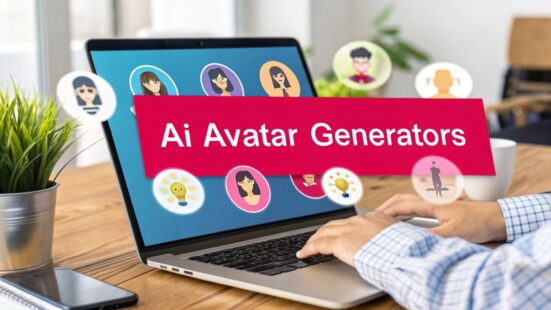
Imagine having a whole team of digital actors, ready to whip up personalized content for you 24/7. That's pretty much what you get with AI avatar generators. These tools create realistic digital people from a simple text prompt or image, giving you a way to scale up high-quality video content without ever needing a camera or studio.
Table of Contents
What Are AI Avatars and Why Do They Matter for Your Brand?
At its core, an AI avatar is a digital stand-in for a person, brought to life by artificial intelligence so it can speak, gesture, and interact in a surprisingly realistic way. Don't think of them as cartoon characters; think of them as virtual actors ready to deliver a script with lifelike expression. For brands, this technology is way more than just a cool gimmick—it’s a serious strategic asset.
AI avatar generators help e-commerce businesses and marketing teams sidestep the usual headaches of content production. The massive costs, tricky logistics, and long timelines of video shoots get replaced by a simple, digital workflow. This shift means you can launch campaigns faster, personalize content on a massive scale, and drive way more engagement.
The Strategic Shift from Novelty to Necessity
What started as a fun tool for making quirky social media profile pictures has quickly grown into a must-have for modern marketing. The brands that are ahead of the curve now see AI avatars as a key part of creating authentic-style content at a speed and scale that was once impossible.
This shift is obvious when you look at the numbers. The AI avatar market was valued at USD 7.41 billion in 2024 and is on track to explode to USD 118.55 billion by 2034. For direct-to-consumer brands, this trend is a massive green light. Many are already seeing 30-40% higher engagement rates on social ads that use AI-generated avatars because they blend in so well with user-generated content. You can discover more insights about the AI avatar market growth and its impact.
An AI avatar isn't just a digital puppet; it's a scalable communication tool. It allows a brand to speak directly to thousands of customers with a personalized message, something that was logistically impossible with traditional video.
Core Benefits for E-commerce and Marketing
For marketers, the upsides are crystal clear and have a direct impact on the bottom line. Folding AI avatars into your content strategy brings several powerful advantages, especially in the cutthroat world of e-commerce. And these tools aren't just for huge corporations anymore; platforms like JoinBrands are making this tech accessible to everyone by integrating it right into their creator campaign workflows.
Here’s a look at some of the biggest wins when brands use AI-generated avatars in their campaigns.
| Key Benefits of AI Avatars for E-commerce Brands | ||
|---|---|---|
| Benefit | Impact on Marketing Strategy | Example Use Case |
| Massive Scalability | Allows for the rapid creation of countless content variations for different audiences, languages, or A/B tests from a single script. | A skincare brand creates 50 unique video ads, each targeting a different demographic with tailored messaging, all in one afternoon. |
| Significant Cost Reduction | Slashes budgets by removing the need for actors, location scouting, film crews, and post-production houses. | A startup launches its first video campaign without the upfront cost of a professional shoot, redirecting funds to ad spend instead. |
| Increased Production Speed | Drastically shortens the content lifecycle, enabling brands to move from idea to finished video in minutes instead of weeks. | A fashion retailer responds to a viral trend by producing and launching a relevant video ad the very same day. |
| Hyper-Personalization | Delivers unique video messages that can address customers by name, reference past purchases, or mention their location, boosting relevance and conversions. | An online retailer sends a personalized thank-you video from an avatar to customers, mentioning the exact product they just bought. |
Ultimately, integrating AI avatars isn't just about saving time and money. It's about opening up entirely new possibilities for connecting with customers in a way that feels personal, even when you're doing it at scale.
How AI Avatar Technology Actually Works
Stepping into the world of AI avatar generators can feel a bit like watching a magic trick. But behind the curtain, it’s not magic—it’s a fascinating mix of creative algorithms and hard data science. Forget pulling rabbits out of a hat; these platforms use incredibly sophisticated models to build lifelike digital humans from the ground up.
Getting a handle on the core concepts shows you just how powerful this tech is for marketing.
At the heart of many of these tools are Generative Adversarial Networks, or GANs. Picture this: you have two AIs working together. One is a master forger, trying to create a perfect, photorealistic portrait. The other is a world-class art detective, whose only job is to spot the fake.
The forger creates an image, and the detective scrutinizes it, pointing out every tiny flaw. The forger takes that feedback, tries again, and again, millions of times. Eventually, its work becomes so good that the detective can no longer tell the difference between the AI's creation and a real photograph. That’s a GAN in a nutshell, and it’s how these platforms produce such stunningly realistic avatars.
Sculpting Realism from Digital Noise
Another powerful method fueling modern avatar generators is the diffusion model. Think of this one like a sculptor who starts with a completely random, noisy block of digital marble. It’s pure chaos at first.
The AI then acts like a master sculptor, meticulously chipping away at the "noise" in calculated steps. With each pass, a clearer image begins to emerge from the static—a chin here, an eye there—until a high-resolution, coherent face materializes. This approach is fantastic for creating diverse and incredibly high-quality images, which is why so many top-tier generators rely on it.
You can see similar principles at work in advanced AI video generation platforms like RunwayML Gen-3, which use them to create entire moving scenes from scratch.
The core idea isn't just to copy reality, but to understand its underlying patterns. The AI learns what makes a face look human—the subtle shadows, the way light hits the skin, the natural asymmetry—and then recreates it digitally.
The Difference Between 2D and 3D Avatars
Not all avatars are built the same. They generally fall into two buckets, and knowing the difference is key to picking the right tool for your campaign.
- 2D Avatars: These are the most common type and are perfect for video. Think of them as highly advanced digital puppets on a flat screen. They’re ideal for social media ads, website welcome videos, and internal training where the avatar speaks directly to the camera.
- 3D Avatars: These are fully-formed models that can move and interact within a virtual environment. They are the building blocks for more immersive experiences like virtual storefronts, AR product demos, or brand reps in the metaverse.
This infographic breaks down exactly how these technologies unlock major benefits for brands.

As you can see, the tech translates directly into marketing wins, making content production way more efficient and effective. To see how this fits into your broader strategy, check out our complete guide on using AI for content creation. Whether you need a simple 2D talking head or a complex 3D virtual influencer, this is the technology that makes it all possible.
Putting AI Avatars to Work in Your Marketing Campaigns
Knowing the tech behind AI avatar generators is one thing, but seeing how they can fundamentally change your marketing results? That’s something else entirely. The real magic happens when you stop thinking about the theory and start applying it to real-world campaigns that actually drive growth.
These aren’t just ideas for the future—brands are using these strategies right now to connect with customers in ways that are both more personal and way more efficient.
We're talking about more than just slick explainer videos. This is about building a digital workforce capable of running complex marketing plays at a scale that was pretty much impossible before. From churning out endless authentic-looking ad creatives to sending one-on-one personalized video messages, AI avatars are quickly becoming a must-have in a modern marketer's toolkit.
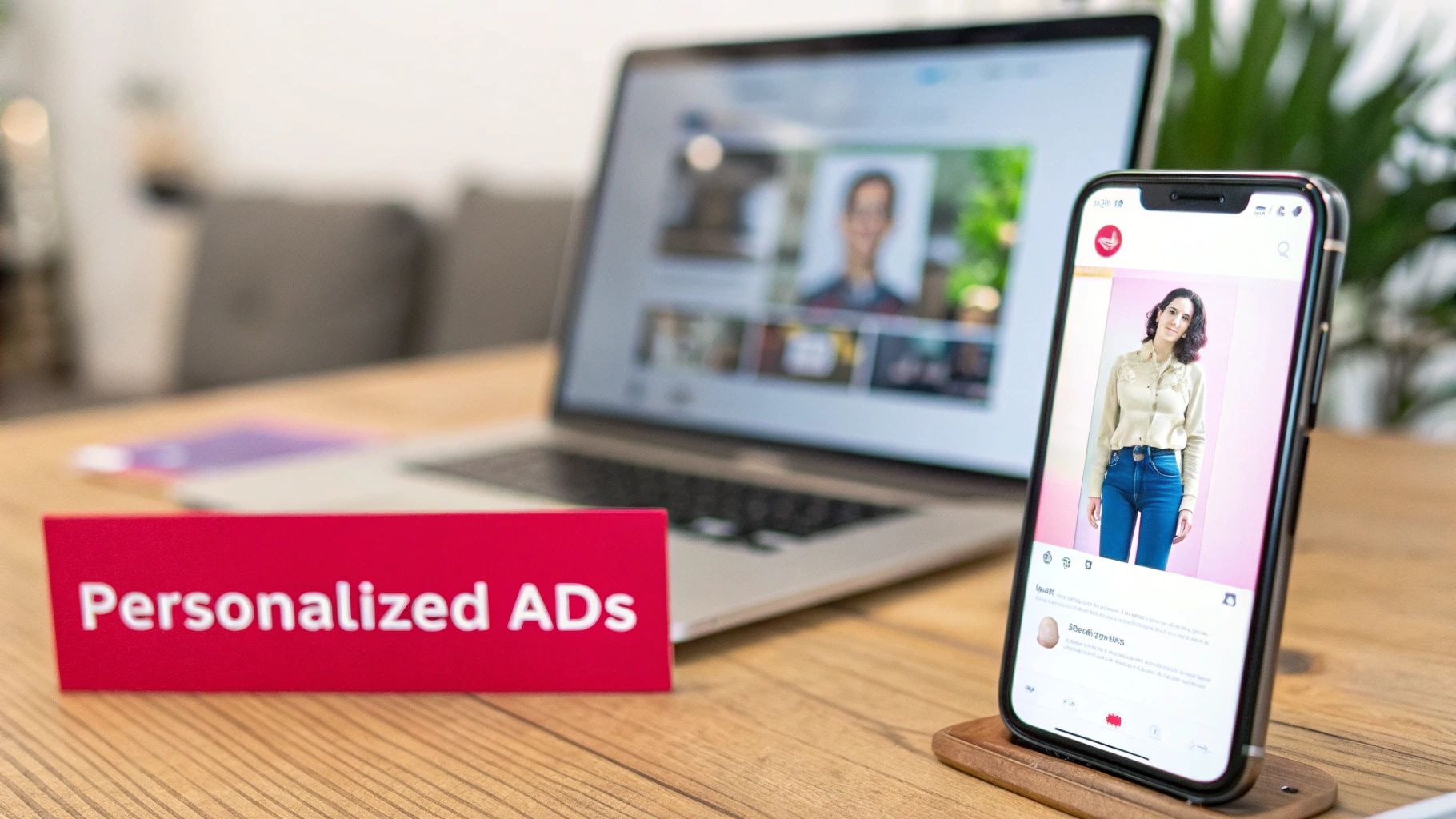
Generate Authentic UGC-Style Ads at Scale
User-Generated Content (UGC) is the gold standard for authentic advertising. Everyone knows it works. The problem? Getting a steady stream of it is a huge headache. AI avatars crack this code, letting you create that UGC vibe on demand, without losing the genuine feel that your audience trusts.
Let's say you have one killer video from a creator that’s performing like crazy. Instead of running that single clip into the ground, you can use an AI avatar generator to spin up countless variations. You can test different hooks, tweak the call-to-action, or even translate the ad for new markets—all while keeping the same creator's trusted face and style.
- Create a Virtual Brand Ambassador: Build a custom AI avatar that perfectly captures your brand's personality. This digital spokesperson can crank out testimonials, product demos, and social media updates with perfect consistency.
- Localize Campaigns Instantly: Take a single video script and generate ads in dozens of languages. The avatar handles the perfect lip-syncing, making your brand feel local in every single market you enter. Most top-tier platforms support over 100 languages.
- A/B Test Creatives Effortlessly: Need to test ten versions of an ad, each with a slightly different intro? Done. This lets you find the winning message fast, without the logistical nightmare of scheduling new video shoots.
Deliver Hyper-Personalization That Converts
Personalization is a game-changer for engagement and sales. We all know that putting a customer's first name in an email subject line works. But AI avatars blow that out of the water by making video personalization possible at scale. This creates a genuine "wow" moment that a block of text just can't compete with.
Think of it this way: instead of a generic "Welcome to our community!" email, a new customer gets a short video where your friendly brand avatar greets them by name and maybe even mentions the specific product they were just looking at. That's how you turn a routine touchpoint into a memorable connection.
This kind of personal touch makes customers feel seen and valued, which is a massive advantage in a noisy marketplace.
Example in Action:
A direct-to-consumer beauty brand is struggling with cart abandonment. Now, when a shopper leaves an item behind, they get a personalized video email an hour later. In it, an AI avatar says, "Hi Sarah, I noticed you were checking out our 'Glow Up' serum. It's one of our bestsellers for a reason!" This kind of tailored reminder is far more persuasive than a plain-text email and can seriously boost cart recovery rates.
Amplify and Maximize Creator Collaborations
Working with influencers and UGC creators is a core part of modern marketing, but often, the content they create is a one-and-done deal. AI avatars give you a way to stretch the value of every creator partnership, massively increasing your ROI.
Once you have the legal rights to a creator's likeness, an AI avatar generator can create their "digital twin." Suddenly, you can produce brand new content featuring that creator long after the original campaign wraps up.
Here’s a simple workflow for amplifying your collaborations:
- Start with an Authentic Foundation: First things first, partner with a real creator through a platform like JoinBrands. Get them to produce a high-quality, engaging video that truly connects with their audience.
- Create a Digital Likeness: With the creator's full consent and a clear agreement in place, use their video to generate a realistic AI avatar. This process captures their unique look and on-screen presence.
- Scale the Content: Now for the fun part. Use that avatar to produce a virtually unlimited number of new video assets. You can create TikTok tutorials, Instagram Reel ads, or even bite-sized product explainers for your website—all featuring the familiar face of a creator your audience already knows and trusts.
This hybrid model gives you the best of both worlds: the genuine appeal of a human creator paired with the incredible scale of AI. It effectively turns a single collaboration into a long-term content engine for your brand.
Integrating AI Avatars into Your Existing Workflow
Bringing AI avatar generators into your marketing mix doesn't mean you have to tear down your current strategy. It's about adding a powerful new tool to your creative arsenal, and getting started is a lot more straightforward than you might think.
Think of it like hiring a new, hyper-efficient member for your creative team. This "employee" works 24/7, speaks any language you need, and churns out content at a blistering pace. The trick is giving them a solid plan so that every piece of content they create serves a real purpose and drives results you can actually measure.
Step 1: Define Your Campaign Goals
Before you even touch a script or look at a single avatar, you have to nail down the "why." What, specifically, are you trying to accomplish with this campaign? A fuzzy goal like "increase sales" just won't cut it. You need to get granular to steer your content in the right direction.
Your goal is the North Star for every other decision you'll make, from the personality of your avatar to the call-to-action you use.
- Want to boost engagement on Reels? The mission is to create short, snappy videos that tap into current trends. Your script has to be punchy, and the avatar needs to be energetic enough to stop someone mid-scroll.
- Need to improve email click-through rates? Here, it's all about personalization. The avatar could greet a subscriber by name and deliver a quick, compelling message that makes them want to click the link.
- Trying to reduce customer support tickets? You’ll want a calm, professional avatar to walk customers through clear explainer videos or FAQ tutorials. The tone should be helpful and easy to follow.
Step 2: Select Your Persona and Write the Script
With your goal locked in, it’s time to decide who is going to deliver the message. You have two main options: you can work with a real creator to build their digital twin, or you can design a totally virtual brand persona from the ground up.
Partnering with a creator, especially through a platform like JoinBrands, injects instant authenticity into your campaign. You can find creators who already fit your brand vibe and use their likeness to generate content at scale. It’s the perfect blend of human-led trust and AI-powered efficiency.
No matter which path you take, the script is everything. A great script makes an avatar feel alive and relatable; a bad one makes it feel clunky and robotic. Keep your language conversational, write for the ear (not the eye), and make sure the message is laser-focused on the goal you set in step one.
A well-crafted script is the soul of your AI avatar. Without it, even the most realistic digital human is just an empty vessel. The words you choose give it personality, purpose, and the power to persuade.
Step 3: Generate and Refine the Content
Now for the fun part—bringing your vision to life. This is where you jump into an AI avatar generator, upload your script, pick your avatar, and select a voice. Most modern tools give you a surprising amount of control, letting you tweak everything from the avatar's tone and pacing to their background and what they're wearing.
Don't expect the first take to be perfect. This part of the process is all about iterating.
- Generate the Initial Video: Plug in your script and settings to get your first draft out.
- Review for Tone and Pacing: Does the delivery feel right? Is the energy there? Adjust the inflections, add pauses, and play with the speed to make it sound more natural. Many generators offer fine-tuning options for exactly this.
- Check Visual Cohesion: Make sure the avatar's look and the background match your brand guidelines. Sometimes a small change, like the color of a shirt, can make all the difference.
Step 4: Deploy, Track, and Optimize
Once you've got a polished video you’re happy with, the final step is to get it out there and see how it performs. This is where all that initial goal-setting really pays off. Because you defined a clear objective from the start, you know exactly which metrics to keep an eye on.
Push the content out on your chosen channels, whether that's an Instagram ad, a landing page video, or an email campaign. Then, watch the data. For an ad, you’ll be tracking things like click-through rate (CTR), cost per click (CPC), and of course, conversions.
The feedback you get is gold. If one version of a video is crushing it while another is falling flat, you can quickly spin up new variations based on the winner. This cycle of generating, deploying, and optimizing is what makes AI avatars such a nimble and powerful strategy for any marketing team today.
How to Choose the Right AI Avatar Generator

With a ton of AI avatar generators flooding the market, figuring out which one is right for your brand can feel like a shot in the dark. The trick is to look past the slick demos and zero in on the features that will actually move the needle for your marketing. Making a smart choice here ensures your campaigns hit the mark, your brand stays protected, and you actually get a return on your investment.
To make the right call, you need a solid evaluation plan. Think of it like a scorecard for comparing platforms, where you weigh everything from avatar quality and customization options to the crucial legal fine print. This isn't just about picking a tool; it's about choosing a strategic partner for your content.
Evaluating Realism and Quality
First things first: the avatar has to look and feel real. A clunky, obviously fake avatar can do more damage than good, making your brand look out of touch. You're aiming for a generator that creates avatars so lifelike they could easily pass for high-quality, user-generated content.
The devil is in the details, so pay close attention to the small things that scream realism.
- Lip-Sync Accuracy: The avatar's mouth absolutely must match the audio perfectly. Any lag or weird mismatch instantly breaks the illusion and kills credibility.
- Natural Expressions and Gestures: Look for the subtle stuff—a slight head tilt, natural blinks, and hand gestures that feel human, not programmed.
- Voice Quality and Tone: The platform should offer a variety of high-quality voices that don't sound like a GPS from 2005. The real game-changer is the ability to tweak pitch, speed, and emotional tone.
Customization and Brand Alignment
Your avatar is basically a digital brand ambassador, so it needs to be a perfect match for your brand's vibe. A generic, out-of-the-box model just won’t do. The best tools offer deep customization, letting you build a digital persona that genuinely represents your brand.
Look for platforms that let you dial in every last detail—clothing, accessories, hairstyles, even the background. The ability to upload your own brand assets, like logos or specific background images, is a must-have for keeping your look consistent everywhere. For a deeper look at this, our guide on the AI influencer generator covers how to create custom personas that really connect with specific audiences.
The point of customization isn't just to make an avatar look cool; it's to make it look like your brand. Every visual choice should reinforce your identity and speak directly to your ideal customer.
Legal and Ethical Guardrails
Okay, this is the part where you absolutely cannot cut corners. The legal and ethical side of using AI avatars, especially when they're based on real people, is a minefield. Any platform worth its salt will have crystal-clear policies on intellectual property, consent, and data privacy to protect both you and the creators you partner with.
As you vet different generators, get answers to these make-or-break questions:
- Intellectual Property: Who actually owns the final video? You need a platform that gives you full ownership or, at a minimum, clear and permanent usage rights for what you create.
- Likeness Rights and Consent: If you're creating a "digital twin" of a real person, does the platform have a bulletproof process for documenting their consent? This is non-negotiable for avoiding legal headaches down the road.
- Brand Safety Protocols: What's in place to stop the tech from being used for sketchy purposes? Look for strong content moderation policies and clear terms of service.
With the North American market holding over 39.2% of the global share, the leading companies are often the ones setting the standards for these ethical practices. While stats show AI avatars can slash content production time by up to 70%, that speed can't come at the expense of doing things the right way.
To help you systematically compare your options, we've put together a checklist. Use this table to score each platform on the criteria that matter most to your business.
Evaluation Criteria for AI Avatar Generator Platforms
| Evaluation Criterion | What to Look For | Why It Matters |
|---|---|---|
| Avatar Realism | High-fidelity visuals, accurate lip-syncing, natural movements, and realistic skin/hair textures. | Low-quality avatars look unprofessional and can erode brand trust. Realism is key to audience connection. |
| Customization Depth | Ability to control appearance (clothing, hair, features), voice, background, and upload branded assets. | Ensures the avatar aligns perfectly with your brand identity and campaign goals, avoiding a generic look. |
| Voice Quality & Options | A diverse library of natural, non-robotic voices with controls for tone, pitch, and emotion. | The voice is half the performance. A poor-quality or mismatched voice can ruin the entire video. |
| Ease of Use | An intuitive interface, clear workflow from script to video, and minimal technical knowledge required. | A complex tool slows down content production, defeating the purpose of using AI for efficiency. |
| IP & Usage Rights | Clear terms granting you full commercial ownership or a perpetual, royalty-free license for created content. | Ambiguous ownership terms can lead to legal disputes and limit how you can use your own marketing assets. |
| Consent Management | A documented and transparent process for obtaining and managing consent if creating avatars of real people. | Protects your brand from likeness rights infringement and ensures ethical collaboration with creators. |
| API & Integration | Availability of an API for automating video creation and integrating with other marketing tools (e.g., CRM, CMS). | Allows you to scale content production and build dynamic, personalized video campaigns automatically. |
| Cost & Scalability | Transparent pricing models (subscription, pay-per-video) that align with your expected usage and budget. | You need a plan that supports your content goals without hidden fees or prohibitive costs as you scale. |
Choosing the right AI avatar generator is a strategic decision that directly impacts your content's effectiveness and your brand's reputation. By using a structured evaluation process and focusing on quality, customization, and legal safeguards, you can find a partner that helps you create compelling, on-brand content safely and at scale.
Common Questions About Using AI Avatars in Marketing
Jumping into any new technology brings up a lot of questions, and stepping into the world of AI avatar generators is no different. For marketers, the big questions usually circle back to brand identity, legal risks, and of course, the actual costs. Getting clear, straightforward answers is the only way to move forward with confidence and make smart decisions for your campaigns.
This section is all about tackling those common concerns head-on. We'll give you actionable advice to help you navigate the tricky parts of this powerful tech, making sure you're ready to integrate AI avatars into your strategy effectively and responsibly.
How Do We Ensure an AI Avatar Aligns with Our Brand Voice?
Making sure an AI avatar feels like a natural extension of your brand is absolutely essential for keeping things authentic. This is about so much more than just picking a face; you're crafting a complete digital persona that needs to click with your target audience.
The first step is getting the visuals right. Choose an avatar whose appearance, style, and general vibe match your brand's personality. Most of the better generators let you get really granular with customizing clothing, accessories, and backgrounds to make sure every little detail is on-brand.
But the script is where your brand's voice really shines. Your copy has to be written in the same authentic tone your customers know and love, whether that’s witty and informal or professional and straight-to-the-point. A/B testing different scripts and even avatar expressions is a fantastic way to figure out what truly connects with your audience.
What Are the Legal Implications of Using a Real Person’s Likeness?
Navigating the legal side of using a real person's likeness—what's often called a "digital twin"—is one of the most critical parts of using this technology. This isn't an area for guesswork. It demands explicit, informed consent that's all documented in a legally sound contract.
That agreement must clearly spell out how, where, and for how long their digital likeness will be used. It should cover the nitty-gritty details like compensation, usage rights across different channels (like paid social ads versus your website), and what happens to the digital asset after the contract is over. You have to ensure you have full ownership or a crystal-clear, comprehensive license.
Using a person's digital likeness without a rock-solid agreement is a huge legal and ethical risk. The contract should protect both the brand and the creator, leaving zero room for confusion about usage rights or payment.
Platforms built for creator collaborations, like JoinBrands, often have a structured framework for handling these agreements. This makes it easier to secure the necessary rights and protects everyone from potential disputes over likeness rights down the road.
Can AI Avatars Truly Replace Human Influencers?
Honestly, AI avatars are best viewed as a powerful force multiplier for human creators, not a flat-out replacement. While they bring incredible scalability, control, and cost-efficiency to the table, they often can't replicate the deep trust and genuine connection a human influencer builds with their community over years.
The smartest play is a hybrid strategy that combines the strengths of both. Use your human creators to build those authentic connections, launch your big campaigns, and establish that baseline of trust. Then, bring in the AI avatars to scale that content to the moon.
- Amplify Winning Content: Turn one successful creator video into dozens of ad variations.
- Localize for Global Reach: Translate a creator's message into different languages for international markets.
- Produce Rapid-Response Assets: Quickly spin up promo videos for flash sales or to jump on a trending topic.
This model maximizes the ROI you get from your creator partnerships. For a deeper look at how these two content types work in tandem, check out our detailed comparison of UGC vs. AIGC and see how they can support each other in a campaign.
How Much Does It Cost to Create and Use an AI Avatar?
The cost of using AI avatars can be all over the map. It really depends on the platform you choose, how complex the avatar is, and how much content you plan to generate. Many AI avatar generators run on a subscription model with pricing tiers built for different levels of need.
These plans can start from around $30 per month for basic features and go up to several hundred dollars for enterprise plans that include API access and other premium tools. Some platforms use a credit-based system, where you pay per minute of video you create. Making a custom digital twin of a real person is almost always a premium service that might have a one-time setup fee on top of any ongoing usage costs.
For most DTC brands, a mid-tier subscription is usually more than enough to churn out a high volume of social media ads and website videos. When you stack that cost against traditional video production—which can easily hit thousands of dollars for a single shoot—AI avatars almost always deliver a much higher return on investment for scalable content.
Ready to unlock the power of scalable, authentic content with AI and real creators? On JoinBrands, you can seamlessly connect with over 250,000 creators and integrate AI workflows to amplify your marketing campaigns. Start your project today and see how easy it is to generate high-impact content that drives results.