

 Your Guide to Understanding TikTok GMV
An ambassador program isn't just another fleeting marketing campaign. Think of it as a long-term strategy, a way to partner with your most genuine fans—the people who already love what you do—and empower them to spread the word. Unlike one-off influencer posts, this is about building a real community of advocates who consistently champion your brand.
Table of Contents
Laying the Groundwork for Your Ambassador Program
Before you even think about recruiting your first ambassador, you need a solid blueprint. The best programs are built on a strong foundation, planned with intention from day one. This is where you get crystal clear on what success actually looks like for your business.
Getting this part right is the difference between a program that just generates some social noise and one that delivers tangible, measurable results. It means moving beyond vague goals like "more awareness" and pinning down specific objectives. Are you trying to flood your ad campaigns with authentic user-generated content (UGC)? Drive direct sales for a new product? Or maybe just generate some serious social proof?
Define Your Program's Core Objectives
First things first: you have to connect your program to real business outcomes. Without clear goals, you’re just flying blind, and you’ll never be able to prove ROI. What do you actually want your ambassadors to do, and what impact should their actions have?
Let's get specific. Here are a few examples of goals that have teeth:
- Boost Social Proof: Generate 50 high-quality pieces of UGC each month to repurpose in paid social ads.
- Increase Conversion Rates: Drive 100 qualified sales per quarter through unique ambassador affiliate links.
- Expand Reach: Achieve a collective reach of 1 million impressions for our upcoming product launch.
Your goals need to be SMART—Specific, Measurable, Achievable, Relevant, and Time-bound. This clarity will guide every single decision you make down the line, from who you recruit to how you reward them.
To make sure your program goals are pulling in the same direction as your broader business strategy, it helps to map them out.
Matching Program Goals to Business Objectives
This table matches common business objectives with specific, measurable ambassador program KPIs to help you define success from the start.
| Business Objective | Primary Ambassador Goal | Key Performance Indicator (KPI) |
|---|---|---|
| Increase Brand Awareness | Expand reach to new audiences | Impressions, follower growth, social mentions |
| Drive Sales & Revenue | Generate direct sales | Conversion rate, sales from affiliate links/codes |
| Build Social Proof & Trust | Create authentic UGC | Volume of UGC, engagement rate on ambassador content |
| Improve Customer Loyalty | Foster a brand community | Ambassador retention rate, community engagement |
| Launch a New Product | Generate initial buzz and reviews | Reach of launch content, number of product reviews |
Defining these connections upfront ensures your ambassador program is a strategic asset, not just a marketing expense.
A well-defined objective acts as your program's North Star. It ensures that every creative brief, every ambassador you recruit, and every dollar you spend is pushing you in the right direction and contributing to your company's growth.
Craft Your Ideal Ambassador Persona
Once you know what you want to achieve, you can figure out who can help you get there. Not every fan is the right fit, and your ideal ambassador persona should be just as detailed as your customer personas. It's about so much more than just follower counts; it's about finding true alignment.
When sketching out your ideal partner, dig into these traits:
- Brand Affinity: Are they an actual customer who already loves and uses your stuff? This is non-negotiable. Real advocacy starts with genuine passion.
- Audience Demographics: Does their audience look like your target customer? You want to be sure their message will land with the right people.
- Content Style: Does their aesthetic and tone of voice vibe with your brand's identity? Look for a natural fit.
- Engagement Rate: Forget vanity metrics. Do they have an active, trusting community that actually listens to their recommendations? A nano-creator with 5,000 highly engaged followers is often far more valuable than a macro-influencer with 100,000 passive ones.
The global influencer marketing market—which absolutely includes brand ambassador programs—is exploding, projected to hit $33 billion in 2025. This massive growth isn't a fluke; it's a sign that brands are weaving this strategy into their entire marketing funnel. We're also seeing that ambassadors directly drive 53% of brand value themes in online conversations, meaning they have a huge impact on how your brand is perceived. The takeaway? Choosing partners who truly embody your mission is critical.
As you think about the structure, it's also smart to look at similar models. For example, exploring the ins and outs of setting up an affiliate program can give you ideas on how a commission-based framework might complement your ambassador strategy. With this solid groundwork in place, you’ll be ready to build a program with a clear purpose and the right people to bring it to life.
Finding and Onboarding Your True Brand Fans
Your best ambassadors are almost never strangers. More often than not, they’re hiding in plain sight—already part of your community. Think about the customers who consistently leave glowing reviews, the social media followers who tag you in their posts completely unprompted, or even the employees who are genuinely all-in on your mission.
The real trick isn't just chasing creators with big follower counts. It's about finding the true believers, the people who are already passionate about what you do.
The search starts by looking at the data you already have. Your customer list is a goldmine. Seriously. Dig into your purchase history to spot the repeat buyers or those with the highest lifetime value. These are your superfans—the ones who have already voted for your brand with their wallets, again and again.
At the same time, comb through your social media mentions and tagged content. You're looking for those organic advocates, the users who consistently create awesome content featuring your products without ever being asked. Their excitement is genuine, and that makes it incredibly powerful. This is the foundation of an ambassador program for brands built on real affinity, not just transactions.
Smart Ways to Recruit
Once you have a shortlist of potential ambassadors, you need a smart way to reach out. Don't just blast out a generic, copy-paste message. A personalized approach shows you’ve actually noticed their specific contributions and that you value their loyalty.
Here are a few channels that have worked wonders for us:
- Targeted Email Campaigns: Segment your customer list and send personalized invitations to your most loyal folks. Make it clear why you chose them and what makes them a perfect fit for the program.
- Social Listening Tools: Use software to keep an eye on brand mentions and keywords in your industry. This helps you discover influential voices who are already shaping conversations in your space, even if they haven't mentioned you directly yet.
- Application Forms: Set up a dedicated landing page for your ambassador program. It's a low-effort, high-reward tactic. Promote it on your site, in your email newsletter, and across social media. This lets your most enthusiastic fans come directly to you, guaranteeing you attract people who are already motivated.
Want to dive deeper into recruitment tactics? Check out our full guide on how to find brand ambassadors.
Before you even send that first outreach email, though, you need to have your strategy locked down.
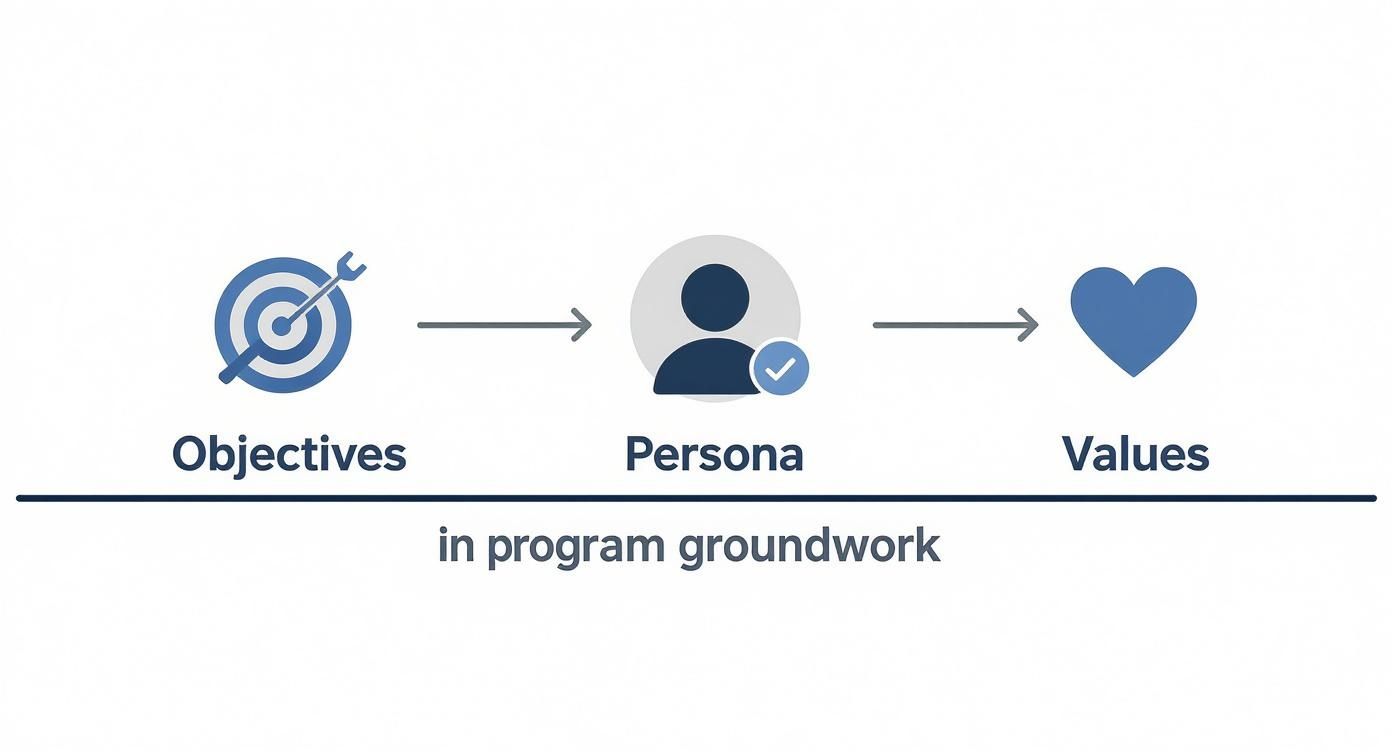
As you can see, getting crystal clear on your objectives, ideal persona, and core values is the bedrock of a successful program. Without this groundwork, your recruitment and onboarding efforts will fall flat.
Designing a Killer Onboarding Experience
Let's be real: finding the right people is only half the battle. A phenomenal onboarding experience is what turns an excited new recruit into a confident, effective advocate for your brand. Your mission here is to make them feel welcomed, valued, and totally equipped for success from the minute they say "yes."
A clunky or confusing onboarding process is a surefire way to kill their initial buzz. Remember, research shows 77% of consumers say their trust in a brand is shaped by how it treats its people—and yes, that absolutely includes your ambassadors. A smooth, professional welcome sets the right tone for the entire partnership.
Your onboarding is the first real taste an ambassador gets of your program's culture. Make it memorable. It’s your chance to validate their decision to partner with you and get them genuinely fired up to start creating.
A welcome kit is one of the most powerful tools for making a strong first impression. It doesn’t have to break the bank, but it absolutely has to be thoughtful.
- What to Put in Your Welcome Kit:
- A personalized welcome letter, preferably signed by someone important on the team.
- A curated selection of your best-selling products for them to actually use and feature.
- Some quality branded swag, like a t-shirt, hat, or a nice water bottle.
- A printed copy of your brand guidelines and key program info for easy reference.
This initial package does so much more than just hand over resources. It creates an immediate, tangible connection to your brand and gives them their very first piece of content to get excited about sharing.
Set Them Up for Success
Finally, you need to arm your new ambassadors with all the tools and information they need to hit the ground running. This means clear, concise brand guidelines that explain your mission, tone of voice, and visual style. A word of caution: avoid being overly restrictive. The goal is to provide a creative framework, not a rigid rulebook that suffocates their unique voice.
Create a central hub for all program resources. This could be anything from a dedicated portal on your website to a shared Google Drive or even a private Slack channel. Whatever you choose, it needs to be the one-stop shop where they can easily find creative briefs, product info, important links, and content examples.
Making these resources easy to find and use reduces friction and empowers your ambassadors to create on-brand content with confidence. This proactive support shows you’re invested in their success and helps build a strong, lasting partnership from day one.
Creating a Fair and Motivating Reward Structure
Let's get down to what really makes an ambassador program tick: making it worth their while. Compensation isn't just about cutting a check. It’s about building a reward structure that feels fair, genuinely motivating, and shows you truly appreciate the work your ambassadors put in.
A smart system can turn a simple transaction into a powerful, long-term partnership. The goal here is to make your ambassadors feel like valued insiders, not just hired megaphones. This means getting creative and blending monetary perks with non-monetary benefits that resonate with them and fit your budget.

Different Models for Ambassador Compensation
There's no magic bullet for rewarding ambassadors. The right approach really hinges on your program's goals, your product, and the kind of people you're bringing on board. The most successful programs I've seen usually mix and match a few different models to create an appealing and flexible package.
Here are the most common models to build from:
- Affiliate Commissions: This is the performance-based classic. Ambassadors get a cut of every sale they drive through their unique link or discount code. It’s a fantastic low-risk option because it ties rewards directly to revenue.
- Flat Fees: Perfect for when you need specific things done, like a certain number of Instagram stories or a dedicated YouTube video. A flat fee makes expectations crystal clear for everyone.
- Free Products or Store Credit: Often called "gifting," this is a killer way to get started. It lets ambassadors actually use and fall in love with your products, which leads to much more authentic content. Plus, it's a low-cost win for you.
- Performance Bonuses: Light a fire under your top performers. Set up bonuses for hitting milestones, like a sales threshold or creating the month's most engaging post.
The way brands pay ambassadors has changed a lot recently. We're seeing a big shift toward deeper, more meaningful partnerships, with 73% of marketers planning to increase their spending on these programs. This has given rise to hybrid models that blend fixed fees with affiliate commissions, then layer on exclusive perks to build loyalty that a simple paycheck can't buy. You can dive deeper into ambassador compensation trends to see how the industry is adapting.
The best reward structures show a clear path for growth. Ambassadors need to see that putting in more effort and getting better results will unlock bigger rewards. That’s what keeps them hungry and striving to deliver more.
Building a Tiered Reward System
A tiered system is a brilliant strategy. It gamifies the program and gives your most valuable partners the recognition they deserve by creating a clear path for advancement. As ambassadors climb the ladder, they unlock better commissions, cooler perks, and more exclusive opportunities.
This doesn't just motivate your existing team; it also makes your program way more attractive to new recruits who can see the long-term upside.
Here’s what a simple tiered system could look like:
| Tier Level | Requirements | Rewards & Perks |
|---|---|---|
| Bronze (Entry) | Complete onboarding, first social post | Welcome kit, 10% commission, personal discount code |
| Silver (Active) | 5+ sales/month, consistent content | 15% commission, exclusive product previews, featured on brand’s social media |
| Gold (Top Performer) | 20+ sales/month, high-engagement UGC | 20% commission, cash bonuses, direct access to the marketing team for feedback |
The Power of Non-Monetary Perks
Never, ever underestimate the power of rewards that money can't buy. These are the benefits that forge a real community and make ambassadors feel like true partners, not just contractors. They create a sense of belonging that cash alone simply can’t.
Think about weaving in some of these high-value perks:
- Exclusive Access: Let them try new products before anyone else.
- Professional Development: Offer them free tickets to industry events or access to workshops.
- Direct Influence: Bring them into feedback sessions to help shape your next product launch.
- Public Recognition: Give them a shout-out on your website or social channels as a key partner.
At the end of the day, a transparent and well-rounded reward structure is the bedrock of any successful ambassador program. When you combine tangible rewards with genuine recognition, you build a sustainable partnership that drives incredible results for everyone.
Managing Campaigns and Building a Real Community
Alright, your ambassadors are onboarded and excited. Now the real work begins. This is the part where you shift from just building a program to actually cultivating a community. It’s a constant process of engagement, clear communication, and support that keeps the fire burning long after those initial welcome kits are unboxed.
This ongoing management is the engine of your ambassador program. It keeps your brand top-of-mind, ensures content quality stays high, and makes your partners feel like they’re part of something special—not just another name on a spreadsheet. When you get this right, you transform a simple partnership into a powerful, collaborative force.

Crafting Creative Briefs That Inspire
One of the most common ways ambassador programs go off the rails is with bad creative briefs. They’re either way too restrictive or frustratingly vague. Your briefs should be a launchpad for creativity, not a rigid set of rules that kills authenticity.
The best briefs hit that sweet spot. They give clear direction on the campaign’s goals, key messages, and the absolute do's and don'ts, but leave plenty of room for the ambassador's unique voice and style to come through. After all, you picked them for their perspective, right?
Your brief should always nail down these points:
- Campaign Objective: What's the main goal here? (e.g., drive traffic to a new product page, generate UGC for holiday ads).
- Key Talking Points: Just 2-3 essential messages you need them to hit.
- Visual Guidelines: A simple mood board, color palette, or a few examples of the aesthetic you're going for.
- Call to Action: What specific action do you want their audience to take?
- Deadlines & Deliverables: Crystal clear expectations on what you need and when you need it.
Fostering an Engaged Community
An ambassador program is so much more than a content-for-cash exchange. It's a community. Building genuine connections between your brand and your ambassadors—and even between the ambassadors themselves—is the secret sauce for long-term loyalty and motivation.
You absolutely need a dedicated communication channel. A private Slack or Discord channel is perfect for real-time chats, quick questions, and helping them build relationships with each other. It’s where your ambassadors can share wins, bounce ideas around, and feel like they’re on an exclusive team.
Don’t let your communication be a one-way street. Actively ask for feedback, celebrate their successes publicly, and create chances for them to connect. A strong community is your program's best retention tool.
Beyond the daily chatter, you need regular touchpoints to keep everyone aligned. A monthly newsletter is great for highlighting top-performing content, announcing upcoming campaigns, and sharing exclusive brand news. Virtual meetups or Q&A sessions with your marketing team also go a long way in making ambassadors feel like true insiders. If you want to dive deeper, you can learn how to build an effective online community with proven strategies.
This entire approach mirrors the principles of effective influencer relationship management, where the focus is on building trust and mutual respect, not just managing transactions.
Navigating Legal and Compliance Guardrails
As you start managing campaigns, you have to protect both your brand and your ambassadors from a legal perspective. This isn’t optional. Transparency isn't just good practice—it's the law. The Federal Trade Commission (FTC) has very clear guidelines requiring ambassadors to disclose their connection to your brand.
This means any promotional post must include a clear and conspicuous disclosure, like #ad, #sponsored, or #BrandPartner. Make this non-negotiable in your ambassador agreement and hammer it home in every single creative brief.
Your ambassador agreement should be a simple, straightforward document that covers:
- Scope of Work: The kind of activities you expect from them.
- Compensation: How and when they’ll get paid or rewarded.
- Content Rights: Who owns the content they create for you.
- Disclosure Requirements: A clear mandate to follow all FTC guidelines.
- Termination Clause: The conditions under which either party can end the partnership.
Having a clear, signed agreement protects everyone and sets professional expectations right from the start. It ensures your program runs ethically and helps you steer clear of any legal headaches down the road.
Tracking Performance and Proving Program ROI
The most successful ambassador programs are built on data, not guesswork. Once your ambassadors are out there creating content, you need a solid system to track what’s working, what isn’t, and—most importantly—prove the program's value to your company’s bottom line.
Without clear metrics, you're just spending money. With them, you're making strategic investments. Proving your Return on Investment (ROI) is the ultimate goal here. It’s the language that stakeholders understand and the validation you need to justify scaling your efforts. This means moving beyond vanity metrics like follower counts and focusing on data that connects ambassador activities to real business results.
Choosing KPIs That Actually Matter
To measure success, you have to define what it looks like from the get-go. Your key performance indicators (KPIs) should tie directly back to the program objectives you set in the beginning. Are you focused on awareness, engagement, or direct sales? Each goal has its own set of metrics.
For Brand Awareness Programs
If you’re trying to get your name out there, you’ll want to track metrics that show visibility and reach.
- Reach and Impressions: This is the big picture—the total number of unique users who see ambassador content and the total number of times it's displayed. It’s your first indicator of how much ground your ambassadors are covering.
- Share of Voice: How often is your brand mentioned in online conversations compared to your competitors? If this number is climbing, your ambassadors are successfully cutting through the noise.
- Website Traffic: A simple but powerful one. Monitor referral traffic coming from ambassador links to see how many people they’re actually sending your way.
For Engagement-Focused Programs
When your goal is to build a community and spark conversation, your focus shifts to interaction.
- Engagement Rate: This is the percentage of an ambassador’s audience that likes, comments, and shares their content. A high rate tells you they have a strong, active community that trusts their recommendations.
- Content and UGC Volume: Look at the sheer quantity of high-quality, on-brand content your ambassadors are producing. This is your pipeline for authentic marketing assets you can repurpose elsewhere.
- Audience Growth: Keep an eye on your own social media channels. Is ambassador activity bringing new, relevant followers to your brand?
Attributing Sales and Measuring Conversions
When it’s time to talk money, direct attribution is king. This is where you connect specific ambassador actions to actual customer purchases. The key is to arm your partners with trackable tools that leave a clear data trail.
Unique affiliate links are the gold standard. When a customer clicks an ambassador's link and buys something, the sale is automatically credited to them. It’s clean and simple.
Similarly, unique discount codes not only give customers a reason to buy but also provide an easy way to track which ambassador drove a particular sale. These tools eliminate the guesswork and allow for precise revenue attribution.
The right data tells a powerful story. For instance, some brands have reported that 30% of attendees at ambassador-led product demos ended up making a purchase. Others have seen event activations drive up social media mentions by as much as 50%. You can check out more of these brand ambassador marketing findings on elev8.la.
Don’t just track the final sale. Use your analytics to map the entire customer journey. See which ambassador channels drive the most traffic, which content formats lead to the highest conversion rates, and what the average order value is for ambassador-referred customers.
Looking Beyond the Numbers with Qualitative Metrics
While hard data like sales and traffic are essential for proving ROI, qualitative metrics provide the why behind the numbers. They help you understand the deeper impact your program is having on how people perceive your brand.
These "softer" metrics include things like:
- Brand Sentiment: Use social listening tools to analyze the tone of conversations around your brand. Are people speaking positively? A shift in the right direction shows your ambassadors are building trust and goodwill.
- Content Quality: Go beyond just counting posts. Assess the creativity, authenticity, and brand alignment of the UGC your ambassadors create. This high-quality content is a valuable asset in its own right.
- Community Feedback: Actually read the comments and discussions happening on ambassador posts. This is a direct line into the unfiltered thoughts and feelings of your target audience.
To really nail down your program's performance, you need a clear way to organize and review your KPIs. Breaking them down by funnel stage—Awareness, Engagement, and Conversion—helps you see the full picture and identify exactly where your program is strongest.
Essential KPIs for Ambassador Program Tracking
| Funnel Stage | Metric | What It Measures | How to Track It |
|---|---|---|---|
| Awareness | Reach & Impressions | The total audience size and visibility of ambassador content. | Platform analytics (Instagram Insights, TikTok Analytics), creator reports. |
| Share of Voice (SoV) | Your brand's visibility compared to competitors. | Social listening tools like Brand24 or Sprout Social. | |
| Referral Traffic | The volume of website visitors from ambassador links. | Google Analytics (Campaign URL Builder), platform-specific affiliate links. | |
| Engagement | Engagement Rate | The percentage of audience interacting with content. | (Likes + Comments + Shares) / Followers. Tracked in your platform. |
| Content Volume | The amount of UGC created by your ambassadors. | Manual tracking or your ambassador management platform. | |
| Audience Growth | Growth of your brand's social media following. | Your platform's native analytics tools. | |
| Conversion | Conversion Rate | The percentage of clicks that result in a purchase. | Affiliate platform dashboards, Google Analytics E-commerce tracking. |
| Revenue Generated | Total sales attributed to ambassador links or codes. | Your e-commerce platform (Shopify, etc.) or affiliate software. | |
| Cost Per Acquisition | How much you spend to acquire one new customer via ambassadors. | Total Program Cost / Number of New Customers. |
By regularly reviewing these metrics, you can get a holistic view of your program's health and make smarter decisions about where to focus your energy and budget.
Creating Insightful Reports to Optimize and Scale
Data is only useful if you act on it. Regular reporting is how you identify your top performers, spot trends, and make informed decisions to keep improving your program. A good report isn’t just a data dump; it visualizes your key metrics and offers clear, actionable takeaways. For a deeper dive, our guide on creating a social media campaign report offers some great frameworks you can adapt.
Your reports should always highlight:
- Top-Performing Ambassadors: Who is driving the most sales, engagement, or traffic? These are the people you want to build stronger relationships with.
- Most Effective Content: Which types of posts, videos, or platforms are delivering the best results? Double down on what’s working.
- Overall Program ROI: This is the big one. Calculate it by comparing the total revenue generated by ambassadors to the total cost of running the program (commissions, gifted products, platform fees, etc.).
By consistently tracking both quantitative and qualitative data, you create a powerful feedback loop. This data-driven approach allows you to refine your strategy, reward your most impactful partners, and confidently scale your ambassador program into a predictable and powerful growth engine for your business.
Frequently Asked Questions About Ambassador Programs
Even with the best game plan, launching an ambassador program always brings up a few questions. It's easy to get tangled up trying to understand the difference between influencers and ambassadors or just figuring out where to even start. Let's clear up some of the most common questions brands ask when they're ready to get serious.
Getting these fundamentals right from the beginning gives you the confidence to move forward and helps you sidestep the common mistakes that can trip up even the most promising programs. Think of this as your quick-start guide to building your ambassador program for brands on solid ground.
Influencers vs. Ambassadors: What’s the Difference?
This is probably the number one point of confusion I see. People use the terms interchangeably, but the relationship at the core of each is fundamentally different. Knowing which one you need is critical.
Influencer Marketing: This is almost always a transactional, short-term deal. You might hire an influencer for a one-off campaign to promote a new product. The main goal here is immediate reach—you're paying to get in front of their large audience for a quick visibility boost.
Brand Ambassador Programs: These are all about building long-term, authentic relationships. Your best ambassadors are usually genuine fans, often existing customers who already love what you do. Their value comes from consistent, believable advocacy over a long period, which is what builds deep trust with their community.
An influencer’s job is to create buzz. An ambassador’s role is to build belief.
How Many Ambassadors Should I Start With?
It’s so tempting to go big right out of the gate, but that’s a classic rookie mistake. You’ll always be better off starting small, nailing your process, and then scaling up from a position of strength. For most brands, a pilot group of 10 to 25 highly engaged ambassadors is the sweet spot.
A smaller, more manageable crew allows you to provide personalized attention, which is everything in the early days. You can really test out your onboarding, fine-tune how you communicate, and iron out any wrinkles in your rewards system without getting completely overwhelmed. Once you've proven the model works and can point to real results, you can confidently open the floodgates.
What Are the Most Common Mistakes to Avoid?
Knowing what not to do is just as important as having a solid plan. I've seen countless programs stumble because they fall into the same predictable traps. If you can steer clear of these from day one, you'll save yourself a ton of headaches and money down the road.
The biggest misstep is treating your ambassador program like just another sales channel. When you focus solely on transactions instead of building a real community, you lose the authenticity that makes these partnerships so powerful in the first place.
Here are the top mistakes I see brands make time and time again:
- Lacking Clear Goals: Launching a program without specific, measurable KPIs is like driving without a destination. You'll never know if you're succeeding or be able to justify the investment.
- Recruiting on Follower Count Alone: Chasing big follower numbers over genuine brand love is a recipe for disaster. It leads to inauthentic content and engagement that's a mile wide and an inch deep.
- Providing Bad Creative Briefs: Overly restrictive briefs will suffocate creativity, but briefs that are too vague will get you a bunch of off-brand content. There's a balance.
- Failing to Track ROI: If you're not using proper tracking links and discount codes, you'll have no way to prove the program's value or figure out what's working so you can do more of it.
Ready to build and manage a thriving ambassador program without the guesswork? JoinBrands connects you with over 250,000 creators and provides the tools to manage your campaigns, track performance, and drive real growth. Launch your first campaign today!