
 Your Guide to Ecommerce Marketing Automation
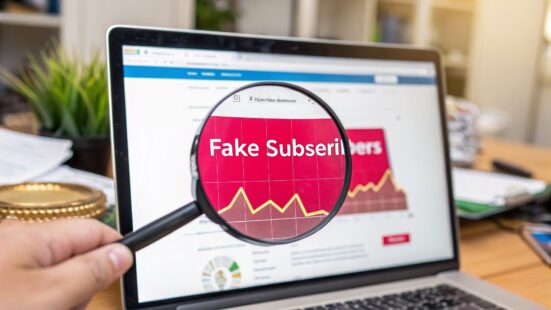
When we talk about a fake subscriber count, we're talking about channels that have artificially pumped up their numbers. This usually happens by purchasing bots or a truckload of inactive accounts instead of earning a real, breathing audience. This practice is designed to do one thing: mislead brands into paying for access to a phantom audience, guaranteeing zero real-world engagement and completely torching your marketing spend.
Table of Contents
The True Cost of a Fake Subscriber Count

Let's be blunt: investing in an influencer with a fake subscriber count isn't just a missed opportunity—it's a direct hit to your budget. When you pay for a sponsored post, you're buying into what you think is a loyal, engaged community. But when that community is mostly bots, your message lands on deaf ears.
Imagine you've shelled out a premium for a creator with 500,000 subscribers, only to find out later that 40% of them are fake. You’ve just thrown away 40% of your budget before the campaign even got off the ground. This isn't some theoretical problem; it’s a common pitfall for brands who get dazzled by big numbers instead of digging into genuine audience health.
Pro Tip: I've seen too many brands get mesmerized by a huge subscriber number. Treat it as just one piece of the puzzle. The real gold is in how many actual people see and interact with the content, not how many ghost accounts are following a channel.
The Damage Beyond Wasted Spend
The financial sting from a fake subscriber count is way worse than just the initial payment. It kicks off a ripple effect of bad data that can completely derail your entire marketing strategy. When your campaign analytics are built on a foundation of fake followers, you end up with a wildly distorted picture of your performance.
This flawed data leads to terrible strategic decisions down the road. You might mistakenly think a certain type of content or messaging is crushing it, prompting you to double down on a failing strategy. The true cost isn't just the one-time campaign fee; it's the compounding error of every future marketing choice you make based on those bogus results.
Practical Example: I once consulted for a brand that nearly pivoted its entire product line based on campaign data from an influencer with a huge, but fake, following. The campaign reported massive "reach," but sales were flat. They thought the audience disliked the product. The real issue? The audience never saw the ads in the first place. A simple audit revealed 60% of the influencer's followers were bots. We saved them from a disastrous business decision by spotting the fake subscriber count.
Why Proactive Vetting Is Non-Negotiable
Identifying fake followers isn't just some "best practice" to check off a list; it’s an essential defense for your brand's integrity and your bottom line. Getting ahead of this by vetting influencers protects your investment and makes sure your money is going toward actual, genuine growth.
Here’s exactly what’s at stake:
- Wasted Ad Spend: Your marketing dollars are spent reaching bots and dormant accounts, generating a fat zero in return.
- Skewed Campaign Data: Inflated metrics lead to flawed analysis and poor future marketing decisions. You end up chasing ghosts.
- Damaged Brand Credibility: Associating with fraudulent influencers can tarnish your reputation, especially among savvy consumers who can spot fakes a mile away.
- Sabotaged ROI: It's simple math. No real audience means no real engagement, no clicks, and no sales. A positive ROI becomes impossible.
Understanding these stakes is the first critical step. By learning how to spot a fake subscriber count, you stop being a potential victim of fraud and start acting like a sharp marketer who only invests in authentic partnerships that drive real, measurable results.
Spotting Red Flags in an Influencer Profile

Before you ever run a single analytic report, you can learn almost everything you need to know with a quick five-minute scan of an influencer’s profile. I can’t stress this enough: this initial check is your first line of defense. It’s how you instantly weed out the most obvious fakers and avoid wasting hours on a deeper dive.
Think of it as a gut check for their channel’s health.
One of the most obvious tells is a wild imbalance between their subscriber count and their video views. If a creator claims to have 200,000 subscribers but their recent videos are barely cracking 2,000 views, a massive alarm bell should be going off. That’s a 1% view rate, which screams "phantom audience."
This kind of gap is a direct pointer to a disengaged or, worse, a completely non-existent follower base. A healthy, authentic channel will always have a much more logical relationship between its subscriber base and its view counts.
Decoding Unnatural Growth Spikes
Real, organic audience growth is almost always a slow, steady burn. Sure, you’ll see occasional jumps after a video goes viral or gets picked up by the media, but fraudulent growth just looks… weird. You have to be on high alert for those sudden, massive spikes in subscribers that seemingly come from nowhere.
For example, a channel jumping from 50,000 to 75,000 subscribers overnight without a viral video to explain it is a classic sign they just bought a batch of fake followers. These jagged spikes on a growth chart are the kind of unmistakable evidence you’re looking for.
This is a huge problem on platforms like YouTube. Sudden subscriber spikes—we're talking an abrupt 20-50% growth literally overnight—are telltale signs of purchased followers. This is especially risky for DTC startups and SaaS founders using platforms like JoinBrands who depend on credible creators for their product launches. Legitimate growth looks more like 5-10% monthly after a hit video, while fake accounts are exposed by sharp, unnatural increases that have no connection to actual content performance. You can get a better handle on these patterns using tools that analyze historical YouTube data.
Pro Tip: I always cross-reference a sudden follower jump with the creator's content from that exact time. If I can't find a breakout piece of content to justify the surge, I immediately flag them as high-risk. Organic growth always leaves a trail.
Analyzing the Follower-to-Following Ratio
While this is often more of a tell on platforms like Instagram and TikTok, the follower-to-following ratio can still give you some useful clues on any platform. A creator who follows thousands of other accounts but has a pretty low follower count might be using aggressive "follow/unfollow" tactics to pump up their numbers.
The strategy is simple: follow a massive number of users hoping for a follow back, then unfollow them later to make their own profile look more curated. It’s not quite as bad as buying bots, but it definitely shows a creator who’s more focused on vanity metrics than on building a real community.
Practical Example: An "influencer" with 10,000 followers who is also following 7,500 accounts should be looked at with a healthy dose of skepticism. In contrast, a creator with 100,000 followers who is only following 500 accounts is generally a good sign. It shows they are a destination for content, not just desperately chasing follows.
The Dead Giveaway of Generic Comments
Last but not least, do yourself a favor and actually read the comments on their recent posts. A real, breathing community leaves thoughtful, specific, and sometimes even critical comments. A bot army? Not so much.
Be very wary of channels that are flooded with generic, repetitive comments like these:
- "Nice video!"
- "Great post!"
- "Good job!"
- Or just a long, random string of emojis.
These are the hallmarks of comment bots, which are programmed to post simple phrases to fake the appearance of engagement. A real audience asks questions, shares their own experiences related to the video, and tags their friends. A fake subscriber count almost always comes with a fake comment section to match.
Using Data to Verify Audience Authenticity

Alright, you’ve done the initial sweep and spotted some obvious red flags. Now it’s time to let the numbers do the talking. While a quick profile scan can weed out the most blatant fakes, a quantitative check is where you truly separate the pros from the pretenders.
This is how we build a solid, data-backed case for our partnership decisions. Forget getting fixated on that big, shiny subscriber number. Instead, we need to dig into the metrics that show how a real audience actually behaves.
The View-to-Subscriber Ratio
One of the most straightforward yet powerful checks is the view-to-subscriber ratio. This simple calculation gives you an instant snapshot of how many claimed subscribers are actually tuning in. Think about it: a healthy, engaged community will consistently watch new content from a creator they follow.
Here’s a number that should stick with you: channels with fake subscriber counts often see 10-15% or more of their audience being completely bogus. The view-to-subscriber ratio is a dead giveaway.
Practical Example: A legitimate channel with 100,000 subscribers should average 5,000-15,000 views per video (a 5-15% ratio). If their videos consistently tank at just 1,000-2,000 views, it’s a massive signal of bot inflation. Your ad budget is effectively being spent on a phantom audience.
This ratio provides a quick, objective baseline. If the numbers don't add up, it's your first major quantitative warning sign.
Engagement Rate Per View: The Gold Standard
Now for the part where many marketers make a critical mistake: calculating engagement rate based on the total subscriber count. This is a deeply flawed approach because, as we know, subscriber numbers can be bought.
A much, much more reliable metric is the engagement rate per view. This focuses only on the actions of people who actually watched the video.
Pro Tip: To calculate it, simply add the total likes and comments on a video, then divide that number by the total views for the same video. A healthy channel will consistently show a 3-8% engagement rate per view, proving that viewers are actively interacting.
This method cuts through the noise of a potentially fake subscriber count and measures the true impact of the content. You can buy bots to inflate subscribers and even views, but they rarely leave meaningful, human-like comments. A strong engagement rate per view is the hallmark of a real, captivated audience.
For a deeper dive into this kind of analysis, our detailed guide on social media audience analysis offers additional strategies and perspectives.
To make this even easier, here’s a quick reference table I use to spot-check accounts.
Healthy vs Suspicious Influencer Metrics
This table breaks down the key numbers at a glance. It's a great tool for quickly assessing whether an influencer's metrics fall within a healthy, authentic range or raise a red flag.
| Metric | Healthy Range (Authentic) | Suspicious Range (Potential Fakes) |
|---|---|---|
| View-to-Subscriber Ratio | 5-15% of subscribers view each new video. | < 3-4% of subscribers view new videos. |
| Engagement Rate per View | 3-8% (likes + comments) / views. | < 1-2%, or abnormally high on specific posts. |
| Comment Quality | Relevant, conversational, varied comments. | Generic comments ("Nice pic!"), emojis, or spam. |
| View/Like/Comment Ratio | Ratios are relatively stable across videos. | Wildly inconsistent ratios (e.g., high views, no likes). |
| Performance Over Time | Consistent, predictable performance range. | Erratic spikes and dips in views or engagement. |
Keep in mind, these are guidelines, not absolute rules. But when you see an account consistently landing in the "Suspicious Range" across multiple metrics, it's a strong signal to investigate further or walk away.
Analyzing Performance Consistency
One-hit wonders are common on social media, but a truly authentic influencer will show consistent performance over time. Here's a pro tip: always analyze the engagement patterns across their last 10-15 videos. Never judge an account by just one or two recent uploads.
What you're looking for is stability. An authentic channel's videos will generally perform within a predictable range, even if the topics vary slightly. In contrast, a channel using purchased views or likes will often have erratic and illogical performance patterns.
Here are the patterns to watch for:
- Wildly Inconsistent Views: One video might have 200,000 views while the next, on a similar topic, struggles to hit 5,000. This often signals a "bot drop" on a specific video to make it look popular.
- Likes Don't Match Views: You might see a video with an unusually high number of likes compared to its view count—another classic sign of purchased engagement.
- Comment Spikes on Random Videos: A sudden burst of generic comments on an otherwise low-performing older video can indicate a recent purchase to boost perceived engagement.
By looking at their content portfolio as a whole, you can spot these unnatural patterns that a single-video analysis would completely miss. Consistency is the hallmark of genuine, organic growth and an audience that actually shows up time and time again.
Automating Detection with Verification Tools
While a sharp eye can spot the most obvious red flags, you really need specialized tools to do a deep, robust vet. Think of this software as your secret weapon, doing the heavy lifting to uncover patterns a human would almost certainly miss. They’ll save your team countless hours and give you the hard data to back up your decisions.
Platforms like HypeAuditor, Gleemo.ai, and Scrumball are designed specifically for this. They dig into massive amounts of data to pull a comprehensive health report on an influencer's channel, going way beyond surface-level stats.
Interpreting Audience Quality Scores
Most of these verification tools will give you some kind of overarching Audience Quality Score. This is your first data-driven checkpoint—a single number that sums up an account's authenticity based on follower credibility, engagement patterns, and growth history.
Pro Tip: A high score, usually above 80-85, is a great sign of a healthy, real audience. But if you see a score dipping below 60, that’s a serious warning. It means the platform has flagged the account as high-risk, and you need to dig much, much deeper.
This score isn't just an arbitrary number. It’s the result of an algorithm that has crunched thousands of data points to give you a professional "second opinion" before you invest any more time on a potential partner.
Going Deeper with Subscriber Growth Charts
One of the most revealing features in these tools is the subscriber growth chart. A healthy, authentic channel almost always shows slow and steady upward growth. You might see a few bigger jumps here and there, but they usually line up with a viral video or a big press mention.
On the other hand, a channel propped up by fake subscribers will have a chart that looks completely unnatural. You’ll see sudden, sharp spikes followed by flat lines or even dips. This is a classic sign of "bot drops," where someone has purchased a batch of followers all at once. These tools make those anomalies impossible to miss.
Take a look at this screenshot from Gleemo.ai. It shows exactly how these tools flag suspicious follower groups.
The report doesn't mince words, clearly labeling a huge chunk of the audience as "Doubtful." That’s the kind of data-backed evidence you need to confidently walk away from a bad partnership.
Uncovering Bot Behavior with Advanced Analysis
This is where automation really proves its worth. These platforms are built to detect specific bot-like behaviors at a scale that's just not possible to do by hand.
- Gibberish Comments: They scan thousands of comments for junk, flagging repetitive phrases like "Nice video!" or nonsensical emoji strings that are the calling card of comment bots.
- Suspicious Watch Times: On YouTube, some tools can even analyze audience retention. If a video has tons of views but an average watch time of just a few seconds, it’s a huge red flag that bots are being used to inflate the view count.
- Inauthentic Engagement: The algorithms are also trained to spot weird engagement ratios. A post with thousands of likes but almost zero comments? That often points to purchased likes.
These tools are a must-have for any serious marketing team. If you're building out your toolkit, you might also want to check out our guide on the best influencer marketing tools available in 2026.
What these tools reveal is that fake subscribers don't just sit there—they actively destroy genuine engagement. AI audits have found that low view-to-subscriber ratios can expose channels with up to 70% artificial audiences. In one stunning example, a mega-channel claiming over 400 million subs was found to have over 70.5 million "Doubtful Followers." This is the kind of insight that’s mission-critical for CMOs, especially on platforms like JoinBrands where authentic user-generated content is the engine that drives sales. You can uncover these insights on Gleemo.ai yourself.
This principle of using tech for automated verification isn't just for marketing. You see it in other fields, too. For instance, advanced platforms offering AI legal software can automate complex document review, proving how powerful these tools are for streamlining detailed vetting. By making these verification platforms a standard part of your workflow, you’re shifting from guesswork to a data-driven strategy that ensures your budget is spent on real influencers with real audiences.
Building Your Influencer Vetting Workflow
Alright, enough with the theory. Let's build a real, repeatable workflow that stops you from getting burned by fake subscriber counts and protects your budget.
An effective vetting system isn't about spending hours auditing every single creator who slides into your DMs. It's about being smart and efficient. We'll use a tiered approach to quickly weed out the obvious fakes so you can pour your energy into the creators who actually have potential.
The system starts with quick manual checks—a gut check, really—to spot the most glaring red flags. From there, we escalate the promising candidates to a deeper dive using verification tools. This whole process saves a ton of time and ensures you're basing partnerships on solid data, not just pretty profiles.
The Tiered Vetting Approach
Think of your workflow in two simple stages. The goal is to filter out most of the bad fits in the first stage, saving your heavy-duty analysis for the final few contenders.
Tier 1: The Rapid Manual Scan
This is your first line of defense. It should take you no more than 5-10 minutes per influencer. At this point, you're just looking for those big, waving red flags we talked about earlier.
- View-to-Subscriber Gut Check: Does the math feel off? If a channel boasts 300,000 subscribers but struggles to break 5,000 views per video, that’s an immediate red flag.
- Comment Section Skim: Take a quick scroll through the comments on their last few videos. Are they all generic praise like "Great vid!" or "Love this!"? Or are there real, specific conversations happening?
- Growth Chart Glance: If you're using a tool with historical data, peek at their subscriber growth. Any sudden, vertical spikes that don’t line up with a viral video are highly suspicious.
Pro Tip: If a creator fails this initial sniff test, just move on. Seriously. Don't waste another second. The point here is speed—disqualify the obvious duds and build a shortlist of profiles that look genuinely promising.
Tier 2: The Deep-Dive Data Analysis
For the influencers who made it past your initial scan, it's time to dig deeper. This is where you bring in the verification tools and ask for direct access to their analytics. You're not just looking for red flags anymore; you're actively seeking confirmation of a healthy, engaged audience.
This simple three-step process is a great way to visualize the flow.

By following this scan, verify, and select model, you ensure that by the time you're ready to talk partnership, your decision is backed by real data, not just vanity metrics.
Requesting Analytics and Media Kits
Once an influencer passes your rapid scan and makes it to Tier 2, it's time to reach out. The goal is to get their official media kit and, more importantly, recent screenshots of their backend analytics. This does two things: it shows you're a serious potential partner, and it lets you cross-reference what third-party tools are telling you.
Here's a simple, no-fluff email template you can adapt. It’s friendly but gets straight to the point.
Subject: Potential Partnership – [Your Brand] x [Influencer's Channel Name]
Hi [Influencer Name],
My name is [Your Name] from [Your Brand]. I've been following your channel and really enjoyed your video on [Specific Video Topic]—great stuff!
We're planning our [Campaign Name] campaign and think your audience could be a perfect match.
To help with our planning, would you be able to send over your latest media kit? We'd also love to see a few recent screenshots of your channel analytics (specifically audience demographics, average views, watch time, and engagement rates).
Looking forward to hearing from you.
Thanks,
[Your Name]
This direct approach signals you're a pro and gets you the data you need to confirm authenticity. If a creator pushes back or is hesitant to share this info, that can be a major warning sign in itself. When building a solid vetting process, it's also smart to understand how different demographics behave, as this Generation Z Influencers playbook points out.
Legal Protection in Your Contracts
Your job isn't done after you pick an influencer. The final, and arguably most important, step is protecting your investment in the contract. You absolutely need to include clauses that address audience authenticity head-on.
This holds the creator accountable and gives you a clear way out if you discover a nasty surprise later.
Pro Tip: Consider adding a clause like this to your agreement:
Audience Authenticity Guarantee: The Creator represents and warrants that their subscriber/follower base is organically grown and has not been artificially inflated via bots, purchased followers, or other fraudulent methods. The Creator guarantees their fraudulent or "bot" follower percentage does not exceed 15% of their total audience. Should a third-party audit initiated by the Brand reasonably determine this threshold has been breached, the Brand reserves the right to terminate this agreement immediately and/or demand a partial or full refund of any fees paid.
This kind of language shifts the risk from your brand to the creator. It sets a clear, measurable standard and defines the consequences, protecting your budget from fraud. A smart workflow combined with a strong contract is the backbone of successful influencer relationship management and will save you countless headaches down the road.
Common Questions About Fake Subscribers
When you start digging into an influencer's audience, a few key questions always come up. As a marketer, you need solid answers to protect your budget and make smart partnership decisions. Let's tackle the most common questions I hear about dealing with fake subscribers.
How Many Fakes Are Too Many?
Let’s be realistic: no account is perfectly clean. Inactive accounts and bots are just part of the social media landscape, so a count of zero is impossible. The real question is, what’s a reasonable threshold?
Based on what we see across thousands of campaigns and data from top verification tools, a fake or suspicious follower count under 8% is pretty standard. If you run an audit and the number is in the 8-15% range, that's your cue to be extra cautious. It's not an automatic deal-breaker, but you absolutely need to scrutinize their engagement and audience quality before signing anything.
Pro Tip: Anything over 15% is a massive red flag. At that point, it's highly likely the creator bought followers, which spells big trouble for your campaign's ROI.
Can Influencers Actually Get Banned for Buying Followers?
Yes, and it happens more often than you'd think. Buying followers, subscribers, or any kind of fake engagement is a blatant violation of the terms of service on every major platform—from YouTube and Instagram to TikTok.
These platforms are constantly updating their tech to hunt down and penalize accounts trying to game the system. The fallout can be brutal.
- Content Removal: The platform might just delete the posts that got the fake engagement.
- Shadowbanning: This is a silent killer. An account's content gets hidden from non-followers, completely tanking their reach.
- Permanent Suspension: The worst-case scenario. The entire channel gets deleted, and with it, your campaign and investment.
Practical Example: A well-known beauty influencer was permanently banned from Instagram after an investigation revealed they had purchased over 200,000 followers. The brands they were working with had their campaigns instantly vaporize, resulting in six-figure losses and a major PR headache.
What’s the Single Most Important Metric to Check?
While there's a lot to look at, if I had to pick one metric that tells the real story, it’s the engagement rate per view. This is a classic mistake I see brands make—they calculate engagement based on the total subscriber count, which is the easiest number to fake.
Instead, you have to focus on the people who actually watch the content.
It’s simple to calculate: take the total likes and comments on a recent video and divide that by the number of views on that same video. A healthy, active community usually generates a 3-8% engagement rate per view. This number proves the content is actually connecting with people and making them act—a sign of a real audience and the bedrock of any successful campaign.
How Do Platforms Like JoinBrands Protect You From This?
This is where a dedicated creator marketing platform like JoinBrands becomes a brand's best friend. These platforms are built from the ground up to filter out the fakes and connect you with genuinely authentic creators.
They often have their own internal vetting systems that analyze a creator's historical data, spotting shady patterns that you could never see from their public profile. Their AI-powered tools also go beyond vanity metrics, prioritizing influencers who have a proven history of driving real engagement and sales.
Plus, when you manage your campaigns directly on the platform, you get transparent, real-time analytics. This means you can monitor performance, catch any issues the moment they pop up, and confidently move your budget to the creators who are truly delivering value and reaching a real audience.
Ready to connect with authentic creators and protect your marketing budget? JoinBrands offers an all-in-one platform with advanced vetting and AI-powered tools to ensure your campaigns are built on a foundation of trust and real results. Find your perfect creator at https://joinbrands.com.