
 7 Key Benefits of Influencer Marketing for Brands in 2025
Brands often find their best YouTube influencers in a few key places: scrolling through specialized platforms, running manual searches with super-specific keywords, or even just peeking at who their competitors are collaborating with. These aren't just vanity searches for subscriber counts; the real goal is to find creators whose audience and content genuinely vibe with the brand. It's about finding that sweet spot of authentic engagement and trust.
When you nail that partnership, you unlock a level of brand loyalty that traditional advertising can only dream of.
Table of Contents
Why Your Next Big Win Is a YouTube Creator
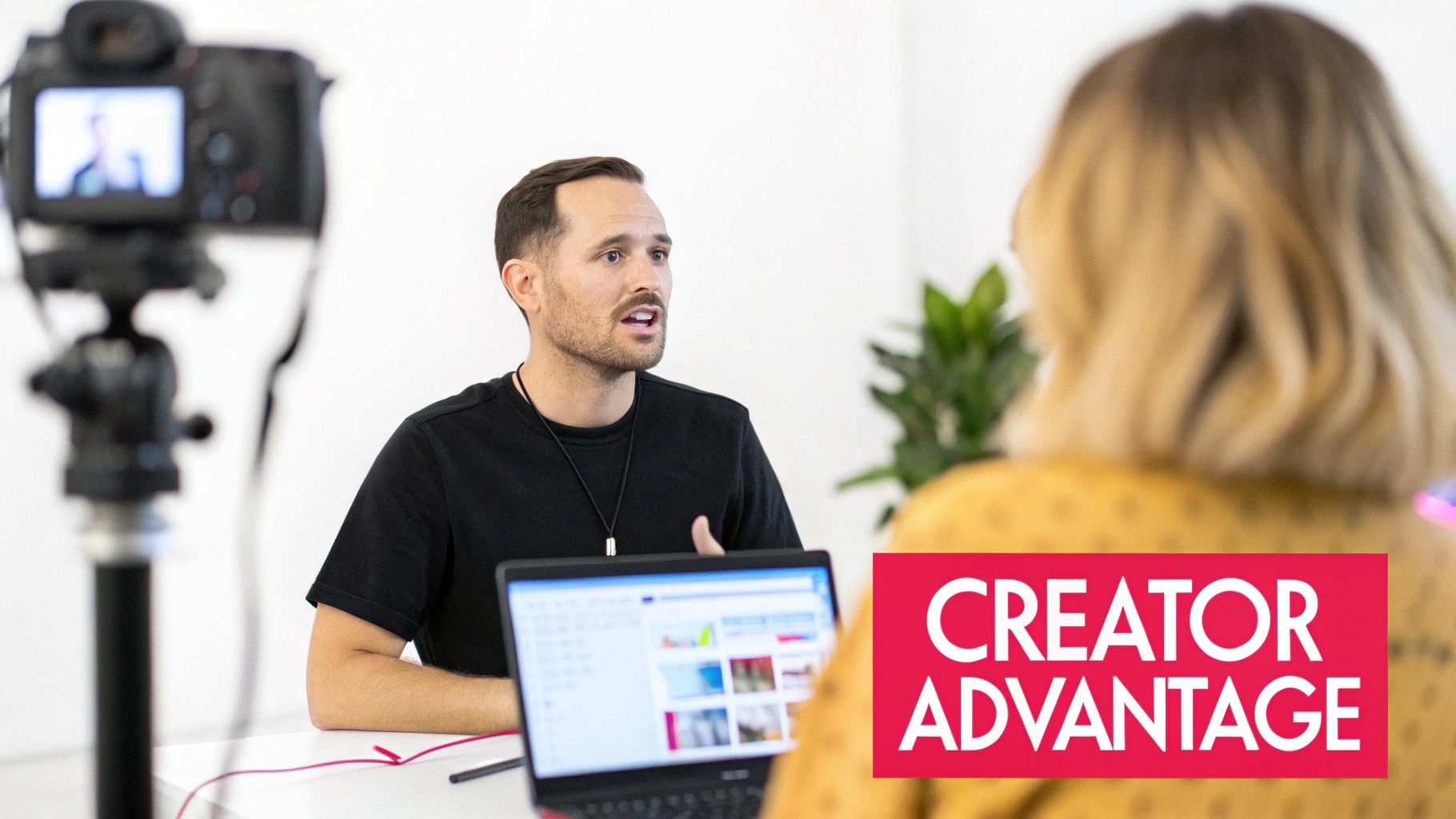
Look, everyone knows influencer marketing is a beast. But YouTube creators bring something special to the table that you just don't get on other platforms. The long-form video format builds a totally different kind of relationship between a creator and their audience—one that’s built on deep trust and authority.
Think about it. When someone subscribes to a channel, they're not just mindlessly following. They're investing their time, sometimes hours of it, watching detailed tutorials, honest reviews, and personal vlogs. This creates a bond that feels less like a paid ad and more like getting a recommendation from a good friend you trust.
The Power of Authentic Connection
That deep level of trust is where the magic happens for brands. A traditional ad interrupts what people are doing. A creator's endorsement, on the other hand, becomes part of the experience. It's seamless, and that means you get a much more engaged and receptive audience. Instead of being another company shouting for attention, you become part of a conversation people actually want to be in.
The numbers don't lie. Influencer marketing has exploded into a global industry, estimated to be worth $32.5 billion. YouTube is a huge piece of that pie, with 37% of brands worldwide actively using the platform to run their campaigns.
Strategic Impact Beyond Follower Counts
Working with YouTube creators is about so much more than just getting in front of a big audience. It’s about tapping into laser-focused, highly engaged communities.
- Micro-Influencers (10k-100k subscribers): These creators are gold for niche products. They often have fiercely loyal communities with off-the-charts engagement rates.
- Macro-Influencers (100k-1M+ subscribers): These folks offer the best of both worlds—serious reach combined with established credibility that can drive massive brand awareness.
The right YouTube partnership isn't just a quick promotional hit. It's a strategic play to build real, lasting brand affinity. An authentic endorsement from a trusted creator can stick with an audience long after the campaign is over.
To really get a feel for the creator landscape and spot those with serious growth potential, it pays to do your homework. Digging into profitable YouTube channel ideas for growth can give you a massive leg up. It helps you appreciate the hustle and strategy behind a successful channel, which in turn helps you find partners who aren't just popular now, but are building something sustainable that aligns with your own long-term goals. Done right, these collaborations become a rock-solid part of your entire marketing strategy.
Defining Your Ideal Creator Persona
Before you even think about typing a keyword into a search bar, the real work begins. Finding the right YouTube influencer isn't some random scrolling exercise; it’s about knowing exactly who you're looking for. This is where building an "Ideal Creator Persona" becomes your single most important tool.
Think of this persona as the compass for your entire search. It's a detailed profile that digs so much deeper than simple metrics like subscriber counts. Nail this process, and your search becomes focused, efficient, and ultimately leads you to partners whose content feels like a natural extension of your own brand.
Beyond Follower Counts: Brand Values and Content Style
First, you have to look inward. What does your brand actually stand for? If your company is all about sustainability and ethical production, partnering with a creator famous for flashy, fast-fashion hauls is going to create an instant disconnect for both audiences. The goal here is genuine alignment, not just exposure.
Start by outlining the core characteristics that truly matter.
- Brand Ethos: Are you playful and funny, or are you more educational and authoritative? A creator's personality needs to complement yours. When it doesn't, the sponsored content feels jarring and out of place to their audience.
- Content Style: Do you need someone who can create in-depth tutorials, quick-fire product reviews, or aspirational lifestyle vlogs? Pinpoint the exact format that will make your product shine.
- Production Quality: You also need to consider the level of polish you're after. A scrappy, authentic "shot-on-an-iPhone" style might be perfect for one brand, while another might require high-production, cinematic visuals to match its premium feel.
A killer partnership happens when a creator’s values and style align so perfectly with your brand that the sponsored video feels just as authentic as their usual uploads. It shouldn't feel like an ad break; it should feel like a genuine recommendation from a trusted friend.
For instance, a company selling high-end, technical hiking gear would build a persona around a creator who produces rugged, well-researched outdoor adventure content—not a city-based vlogger who goes for a casual walk once in a while. This kind of initial filtering will save you countless hours down the road.
Pinpointing the Right Audience Demographics
Once you've defined the creator's vibe, the next layer is their audience. Remember, you aren't just partnering with a person; you're tapping into their entire community. If their followers don't match your target customer, even the most incredible creator won't move the needle.
It's time to get specific with the audience demographics you're looking for.
- Location: Is your product only available in North America? A creator with a mostly European or Asian audience is a non-starter, no matter how big their channel is.
- Age and Gender: Who is your ideal customer? Hunt for creators whose audience analytics mirror that profile. A 90% male audience just won't work if you're selling a female-focused skincare line.
- Interests: What else is their audience into? Certain tools can reveal if their followers also love gaming, cooking, or fitness, which can help you find some really powerful cross-niche opportunities.
Identifying Healthy Engagement Metrics
Finally, your persona needs to include benchmarks for a healthy, thriving community. Big subscriber numbers can be incredibly misleading if the audience is full of ghosts. Real engagement is the true sign of an influential voice.
Keep an eye out for these key signals of a healthy channel:
- Consistent View Counts: Do their videos consistently pull in a solid number of views relative to their subscriber base? A channel with 500k subscribers that only gets 10k views per video is a major red flag.
- Meaningful Comments: Look past all the "Great video!" comments. Are people asking genuine questions, starting discussions, or sharing personal stories? That's the stuff that shows you have a highly invested audience.
- Positive Sentiment: Is the comment section generally positive and supportive? A toxic, spam-filled comment section reflects poorly on the creator and, by extension, any brand they decide to partner with.
By building out this detailed persona first, you transform your search from a wild guessing game into a targeted mission. You'll know exactly who you're looking for, what red flags to avoid, and how to find YouTube influencers who can become true champions for your brand.
Alright, you’ve got your ideal creator persona sketched out. Now for the fun part: the hunt. Finding the right YouTube creators is less about stumbling upon them and more about a strategic search, blending old-school manual digging with the power of modern platforms. The goal is to turn that persona into a real list of partners who can actually get your brand in front of the right eyeballs.
Let's be real, the sheer size of YouTube can feel like you're trying to find a needle in a haystack. We're talking about roughly 69 million creators worldwide, broadcasting in over 80 languages across 100+ countries. It’s massive. According to netinfluencer.com's breakdown of YouTube's global culture, your ideal partner is definitely out there. You just need a solid game plan to find them.
This is where a methodical approach saves the day. We'll walk through the two main paths you can take: getting your hands dirty with manual discovery and then leveling up with platform-based searching.
Getting Your Hands Dirty with Manual Searches on YouTube
Before you even think about paying for a tool, you need to spend some time on YouTube itself. This is non-negotiable. It’s free, and it’s the best way to develop a gut feeling for the content, the conversations, and the creators who are actually resonating with audiences in your niche.
Start by searching like your customers would. If you’re selling a high-end espresso machine, don't just type in "coffee influencer." That's too broad. Instead, try "best espresso puck prep" or "Breville vs. Profitec review." This gets you directly into the world your audience lives in.
Once you've got the basics down, here are a few pro-level tactics:
- Spy on Your Competitors: This is my favorite trick. Search for things like "[Competitor Brand] sponsored" or "[Competitor Brand] review." It’s a goldmine. You’ll instantly see which creators are already doing brand deals in your space and, more importantly, how their audiences react to them in the comments.
- Use Hashtags Strategically: Don't just search for your niche keywords. Combine them with hashtags like
#ador#sponsored. A search for#skincare #ad, for example, cuts right to the chase, showing you creators with a proven track record of partnerships. - Keep an Eye on "Creators on the Rise": Pop over to YouTube's Trending tab and look for this section. It’s a great way to spot emerging talent with super-engaged communities before they get swamped with offers from other brands.
The real magic of manual searching isn't just about compiling a list. It's about understanding the culture. You get to see how a creator talks about a sponsored product, read the raw, unfiltered audience comments, and just get a sense of who genuinely feels like a good fit for your brand’s voice.
This whole process circles back to building out that creator persona. You start with what your brand values, which helps you define your audience, and that, in turn, tells you exactly what kind of content style you should be looking for.
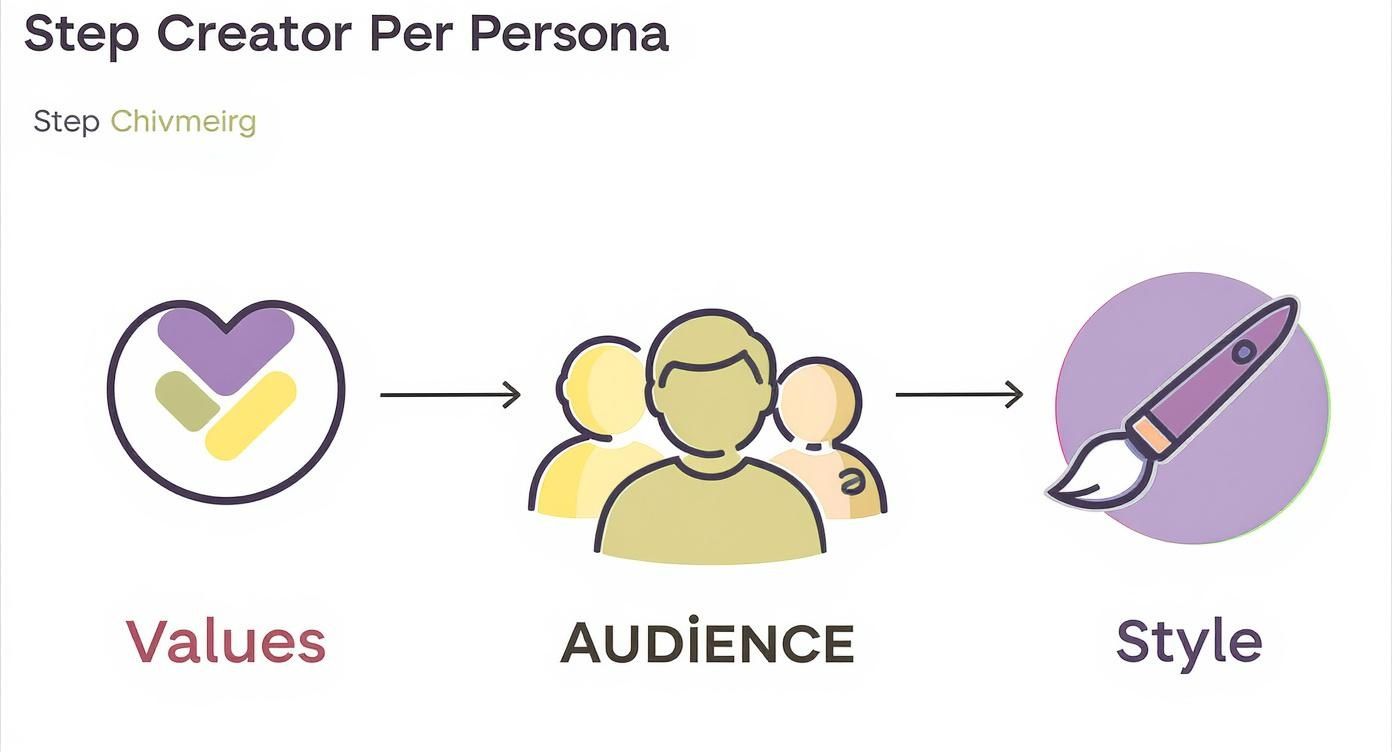
This simple flow is everything. Nail your values first, and the rest of the discovery process becomes so much clearer.
Leveling Up with Influencer Discovery Platforms
Manual searching is essential for getting a feel for the landscape, but it’s a grind. It doesn't scale. When you’re ready to move faster and make decisions backed by hard data, it’s time to bring in an influencer discovery platform.
Think of platforms like JoinBrands as a specialized search engine for creators. Instead of just guessing, you can slice and dice a huge database of creators using the exact criteria from your persona.
Let’s say you’re launching a new line of eco-friendly yoga mats. With a platform, you could filter for:
- Creators in the "Yoga & Wellness" category.
- An audience that's primarily 70% female, aged 25-45, in North America.
- Channels with an average engagement rate above 4%.
- Creators who have never worked with a direct competitor.
That level of precision is something you’ll just never get from a manual search alone. It saves you dozens of hours and surfaces high-quality candidates you might have missed completely. Plus, the ability to vet audience demographics is a game-changer—it ensures you’re not just reaching people, but the right people. You can see how different platforms compare in our guide to the top influencer marketing tools.
To give you a better idea of how these different methods stack up, here’s a quick comparison.
Comparing Influencer Discovery Methods
Choosing how to find your next YouTube partner depends on your resources, timeline, and goals. There's no single "best" way; it's about picking the right tool for the job. This table breaks down the pros and cons of the main approaches to help you decide what's right for your campaign.
| Method | Pros | Cons | Best For |
|---|---|---|---|
| Manual YouTube Search | Free, great for understanding niche culture, helps you find hidden gems. | Time-consuming, not scalable, hard to verify audience data without extra tools. | Brands on a tight budget, initial research phase, or finding a handful of highly-specific creators. |
| Influencer Platforms | Highly efficient, data-rich filters, scalable, streamlines the entire workflow. | Subscription cost, can feel impersonal if you don't do your own final vetting. | Brands needing to find many creators quickly, data-driven campaigns, and managing multiple partnerships. |
| Agency Partnership | Completely hands-off, leverages expert relationships and negotiation skills. | Most expensive option, you lose some direct control over the creator relationship. | Large brands with significant budgets who need to run campaigns at scale without in-house resources. |
Ultimately, the most successful strategies often blend the intuitive insights from manual searching with the data-driven efficiency of a platform.
The Hybrid Approach: Your Best Bet for Finding the Perfect Creator
The smartest marketers don't choose one method over the other. They combine them.
Here’s a workflow that gives you the best of both worlds:
- Explore Manually First: Carve out an afternoon to just browse YouTube. Search your keywords, check out your competitors' tagged videos, and get a feel for the conversation. Make a short list of 3-5 "dream" creators who perfectly embody your brand.
- Use Your "Dream" Creators to Find Lookalikes: Take the names from your dream list and plug them into a platform's lookalike or similarity search feature. This will instantly give you a much larger pool of creators who share a similar audience and content style.
- Filter with Precision: Now, apply your persona's specific demographic and performance filters to this bigger list. Whittle it down to a manageable shortlist of your top 10-15 candidates who are a perfect match on paper.
- Do a Final Gut Check: Before you hit "send" on that first outreach email, go back to YouTube. Watch a few recent videos from everyone on your shortlist. Does their personality really shine through? Does their tone match your brand? This final human check ensures the creator who looks great in the data also feels right.
By blending these approaches, you get the speed and data of a platform without losing the crucial, human insight that leads to truly authentic partnerships. This is how you find YouTube influencers who don't just check a box—they become genuine advocates for your brand.
How to Vet Creators and Spot Red Flags
So you've built a solid shortlist of potential creators. Great! Now the real work begins. Finding someone who looks good on paper is just the first step; the due diligence you do now is what protects your brand and your budget.
Trust me, a flashy subscriber count means absolutely nothing if their audience is a ghost town or their past content is a minefield of brand safety risks. Rushing this stage is one of the biggest mistakes I see brands make.
This is all about digging deeper than surface-level metrics to make sure any partnership will feel authentic, connect with the right people, and actually deliver a return.
Look Beyond the Follower Count
First things first, you have to analyze the numbers that actually matter. Big vanity metrics like total subscribers are often misleading and don't tell you much about a channel's real health. Your focus should be on genuine community interaction and how their content truly performs.
A creator’s engagement rate is a much more reliable signal of their influence. This simple metric—usually calculated as (total likes + comments) / views—shows you what percentage of their audience is actually paying attention. A healthy engagement rate is a sign of a loyal, active community. And that’s exactly who you want to reach.
A creator with 50,000 subscribers and a 5% engagement rate is almost always a better bet than one with 500,000 subscribers and a 0.5% engagement rate. The first has a real community; the second might just have a lot of dormant accounts.
Analyze Audience Demographics and Authenticity
You need to know for sure that you're reaching your target customer. Most good influencer platforms will give you detailed audience analytics, but don't be afraid to ask the creator directly for a screenshot of their YouTube Studio demographics.
Here’s what to zero in on:
- Geographic Location: Is their audience located in countries where you actually sell your product? A huge following in India is useless if you only ship within the United States.
- Age and Gender: Does their core audience match your ideal customer profile? If there's a major disconnect, your message is going to fall flat.
- Follower Growth Patterns: Look for a steady, organic growth curve. Sudden, massive spikes overnight can be a huge red flag that they’ve bought followers. Authentic growth is almost always gradual.
This is especially important on a platform as massive as YouTube. With roughly 2.70 billion monthly active users, you need to be sure a creator's influence is concentrated in the right segment of that global audience.
Scour Their Content and Comments
Now it’s time to get your hands dirty with a qualitative review. Go back to their channel and watch at least five to ten of their recent videos. Make sure to include any past sponsorships. This manual check is where you’ll spot the red flags that data alone can't reveal.
To speed this up, you can grab YouTube video transcripts to quickly scan for keywords, themes, and anything that might be a brand safety concern.
Here’s a quick checklist of what to look for:
- Brand Alignment: Does their tone, language, and overall style fit your brand’s image? If you’re a family-friendly company, a creator who swears constantly is an obvious no-go.
- Comment Sentiment: Dive into the comments. Are people having real conversations? Is the feedback positive? Or is the section overrun with spam, bots, or negativity? The comment section is a direct window into the health of their community.
- Past Sponsorships: How did they handle previous brand deals? Did the integration feel natural and authentic, or was it a clunky, robotic ad read? You want to partner with creators who genuinely seem to like the products they promote.
When you combine this kind of deep dive with solid data analysis, you shift from hoping for a good fit to knowing you've found one. This careful vetting process is the foundation of every successful, high-ROI collaboration.
Crafting Outreach That Actually Gets a Reply
So you've vetted a creator and confirmed they’re a fantastic fit for your brand. Now comes the moment of truth: the first contact.
Let's be real—top-tier creators get dozens of partnership requests every single day. Most of them are generic, impersonal, and get deleted on sight. Your message has to be the one that breaks through all that noise.
This isn’t about just blasting out another email; it's about starting a real conversation. A solid first message shows you respect their work, clearly explains the value for them, and makes it dead simple for them to say "yes."
The Subject Line: Your First (And Only) Impression
Before a creator even reads your pitch, they see your subject line. This is your one shot to actually get the email opened.
Generic titles like "Collaboration Opportunity" or "Partnership Inquiry" are the fastest way to get your email trashed. They practically scream "mass email." You have to do better.
Your subject line needs to feel personal and intriguing. A little bit of customization goes an incredibly long way.
- Bad Example: "YouTube Collaboration"
- Good Example: "Love your video on cold brew, [Creator Name]!"
- Great Example: "Partnership Idea for [Your Brand] x [Their Channel Name]"
The goal here is to prove you’re a human who has actually watched their content, not some bot scraping for email addresses. Using their name or channel name is the bare minimum. Referencing a specific piece of their work? That's how you stand out.
The Anatomy of a Winning Outreach Email
Once they open the email, the first couple of lines are make-or-break. You need to prove you’ve done your homework and aren’t just another brand looking for a quick promo.
A well-structured email makes it easy for them to figure out who you are, what you want, and why it's a great fit for them and their audience.
This simple structure is one I've seen get replies time and time again:
The Genuine Compliment: Start by mentioning a specific video you enjoyed and why you liked it. "I loved your recent review of the XYZ camera; the way you explained its low-light performance was super helpful." This immediately shows you're a fan, not just a marketer.
The Quick Intro: Briefly introduce your brand and what you do. Keep it to one or two sentences, max. "I'm with [Your Brand], and we make sustainable outdoor gear for adventurers."
The Value Proposition: This is the heart of your message. Clearly and concisely explain why a partnership makes sense. Crucially, focus on the value for their audience. "Since your audience is passionate about eco-friendly travel, we thought our recycled backpacks would be a perfect fit for your upcoming hiking series."
The Clear Ask: Don't be vague or beat around the bush. State exactly what you have in mind. Are you offering a free product for a review, a paid dedicated video, or maybe an affiliate partnership? "We'd love to send you one of our backpacks to feature in a video, with no creative restrictions from our side."
The Easy Next Step: End with a clear, low-friction call to action. Make it easy for them. "If this sounds interesting, just let me know, and I can share more details. No pressure at all!"
The best outreach feels less like a business proposal and more like a conversation starter between two professionals who respect each other's work. Keep it concise, personal, and focused on mutual value.
Persistent Follow-Up Without Being Annoying
Creators are busy people. Their inboxes are a battlefield. Sometimes, even a great email just gets buried. A polite follow-up is often what it takes to get noticed, but there’s a fine line between persistence and being pushy.
My rule of thumb is to wait about 5-7 business days before sending a gentle follow-up.
A simple reply to your original email is perfect. Something like, "Hey [Creator Name], just wanted to gently bump this in your inbox in case you missed it. Let me know if you have any questions!" works wonders. If you don’t hear back after a second follow-up, it’s usually best to move on.
This approach respects their time while giving your proposal the best possible chance to be seen. For more templates and strategies, our comprehensive guide to influencer marketing outreach dives even deeper into nailing this process.
Common Questions About Finding Influencers
Once you start diving into the world of YouTube partnerships, a lot of questions pop up. Things like budgets, what to expect, and how to tell if it's even working can feel a bit overwhelming at first.
Getting a handle on these points from the get-go is the best way to build a campaign that actually gets results. Let's walk through some of the most common things brands ask when they're ready to find YouTube influencers.
How Much Should I Expect to Pay a YouTube Influencer?
This is always the first question, and the honest-to-goodness answer is: it really, really depends on the creator. The cost can be anything from sending them a free product to cutting a five-figure check for a single video.
A creator's price tag is a mix of their influence, how loyal their audience is, and the niche they're in. It's so much more than just a subscriber number.
Here’s a rough guide to give you a better idea of the landscape:
- Micro-Influencers (10k-50k subscribers): These creators are often the most flexible. Many are thrilled to work in exchange for a free product, while others might ask for a few hundred dollars for a quick mention. They're an absolute goldmine for niche products and brands working with a tighter budget.
- Mid-Tier Creators (50k-500k subscribers): This is where you start to see a real jump in rates. A dedicated video from a creator in this tier can run anywhere from $1,000 to $10,000. The final price will hinge on things like their average views and how active their comment section is.
- Macro-Influencers (1M+ subscribers): Getting into a partnership with top-tier talent is a serious investment. You're often looking at fees starting in the tens of thousands for just one sponsored video, which reflects their massive audience and higher production value.
A key thing to remember is that a creator with a smaller, super-engaged community can often drive a much better return than a huge channel with a passive audience. Always prioritize engagement and audience fit over raw subscriber numbers.
What Is the Difference Between a Sponsored Video and an Affiliate Deal?
Knowing what kind of partnership you’re after is super important because it shapes everything from how you pay the creator to what your goals are. They might both be collaborations, but they work in completely different ways.
A sponsored video is a straightforward deal. You pay a flat, pre-agreed fee for a specific piece of content, like a full product review or a 60-second integration in their weekly vlog. The main goal here is usually brand awareness—getting your name in front of a whole new audience, fast.
An affiliate partnership, on the other hand, is built for the long haul and is all about performance. Instead of an upfront fee, the creator earns a commission on every sale they drive using their unique discount code or trackable link. This model is laser-focused on generating sales and gives the creator a real reason to keep promoting your product authentically over time.
How Can I Measure the ROI of a YouTube Campaign?
You absolutely have to measure your return on investment, but how you measure it comes down to what you wanted to achieve in the first place. You need to decide what a "win" looks like before the campaign even goes live.
- For Brand Awareness: Keep an eye on metrics like total views, impressions, and how often your brand gets mentioned on social media after the video drops.
- For Engagement: Look for a bump in likes, comments, and new subscribers to your brand’s own YouTube channel during the campaign.
- For Direct Sales: This is the easiest one to track. Give each influencer their own unique, trackable link (UTM parameters are your friend here) or a custom discount code. This lets you see exactly how much website traffic, how many leads, and how much revenue came directly from their video.
To get a crystal-clear ROI, just take the total revenue generated from their link or code and compare it to what you spent on the campaign (creator fees, product costs, etc.). Simple as that.
What Common Mistakes Should I Avoid When Working with Creators?
Even when you find the perfect creator, a partnership can still go south if you're not careful. There are a few common tripwires that can damage a relationship and kill a campaign's momentum.
One of the biggest blunders is handing over a creative brief that’s way too restrictive. These creators built their audience for a reason—they know what works. If you try to control every word they say, you’ll end up with a video that feels like a bad infomercial and completely flops.
Another major pitfall is getting hypnotized by big subscriber numbers and ignoring what really matters: genuine engagement and a true brand fit.
And finally, never, ever skip the contract. Getting everything in writing—deliverables, content usage rights, payment terms—is non-negotiable. It protects both you and the creator and prevents awkward misunderstandings later. The best partnerships feel like a true collaboration, not just a transaction.
Ready to find YouTube influencers who can drive real results for your brand? With JoinBrands, you can access a network of over 250,000 vetted creators and use powerful AI-driven tools to find the perfect match for your campaign. Streamline your entire workflow—from discovery and outreach to content approval and payment—all on one simple platform. Start your campaign today!