
 Your Guide to Designing a High-Engagement TikTok Video Template in 2026
To really connect with Gen Z, you have to throw out the old marketing playbook. This isn't about shoehorning the latest slang into an ad; it's a complete shift in how brands communicate, period. It means swapping polished perfection for radical transparency, purpose-driven action, and authentic co-creation. This generation doesn't just buy from brands—they join them.
Table of Contents
Cracking the Code of the Gen Z Consumer
First things first: you have to get inside their heads and understand their unique worldview. Born between the late 1990s and early 2010s, Gen Z are the first true digital natives. They didn't just grow up with smartphones and social media; these things are extensions of their reality.
This constant connectivity has produced a consumer who is incredibly sharp, naturally skeptical, and has a built-in radar for anything that feels fake.
Unlike Millennials who watched social media unfold, Gen Z has never known a world without it. That's not a small detail—it's everything. A Millennial might still appreciate a slick, well-produced ad. But a Gen Z consumer? They're far more likely to trust a raw, unedited video from a creator they follow or a piece of user-generated content from a friend.
Core Values That Drive Purchase Decisions
If you want your brand to click with Gen Z, you have to align with what they actually care about. They aren't just looking for a cool product; they're doing a full background check on your brand's entire ethical footprint. It’s critical to move past the stereotypes and understand the principles that genuinely motivate their choices.
Three pillars consistently define what they expect from brands:
- Authenticity and Transparency: Gen Z can smell a phony a mile away. They're drawn to lo-fi, unfiltered content that feels real, not a hyper-produced commercial. Brands that own up to their mistakes and talk openly with their audience are the ones that build lasting trust.
- Social and Environmental Consciousness: This generation expects brands to have a backbone and take a stand. Staying silent on major social or environmental issues is often seen as being complicit. They'll put their money where their values are, actively supporting companies committed to diversity, inclusion, and sustainability.
- Community and Co-creation: Gen Z doesn't want to be talked at; they want to be part of the conversation. They gravitate towards brands that build real communities, actually listen to feedback, and give them a role in the creative process itself.
The Economic Powerhouse You Can't Afford to Ignore
Let's be clear: understanding these values isn't just a "nice-to-have" branding exercise; it's a financial imperative. To truly crack the code, you need a deep, nuanced view of this audience, which all starts with solid market segmentation.
Gen Z's spending power is already a massive force, estimated at $360 billion in the US alone. And it's only getting bigger, projected to hit a staggering $12 trillion globally by 2030.
To give you a clearer picture, here’s a quick rundown of what defines their consumer behavior.
Gen Z Consumer Snapshot at a Glance
| Statistic | Key Finding | Implication for Brands |
|---|---|---|
| 82% trust a company more if it uses images of real customers in its ads. | Authenticity is paramount. Polished, unrelatable ads don't land. | Prioritize user-generated content (UGC) and creator partnerships over traditional advertising. |
| 73% are willing to pay more for products from sustainable brands. | Purpose drives profit. Gen Z invests in brands that align with their ethical values. | Make sustainability and social responsibility core to your business, not just a marketing campaign. |
| 61% prefer short-form video content (under 1 minute). | Attention spans are short, and the preferred format is quick, engaging video. | Focus content strategy on TikTok, Instagram Reels, and YouTube Shorts. |
| 48% say brands should be funny on social media. | Entertainment is a key driver of engagement. Gen Z wants to connect, not be sold to. | Inject humor and personality into your brand voice; don't be afraid to be playful. |
| 76% of Gen Z consumers have purchased a product after seeing a brand's social media post. | Social media is the new storefront. It's a primary channel for discovery and conversion. | Invest in a robust, multi-platform social media strategy that is both engaging and shoppable. |
These numbers paint a clear picture: marketing to Gen Z requires a fundamental shift in approach, moving from broadcasting a message to building a genuine connection.
Gen Z doesn't just want to buy your products; they want to believe in what your brand stands for. Purpose is the new product, and community is the new loyalty program.
Building a brand that truly resonates means you have to be constantly listening. For a more detailed guide on how to identify and understand your audience on key platforms, check out our deep dive on social media audience analysis. This foundational work will help you reframe your thinking and see Gen Z not as a target demographic, but as genuine partners in building a more authentic and impactful brand.
Finding Gen Z in Their Native Digital Habitats
If you want your brand to resonate with Gen Z, you have to meet them where they live. And they live online. But this isn't about just logging on and off; for them, it's a completely fluid digital ecosystem where community, entertainment, and shopping all blend into one. Thinking just in terms of "platforms" is way too simple. You need to understand their digital habitats—the specific online environments and content formats that shape their entire social lives and buying decisions.
Forget the old idea of one dominant social media site. While TikTok is definitely a major player, Gen Z’s attention is spread across a whole portfolio of apps, and each one serves a different purpose in their day.
It’s a multi-step journey. They might discover a new skincare trend on TikTok, jump into Instagram DMs to talk about it with friends, watch a creator’s deep-dive review on YouTube, and then join a niche community on Discord to go all-in on their new passion. This means your brand can't just show up in one place; you need a presence that makes sense across all these different spaces.
This diagram breaks down the three core values—authenticity, community, and purpose—that really drive how Gen Z acts and spends across every single one of their digital interactions.
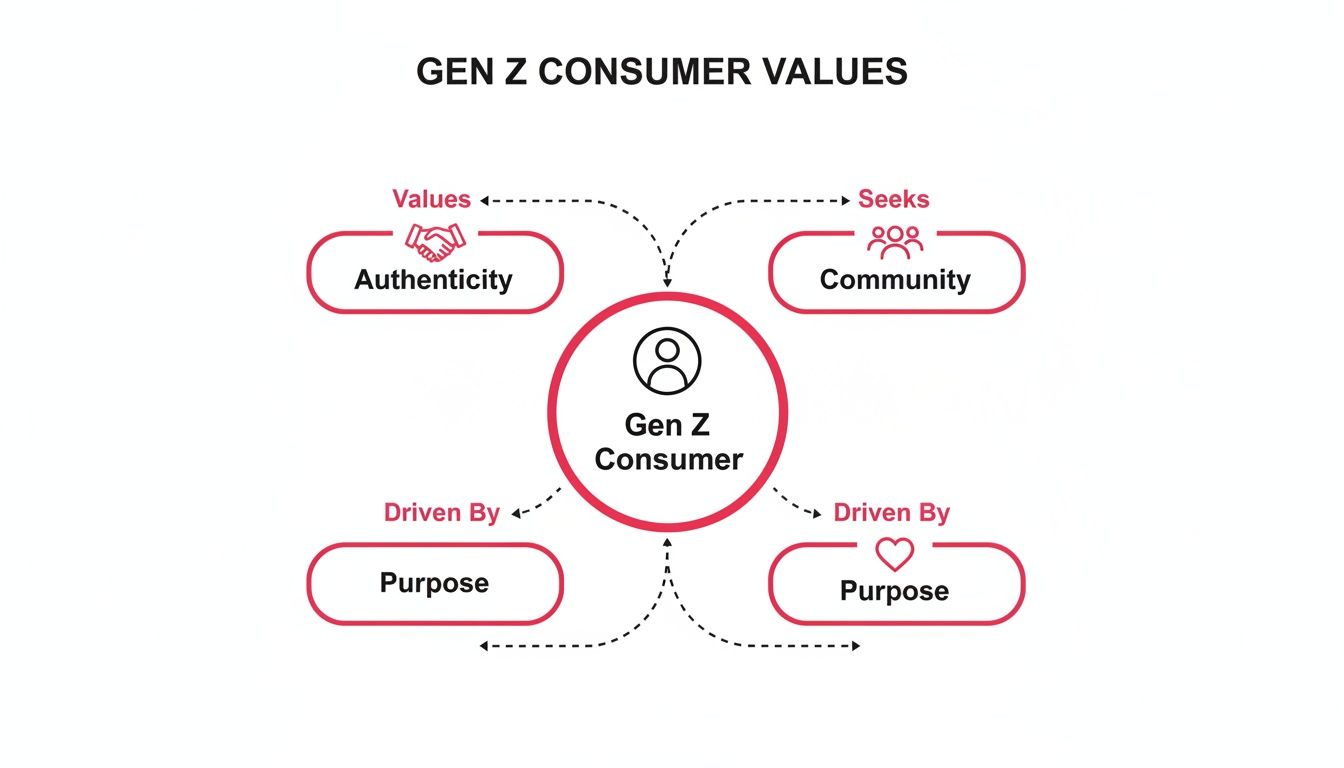
What's clear is that these values are all connected. A winning platform strategy has to deliver on all three fronts, all the time, or it just won’t feel real to them.
The Reign of Short-Form Video
Let’s be clear: the undisputed king of content for Gen Z is short-form video. It's not just another format; it's practically their native language. Platforms like TikTok, Instagram Reels, and YouTube Shorts have become the main engines driving culture and commerce, with a massive 61% of Gen Z saying they prefer video content that’s under one minute.
So, why is it so powerful? Short-form video is built for raw, unpolished, and relatable moments. It’s way less about slick, cinematic production and much more about capturing a genuine feeling, a hilarious skit, a truly useful hack, or an honest review. This lo-fi vibe is a perfect match for their demand for authenticity. Plus, the algorithm-driven feeds on these apps serve up content based on interests, not just who you follow, which creates a constant stream of new discoveries.
For Gen Z, scrolling through TikTok isn't just killing time; it's active discovery. They’re constantly being introduced to new ideas, products, and communities in a way that feels organic and fun, not like a sales pitch.
This is exactly where brands can win big, but only if they play by the unwritten rules. A hard-sell, corporate-style ad gets scrolled past in a split second. Success comes from making content that feels like it belongs on the platform—content that entertains, teaches, or inspires first, and sells second.
Beyond the Scroll: Immersive and Community-Centric Formats
While a 30-second video is great for grabbing their attention, deeper engagement happens in more interactive and community-driven spaces. Understanding these is the key to building real, lasting relationships with this generation.
Here's where Gen Z is spending their time when they're not just scrolling the main feed:
- Livestreaming: Platforms like Twitch, YouTube Live, and TikTok Live offer a real-time, unscripted connection that Gen Z loves. They use livestreams to just hang out with their favorite creators, get a behind-the-scenes look at brands, and join live shopping events that feel more like a fun community hangout than a transaction.
- Ephemeral Content (Stories): Instagram and Snapchat Stories are the perfect place for casual, day-in-the-life updates. Because the content disappears, it encourages less polished and more spontaneous sharing, which Gen Z sees as way more authentic. Features like polls, Q&As, and quizzes are huge because they turn passive watching into a real two-way conversation.
- User-Generated Content (UGC): This might just be the most powerful format of all. UGC is the digital version of a recommendation from a friend you trust. When Gen Z sees real people—not paid actors or models—using and loving a product, it builds an incredible amount of social proof. In fact, a staggering 82% of Gen Z trust a company more if it uses photos and videos from real customers in its ads.
By leaning into these different formats, your Gen Z branding strategy goes from just being on a platform to becoming an active, valued member of the communities that call it home. This is how you stop being just another advertiser and start becoming a brand they actually want in their feed.
Crafting a Brand Voice Gen Z Actually Trusts
When it comes to Gen Z, authenticity isn't just a nice-to-have. It’s the price of admission. This generation has an incredibly sharp radar for anything that feels forced, overly corporate, or just plain fake. Building a brand voice they actually trust means ditching the polished marketing-speak for a personality that's more human, relatable, and consistent.
Think of it this way: you don't make friends with people who only talk in slogans and buzzwords. You connect with people who are funny, maybe a little vulnerable, and have a clear point of view. The same exact logic applies to your brand's voice in the world of gen z branding.
The Anatomy of an Authentic Voice
An authentic voice isn’t about trying to sound young by throwing slang around. It’s about building a genuine personality that Gen Z actually wants to hang out with. This personality needs to show up consistently everywhere, from your TikTok comments to your customer service emails.
There are three pillars that hold up a trustworthy brand voice:
- Relatable Humor: Gen Z uses humor to connect. It's a core part of how they communicate. Brands that can tap into internet culture and meme formats without looking like a dad at a high school dance can build some serious rapport. It proves you get their world.
- Calculated Vulnerability: Perfection is deeply suspicious. Brands that are transparent about their process, own their mistakes, or show behind-the-scenes struggles feel more real and trustworthy. This isn’t about oversharing drama; it's about being human.
- Clear Values in Action: You have to stand for something. With over 73% of Gen Z willing to pay more for sustainable products, they expect brands to do more than just talk. They want to see you live your values through real actions, partnerships, and company policies.
Nailing down an authentic and consistent brand voice is the foundation for any real connection with Gen Z. This often means defining a clear identity and truly knowing your audience—principles that are highlighted in this modern guide to branding for musicians, which shares great insights on identity and audience growth.
Speaking Their Visual Language
How you look is just as important as what you say. That picture-perfect, airbrushed aesthetic that dominated early Instagram? It's a major red flag for Gen Z. They're drawn to visuals that feel immediate, unfiltered, and real.
For Gen Z, the visual medium isn't just about looking good; it's about feeling real. They prefer content that looks like it could have been created by a friend on their phone, not by a massive corporation in a studio.
To connect on a visual level, your content needs to embrace a few key elements:
- Lo-Fi and Unfiltered Aesthetics: Think less professional photoshoot, more spontaneous smartphone video. This raw, "in-the-moment" style feels more authentic and is far more effective at stopping the scroll than overly produced images.
- Meme Culture Integration: Memes are a fundamental part of Gen Z's communication. Using relevant meme formats shows you’re culturally fluent and lets your brand join the digital conversation in a fun way. Just make sure you’re timely and it actually fits your brand.
- Radical Inclusivity: Representation really matters. Gen Z expects to see the diversity of the real world reflected in your campaigns and imagery. This goes way beyond tokenism—it’s about authentically featuring people of different races, body types, abilities, and gender identities.
From Cringe to Connection
The line between connecting with Gen Z and making them cringe is razor-thin. The secret is to empower, not dictate. When you work with creators, give them a clear brief on the campaign goals and brand values, but then give them the creative freedom to deliver that message in their own voice.
A great creative brief for a Gen Z campaign shouldn't be a rigid script. Instead, it should lay out:
- The Mission: What’s the core feeling or message we need to get across?
- The Vibe: What’s the tone we're aiming for (e.g., funny, educational, heartwarming)?
- The Mandatories: What are the absolute must-haves (e.g., product mention, call-to-action)?
- The Freedom: Where can the creator innovate and be themselves?
When you trust creators to be the bridge to their own community, the content feels native to the platform and true to a voice Gen Z already knows and loves. This collaborative spirit is the key to successful Gen Z branding.
Unlocking Trust Through Creator Collaborations
Let's get one thing straight: for Gen Z, the word "influencer" is already starting to feel a little dated and transactional. They don’t just follow people with huge audiences; they build real connections with creators. Think of them as trusted peers, cultural guides, and the most authentic voices in their online communities.
This isn't just a matter of semantics—it's the core of any successful Gen Z branding strategy. A celebrity endorsement might turn heads for a second, but a genuine creator collaboration is what actually builds trust.
This generation has a built-in radar for promotions that feel forced or scripted. They're far more likely to trust a recommendation from a creator they've followed for months (or even years) than they are to believe a slick, traditional ad. Partnering with the right creator isn't just about renting their audience; it's about earning a real stamp of approval from a source their community already trusts implicitly.

Why Smaller Creators Often Drive Bigger Impact
It’s tempting to chase those massive follower counts, but when you're trying to connect with Gen Z, bigger isn't always better. The creator world is incredibly diverse, from nano-creators with a few thousand followers to mega-stars with millions. And while the mega-creators offer enormous reach, it's often the smaller, niche creators who deliver way more bang for your buck in engagement and trust.
Here’s why focusing on nano and micro-creators can be a total game-changer:
- Sky-High Engagement Rates: Creators with smaller, more dedicated followings have ridiculously high engagement. Their audience feels more like a tight-knit community, which means more comments, more shares, and more genuine conversation around your brand.
- Off-the-Charts Authenticity: These creators just feel more relatable and down-to-earth. A recommendation from them doesn't feel like a paid ad; it feels like getting a tip from a friend who happens to be an expert in something you care about.
- Laser-Focused Niche Audiences: Micro-creators are specialists. They live and breathe their niche, whether it's sustainable fashion, vintage gaming, or vegan skincare. Partnering with them gets your brand directly in front of a highly relevant and incredibly passionate audience.
A mega-influencer can shout your brand's name from a mountaintop, but a micro-creator can whisper it directly into the ear of your perfect customer. For Gen Z, that whisper is often far more powerful.
The Mechanics of a Successful Partnership
Pulling off a creator collaboration that actually resonates with Gen Z is a delicate dance between having a strategy and granting creative freedom. If you come in with a rigid, word-for-word script, it will immediately feel fake and could seriously backfire. The goal here is to co-create, not to dictate.
A winning partnership usually follows a few key steps:
- Vet for Values, Not Just Views: The first move is to find creators whose personal brand and values genuinely line up with yours. Look past the follower counts and engagement metrics. Dive deep into their content, read through their comment sections, and really get a feel for the community they've built.
- Empower Them with Creative Freedom: Give them a clear brief. Outline the campaign goals, key messages, and any necessary disclosures. But after that? Step back and trust the creator to do what they do best. Give them the creative license to weave your product into their content in a way that feels natural to their style and true to their voice.
- Play the Long Game: One-off campaigns can feel cheap and transactional. Building long-term relationships with a handful of creators turns them into true brand advocates. Over time, their audience sees their continued use and love for your product, which serves as a powerful, ongoing endorsement.
This collaborative approach is absolutely essential for creating content that feels organic. The explosion of user-generated content in marketing proves this point perfectly. You can see just how powerful this shift is by exploring the impact of user-generated videos. When you empower creators, they produce content that doesn't just sell a product—it tells a story their audience genuinely wants to hear.
Ultimately, winning at creator marketing for Gen Z means letting go of some control. It’s about recognizing that these creators are the undisputed experts on their own communities. By trusting them to be the bridge between your brand and their audience, you unlock a level of authenticity and credibility that traditional advertising simply can't buy. This approach doesn't just create a campaign; it builds a community.
Measuring What Matters in Gen Z Campaigns
Let's be real: trying to measure a Gen Z campaign with old-school metrics is like trying to explain TikTok to your grandpa. Sure, likes and views look nice on a spreadsheet, but they don’t actually tell you if you’re connecting with anyone.
Think of it this way: a high view count is just people walking past your store window. It's a start, but it doesn't mean a single person is interested in coming inside. For Gen Z, you need to track the signals that show people aren't just seeing your content—they’re interacting with it, saving it, and telling their friends about it.
It’s time to move past the vanity metrics and focus on the KPIs that prove your content is hitting home on a much deeper level.
Moving Beyond Vanity Metrics
First things first: we need to redefine what a successful interaction even looks like. For a generation that lives and breathes community, actions that signal personal value or social currency are infinitely more important than a passive "like."
Here are the metrics that actually matter when you're trying to win over Gen Z:
- Share Rate: This is the ultimate digital compliment. A share means your content was so good, so funny, or so relatable that someone was willing to stake their own social reputation on it. They literally put your brand into their group chat or on their own feed.
- Save Rate: When someone saves your content, they’re bookmarking it for later. This is a massive tell that you provided real value—whether it was a useful how-to, an outfit they want to copy, or a product they genuinely plan to buy. It's a sign of future intent.
- Comment Sentiment: Stop just counting comments and start reading them. Are people asking genuine questions? Are they tagging their friends? Positive, engaged comments show you sparked a real conversation and an emotional connection, which is way more valuable than a sea of fire emojis.
In the world of Gen Z marketing, a single authentic share is often more valuable than a thousand passive likes. It's the digital equivalent of word-of-mouth, and it’s the most powerful currency a brand can have.
These engagement signals paint a much clearer picture of your campaign’s health. To get a complete playbook on what to track, diving into a guide on key content performance metrics will give you a solid framework for proving your work is paying off.
Connecting Engagement to Business Impact
At the end of the day, your branding efforts need to contribute to the bottom line. The great news is that the path from high engagement to actual purchase has never been shorter, thanks to the explosion of social commerce features.
Tracking conversions is how you demonstrate the real, tangible return on investment (ROI) from your campaigns.
- Social Commerce Conversions: Keep a close eye on direct sales coming from features like TikTok Shop and Instagram Shopping. These platforms make it incredibly easy for someone to go from "that's cool" to "add to cart" in seconds, giving you clear, attributable revenue.
- Click-Through Rate (CTR) to Website: If you're not selling directly on social, track how many people are clicking the link in your bio or a creator's post to land on your site. This shows a clear intent to learn more or shop your full collection.
- Coupon Code Redemptions: This is a classic for a reason. Assigning unique discount codes to specific creators or campaigns is a simple and ridiculously effective way to see exactly which partnerships are driving sales.
By combining these deep engagement metrics with hard sales data, you build an undeniable case for your strategy. This approach proves that authentic, creator-led content doesn't just build brand love—it drives real, sustainable revenue.
Avoiding Common Gen Z Branding Pitfalls
Marketing to Gen Z can feel like walking a tightrope. One wrong move and your brand can go from being part of the conversation to being the butt of the joke in a single post. This generation has a finely-tuned radar for anything that feels fake, meaning common marketing mistakes aren't just ignored—they're screenshotted, shared, and called out.
The biggest tripwire for most brands? Trying way too hard. This usually looks like cramming corporate-approved slang into captions, using a meme that died three weeks ago, or awkwardly hopping on every trend without getting the cultural context. Gen Z doesn't want your brand to act like a "cool teen"—they want it to be a competent, self-aware brand that knows who it is and what it stands for.
The Dangers of Being Inauthentic
At the end of the day, most branding failures boil down to a massive gap between what a brand says and what it does. This audience is incredibly savvy at sniffing out hypocrisy, and they have the digital tools to put any inconsistencies on blast for the world to see. This is one of the most critical parts of Gen Z branding to get right.
Common mistakes here usually fall into a few buckets:
- "Brand-splaining": This is the corporate version of mansplaining, where a brand tries to explain Gen Z's own culture back to them. It comes off as condescending and immediately signals you're an outsider looking in, not a genuine participant.
- Performative Activism: Slapping a rainbow on your logo for Pride Month or posting a black square without any real, sustained action is a fast track to losing all credibility. Gen Z expects brands to back up their values with tangible initiatives, like diverse hiring practices, sustainable supply chains, or meaningful donations—not just empty social media gestures.
- Ignoring Community Feedback: Gen Z expects the brands they follow to engage in a two-way conversation. When brands ignore critical comments, delete negative feedback, or just flat-out refuse to address valid concerns, it sends a loud, clear message: they don't actually care what their community thinks.
"For Gen Z, a brand's silence on important social issues is often as loud as a direct statement. They view neutrality as complicity, and they will hold brands accountable for what they choose to ignore."
This means your brand’s reputation is always on the line. Failing to engage with criticism gracefully doesn't just sink a single campaign; it can completely erode the long-term trust you’ve worked so hard to build.
Creator Partnerships Gone Wrong
Working with creators is a pillar of any solid Gen Z branding strategy, but it's an area filled with potential landmines. The most common error is giving creators overly restrictive briefs that completely strip them of their unique voice and style. When a sponsored post sounds like it was written by your legal department, both the brand and the creator lose credibility.
Another major issue is a lack of transparency. If a partnership feels sneaky or the #ad disclosure is buried somewhere no one will see it, it creates immediate suspicion. Gen Z values honesty, and that absolutely includes being upfront about paid promotions.
Finally, failing to properly vet a creator for value alignment is a recipe for disaster. A partnership with someone whose past behavior contradicts your brand's stated values can lead to serious backlash, forcing you into a public relations mess that's nearly impossible to clean up. Ensuring a genuine match from the very start is non-negotiable for protecting your brand.
Gen Z Branding Pitfalls and Solutions
To help you sidestep these common issues, we’ve put together a quick reference table. Think of it as a cheat sheet for keeping your Gen Z engagement authentic and effective.
| Common Mistake | Why It Fails with Gen Z | What to Do Instead |
|---|---|---|
| Forced Slang & Memes | It feels inauthentic and shows a surface-level understanding of the culture. They can spot a "fellow kids" moment from a mile away. | Speak in your own brand voice. If a trend naturally fits, great. If not, sit it out. Focus on being genuine, not trendy. |
| Performative Activism | Empty gestures without real action are seen as exploitative and hypocritical. It erodes trust almost instantly. | Back up your words with tangible action. Talk about your diversity initiatives, sustainability efforts, or community support—and show the receipts. |
| Overly-Scripted Creators | It makes the creator look like a sellout and your brand look controlling. The content loses all of its organic appeal. | Give creators freedom within a flexible brief. Trust them to know their audience and create content that resonates in their own voice. |
| Ignoring Negative Feedback | It signals that you don't value your community's opinions and are only interested in positive reinforcement. | Address valid criticism openly and honestly. Acknowledge mistakes, listen to your community, and show you're willing to learn and adapt. |
| "Brand-splaining" | It's condescending and shows you view their culture as a marketing tactic rather than a real, lived experience. | Participate, don't dictate. Listen to the conversation, learn the context, and find ways to add value without trying to explain their own world to them. |
Ultimately, avoiding these pitfalls comes down to respect. Respect for the intelligence of your audience, respect for the culture you're engaging with, and respect for the creators you partner with. Get that right, and you're well on your way.
Got Questions About Gen Z Branding? We’ve Got Answers.
Trying to connect with Gen Z can feel like learning a new language, but the core ideas aren't as complicated as they seem. It all boils down to being real, inviting them in, and sharing their values.
To cut through the noise, we've tackled some of the biggest questions marketers are asking right now with straight-up, actionable answers.
How Is Branding for Gen Z Different from Millennials?
While you might group them together as "digital natives," the way they experience the internet is worlds apart. Millennials watched the social media world get built; Gen Z was born in it. This makes them incredibly savvy at sniffing out a marketing campaign from a mile away.
Think of it this way: a Millennial might appreciate a slick, polished ad on their Instagram feed. Gen Z? They're far more likely to trust a raw, unedited TikTok from a creator they actually follow. They don't just want to see content; they want to be part of making it.
Branding for Gen Z isn't about broadcasting a message—it's about inviting them to co-create it. They'd rather partner with a brand through a creator they trust than be a passive audience for a traditional ad.
This changes everything. Your goal shifts from pushing a message to building a real community.
What Content Formats Actually Work?
Short-form video is the undisputed champ here. Platforms like TikTok, Instagram Reels, and YouTube Shorts are where you need to be. The key is creating entertaining, relatable stuff that feels like it belongs on the platform—not like a repurposed TV commercial. A staggering 61% of Gen Z prefers video content that’s under a minute long.
But it's not just about short videos. A killer strategy uses a mix of formats to build genuine trust:
- User-Generated Content (UGC): Nothing screams "people actually like this" louder than content from real customers. It's the ultimate social proof.
- Interactive formats: Polls, quizzes, and Q&As on Instagram Stories are perfect for getting them to engage directly with your brand.
- Immersive livestreams: Use these for product drops, behind-the-scenes tours, or "ask me anything" sessions to create a sense of shared experience.
How Can a Brand Seem Authentic Without Trying Too Hard?
This is the million-dollar question. Real authenticity isn't about faking it; it's about proving it through your actions. The second you start forcing slang or jumping on a meme that died last week, you've lost. Instead, show your values, don't just talk about them.
Here’s how to nail it:
- Empower Your Creators: Ditch the rigid scripts. Give them the creative freedom to talk about your product in their own voice.
- Actually Engage: Don't just post and ghost. Respond to comments, listen to feedback, and show your community you're paying attention.
- Be Radically Transparent: Messed up? Own it. Want to explain your pricing or sustainability practices? Do it. Honesty builds trust.
Authenticity isn’t about pretending to be a teenager; it’s about acting like a human. Focus on making genuine connections, and your brand will earn the trust it needs to win over this generation.
Ready to connect with a diverse network of authentic creators who can bring your Gen Z branding strategy to life? JoinBrands provides the tools you need to launch impactful campaigns, from finding the perfect TikTok Shop affiliates to managing user-generated content seamlessly. Start your creator marketing journey today.