
 What Is an Ambassador for a Brand and How to Build Your Program
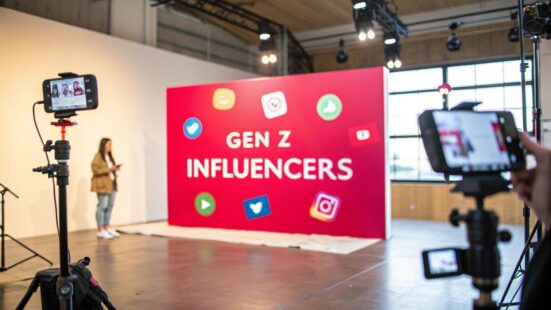
Gen Z influencers are a whole different breed. They're digital natives who completely tore up the old marketing playbook, choosing raw authenticity and community connection over the picture-perfect polish that defined earlier generations. Their influence isn't just a passing trend; it's a massive economic engine built on one simple idea: relatability is the new currency.
Table of Contents
What Makes Gen Z Influencers Tick (And Why You Should Care)
To really get Gen Z influencers, you have to look past the birth years. Unlike their Millennial predecessors who basically invented the curated Instagram aesthetic, Gen Z creators grew up in a world where social media was already the default town square. For them, it’s not about staging a flawless life—it's about sharing a real one.
This is a huge mental shift for any brand trying to connect with this audience. The most valuable thing these creators offer isn't perfection; it's authenticity. We're talking unfiltered "get ready with me" videos, chaotic day-in-the-life vlogs, and meme-heavy humor that feels like an inside joke you share with thousands of their closest friends.
Relatability Is Their Superpower
For Gen Z, an influencer’s worth is tied directly to how genuine and relatable they feel. This generation has a built-in radar for anything that feels fake, and they will tune out instantly if content seems overly scripted or just like a traditional ad. That’s precisely why their recommendations hit so hard.
This dynamic is flipping the marketing world on its head. Gen Z influencers are serious economic drivers, with a staggering 32% of Gen Z consumers making purchases based on what influencers recommend. For comparison, that number is only 21% for Millennials. When you consider that 76% of this generation follows at least one influencer, their sway over everyday buying decisions is impossible to ignore.
Gen Z doesn't want to be sold to; they want to be connected with. Their favorite creators aren't just content producers; they are trusted peers, digital friends, and tastemakers whose opinions feel like advice from someone they know personally.
A New Playbook For Engagement
This laser focus on genuine connection means brands need a totally different approach. You can't just ship a product with a script anymore. To win, you have to embrace the creator’s unique voice and give them the freedom to weave your brand into their world organically. In short, you have to trust that they know their audience better than you do.
The visual below really breaks down the three core pillars that make these creators so effective.
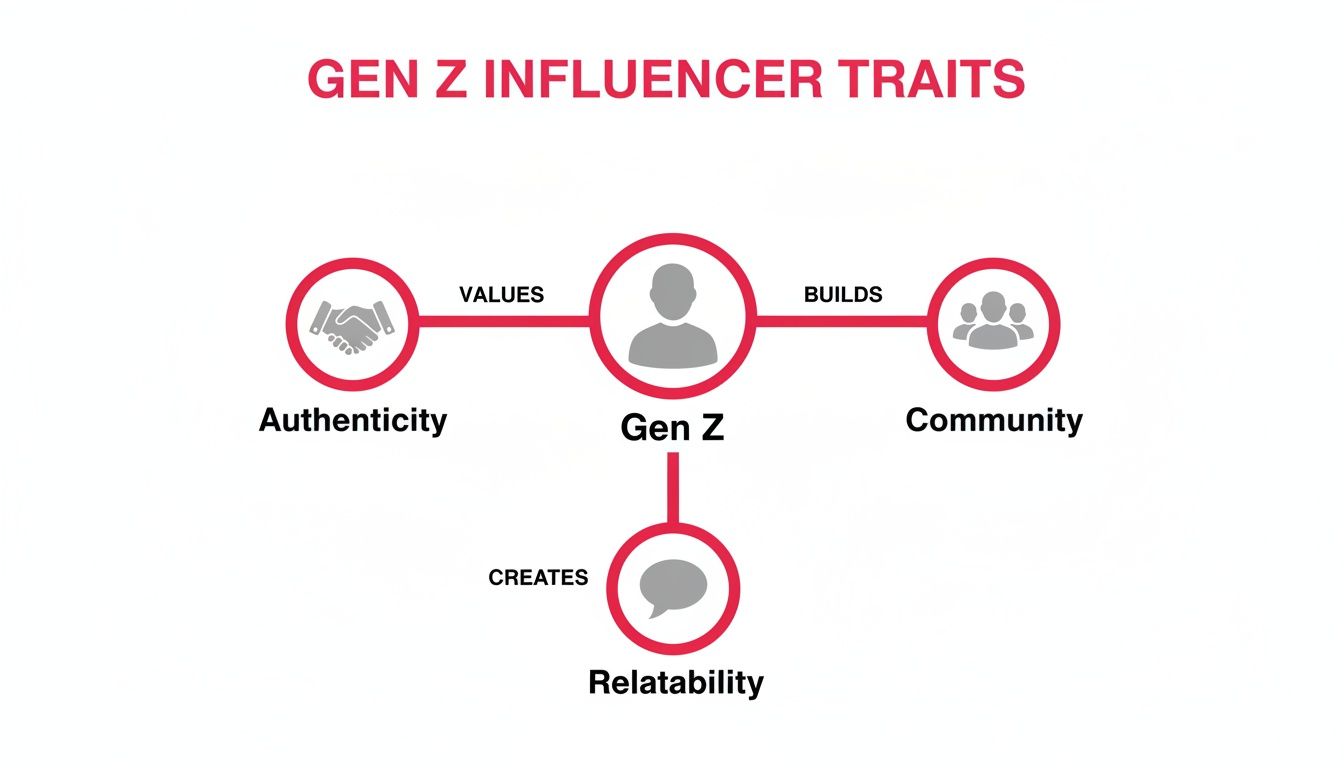
It all comes down to that powerful trifecta: being authentic, building a real community, and creating content that feels deeply relatable.
To really nail your strategy, it's helpful to see how these two generations stack up side-by-side. The differences are pretty stark.
Gen Z vs Millennial Influencers At a Glance
Here’s a quick comparison highlighting the key differences between Gen Z and Millennial creators.
| Characteristic | Gen Z Influencers (Born 1997-2012) | Millennial Influencers (Born 1981-1996) |
|---|---|---|
| Primary Platforms | TikTok, YouTube Shorts, Twitch, Instagram Reels | Instagram (feed-focused), YouTube (long-form), Blogs |
| Content Style | Raw, unedited, lo-fi, chaotic, meme-driven | Polished, aspirational, highly curated, professional |
| Audience Relationship | Peer-to-peer, feels like a digital friend | Aspirational, seen as an expert or role model |
| Authenticity | Values unfiltered reality, behind-the-scenes | Values a perfected, aesthetically pleasing version of reality |
| Brand Collaborations | Expects creative freedom, organic integrations | Often follows brand guidelines, produces campaign-style content |
Seeing the contrast makes it clear that the tactics that worked for Millennials just won't cut it with Gen Z's audience.
Understanding this framework is the first step. Before diving into campaign specifics, it's worth getting inside the mind of a creator to see why they operate this way. Learning how to become an influencer today shows that their path isn't about manufacturing a perfect image—it's about building a community around a shared, authentic reality.
The Digital Playgrounds Where Gen Z Creators Thrive
Before you can really get Gen Z influencers, you have to understand where they live online. These creators don't just use platforms; they inhabit them. Each space has its own digital language, its own culture, and its own rules. Treating all social media as one big blob is the quickest way to launch a campaign that feels totally disconnected.
Think of each platform as having its own personality. TikTok's algorithm is like a frantic talent scout, always hunting for the next big thing and rewarding raw, chaotic creativity over a polished production. Then you have Instagram, which is more like a curated visual diary—a space for aesthetic storytelling and quick updates through Reels and Stories.
The sheer amount of time Gen Z spends on these apps has turned creators into the new gatekeepers of attention. With 89% of Gen Z on Instagram, 84% on YouTube, and 82% on TikTok, their influence is massive. Nearly half of them spend at least four hours a day scrolling, but they're posting less personal stuff themselves. Instead, their feeds are dominated by influencer-led content.
The Reign of Short-Form Video
Let's be clear: short-form video is king. This is Gen Z's native language, and three platforms rule the kingdom: TikTok, Instagram Reels, and YouTube Shorts. They might look the same at first glance, but smart brands know they're very different beasts.
TikTok The Trendsetter: This is ground zero for trends. TikTok’s legendary discovery algorithm means a creator with a tiny following can blow up overnight. For brands, this is your cue to jump on sound-driven trends, launch user-generated content challenges, and create stuff that feels spontaneous, not scripted. If you're ready to dive in, check out our guide on https://joinbrands.com/blog/how-to-find-tiktok-influencers/ to get started.
Instagram Reels The Polished Performer: While Reels definitely follows TikTok's lead on trends, the content often feels a bit more polished and aspirational. Because it’s baked right into the Instagram ecosystem, it’s a killer tool for driving traffic directly to product pages or the link in a creator's bio.
YouTube Shorts The Discovery Engine: Think of Shorts as the ultimate gateway drug to longer videos. A viral Short can funnel millions of new viewers to a creator's main channel, acting as a top-of-funnel magnet to build a loyal subscriber base for their more in-depth content.
Beyond the Scroll: Unscripted and Authentic Spaces
While short-form video grabs eyeballs, the real, deep connections are built on platforms that feel more raw and unscripted. This is where community and genuine trust are built.
Live streaming on platforms like Twitch and YouTube Live is the new town square for Gen Z. Here, creators hang out for hours, sharing unfiltered gameplay, hot takes, or just casually chatting with their audience. That real-time interaction creates an intimate, "we're in this together" vibe that a pre-recorded video just can't match.
For a generation that prizes transparency, ephemeral content is everything. Instagram Stories and platforms like BeReal thrive on showing those in-the-moment, unedited glimpses into a creator's actual life. This reinforces the one thing they value most: authenticity.
This unfiltered vibe is what builds trust from the ground up. For new creators trying to find their footing, a Youtube Channel Idea Generator can be a great way to brainstorm content ideas that feel natural to these platforms.
At the end of the day, understanding these different digital playgrounds is the key. It’s how you craft campaigns that don't just interrupt the conversation, but actually become a welcome part of it.
Finding and Vetting Authentic Gen Z Partners
Alright, let's get practical. Finding creators who actually vibe with your brand is where the magic happens. A great Gen Z influencer can give you a direct line to a super-engaged community, but you won't find them by just searching hashtags and sorting by follower count. The mission is to find partners, not walking billboards.
Think of it like casting a movie. You wouldn't hire an actor just from their headshot, right? You’d check out their past work, see their range, and make sure they nail the character's spirit. The same goes for influencers. Follower count is just a surface-level metric; the real value is in the conversations they start, the community they’ve built, and the authenticity of their voice.
Moving Beyond Basic Searches
Relying on generic searches like #ad or #sponsored is the quickest way to find creators who will work with anyone and everyone. To find real partners, you have to go deeper and immerse yourself in the communities where your ideal customers are already hanging out.
Start by digging into the niche subcultures that align with your brand. If you're selling sustainable activewear, for instance, forget the obvious tags. Instead, search for terms like "thrifting hauls," "low-impact living," or even specific hiking trail names on TikTok and Instagram. This approach uncovers creators who are already living your brand's values, making any potential partnership feel like a natural fit.
Another killer strategy? Check out who your competitors are working with. Look at their collaborations and, more importantly, how that creator’s audience is reacting. A successful partnership from a competitor can give you a solid blueprint for the kind of creator profile that will click with your shared audience.
Vetting Creators for Genuine Influence
Once you’ve got a shortlist, the real work begins. This is where you separate the creators who have real influence from those who just have big numbers. The secret is to look at the quality of their engagement, not just the quantity.
A creator with 10,000 followers getting hundreds of thoughtful comments per post is way more valuable than one with 500,000 followers whose comments are full of bots and generic "Great post!" replies.
Seriously, read the comments. Are people asking genuine questions, sharing their own stories, or tagging friends? That’s the sign of an active, loyal community. A high comment-to-like ratio is often a dead giveaway of an audience that hangs on the creator's every word.
Use this quick checklist to size up potential Gen Z influencers:
- Engagement Rate Analysis: Do the math (likes + comments ÷ followers) to find their real engagement rate. Look for consistency across their content, not just a single viral hit. A strong engagement rate on TikTok can be as high as 18%, which blows other platforms out of the water.
- Comment Sentiment Review: What's the vibe in the comments? Is it positive, funny, and conversational? You want to see followers who genuinely connect with the creator's personality.
- Audience Demographics Check: Most creators have a media kit with audience data. Make sure their followers' age, location, and interests are a perfect match for your target customer.
- Content Authenticity Audit: Do a deep scroll through their feed. Is their voice and style consistent? Or do they completely change their tune depending on the sponsor? You're looking for a partner whose personal brand genuinely aligns with yours.
Spotting Red Flags Before You Commit
Finally, you need to protect your brand by knowing what to watch out for. Weird, sudden spikes in followers often mean they've been bought. A comment section filled with spammy accounts and generic one-word replies is another huge warning sign.
Also, be cautious of creators whose feeds are wall-to-wall sponsored posts. Gen Z can spot a sellout from a mile away and get turned off by someone who seems to promote anything for a paycheck. Real influence is built on a foundation of genuine, passion-driven content.
Taking the time to properly vet Gen Z influencers is non-negotiable. It ensures your investment builds real brand love and drives results, helping you sidestep those costly, cringe-worthy mismatches.
Crafting a Brief That Inspires Creativity, Not Cringe
So, you’ve found the perfect Gen Z creators for your brand. Now comes the make-or-break moment: writing the creative brief.
Get this part wrong, and you’ll end up with content that feels like a bad, out-of-touch TV commercial. But get it right? You’ll unlock authentic content that truly connects with an audience that can smell a traditional ad from a mile away. The goal isn’t to dictate every last detail; it’s to guide their creativity.
Think of your brief less like a rigid instruction manual and more like a collaboration starter. You’re telling them the destination (your campaign goal), but you're letting them pick the route to get there. Nothing kills the authenticity you’re paying for faster than an overly restrictive brief with word-for-word scripts.
The Balance Between Guardrails and Freedom
The best briefs strike a delicate balance, providing clear guardrails without boxing the creator in. You absolutely need to communicate the non-negotiables—the core message, key product features, and any required FTC disclosures. But after that, the magic really happens when you let creators do what they do best: create.
Give them the space to weave your brand into their unique style. If they’re known for hilarious, chaotic vlogs, let them make a hilarious, chaotic vlog that just so happens to feature your product. If their thing is aesthetic "day in the life" videos, trust them to find a beautiful, organic way to showcase what you’re selling. This is how you get content that feels like a natural part of their feed, not a jarring interruption.
The core principle is simple: You are the expert on your brand, but the creator is the expert on their audience. A successful partnership trusts and respects both areas of expertise equally.
This collaborative mindset is everything. It shifts the relationship from a simple transaction to a true strategic partnership, which is exactly how top creators view their best brand deals.
Essential Components of a Gen Z-Friendly Brief
So what actually goes into a brief that works? Focus on clarity and inspiration, not control. The document should be short, sweet, and easy to scan, giving them just enough direction to get the creative wheels turning. You can get a great head start by adapting a solid creative brief template for any campaign.
Here are the must-have elements:
- A Clear Campaign Goal: What’s the one thing you’re trying to achieve? Is it website clicks? App downloads? Brand awareness? Pick one primary objective. For example: "Our main goal is to drive traffic to our new sustainable sneaker collection and get 1,000 clicks on the product page."
- Key Talking Points (Not a Script): Give them 2-3 bullet points about the product's main benefits and let them translate these points into their own voice. "Mention it’s made from recycled ocean plastic" works way better than giving them an exact sentence to read.
- The "Dos and Don'ts": This is where you set your brand safety guardrails. Be specific, but keep it brief. Think: "Do show the product in a real-life setting. Don't use filters that change the product's color."
- A Simple Call to Action (CTA): Tell the creator exactly what you want their audience to do next. Should they use a discount code? Click the link in their bio? Make it direct and easy to follow.
By focusing on these core components, you give creators the direction they need while leaving plenty of room for their personality to shine through. That’s the secret to getting content that feels real and actually gets results.
Building Fair and Lasting Creator Partnerships

Once you’ve nailed down the creative brief, the conversation naturally turns to the money question: how do you pay your creator partners fairly? This is about more than just cutting a check. It’s about building a relationship that lasts longer than a single, transactional post.
Get this part right, and you can turn a one-off campaign into a powerful engine for long-term brand advocacy. The first step is recognizing that Gen Z influencers aren’t just playing around online. They are serious entrepreneurs running their own media businesses, and they’ve worked hard to build a community that trusts what they say. Forgetting that is the fastest way to sour a potential partnership before it even starts.
Choosing the Right Compensation Model
There’s no magic formula for creator compensation. The best approach really depends on your campaign goals, your budget, and how the creator prefers to work. The key is to be flexible and land on a model that feels like a win for everyone involved.
Here are a few of the most common structures you'll run into:
- Flat Fees: This is the simplest model by far. You agree on a fixed price for a specific set of deliverables—say, one TikTok video and three Instagram Stories. It makes budgeting predictable and works great for awareness campaigns where tying every dollar to a sale is tough.
- Performance-Based Commissions: Usually tracked with affiliate links or unique discount codes, this model gives the creator a slice of the sales they drive. It’s a fantastic way to directly link your spend to ROI, making it a perfect fit for conversion-focused campaigns.
- Product Seeding (Gifting): For new brands just starting out or collaborations with smaller creators, sending free products can be a good way to get some organic buzz going. Just be careful to treat it as a relationship-starter, not a substitute for actual payment, especially when you're working with more established creators.
- Long-Term Ambassadorships: This is the gold standard for creating deep, lasting partnerships. You put a creator on a monthly retainer to create content consistently over several months or even a year. This is how you build true brand affinity and turn an influencer into a genuine advocate.
Beyond the Paycheck: Fostering a True Partnership
While fair pay is the foundation, the real secret to winning with Gen Z influencers is treating them like strategic partners, not hired guns. This generation lives and breathes collaboration and mutual respect. They want to work with brands they believe in, not just for them.
The most impactful collaborations happen when a brand trusts a creator's expertise and a creator genuinely believes in the brand's product. This mutual respect is the fuel for authentic content that truly resonates.
This means you need open communication right from the get-go. Ask for their creative input on the campaign concept. When you give feedback, make it constructive—help them improve without shooting down their ideas.
Most importantly, remember they are running a business. They are career architects and economic powerhouses, with 76% using Instagram and 52% using TikTok for professional advice. For brands, this means respecting their value is essential to tap into the 67% of Gen Zers who depend on online reviews and authentic content. You can learn more about how Gen Z is shaping the creator economy and why this matters.
Building a strong, respectful relationship does more than just make for a smooth campaign. It lays the groundwork for turning a talented creator into one of your brand’s most passionate and effective long-term advocates.
Measuring What Matters in Your Gen Z Campaigns
Alright, your campaign is live. The content is out there, likes are piling up, and the view count is ticking upward. But here's the million-dollar question: Did any of it actually work? To know if your investment paid off, you have to look past those surface-level numbers.
Measuring success with Gen Z requires a different way of thinking. Vanity metrics might give you a temporary ego boost, but they don't tell the whole story. Real impact comes from tracking how a creator’s content actually changed their audience's behavior and perception of your brand—not just how many people double-tapped their screen. This means focusing on KPIs that plug directly into your business goals.
Beyond Likes and Views to Actionable KPIs
To really prove ROI and make smarter moves on your next campaign, you need to dig into what happened after the view. Did people take action? Did their opinion of your brand shift? These are the questions that truly matter.
Your main goal should be to draw a straight line from a piece of content to a conversion or an engagement that signals genuine interest. Think of it this way: likes are applause, but sales are a standing ovation.
Here are the key metrics to zero in on:
- Conversion Rates from Unique Codes: This is your most direct link between influence and revenue. Give each creator a unique discount code, like "EMMA15." Tracking how many times each code gets used tells you exactly which partners are driving real sales.
- Click-Through Rates (CTR) on Affiliate Links: Just like discount codes, unique tracking links (affiliate links) placed in a creator's bio or Stories show you precisely how much traffic they're sending your way.
- User-Generated Content (UGC) Volume: A killer campaign doesn't just feature your product; it inspires the creator's audience to make their own content with it. Keep an eye on hashtags and brand mentions to see how many followers are posting about their purchases. This is basically free marketing.
A viral video is exciting, but a campaign that generates hundreds of authentic customer posts is powerful. UGC is proof of genuine brand adoption and provides a treasure trove of social proof you can repurpose.
Measuring Brand Lift and Long-Term Value
Not every campaign is about driving immediate sales. Sometimes you're playing the long game—building brand awareness or changing how people see you. While these "softer" metrics are a bit trickier to measure, they're critical for understanding the full impact of your partnerships with Gen Z influencers.
Brand lift is all about measuring the change in brand perception before and after a campaign. Did more people recognize your name? Did their opinion of your products get better?
You can get a good read on this with a few smart tactics:
- Social Listening: Keep tabs on brand mentions and the sentiment around them. Did conversations about your brand spike during the campaign? More importantly, was the tone positive?
- Audience Surveys: Use simple tools like Instagram’s poll sticker or run small-scale surveys to ask audiences directly if they remember seeing your brand featured by a certain creator.
- Website and Search Traffic: Look for bumps in direct traffic to your website or an increase in branded search queries (people Googling your brand by name) that line up with your campaign's timeline.
To get a crystal-clear picture of what you should be tracking, it helps to map your metrics to your specific goals. Here’s a quick breakdown to get you started.
Key Performance Indicators for Gen Z Influencer Campaigns
This table connects common campaign goals to the specific metrics you should track to measure success and show your boss that this stuff really works.
| Campaign Goal | Primary KPIs | Secondary KPIs |
|---|---|---|
| Drive Direct Sales | Conversion Rate (unique codes), Revenue per Creator, Click-Through Rate (CTR) | Cost Per Acquisition (CPA), Return on Ad Spend (ROAS), Shopping Cart Abandonment Rate |
| Increase Brand Awareness | Reach, Impressions, Video View Count, Branded Hashtag Mentions | Follower Growth, Profile Visits, Branded Search Volume Lift |
| Boost Engagement | Likes, Comments, Shares, Saves, User-Generated Content (UGC) Volume | Engagement Rate per Post, Sentiment Analysis (positive/negative mentions) |
| Generate Website Traffic | Click-Through Rate (CTR) on Affiliate/Tracking Links, Landing Page Views, New Users | Bounce Rate, Average Session Duration, Pages per Session |
| Promote a New Product | Pre-orders/Sales from Creator Links, Wishlist Adds, Product Page Views | Reach and Impressions, Engagement on Announcement Posts, UGC featuring the new product |
By organizing your metrics this way, you move from just collecting data to telling a story about your campaign's performance.
To build a truly comprehensive dashboard, check out our detailed guide on the most important content performance metrics.
This data-driven approach does more than just justify your budget. It turns your influencer strategy from a guessing game into a repeatable, scalable engine for growth. When you focus on what really matters, you can refine your approach, double down on what works, and build even better campaigns next time.
Common Questions About Gen Z Influencer Marketing
Diving into Gen Z influencer marketing can feel like you're trying to learn a whole new language on the fly. This generation's creators have completely flipped the script on engagement, and it's only natural for brands to have questions about how to keep up.
We've gathered some of the most common questions we hear and are breaking them down with clear, practical advice. Think of this as your guide to sidestepping the usual pitfalls and building partnerships that actually work.
What Is the Biggest Mistake Brands Make with Gen Z Influencers?
Hands down, the single biggest mistake is handing over an iron-clad creative brief. When a brand tries to script every single word or dictate every camera angle, they immediately extinguish the very spark of authenticity that makes Gen Z influencers so powerful. Their audiences can spot a forced, inauthentic post from a mile away.
Forget the rigid scripts. Instead, give creators your campaign goals and a handful of must-have talking points. From there, you have to trust them to weave your brand's message into their own unique content style. Giving them creative freedom isn't just a nice-to-have; it's the key to protecting the genuine voice their audience showed up for in the first place.
The goal is not to make a creator sound like your brand. The goal is to have your brand authentically endorsed by a voice that Gen Z already trusts. This requires a shift from control to collaboration.
Are Micro-Influencers More Effective for Reaching Gen Z?
For a lot of brands, the answer is a huge "yes." While big-name macro-influencers can offer incredible reach, micro-influencers—those with follower counts between 10,000 to 100,000—often drive way higher engagement rates. Their magic comes from the tight-knit, niche communities they've built and the deep, peer-to-peer trust they command.
Gen Z puts a premium on relatability and what they see as the raw honesty of smaller creators. A recommendation from a micro-influencer feels less like a paid ad and more like getting advice from a trusted friend. A great strategy often involves a mix:
- A few larger creators to cast a wide net and build broad awareness.
- A network of micro-influencers to spark deep community conversations and drive conversions.
This blended approach lets you have the best of both worlds, balancing massive scale with real, genuine connection.
How Should We Handle Negative Feedback in a Creator's Comments?
Seeing negative comments pop up can feel a little scary, but how you react is everything. The absolute worst thing you can do is hit the delete button (unless it’s obvious spam or hate speech). With Gen Z audiences, transparency isn't just appreciated; it's expected.
Try to see negative feedback as a golden opportunity to engage authentically. Work with your creator to craft a reply that's both constructive and honest. Simply acknowledging a valid point or publicly offering a fix can build more trust and credibility than a perfectly polished comment section ever could. It proves your brand is listening, confident, and actually cares about what its customers have to say.
Ready to connect with authentic creators who can bring your brand to life? With JoinBrands, you can discover and collaborate with over 250,000 influencers, UGC creators, and TikTok Shop Affiliates to accelerate your sales and social presence. Find the perfect Gen Z influencers for your next campaign on JoinBrands.