
 How to Increase Social Media Engagement
When you think about collaborating with creators, one platform pretty much owns the conversation: Instagram. It's way more than just a photo-sharing app these days; it's a full-blown economic engine powered by real human connection. Learning how to collaborate on Instagram isn't just another marketing play – it's a core business strategy.
To put it simply, you can team up using features like the Collab tool to co-author posts and Reels, use the Paid Partnership label to keep things transparent, or even just set up a good old-fashioned content swap. The process is always about finding the right partner, defining what success looks like, and creating a campaign that feels genuine to both of your audiences.
Table of Contents
Why Instagram Is Your Ultimate Collaboration Arena

The numbers don't lie. The influencer marketing industry is on track to hit an eye-watering $40 billion globally, and Instagram is still sitting comfortably on the throne.
A staggering 93% of brands use the platform for their influencer campaigns. On the flip side, 87% of influencers say it's their number-one choice for partnerships. When both sides of the marketplace agree, you know you've found fertile ground for growth.
Key Instagram Collaboration Statistics at a Glance
Let's break down why this platform is such a powerhouse. The data paints a clear picture of the opportunity waiting for brands that get it right.
| Statistic | Impact for Brands |
|---|---|
| $40 Billion | The projected global size of the influencer marketing industry, showing massive investment. |
| 93% | The percentage of brands using Instagram for influencer marketing, making it the industry standard. |
| 87% | The percentage of influencers who prefer Instagram for partnerships, ensuring a vast talent pool. |
These stats aren't just big numbers; they represent a fundamental shift in how brands connect with people. Instagram is where the action is.
The Power of Niche Communities
So, what makes Instagram so effective? It's all about tapping into highly engaged, niche communities. Creators, particularly nano- and micro-influencers, have built incredible levels of trust with their followers.
When they team up with a brand, that trust transfers over, creating an endorsement that traditional ads can only dream of. This is why collaborations are a cornerstone of modern Social Media Marketing for Small Business. Instead of shouting into the void, you get to whisper directly to an audience that's already leaning in.
A Platform Built for Partnerships
Instagram knows what it is. It has fully embraced its role as a collaboration hub by rolling out native tools that make partnerships smoother and more transparent for everyone involved.
- The Collab Feature: This is a major advantage. It lets two accounts co-author a single Feed post or Reel, sharing all the likes, comments, and views. Your potential reach is instantly doubled.
- Paid Partnership Label: This little tag clearly discloses the commercial nature of a post. It's crucial for building audience trust and complying with advertising rules.
- Affiliate Tools: Instagram is making it easier for creators to earn commissions right in the app, giving brands a performance-based channel to drive direct sales.
The real magic of Instagram collaborations is turning a brand's message into a creator's story. It's this transformation from advertisement to authentic content that drives unparalleled engagement and ROI.
When you understand these dynamics, you can move past just paying for a sponsored post. You can build genuine partnerships that deliver real value to the creator, their audience, and your bottom line.
Building Your Collaboration Strategy From the Ground Up
A great Instagram collaboration doesn't just happen by chance; it's architected. Long before you even think about sliding into a creator's DMs, you need a solid strategy. This is your blueprint, the plan that makes sure every piece of content you co-create actually pushes your business forward. Without it, you're just making noise.
Think of it like building a house. You wouldn't start hammering without a plan, right? The same goes for creator partnerships. Your strategy guides every decision, from who you partner with to what a "win" actually looks like.
Defining Your Campaign Goals
First things first: you have to define success with surgical precision. Fuzzy goals like "more exposure" are a recipe for disappointment because you can't measure them. Instead, you need to anchor your collaboration to specific outcomes that tie back to real business results.
So, what are you really trying to accomplish? Your answer here will shape the entire campaign.
- Boost Brand Awareness: Is the main goal just getting your name in front of a new, highly-targeted audience? Your key metrics will be Reach, Impressions, and Follower Growth.
- Drive Engagement: Do you want to spark conversations and build a more active community? Then you'll be laser-focused on Likes, Comments, Shares, and Saves.
- Increase Sales: Looking for a direct hit to the bottom line? Then you'll need to track things like Click-Through Rate (CTR), Conversion Rate, and Return on Ad Spend (ROAS).
- Generate User-Generated Content (UGC): Sometimes the goal is simply to get a library of authentic content you can repurpose. Here, success is measured by the number of high-quality photos or videos you receive.
Your goal isn't just a finish line; it's a filter. A goal of driving sales will lead you to a different type of creator and content style than a goal of simply increasing brand awareness.
For example, a skincare brand launching a new serum might set a clear goal: "Achieve a 3% conversion rate from creator-generated affiliate links within the first 30 days." That's specific, measurable, and has a deadline. Perfect.
Identifying the Perfect Creator
Once your goals are crystal clear, it’s time to find the right partner. This is a classic stumbling block for brands, who often get blinded by huge follower counts. While reach is nice, alignment is what truly matters for a successful Instagram collaboration.
Vanity metrics can be seriously misleading. A creator with a million followers might have a dismal engagement rate of less than 1%. Meanwhile, a micro-influencer with just 10,000 followers could have a fiercely loyal community that hangs on their every word, driving far better results.
Moving Beyond Follower Count
You need to dig deeper. Look for creators whose audience demographics are a dead ringer for your ideal customer. A travel creator's media kit, for instance, might show that their audience is "Primarily U.S.-based women ages 25-44." If you're selling travel gear for that exact group, you've struck gold.
Here’s a practical checklist I use for vetting potential creators:
- Audience Alignment: Do their followers match your target customer in age, location, interests, and even income?
- Engagement Quality: Don't just look at the number of likes. Read the comments. Are they genuine conversations or just a wall of fire emojis? Real talk signals a real community.
- Content Authenticity: Does their aesthetic and tone of voice feel right for your brand? The partnership has to feel natural, not like a forced, clunky advertisement.
- Professionalism: Check out their past brand deals. Do they disclose sponsorships properly? How do they handle questions or negative comments?
Creator marketplaces can be a huge time-saver here. Platforms like JoinBrands let you filter through a massive network of vetted creators by niche, audience data, engagement rates, and more. It takes a lot of the initial guesswork out of the equation.
Crafting a Comprehensive Creator Brief
After you've found your ideal match, the creator brief becomes the single most important document for your entire campaign. This is your playbook, outlining every last detail to make sure you and the creator are perfectly in sync. A solid brief prevents headaches and almost always leads to better content.
Your brief should be detailed enough to provide clear direction but not so restrictive that it kills the creator's creativity.
It absolutely must include:
- Campaign Objectives: Remind them of the "why" behind the campaign.
- Key Messaging: What are the 2-3 core messages you need them to communicate?
- Content Deliverables: Be specific. "1 Reel, 3 Stories, and 1 Carousel Post" is much better than "a few posts."
- Visual Guidelines: Lay out any "do's and don'ts" for how your brand or product should be shown.
- Call to Action (CTA): What, exactly, do you want their audience to do? (e.g., "Shop the link in my bio," "Use code PARTNER15 for 15% off").
- Campaign Hashtags & Mentions: List every single tag and @mention they need to include.
- Timeline: Set clear deadlines for drafts, revisions, and final post dates.
A well-written brief is an act of empowerment. It gives the creator the confidence and clarity to do their best work while making sure it hits all your strategic goals.
Finding and Partnering With the Right Creators
Okay, you've got your strategy locked in. Now it's time to turn those plans into actual partnerships. This is where the magic happens, moving from a name on a spreadsheet to a real, collaborative relationship.
Success here really comes down to three things: personalized outreach, crystal-clear agreements, and a professional workflow that respects both your time and the creator's.
Forget about copy-pasting the same generic DM a hundred times. Good creators are absolutely buried in lazy, impersonal requests every single day. If you want to stand out, you have to show you've actually done your homework. That first message is your first impression – make it count.
Crafting Outreach That Actually Gets a Reply
Personalization is completely non-negotiable. Your initial message has to prove you understand and appreciate the creator's specific content and their audience. Generic praise like "I love your feed!" is an instant red flag and will get you nowhere.
Instead, reference something specific. "That Reel you posted last week about your morning routine was hilarious," or "The way you explained that concept in your Stories really stuck with me." This tiny bit of effort immediately shows you see them as an individual, not just another number for your campaign.
A strong first message usually hits these four points:
- A Genuine Compliment: Mention a specific post and explain why it caught your eye.
- A Clear Intro: Briefly say who you are and what your brand is all about.
- The "Why": Explain why you think a partnership makes sense. Connect their content style or audience directly to what your brand stands for.
- A Soft Ask: Don't just jump in and ask for their media kit or rates. Instead, ask if they’d be open to hearing more about a potential collaboration. This is a much lower-pressure way to start a conversation.
Pro Tip: Keep that first DM or email short and sweet. The goal is just to get their attention and move the conversation to email, where you can hash out the details and send over the full campaign brief.
For brands looking to build a solid process for this, our guide on how to find Instagram influencers dives much deeper into the tactics for identifying and connecting with the perfect partners for your campaigns.
Demystifying Collaboration Agreements
Once a creator says they're interested, it's time to make things official with an agreement. This might sound intimidating, but a simple, clear contract is your best friend. It protects both you and the creator by getting rid of any "what-ifs" and setting clear expectations right from the start.
Your agreement doesn't need to be 30 pages of dense legalese. It just needs to clearly cover the essentials of your collaboration.
Here are the key clauses every agreement should have:
- Scope of Work: Be specific. Detail the exact deliverables, like "One (1) Instagram Reel and three (3) Instagram Stories."
- Content Ownership and Usage Rights: This is a big one. Who owns the final content? How can your brand use it? Can you run it as a paid ad or put it on your website? For how long? Get this in writing.
- Timeline and Deadlines: Lay out the key dates for first drafts, your feedback, and the final go-live post date.
- Compensation and Payment Terms: State the exact payment amount, the method (PayPal, bank transfer, etc.), and the schedule (e.g., 50% upfront, 50% on completion).
- Exclusivity: If the creator can't work with a competitor for a certain amount of time, you need to state that clearly.
- Approval Process: Briefly explain how they'll submit content for your review and how many rounds of edits are included.
Exploring Different Compensation Models
How you pay a creator can vary a ton depending on your goals and budget. There isn't a single "right" answer, so you need to know the most common structures and when each one makes sense.
| Compensation Model | Best For | Key Consideration |
|---|---|---|
| Product Seeding (Gifting) | Getting authentic reviews and UGC from smaller creators with super-engaged audiences. | You're not guaranteed a post, and you have almost no creative control. |
| Flat Fee | Securing specific deliverables for campaigns focused on brand awareness or engagement. | This is the most common model. Fees vary wildly based on the creator's size and the scope of work. |
| Affiliate Commission | Driving direct sales and being able to track ROI with performance-based deals. | This only works with creators whose audience genuinely trusts their product recommendations. |
| Hybrid Model | Combining a smaller flat fee with a performance bonus or commission. | This gives the creator some guaranteed income while giving your brand a results-driven incentive. |
Choosing the right model is all about aligning incentives. If you're running a sales-focused campaign, an affiliate or hybrid model is a no-brainer. If you're just trying to get your name out there and reach is the main goal, a flat fee is usually the way to go.
Executing Flawless Campaign and Content Workflows
Once the contract is signed, the real work begins. This is where the magic happens, but it’s also where things can easily go sideways without a solid plan. Successfully executing an Instagram collaboration is all about juggling the moving parts – from getting the product into the creator's hands to approving the final content before it goes live.
Think of this as the operational heart of your campaign. A smooth workflow here isn’t just about being efficient; it’s about building a strong, lasting relationship. Creators love working with brands that are organized, communicate clearly, and respect their creative process. Nailing these logistics is what separates the one-off campaigns from the long-term partnerships that drive real growth. It's a core part of effective influencer relationship management.
This simple flowchart breaks down the core stages of a typical creator partnership, from that first outreach message to the final payment.
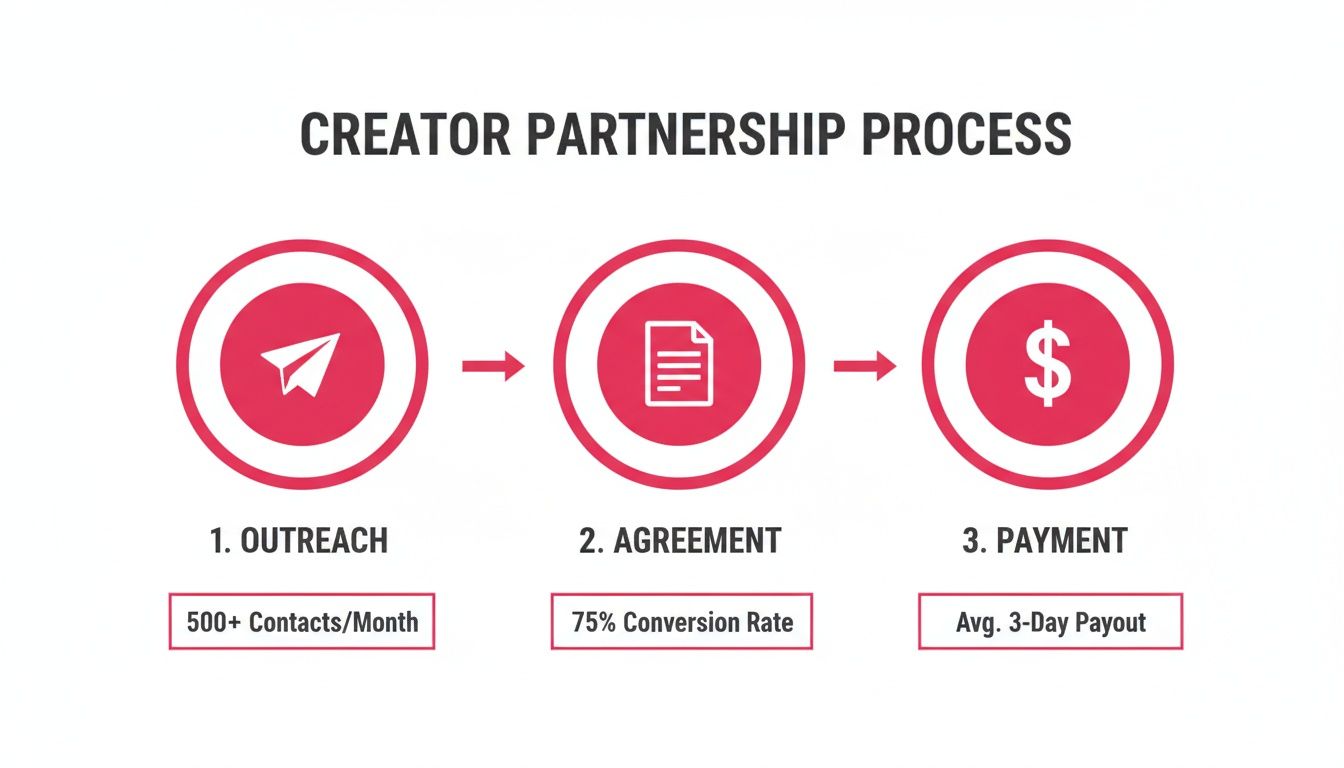
Visualizing the process like this helps everyone stay on the same page and ensures no critical step gets missed along the way.
Managing Product Shipment and Logistics
If your collaboration involves a physical product, getting it to the creator quickly is priority number one. Don't let shipping be an afterthought, because a delay here can throw off the entire campaign timeline before it even starts.
Always use a reliable shipping service with tracking and share that tracking number with the creator immediately. It’s a small gesture, but it shows you're on top of things and keeps them in the loop.
A few pro tips for shipping:
- Confirm the Address: Always, always double-check the creator's shipping address before you send anything out.
- Add a Personal Touch: A simple handwritten note or a small extra gift can make a huge impression and make the creator feel genuinely valued.
- Include Clear Instructions: If the product needs assembly or has specific usage instructions, make sure that info is crystal clear and included in the box.
Establishing a Smooth Content Review Process
The content review stage is a classic bottleneck. The goal is to strike a delicate balance: provide clear brand guidance while respecting the creator’s voice and style. Giving feedback that's overly critical or just plain vague is a surefire way to stifle creativity and end up with content that feels robotic.
Instead of saying, "I don't like this," try providing constructive, actionable feedback. Something like, "This looks great! Could we try one more shot that really shows off the product's texture?" gives specific direction without making them feel like they missed the mark.
The point of feedback isn't to control the creator; it's to align their authentic style with your campaign goals. You chose them for a reason – trust their expertise and guide them, don't micromanage them.
Set up a simple system for submitting drafts. A shared Google Drive folder or a dedicated channel in a tool like Slack or Asana works wonders. This keeps all communication, files, and feedback in one place, saving you from the headache of digging through email chains. Be sure your agreement clearly states how many rounds of revisions are included to manage everyone's expectations from day one.
Using Instagram's Native Collaboration Tools
Instagram has rolled out some fantastic features designed specifically to make brand-creator partnerships more transparent and effective. Knowing how to use them is non-negotiable if you want to get the most out of your campaign.
The 'Paid Partnership' Label
This one isn't optional for sponsored content. The ‘Paid Partnership’ label appears right at the top of a post or Story, making the commercial relationship clear to the audience. It’s absolutely essential for maintaining trust and complying with FTC guidelines and advertising regulations. While the creator is responsible for adding the tag, it’s your job as the brand to make sure this requirement is baked into the creative brief.
The Co-Authoring 'Collab' Feature
The Instagram Collab feature is a major advantage for reach. It lets you and a creator co-author a single Feed post or Reel. The content shows up on both of your profiles, and you share all the likes, comments, and views. It's an instant visibility boost.
When a creator you're working with publishes a Collab post, you'll get an invitation to accept it. Once you do, the post appears on your own profile grid, effectively doubling its organic reach by tapping into both of your audiences at the same time.
Leveraging Affiliate and Shopping Tools
For any e-commerce brand, Instagram's affiliate and shopping tools are a direct line to tracking sales from a collaboration. Creators can tag your products right in their posts, allowing their followers to browse and buy without ever leaving the app. This creates a frictionless path from seeing a product to purchasing it, making it much easier to measure the direct ROI of your partnership.
7. Amplifying and Measuring Your Collaboration's Impact
Getting your collaboration live is the starting line, not the finish. That initial organic buzz feels great, but to really get your money's worth, you need a smart plan to amplify what's working and a rock-solid way to measure it. This is how you turn a good campaign into a great one and prove its value.
It all starts by watching the organic results roll in. Let's be real, not every single post from a collaboration is going to be a home run. The real magic happens when you spot the content that’s already taking off – the pieces with surprisingly high engagement or saves – and pour some gasoline on that fire with a paid strategy.
Turning Organic Wins into Paid Powerhouses
Here’s a secret: the best ads on Instagram don’t look like ads. They look like authentic, helpful content from creators people genuinely trust. This is the whole idea behind amplifying creator content. Instead of cooking up slick brand ads from scratch, you’re putting money behind content that has already proven it connects with an audience.
This is where Spark Ads (or partnership ads) come in. They let you promote a creator's post directly from their account, keeping that authentic vibe while giving you full control over the targeting, budget, and campaign goals. You can take that high-performing Reel and push it to a lookalike audience or retarget people who’ve visited your website. It’s the perfect blend of a creator's credibility and your own data-driven ad strategy.
Think of it this way: organic reach is your testing ground, and paid amplification is how you scale the winners. You're using real engagement data to make smarter bets with your ad spend, which almost always leads to a better Return on Ad Spend (ROAS).
Choosing the Right Metrics for Your Campaign Goals
Measurement can feel like you're drowning in data, but it gets a lot simpler when you tie it directly back to the goals you set in the very beginning. The metrics that matter for a brand awareness campaign are completely different from those for a direct sales push.
Don't get lost in vanity metrics. Focus on the key performance indicators (KPIs) that actually tell you if you're winning.
To make it crystal clear, this table breaks down which numbers to focus on based on what you're trying to achieve.
Choosing the Right Metrics for Your Campaign Goals
| Campaign Goal | Primary KPIs | Secondary KPIs |
|---|---|---|
| Brand Awareness | Reach, Impressions, Follower Growth | Video Views, Story Views, Profile Visits |
| Engagement | Likes, Comments,-Shares, Saves | Engagement Rate, Post Interactions |
| Conversion | Click-Through Rate (CTR), Conversions, ROAS | Cost Per Acquisition (CPA), Website Clicks |
Focusing on the right KPIs is everything. If your goal was to drive sales, celebrating a high like count without looking at clicks or conversions means you're missing the real story.
To get a much deeper look at this, you should check out our guide on key content performance metrics that helps you measure what truly moves the needle.
Building a Clear Picture of Performance
To get the full story of your collaboration's impact, you’ll need a few different tools in your belt. Start with what Instagram gives you for free. Instagram Insights has a ton of data on reach, engagement, and audience demographics for every post. When you start running paid ads, Meta's Ads Manager becomes your command center for tracking everything from cost-per-click to ROAS.
But native tools don't always capture the entire conversation happening around your brand. To truly understand the ripple effect of your campaigns, powerful Instagram monitoring is key. Third-party tools can help you track brand mentions, analyze sentiment, and see how your collaboration is being discussed far beyond the original post, giving you a much richer picture of its cultural impact.
Here’s a quick rundown of a solid measurement toolkit:
- Instagram Insights: Your go-to for on-platform organic performance.
- Meta Ads Manager: The headquarters for all your paid amplification metrics.
- Google Analytics: Essential for tracking website traffic and conversions coming from creator links.
- Creator Platforms: Tools like JoinBrands often have built-in dashboards to see campaign performance across all your creators in one spot.
measurement isn't about creating a pretty report. It's about finding actionable insights. By digging into the data, you can answer the questions that matter: Which creator drove the most sales? Did Reels or Carousels get higher engagement? What talking points resonated most with the audience?
Answering these questions turns your data from a pile of numbers into a strategic asset. These insights will sharpen every decision you make in the future, helping you pick better partners, refine your creative, and consistently improve the ROI of your Instagram collaborations.
Got Questions About Instagram Collaborations? We’ve Got Answers.
Even with the best-laid plans, questions always come up when you start diving into Instagram partnerships. Consider this your go-to guide for the most common hurdles and "what-ifs" that brands and creators run into. Nailing these details can be the difference between a campaign that’s just good and one that’s truly great.
We've put together some quick, straightforward answers to clear up any confusion and help you manage your next campaign with total confidence. Let's tackle some of the most frequent questions we hear about collaborating on Instagram.
Can You Add a Collaborator After Posting?
Absolutely! This is a fantastic and surprisingly underused feature. If you forget to add someone or decide later that a post would be perfect for a collaboration, Instagram has your back.
Just head to the post, tap the three dots in the corner, and hit "Edit." From there, tap "Tag People," and you’ll see the "Invite Collaborator" option. Search their username, send the invite, and you're set. Once they accept, the post will pop up on their profile grid, instantly sharing its reach. It’s a perfect way to retroactively boost a piece of content that's already performing well.
What Happens If One Collaborator Has a Private Account?
This is a critical point to understand. If the account that originally publishes the Collab post is private, they can still invite a public account to be a collaborator. But here's the catch: the second that public account accepts the invite, the post becomes publicly visible from their profile.
Essentially, the content will be seen by all of the public account's followers, overriding the original poster's private status for that specific post. It's super important for both parties to be on the same page about this before an invitation is sent or accepted to avoid any awkward surprises.
Who Should Be the Main Publisher of the Post?
This is more of a strategic call than a technical one. A while back, Instagram's head, Adam Mosseri, hinted that having the account with the largest following publish the post could give it a bigger initial push in the algorithm.
That said, for most brand-creator partnerships, authenticity is king. It almost always feels more natural and genuine when the creator is the one hitting "publish." The post lands better with their audience because it comes directly from the voice they know and trust.
Think about your main goal. If you're chasing the biggest possible algorithmic reach right away, let the larger account post. If authentic storytelling is your priority, the creator should take the lead.
How Does Payment Work for Collab Posts?
Instagram's Collab feature is purely for co-authoring content; there's no built-in payment system. All the financial details have to be sorted out directly between the brand and the creator, completely off the platform.
This is exactly why a solid, clear collaboration agreement is non-negotiable. Don't even think about starting without one. Your contract needs to spell out, at a minimum:
- The total payment amount
- A clear payment schedule (e.g., 50% upfront, 50% on completion)
- The preferred payment method (like PayPal or a bank transfer)
- The exact dates or milestones that trigger each payment
Never, ever rely on a handshake or a verbal agreement. Get every single financial detail down in writing. It protects everyone involved and sets the stage for a professional, transparent partnership.
Ready to streamline your entire collaboration process, from finding the perfect creator to managing campaigns and payments? JoinBrands provides an all-in-one platform to connect with over 250,000 vetted creators and manage your partnerships with ease. Discover how JoinBrands can accelerate your brand's growth today.