

 Maximizing ROI in 2025: The Strategic Advantage of Micro-Influencers in Influencer Marketing
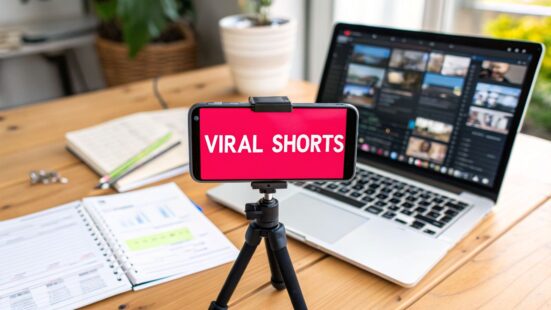
If you're a brand or creator, you've probably heard that YouTube Shorts are the fast track to growth. But what does it actually take to make one that works?
It really boils down to three things: planning a killer idea, shooting a vertical video under 60 seconds, and adding some quick edits. Then, you just need to upload it with the right title and the all-important #shorts hashtag so the algorithm knows what to do with it.
Table of Contents
The Blueprint for Creating Viral YouTube Shorts
Let’s be real—YouTube Shorts aren't just another trend. They're a fundamental shift in how people watch videos, and for brands, they're a goldmine for reaching new audiences at a speed that traditional videos just can't match.
The difference in performance can be jaw-dropping. We’ve seen it happen time and again. In one case, we posted the exact same content as a standard landscape video and as a Short. The landscape video got a decent 242 views. The Short? It blew up to 15,406 views. That’s a 6,264% increase.
When you see numbers like that, you realize that figuring out how to create effective Shorts isn't just a nice-to-have skill anymore. It’s essential.
Your High-Level Production Workflow
To avoid burnout and stay consistent, you need a simple, repeatable process. I like to break it down into three main phases: Ideation, Production, and Optimization. Nail these three, and you'll be turning simple ideas into polished, high-potential videos over and over again.

This workflow shows that a great Short isn't just luck. It’s the result of a smart, structured approach.
A great way to get inspired is to see what’s working elsewhere. Check out successful short-form video ads on platforms like TikTok and Reels. The hooks and editing styles that grab attention there often translate perfectly to YouTube Shorts.
Mastering the Technical Essentials
Before you hit record, you have to know the rules. Getting the technical specs right ensures YouTube actually recognizes your video as a Short and pushes it out. If you mess this up, your video might get lost in the void or look terrible, wasting all your hard work.
Pro Tip: Always shoot vertically. You can crop a horizontal video, but it never looks quite right. Native 9:16 footage shot on a phone just looks more authentic and performs better. Viewers and the algorithm both prefer it.
Here’s a quick reference table with the technical specs you absolutely need to know.
YouTube Shorts Technical Specifications Cheat Sheet
I recommend keeping this cheat sheet handy. It covers the non-negotiables for getting your Shorts seen.
| Specification | Requirement | Pro Tip |
|---|---|---|
| Aspect Ratio | 9:16 (Vertical) | Just hold your phone vertically. This avoids any weird black bars or having to crop your shot later. |
| Length | Up to 60 seconds | The sweet spot is often 15-30 seconds. This helps maximize your Average Percentage Viewed, a key metric for the algorithm. |
| Resolution | 1920×1080 pixels | Don't worry too much about this one. Most modern smartphones shoot in this quality by default, giving you a sharp video. |
| Title/Description | Must include #shorts | Put #shorts in the title or the very first line of your description. This is the signal to YouTube to categorize it correctly. |
Memorize these specs. Getting them right from the start is one of the easiest ways to set your content up for success.
Planning and Scripting Shorts That Hook Viewers

Let's be real: a viral Short isn't an accident. It’s won long before you ever hit the record button. The creators getting millions of views aren't just getting lucky; they’re strategic. They know how to plan content that grabs attention instantly and, more importantly, holds it.
This process starts by becoming a student of your niche. Don't just mindlessly scroll the Shorts feed—do it with a purpose. Pay close attention to the videos pulling in massive views. What's the common thread? Is it a particular sound, a clever editing trick, or a format that keeps popping up?
This research is your treasure map. When you know what your audience already loves, you can build on that foundation, making your content feel both familiar and fresh. That’s how you get the algorithm to notice you.
Finding Your Viral Idea
Inspiration is something you hunt for, not wait for. The YouTube app itself is packed with trending ideas if you know where to look. Tapping into what’s already buzzing is one of the fastest ways to get discovered.
Here are a few goldmines for ideas:
- The Trending Tab: This gives you a bird's-eye view of what's hot on the platform. Keep an eye out for emerging Shorts formats or challenges that are starting to gain steam.
- Competitor Channels: See what's working for others in your space. Don't just copy—deconstruct their top-performing Shorts. What’s the hook? How’s the pacing? What topic are they hitting?
- The YouTube Music Library: When you go to create a Short, the music library often surfaces songs that are trending right now. Using this audio can give your video a serious algorithmic boost since YouTube is already pushing it to viewers.
Pro Tip: Find a trending sound you like? Tap on it. You’ll see a feed of every Short using that audio. This is an incredible source of inspiration, showing you countless ways a single trend can be spun for different niches. I've seen dance trends used for fitness products and comedy audio used for a software demo.
Scripting for a 1-Second Attention Span
In the world of Shorts, you have about one second to stop the scroll. That makes your opening—your hook—the most critical part of your video. If that first second is weak, the rest of your masterpiece doesn't matter because no one will stick around to see it.
This means your script needs to be built around a powerful opening. A few narrative frameworks have proven to work wonders for this fast-paced format:
- Problem-Agitation-Solution (PAS): Kick things off by highlighting a common pain point. Twist the knife by showing the frustration it causes. Then, swoop in with your product or idea as the perfect solution. Imagine a cleaning product Short: it starts with a nasty stain (Problem), shows someone scrubbing with no luck (Agitation), and ends with a satisfying one-swipe clean (Solution).
- Before-and-After: This is a visual powerhouse. It’s a classic for a reason. Show the dull, messy, or inefficient "before," then unveil the incredible "after." This works for everything from home renovations and makeup tutorials to productivity app demos.
- "Three Reasons Why…": This hook is brilliant because it sparks curiosity and sets a clear expectation. A Short titled "3 Reasons Your Ads Aren't Converting" promises quick, valuable info, making people watch until the end to get all three tips.
Once you’ve got your idea and hook nailed down, you can flesh out the script. If you really want to level up this skill, our complete guide on how to write video scripts is packed with deeper insights. In Shorts, every single word counts.
Storyboarding Your Short for Maximum Impact
A storyboard doesn't need to be a fancy artistic sketch. Seriously, it can just be a quick list of shots that map out your video from start to finish. This simple planning step forces you to make every moment count and gives your final cut a logical, compelling flow.
For a 30-second Short, your storyboard could be as simple as this:
- Seconds 0-2 (The Hook): Extreme close-up on a frustrating problem (like hopelessly tangled headphones).
- Seconds 3-10 (The Agitation): Quick, jumpy cuts of the user struggling and looking annoyed.
- Seconds 11-20 (The Reveal): Introduce the solution—your awesome wireless earbuds—with a smooth, satisfying shot.
- Seconds 21-27 (The Demo): Show the product in action, highlighting key benefits like instant pairing or crisp sound.
- Seconds 28-30 (The CTA): End with a clear text overlay and a final shot of the product. Something simple like "Link in bio!" works perfectly.
This structure keeps you on track during filming and guarantees you deliver a punchy, effective message without a single wasted second.
Shooting and Editing Techniques for Viral Shorts
With your game plan locked in, it's time for the fun part: bringing your Short to life. Let me tell you, creating a Short that performs isn't about having the fanciest, most expensive gear. It’s about mastering the basics of shooting and editing for a vertical, super fast-paced world. Your smartphone is more than enough to get stunning results.
First things first, and it's the simplest step of all: make sure your video is crystal clear. One tiny habit that makes a massive difference is to regularly clean your phone's camera lens. This simple action stops smudges and blur from wrecking a perfect take.
Nailing the Shot with Your Smartphone
Forget about needing a professional film crew. A couple of small adjustments to how you shoot can instantly make your videos look more polished and engaging.
- Embrace Good Lighting: Natural light is your best friend, period. Just face a window to get soft, even light that gets rid of any harsh shadows. Shooting indoors or at night? A simple ring light is a game-changer, making you and your products look premium.
- Lock Your Focus and Exposure: Ever seen a video where the camera keeps annoyingly refocusing or the brightness jumps around? You can prevent that. On most phones, just tap and hold on your subject to lock the focus and exposure. This creates a smooth, professional-looking clip every time.
- Frame for Vertical: The 9:16 aspect ratio is your entire canvas. Unlike traditional video, you have a ton of vertical space to work with, so use it! Get closer to your subject and fill the frame. It creates a much more intimate and immersive feel for the person watching. To really dive deep into how different shots tell a story, check out our guide on camera angles and their impact.
Pro Tip: When filming yourself talking, always try to position the camera slightly above eye level. This angle is universally more flattering and helps you create a stronger connection with your audience. Stay away from low angles—they can distort your features and just don't look great.
Editing That Captivates and Retains
Once you've got your raw clips, the edit is where the magic happens. This is where you inject the energy and pace that make a Short impossible to scroll past. The goal is to build a rhythm that holds attention and, ideally, makes people watch it again. Replays are a huge positive signal to the YouTube algorithm.
You can absolutely edit right inside the YouTube app. It has some handy tools for trimming clips, adding text, and grabbing trending sounds. But for more creative freedom, most creators end up using a dedicated editing app.
Choosing Your Editing Toolkit
The software you choose can really shape your workflow and the final quality of your Short. While YouTube's built-in editor is perfect for quick, simple videos, specialized apps give you a much bigger box of tools to play with.
Here's a quick rundown of the most popular options out there for creators in 2026.
Editing Software Comparison for YouTube Shorts
| Editing Tool | Best For | Key Features | Cost |
|---|---|---|---|
| YouTube App | Quick edits and using trending audio | Seamless access to YouTube's music library, green screen, timer, and basic text overlays. | Free |
| CapCut | All-in-one editing with advanced features | Auto-captions, advanced transitions, text-to-speech, and a huge library of effects and templates. | Free (with optional Pro subscription) |
| InShot | Simple and intuitive mobile editing | Easy-to-use interface for trimming, adding music, filters, and text. Great for beginners. | Free (with ads and watermarks) |
| Adobe Premiere Rush | Cross-device editing for serious creators | Syncs projects between mobile and desktop, offering more professional-grade color correction and audio tools. | Included with Creative Cloud |
Finding the right tool is all about matching its features to your creative vision and how much time you want to spend editing. Don't be afraid to try the free versions to see which one feels the most natural for you.
Practical Example: The Jump-Cut Technique
One of the most powerful editing tricks for Shorts is the jump cut. It's the secret to creating a fast, energetic pace and cramming a lot of information into a short amount of time.
Let's say you're a DTC brand showing off a new skincare routine. Instead of one long, boring shot, you'd use jump cuts:
- Clip 1: A quick shot of the cleanser being applied.
- Clip 2: Instantly cut to the toner being used.
- Clip 3: Cut again to the moisturizer being smoothed on the skin.
- Clip 4: End with a final shot of the full product line and glowing skin.
This entire sequence can fly by in just 5-7 seconds. It's dynamic, visually exciting, and tells the viewer everything they need to know without a single wasted moment. That kind of snappy pacing is exactly what keeps eyes glued to the screen.
Optimizing Your Upload for the YouTube Algorithm

You’ve created an amazing Short, and that's a huge win. But the job isn't done. Now you have to play ball with the YouTube algorithm to make sure it knows exactly who to show it to.
Think of it this way: a fantastic video with sloppy optimization gets buried. Meanwhile, a pretty good video with smart optimization can easily find its way to thousands, or even millions, of new viewers. Every single field on the upload screen is your chance to give the algorithm a roadmap to your ideal audience.
Crafting the Perfect Title and Description
Your title is everything. It’s the first, and most important, signal you send to both viewers and the algorithm about what’s inside your video. It has to be clear, compelling, and full of keywords that real people are searching for.
A title like "My New Short" is a complete waste of digital real estate. It tells you nothing. Now, compare that to "3 Skincare Mistakes to Avoid #shorts". This immediately tells everyone what the video is about and who it’s for.
Speaking of which, adding #shorts to either your title or description is non-negotiable. It’s the primary tag YouTube uses to identify and push your content into the Shorts feed.
Next up is your description. Most viewers won’t click to read the whole thing, but the algorithm absolutely scans every word. Use this space wisely.
- Expand on your title: Briefly sell the value a viewer gets from watching.
- Add relevant hashtags: Throw in 2-3 more specific hashtags for your niche (e.g.,
#skincaretips,#acnetreatment). - Drop a call-to-action (CTA): This is a perfect spot to link to a related long-form video or a product page.
A well-crafted title and description don't just describe your video—they actively sell it to the algorithm, ensuring it gets placed in front of an audience that is most likely to engage. This is a crucial step in learning how to create YouTube shorts that actually get views.
Choosing a Thumbnail and Driving Engagement
Yes, Shorts autoplay in the feed, but your thumbnail still has a job to do. It shows up on your channel page, in search results, and in recommended video sections.
When you upload, YouTube lets you pick a single frame from your video to act as the thumbnail. Take a minute to scroll through and find the most dynamic or intriguing moment. That one choice can be the difference between someone clicking on your channel or just scrolling past.
Once your Short is live, the work continues in the comments. This is a goldmine for building community and sending positive engagement signals back to the algorithm.
Pro Tip: As soon as you upload, pin a strategic comment. It could be a question to get the conversation started ("What's your biggest skincare challenge?") or a direct link to a product you talked about. This pinned comment works like a secondary CTA and helps steer the initial engagement.
Another killer feature that’s seriously underused is the Remix option. When you spot a trending video, you can hit the "Remix" button to create your own Short using its audio or as a side-by-side reaction. This directly connects your content to a proven viral trend, giving you a huge leg up in discoverability.
Ultimately, a mixed content strategy is where the magic happens. Shorts have become a go-to tool for rapid growth, and data shows that channels combining Shorts with long-form content can accelerate their growth by 41%. For every Short that cracks 10,000 views, creators can expect to pull in 12 to 18 new subscribers—a metric that DTC brands on platforms like JoinBrands should be tracking obsessively. You can dig into more on this powerful synergy by checking out these YouTube Shorts statistics.
Analyzing Performance and Scaling Your Strategy

Hitting "publish" on a Short isn't the finish line—it's the starting block. The real work begins when you figure out how to turn those initial views into a repeatable growth strategy. This means jumping into your YouTube Studio analytics to see what’s making your audience tick and what’s making them swipe away.
When you understand the story behind the numbers, you can stop guessing and start building a precise system for capturing and holding attention.
Decoding Your YouTube Shorts Analytics
Your Shorts analytics dashboard is a goldmine of audience feedback. Instead of getting overwhelmed by all the charts and graphs, let's focus on the metrics that actually signal viral potential to the algorithm.
These are the numbers I obsess over for every Short:
- Average Percentage Viewed (APV): This is the king of all metrics. It’s a dead-simple measure of how much of your video people actually watched. A high APV is a massive green light to YouTube.
- Engaged Views vs. Swiped Away: This tells you who chose to watch versus who swiped past in the first second or two. It's a direct report card on how well your hook worked.
- Subscriber Gains: This one is simple: how many people loved your Short so much they smashed the subscribe button right then and there? It’s a huge indicator that you’re attracting the right crowd.
These numbers tell a story. A high APV but low subscriber gains could mean your video was fun but didn't build a connection to your channel. On the other hand, if you see high engaged views but the APV drops off, you know your hook is solid but the middle of the video needs work. Learning to read these content performance metrics is how you get a clear picture of what to do next.
The Viral Signals Your Analytics Reveal
The YouTube algorithm isn’t a mystery box. It's looking for clear performance signals to decide if a Short is worth pushing to millions. If you know the benchmarks, you can create content with a real shot at going big.
Based on current data, the targets are pretty specific. For a 60-second Short, you need to be aiming for an Average Percentage Viewed (APV) above 90%. For a punchy 15-second clip, that bar jumps to over 130%.
Wait, over 100%? Yep. An APV over 100% means people are re-watching your video, which is one of the strongest "viral signals" you can send. YouTube sees that and thinks, "People love this, let's show it to more of them."
Pro Tip: If your APV for a 30-second Short is stuck below 50%, that's a major red flag. It tells you either your hook is failing or the content is losing steam halfway through. For your next video, A/B test a completely different opening and see if you can get that number climbing.
A Framework for A/B Testing and Optimization
Once you know your numbers, you can start experimenting to improve them. This is where A/B testing comes in—a simple method of changing just one thing at a time to see what works best. It's how you methodically find your content's sweet spot.
Here’s a simple testing framework you can start using today:
- Test Your Hooks: Film two versions of the same Short with different openings. Maybe one starts with a question ("Are you making this mistake?") while the other starts with a bold claim ("This one tool changes everything."). Check which version gets more engaged views.
- Experiment with Formats: If you normally do "talking head" videos, try a fast-paced tutorial with text overlays and B-roll. Compare the APV and subscriber gains to see what style your audience prefers.
- Vary Your Calls-to-Action (CTAs): At the end of your Shorts, try asking for different things. One week, ask viewers to comment with their thoughts. The next, ask them to check out a related video. See which CTA drives the action you want.
For brands, this data is gold. If a Short promoting a new product gets a high click-through rate to your site and drives sales, you know you've found a winning formula.
Scaling Your Efforts by Repurposing Content
Look, creating brand new Shorts from scratch is great, but it's a grind. The smartest way to scale your strategy is to repurpose content you already have.
Think about it: your long-form YouTube videos, podcasts, and even blog posts are full of bite-sized gold nuggets. A 10-minute video explaining three key tips can easily become three separate Shorts, each one diving deep into a single tip.
This approach doesn't just save a ton of time; it keeps your messaging consistent across platforms. You end up with a steady stream of high-quality Shorts that constantly drive traffic back to your bigger content pieces, creating a powerful, self-sustaining growth loop.
Your Top YouTube Shorts Questions, Answered
When you're getting into Shorts, a lot of the same questions pop up. It's a different beast than long-form video, and the rules of the game can feel a little confusing at first.
Let's clear the air and tackle the big questions we hear from creators and brands all the time.
What Is the Ideal Length for a YouTube Short?
Just because you can make a Short up to 60 seconds long doesn't mean you should. The name of the game is holding a viewer's attention all the way through, what YouTube calls Average Percentage Viewed (APV).
Honestly, it's way easier to get someone to watch 100% of a 15-second video than a 60-second one. We've seen it time and time again: shorter clips in the 15-30 second window usually crush it. A high APV is a massive signal to the algorithm that your content is solid.
Our Take: Aim for the 20-second sweet spot to start. It’s just enough time to land a punchy tip or a quick story without people getting bored and swiping away. Once you have some data, you can start testing longer formats to see where your audience's breaking point is.
Can I Actually Make Money From YouTube Shorts?
Absolutely. The most direct route is through the YouTube Partner Program (YPP). Once you hit the requirements, you'll start earning a cut of the ad revenue that plays between videos in the Shorts Feed.
But thinking only about ad revenue is leaving money on the table. Shorts are a killer top-of-funnel tool that can feed your entire business.
- Affiliate Marketing: Mention a cool product and point people to your affiliate link. A pinned comment or a link in your channel bio works great for this.
- Driving Traffic: Use a Short as a trailer. Tease a bigger idea and then send viewers to your full-length, monetized video to get the whole story.
- Product Promotion: If you're a brand, this is your chance to show your product in action. A quick demo can lead directly to your online store and turn a viewer into a customer.
See Shorts as the entry point, not the final destination. They bring people into your world.
What Matters More: The Hook or The Call to Action?
This isn't even a contest. The hook is everything. Your call-to-action (CTA) is useless if nobody even watches long enough to hear it.
People scroll through the Shorts feed at lightning speed. You have maybe 1-2 seconds—tops—to stop the swipe. If that first moment is weak, they're gone. A killer hook is the price of entry.
Your hook needs to make a bold promise, spark intense curiosity, or hit on a problem your viewer has right now. Once you've earned their attention and delivered on your promise, then you can drop a simple, clear CTA at the very end. Spend 80% of your effort on those first two seconds.
Should I Use Trending Audio or Original Sounds?
Jumping on a trending sound can definitely give you a quick boost. The algorithm is already pushing that audio, and you can ride that wave to get in front of new eyes. It's a solid tactic for discoverability.
But if you only use trends, you risk sounding like everyone else. Original audio—your own voice, a customer's review, or even custom sound effects—is what builds a recognizable brand.
We've found a balanced approach works best:
- Jump on Trends (Smartly): Use a trending sound when it actually fits your brand and the story you're telling. Don't just force it.
- Create Your Own Vibe: Make original audio a core part of your strategy. Your unique voice is what will make people remember you.
Don't be afraid to mix and match. Sometimes layering a clever voiceover on a quiet, trending instrumental track gives you the perfect combination of discoverability and brand personality.
Ready to stop guessing and start growing? JoinBrands connects you with over 250,000 creators who know how to produce authentic, high-impact Shorts that drive results. Find the perfect partners for your next campaign and start creating content that converts by visiting https://joinbrands.com.