
 How to Increase Social Media Engagement
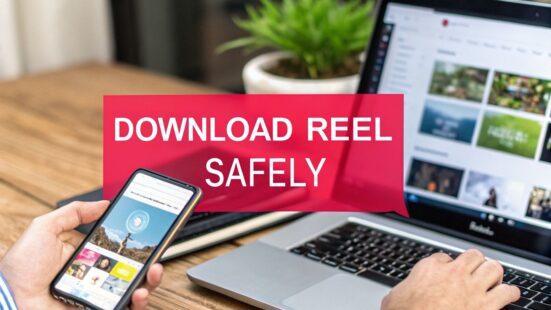
Knowing how to download an Instagram Reel seems straightforward, right? Creators can just hit the native download button, and for everything else, there's screen recording or a handful of third-party tools. But the best method really hinges on why you need the video in the first place – whether it's for your personal collection, a content repurposing strategy, or to build a library of user-generated content (UGC).
Table of Contents
Why Downloading Reels Is a Marketing Superpower
Before we get into the nitty-gritty, let's talk about the 'why'. Grabbing a copy of an Instagram Reel isn't just a technical task; it's a core tactic for any savvy marketer or brand today. Having a high-quality copy of a great Reel unlocks some serious opportunities to squeeze every last drop of value out of your content.
The most obvious win is content repurposing. A single Reel that goes viral can be sliced, diced, and shared across TikTok, YouTube Shorts, or even embedded on your website’s landing pages. This gives your best content a longer life and a much wider reach without having to start from scratch. For brands working with creators, building a library of downloaded Reels is non-negotiable for creating killer ad creatives and authentic social proof.
Practical Example: A small e-commerce brand partners with a creator for a "day in the life" Reel featuring their product. The Reel performs well. The brand downloads it, trims it into a 15-second clip focusing on the product reveal, and uses it as a high-performing ad on Instagram Stories, doubling its click-through rate compared to studio-shot ads.
Choosing the Right Download Method
The path you take should line up with your end goal. Are you a creator saving your own masterpiece, or a brand manager archiving UGC from a recent campaign? The right choice isn't always the most obvious one. This decision tree can help you visualize the best route based on your role.

As you can see, creators have a direct line to downloading their own work. For anyone else, the approach requires a bit more thought, especially when you don't own the content.
Reel Download Methods at a Glance
Here's a quick comparison of the most common methods for downloading Reels, outlining their best use cases, pros, and cons to help you find the right solution fast.
| Method | Best For | Pros | Cons |
|---|---|---|---|
| Native Download | Creators saving their own Reels without music. | Super easy, fast, and maintains quality. | Only works for your own content; often removes copyrighted audio. |
| Third-Party Tools | Brands and users needing high-quality downloads with audio. | Preserves original quality and sound. Many are free and easy to use. | Can be risky (security, ads). Might violate Instagram's terms. |
| Screen Recording | A quick-and-dirty method for personal use. | Simple, no extra apps needed. Works for any Reel. | Quality can be lower. Captures screen UI. Can be time-consuming to edit. |
| Direct Ask | Brands needing creator assets for official use (ads, etc.). | Best way to get the highest quality, original file. Legally sound. | Relies on creator's response time and willingness to share. |
Each of these methods has its place. The key is to match the tool to the task while respecting copyright and platform rules.
The Value of a Video Asset Library
The obsession with Reels is no accident – it's tied directly to the explosion in short-form video. Instagram has over 2 billion monthly active users, and short-form video is on track to make up 82% of all internet traffic in the next few years. For e-commerce brands, this makes Reels a goldmine. By downloading and remixing top-performing creator content, marketing managers can slash production time by up to 50% while getting their message out there authentically.
By treating every downloaded Reel as a valuable asset, you shift from one-off posts to a sustainable content engine. This library fuels everything from targeted ads to organic social campaigns, turning fleeting trends into lasting revenue.
Understanding how to weave these downloaded Reels into your broader effective digital marketing strategies is what separates the pros from the amateurs. For brands, this also ties directly into your paid advertising efforts. In fact, you can check out our guide on how to best use these videos in your Instagram Reels advertising to really drive conversions.
Using Instagram's Official Download Features
Let's start with the most direct route: using the tools Instagram provides right inside the app.
While they have their limits, these are the only officially approved methods. That means zero risk of nasty malware or sketchy privacy issues, which is always a good thing.
The Creator's Download Path
If you’re a creator, Instagram has a built-in download option designed specifically for you to save your own work. It's pretty simple.
Once you’ve published your Reel, just tap the "Share" icon. You'll spot a "Download" button at the bottom. A quick tap sends the video straight to your phone's camera roll.
But here's where you need to pay attention. There are a couple of major catches:
- The Watermark: Any Reel you download after it's been published will have an Instagram watermark slapped on it, complete with the logo and your username. This isn't optional – it’s how Instagram ensures attribution when content gets shared off-platform.
- No Licensed Music: If you used a popular song from Instagram’s music library, that audio will almost certainly be stripped out when you download the video. You’ll get the visuals, but the file will be completely silent due to copyright rules.
Pro Tip: Want a clean, watermark-free version of your Reel to post on TikTok or YouTube Shorts? The trick is to save it from the editor before you hit "Share." After you’ve done all your editing, look for a download icon at the top of the screen. This saves the raw video to your phone without the watermark and, importantly, before any licensed audio is officially attached.
The Gold Standard for Brands
For brands and marketers, the game is completely different. Forget about using the in-app features. The only truly professional approach is to formally request the original, uncompressed video file directly from the creator.
This is the "gold standard" for a reason. It's the only way to guarantee you get the highest possible quality, with no watermarks and no audio problems.
This workflow is more important than ever. The explosion of short-form video has created a goldmine for marketers. With TikTok's monthly active users projected to hit 1.9 billion by 2026 – a massive leap from 2018 – the demand for repurposing creator videos is only growing. Plus, agencies working with influencers are seeing 17% faster audience growth than the average Instagram account, which shows just how valuable these assets are. You can get more stats on this trend over on Charle Agency's blog.
To get these files, you need a clear and professional process. A simple, polite message is the best way to start. Here's a template you can use:
"Hi [Creator Name], we absolutely loved the Reel you created for our [Campaign Name] campaign! For our marketing archives and potential ad use, could you please send us the original, high-resolution video file via Google Drive or Dropbox? Thanks so much!"
This request shouldn't come out of the blue. It must be backed by a solid creator agreement. Your contract needs to explicitly state that you have the right to request and use the original content files for commercial purposes. This simple clause saves you from massive legal headaches and ensures you have full clearance to use the content across all your marketing channels.
How to Safely Use Third-Party Tools and Screen Recording
So, what happens when Instagram's built-in download button just doesn't cut it? That’s when you have to get a little creative with third-party tools or the good old screen record.
These methods absolutely work, but you need to know what you're doing to avoid some common pitfalls. Let's walk through how to use these alternatives safely and get a clean video file every time.
First up are third-party downloaders. These are usually websites where you paste the URL of a Reel, and it spits out a downloadable video file. Their big advantage is they often grab the video with the original audio, something Instagram's native download feature famously removes.
The problem? The web is a minefield of sketchy download sites. Many are loaded with aggressive ads, and some are just fronts for malware. A few minutes of vetting can save you a world of trouble.
Vetting Third-Party Reel Downloaders
Before you paste a link into any downloader site, give it a quick once-over. A trustworthy service isn't going to ask for your Instagram password or try to force you into installing a weird browser extension.
Here’s the simple safety checklist I run through:
- Check for HTTPS: The URL should start with
https://. This is basic security, and if it's missing, I'm out. - Minimal and Relevant Ads: If the site is a chaotic mess of flashing pop-ups and banners, that’s a huge red flag. Good services don't need to rely on that.
- No Software Installation Required: The safest tools do everything right in your browser. If a site insists you download an
.exeor.dmgfile, close the tab immediately. - Clear Privacy Policy: Reputable sites will tell you what data they collect. If you can't find a privacy policy, assume the worst and move on.
Pro Tip: When you find a reliable third-party downloader, bookmark it! This saves you from having to search Google and risk landing on a less-reputable site the next time you need to download a Reel for a project you have rights to.
Mastering the Art of Screen Recording
If you'd rather skip third-party sites altogether, screen recording is your best friend. It’s a feature built directly into your smartphone, letting you capture anything playing on your screen – including an Instagram Reel.

The biggest drawback is that on-screen controls, status bars, and notifications can easily end up in your final video. But with a little prep work, you can get a nearly perfect copy.
The key to a clean screen recording is setting the stage before you hit record. You want to capture just the Reel, without any distracting pop-ups or interface elements.
Here are a few pro tips I've picked up for getting a flawless recording:
- Activate "Do Not Disturb" Mode: This is non-negotiable. It stops calls, texts, and other notifications from appearing on screen and ruining your take.
- Maximize Screen Brightness: Before you start, crank your phone's brightness all the way up. This ensures the final video is vibrant, not dark and muddy.
- Wait for the UI to Disappear: After you hit play on the Reel, just wait a second. The like button, username, and other on-screen text will fade out, leaving just the video content.
- Crop the Video Afterwards: Once you're done, use your phone’s built-in video editor. It's perfect for trimming the start and end of the recording and cropping out the phone’s status bar or navigation buttons at the edges.
Organizing and Managing Your Downloaded Reels

Getting the video file is just the beginning. The real value – and the marketing magic – comes from what you do next. A messy desktop folder packed with randomly named .mp4 files is a fast track to pure chaos, especially when you're dealing with assets from multiple creator campaigns.
Trust me, I've seen it happen. Without a system, you’ll waste hours digging for files, accidentally use content you no longer have the rights for, and miss golden opportunities to reuse your top-performing videos.
Building Your Content Hub
Your first move should be creating a simple, logical folder structure. It sounds basic, but getting your content out of a single "Downloads" folder and into a real system will save you countless headaches.
I always recommend organizing by campaign, and then by creator. This immediately lines up your assets with your actual marketing activities and makes everything easy to find.
Practical Example: A brand runs a "Holiday2024" campaign. Their folder structure in Google Drive looks like this: Marketing > Content Library > Holiday2024 > @creator_one, @creator_two, etc. Anyone on the team can now instantly find all assets from a specific creator for that campaign.
This structure also makes it incredibly easy to track performance. When all the content from a campaign is grouped together, you can quickly see which creator’s Reels drove the best results and use that data to guide your future partnerships.
Mastering Your Naming Convention
Once your folders are in order, a consistent naming convention is the next critical step. A file named video_03_final.mp4 tells you absolutely nothing. A well-named file, on the other hand, gives you the full story before you even click play.
I tell my clients to use a formula that includes a few key identifiers:
- Campaign Name: This is your main project identifier (e.g., SummerGlow24).
- Creator Handle: This shows you who made the content (e.g., @janesmith).
- Date: Use a
YYYY-MM-DDformat so your files automatically sort by date. - Content Type: Clearly label if it's a Reel, Story, or AdCreative.
So, a final file name would look something like this: SummerGlow24_janesmith_2024-08-15_Reel.mp4. This approach makes your entire asset library instantly searchable and understandable for everyone on your team.
Integrating Reels into Your Content Calendar
With your assets neatly organized, it's time to plug them into your content calendar. This is where you shift from just storing files to strategically deploying them. Think of your content calendar as your command center for all things content.
For every single downloaded Reel, your calendar needs to track a few things:
- Usage Rights and Expiration Dates: This is non-negotiable. You have to know exactly when your license to use the content expires to stay out of legal trouble.
- Target Platforms: Is this Reel headed for Instagram, TikTok, or YouTube Shorts? Map out where and when each asset will be published.
- Repurposing Plans: Don't just post it once. Schedule dates to repurpose the video, like re-editing a successful Reel into a 15-second ad creative three weeks later. For more great ideas on this, check out our guide on content repurposing strategies.
This system ensures every Reel you download is used to its full potential, turning a one-time collaboration into a long-term asset that keeps driving results.
Understanding the Legal and Ethical Rules

Alright, this is the part that can save you from some serious headaches down the road. Before you go building a massive library of downloaded Reels, we need to talk about the rules of engagement. Getting this wrong – even by accident – can lead to copyright strikes, legal trouble, and a black eye for your brand's reputation.
The whole thing boils down to one core concept: copyright ownership. Just because a Reel is public doesn't mean it's a free-for-all. Think of it like a painting in a public gallery. Anyone can admire it, but you can't just snap a photo and start selling prints. Digital content works the same way.
Your Content vs. Theirs
It really helps to break this down into the three main scenarios you'll run into. Each one has its own set of rules.
First, you have your own Reels. You're the creator, you own the copyright. You're pretty much free to download and use your own work however you want. The only real catch is if you used music from Instagram's library – those audio rights don't come with the downloaded file.
Next is User-Generated Content (UGC) you've commissioned. This is content you’ve paid a creator to produce specifically for your brand. Your rights to this video are completely dictated by your contract. A solid agreement will clearly state that you have the right to download and use that Reel for specific things, like paid ads or on your website.
Finally, there's someone else's Reel. This is where it gets dicey. You have absolutely no inherent right to download and reuse content made by other people without their direct, written permission. Period.
Pro Tip: Never, ever assume that "giving credit" is enough. Just tagging the original creator when you re-upload their video to your own account does not give you the legal right to use it. This is a super common mistake I see brands make, and it's a fast track to copyright infringement issues.
Practical Dos and Don'ts
Navigating the legal side of downloading Reels is all about understanding usage rights. It's the critical difference between sharing content the right way and committing a copyright violation.
Do:
- Share another creator’s Reel to your own Instagram Story using the built-in "Add to Story" button. Instagram designed this feature to be collaborative, and it always links back to the original source.
- Get explicit, written permission that spells out exactly how you can use the video before you ever feature a downloaded Reel in a paid ad or on a commercial webpage.
- Work with creators through platforms and agreements that make sure content rights are clearly defined and transferred when the project is done.
Don't:
- Download someone else's Reel and re-upload it to your own feed, TikTok, or YouTube without their permission.
- Use a downloaded Reel in your marketing just because it happens to feature your product.
- Assume a creator is cool with you using their video commercially just because they tagged your brand in their post.
To get ahead of these issues, it's worth learning about the specifics of a content creator contract template. This will help you build partnerships that are legally sound from day one.
Diving into the world of downloading Reels always brings up a few common headaches. We hear them all the time.
You're trying to save a video, but you hit a snag – the pesky watermark, the audio vanishes, or you're just not sure if you’re even allowed to do it. Let’s clear up the most common questions once and for all.
Can I Download a Reel Without a Watermark?
Yes, but the “how” is everything. If you’re the one who created the Reel, the trick is to save the video from the editor before you hit publish. That version is yours, clean and totally watermark-free.
Once it's live on the platform, though, things change. Using Instagram’s own download feature will slap a watermark on it with the IG logo and the creator’s handle. The only way to get a high-quality, watermark-free version of a posted Reel is to go straight to the source and get the original video file from the creator.
Why Did the Audio Disappear From My Downloaded Reel?
This is easily the most common frustration, and the answer is simple: music licensing.
When you add a popular song from Instagram’s music library, you’re using audio that’s only licensed for use on Instagram. The moment you download it, Instagram has to legally strip that copyrighted music out.
Pro Tip: To get around this, you have a few options. Use original audio you recorded yourself, find royalty-free tracks you have the rights to, or – the easiest hack – save your video from the editor before you add any music from the Instagram library. You can then add the audio back in using a separate video editor like CapCut.
Is It Illegal to Download Someone Else's Instagram Reel?
This is where it gets tricky. The legality really hinges on what you plan to do with it.
Just downloading a video for your own private viewing sits in a legal gray area that’s rarely, if ever, enforced. The line you absolutely cannot cross is re-uploading, republishing, or using someone else’s content for commercial purposes without their direct permission.
That’s a fast track to violating Instagram's terms of service and, more seriously, committing copyright infringement. Always, always get the rights and permissions squared away before you use downloaded content for anything public or commercial.
Do Third-Party Reel Downloader Apps Actually Work?
A lot of them do, but you’re rolling the dice on risk. Some third-party tools can pull down a Reel, often with the audio still attached. The real challenge is telling the good ones from the bad.
Many of these downloader sites are loaded with invasive ads, play fast and loose with your data privacy, or spit out a low-quality, compressed video. You have to be extremely careful.
For any professional project or official brand use, stick to the safe routes: use the official download methods or, even better, request the asset directly from the creator. It’s the only way to guarantee both security and quality.
Juggling user-generated content – from chasing down permissions to organizing all those downloads – can become a huge bottleneck for any growing brand. JoinBrands makes the whole thing effortless. We connect you with over 250,000 creators and give you the platform to manage campaigns, approve content, and secure full ownership of your assets, all in one spot. Learn how JoinBrands can streamline your creator marketing workflow.