



 A Brand’s Guide to Influencers in Instagram
Ever found a product you love on Amazon and wondered what else the brand sells? Trying to find their full collection just by searching can be a total mess of competitor products and random results. It feels like digging through a flea market bin.
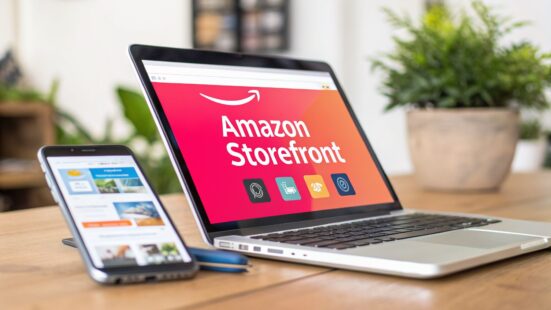
The secret is finding their Amazon Storefront. This is the brand's own custom-built shop right on Amazon—their digital flagship. Knowing how to get there is the difference between that messy flea market and walking into a clean, well-organized boutique.
The fastest way? Go to any of the brand's product pages. Look for a small blue link right above the product title. It usually says something like, "Visit the [Brand Name] Store." Click that, and you're in.
Knowing how to find these storefronts is a game-changer for a few key people:
- For Shoppers: It’s your ticket to exploring a brand's entire catalog without competitor ads popping up everywhere. You can discover new products, check out special collections, and be confident you’re buying directly from the official brand, not a random third-party seller.
- For Marketers: Getting to a competitor's storefront gives you instant intel. You can see their full product lineup, how they handle their branding, their pricing strategy, and the story they’re telling customers on Amazon.
- For Creators & Influencers: Storefronts are partnership goldmines. You can quickly size up a brand’s entire product line to see if it truly fits your niche and your audience's interests. This first step is crucial before ever reaching out. In fact, understanding a brand's presence is fundamental to the entire process of how to find Amazon influencers to partner with.
Pro Tip: Don't be surprised if you can't find a storefront for some brands. This feature is only available for sellers in the Amazon Brand Registry program. If that "Visit the Store" link is missing, the seller probably isn't brand-registered and only has a basic seller profile page.
Ultimately, a storefront is a sign that a brand is serious about its Amazon presence. They're filled with rich content like videos, lifestyle photos, and curated product groups that you'll never see in a standard search result. Learning how to find them saves you a ton of time and gives you a much clearer picture of a brand's world.
Table of Contents
Master Different Ways to Access a Storefront
You'd think finding a brand’s main page on Amazon would be simple, but it’s not always a straight shot. Beyond the obvious link on a product page, Amazon has several different paths to a brand’s digital home base.
Mastering these methods turns you into a navigational pro, whether you're just shopping or doing some serious competitor research. The user experience also changes slightly between desktop and mobile, so knowing what to look for on both is key.
This quick visual guide maps out the decision journey for finding a storefront, highlighting the different routes you'll take on desktop versus the mobile app.

As you can see, while your starting point is almost always a product page, the exact links and where you find them will differ depending on your device.
Navigate from the Product Buy Box
One of the most dependable ways to find a seller's storefront starts right in the "Buy Box"—that's the section on the right side of a product page with the "Add to Cart" and "Buy Now" buttons.
Take a look just below those buttons. You’ll see a few lines of text:
- Ships from: This tells you if Amazon or the seller is handling fulfillment.
- Sold by: This line is your target. It shows the name of the seller’s account.
- Returns: This just outlines the return policy.
All you have to do is click the seller's name next to "Sold by." This action takes you to their detailed seller information page. Once you're there, look for a link that says something like, "Visit the [Brand Name] Storefront." This is a guaranteed path, even if the main product page link is missing for some reason.
Practical Example: Let's say you're on a product page for a 'HydroFlask' water bottle. In the Buy Box, you see "Sold by HydroFlask." Clicking that name takes you to their seller profile, where you'll find a clear link to the official HydroFlask storefront, showcasing all their different bottle sizes, colors, and accessories.
The Power of Custom URLs
For marketers and creators, this next trick is a game-changer. Knowing how to create a direct link to a storefront is an incredibly powerful skill because it lets you bypass cluttered search pages entirely. It's a massive advantage for any campaign.
The standard format couldn't be simpler:https://www.amazon.com/shops/[BrandName]
For instance, if you wanted to find the storefront for the popular electronics brand "Anker," you could just type https://www.amazon.com/shops/Anker into your browser. This gives you a clean, shareable link that’s perfect for social media bios, email newsletters, or even QR codes on product packaging.
Pro Tip: Sometimes the brand name in the URL doesn't perfectly match the public-facing name because of how the account was first set up. If your first attempt doesn't work, try slight variations, like removing spaces or adding "us" at the end (e.g.,
brandnameus).
This direct access completely changes how shoppers can engage with brands. It’s an efficient way to guide traffic, all backed by Amazon’s colossal logistics network. The company now runs over 1,300 fulfillment and distribution centers worldwide, with more than 600 in the United States alone. With an infrastructure that includes 520,000+ warehouse robots and same-day delivery expanded to over 2,300 cities, getting products from these storefronts to customers is faster than ever.
These custom URLs are especially useful for influencers and creators. When you're promoting a brand, sending your audience to a beautifully curated storefront is far more effective than just linking to a single product. It encourages browsing, which can often lead to bigger cart sizes. If you want to dive deeper, you can learn more about how to become an Amazon influencer and use these tools to your advantage.
Use Advanced Search to Find Hidden Storefronts

Sometimes, the easy methods just don't cut it. What happens when a brand’s storefront isn’t clearly linked anywhere? Or worse, they sell under a completely different name than their public-facing brand? This is a common headache for marketers trying to run competitive analysis.
When you hit a dead end, you have to move beyond simple clicks and get a little creative with your search strategy. These techniques will help you dig up storefronts that aren't heavily promoted or are deliberately tricky to find. This is essential for getting a full picture of a brand's Amazon presence, especially when you're dealing with complex company structures where the legal seller name is a mystery.
Leverage Google Site Search
One of the most powerful ways to find an Amazon storefront is to actually step outside of Amazon for a minute. By telling Google to search only a specific part of Amazon's website, you can slice right through the noise and get the link you need.
Here’s the simple command you'll use: site:amazon.com/shops/ [brand name]
Just pop that into the Google search bar, swapping [brand name] with the brand you're hunting for. This little trick forces Google to show you results only from Amazon’s official storefront directory.
Practical Example:
Let's say you’re looking for the storefront of a new skincare brand called "Glow Up." A normal search on Amazon might pull up thousands of products from other brands. It's a mess.
Instead, head over to Google and type this in:site:amazon.com/shops/ "Glow Up"
Pro Tip: Using quotation marks around the brand name, like
"Glow Up", tells Google to search for that exact phrase. This is incredibly helpful for brands with multi-word names and gives you more precise results.
This gives you a clean, focused list of results pointing directly to storefront URLs that match your search. It's an incredibly potent trick that can save you a ton of time.
Uncover Clues with Amazon Search Filters
Amazon's own search bar can also be your ally if you know how to use its filters to your advantage. While it doesn't have Google's fancy operators, you can still isolate a brand's products to find the clues that lead to their storefront.
Start by searching for the brand's name. On the results page, look at the left-hand sidebar and scroll down until you see the "Brand" filter. Check the box next to the brand's name, and this will instantly clear out most of the unrelated third-party listings and competitor junk.
Pro Tip for Marketers: This filtering method is gold when a brand sells under a different legal name. After filtering by brand, click into a few of the top product listings. On each one, find the "Sold by" name in the Buy Box. If you see the same seller name popping up—one that’s different from the brand name—that’s your golden ticket. You can then use that seller name to track down their storefront.
It takes a bit of detective work, but it’s a super effective way to connect the dots between a consumer-facing brand and its official seller account on Amazon. This step is crucial to make sure you're analyzing the right competitor and not just some random reseller.
Putting Your Storefront to Work for Marketing and Sales
Okay, so you’ve found your Amazon Storefront URL. Now for the fun part: turning it into a real asset for your brand. A Storefront isn't just another product page; it’s your brand’s own digital flagship on Amazon, a place where you control the entire experience.

Think about it—this is your chance to pull customers into an immersive brand world, completely free from competitor ads and the usual chaos of search results. In a sea of 9.7 million registered sellers (with about 2 million active), you need every advantage you can get.
With third-party sellers now driving 61% of all units sold on Amazon, a killer Storefront has gone from a "nice-to-have" to an absolute necessity for standing out.
How to Use Your Storefront URL
That clean, shareable Storefront link is pure gold for your marketing. It’s a versatile tool you can slot into just about any campaign. Here are a few practical ways brands can get immediate traction.
Practical Examples for Brands:
- Social Media Profiles: Drop that link right into your bio on Instagram, TikTok, and X (formerly Twitter). It gives followers a direct line to your full collection without any friction.
- Email Signatures: Add the link to your company-wide email signature. It’s a super passive but effective way to promote your Amazon presence in every single email your team sends.
- On-Pack QR Codes: Print a QR code on your product packaging that links straight to your Storefront. This is brilliant for encouraging repeat buys and cross-selling customers on other products they might love.
When you weave your Storefront URL into all these different places, you build a solid bridge between your off-Amazon marketing and your on-Amazon sales.
A Powerful Tool for Creators and Influencers
For content creators, a brand’s Storefront is more than just a place to shop—it’s an affiliate marketing engine. Instead of just sending your audience to a single product page, linking to a curated Storefront gives them a much better and more complete experience.
Pro Tip for Creators: This strategy guides your followers through a hand-picked shopping journey. They can explore themed collections, watch brand videos, and see the entire product line, which almost always results in higher conversion rates and bigger cart sizes for your affiliate links.
This also opens the door to some really creative collaborations. The smartest brands are teaming up with creators to build out custom sections right inside their Storefronts.
Practical Example: Imagine a fitness influencer partners with a supplement brand. The brand could easily create a new tab on their Storefront called "Jessica's Favorites," featuring all the products the influencer actually uses and talks about.
When the influencer promotes the brand, they link directly to this co-branded page. It’s a huge win-win: the audience gets authentic recommendations in one spot, and the brand drives highly targeted sales. If you're looking to build these kinds of partnerships, it's worth the effort to hire Amazon influencers who get this strategy.
Of course, you still need to drive traffic to these pages. For a deep dive on campaign timing, there's a fantastic guide on how to find the best time and day to advertise any ASIN.
Ultimately, the Storefront transforms from a static product list into a living, breathing marketing hub that benefits everyone—brands, creators, and customers.
Troubleshoot Common Storefront Issues
So you're digging around for a brand's Amazon storefront, but you keep hitting dead ends. You've tried all the usual tricks, and either the "Visit the Store" link is completely missing, or you’ve found a few stores that all look suspiciously similar. Don't worry, this is a super common roadblock. It happens all the time, especially with brands that have a more complex or informal setup on the platform.
Knowing how to confirm you’ve found the official store is non-negotiable. It’s the only way to be sure you're analyzing the right competitor, striking a deal with the legitimate brand, or just protecting yourself from sketchy counterfeit sellers.
The Missing Storefront Mystery
The most frequent reason you can't find a storefront is actually the simplest: one doesn't exist. This feature is exclusively for sellers enrolled in Amazon’s Brand Registry program. If a brand skips that step, they don't get a customizable storefront. All they get is a basic, auto-generated seller gallery.
If you’ve checked the product page and the seller info and come up empty, it’s a huge clue the brand isn’t registered. There’s no secret handshake to find something that was never built.
Pro Tip: Don't mistake a seller gallery for a real storefront. A seller gallery is just a plain grid of products. A true Brand Registry storefront is a whole different beast—it has custom layouts, lifestyle photos, videos, and multiple pages that create an actual brand experience.
How to Verify the Official Store
When your search turns up multiple stores with similar names or logos, it’s time to play detective. This is especially critical for marketers and creators. You have to be absolutely certain you're dealing with the official brand, not an imposter or some unauthorized reseller piggybacking on their name.
Run through this quick checklist to make sure you've landed on the real deal:
- Look for A+ Content: On the product pages for items in the store, scroll down to the "From the brand" section. The official brand will almost always invest in A+ Content (or even Premium A+ Content). This is where you'll find those rich images, detailed comparison charts, and brand stories.
- Cross-Reference the Seller Info: Find a product in the storefront and click the "Sold by" name inside the Buy Box. Does the legal name and business address on the resulting seller profile page line up with what you know about the brand? Any weird discrepancies are a major red flag.
- Check for Brand Consistency: Does the storefront’s vibe—the logo, colors, and language—match what you see on the brand's official website and social media? Authentic brands are obsessed with consistency.
The sheer scale of Amazon's marketplace makes this step absolutely essential. Experts predict that by mid-2026, there will be 240-250 million Prime members worldwide, with a staggering 180 million in the United States alone. Events like Prime Day, which saw U.S. sales rocket to $24.1 billion in 2026, highlight the massive financial stakes that attract both real brands and fakes. You can learn more about how Amazon's market scale impacts sellers from recent industry reports.
Answering Your Top Questions
Even after you've mastered the basics, a few tricky questions always seem to pop up when you're hunting for Amazon Storefronts. Let's clear up some of the most common points of confusion.
Why Can’t I Find a Storefront for Every Brand?
Ever get frustrated trying to find a storefront for a brand you know sells on Amazon? The reason is actually pretty straightforward: not every seller gets to have one.
This feature is reserved exclusively for brands that are part of Amazon's Brand Registry program. If a seller is just a reseller or hasn't jumped through the hoops of the brand registration process, they simply don't have the option. All they get is a basic seller gallery page—a simple grid of their products. So, if you can't find that "Visit the Store" link, it’s a dead giveaway the brand isn't registered.
Key Takeaway: Think of a Storefront as a badge of legitimacy. It tells you the seller is the official, verified owner of that brand, not just some random third-party account. For shoppers, that's a crucial signal you're buying the real deal.
What Is the Difference Between a Seller Page and a Brand Storefront?
At first glance, a seller page and a brand storefront might look similar, but they are worlds apart in what they can do. Knowing the difference is key to understanding what you're actually looking at.
- Seller Page: This is the default, auto-generated page for every seller. It's a no-frills list of all the products they sell, along with their seller rating and recent feedback. There’s absolutely no branding or customization.
- Brand Storefront: This is a whole different beast. It's a fully customizable, multi-page mini-website right inside Amazon. Brands can go all out with high-quality videos, lifestyle photos, and curated collections to build a rich, branded shopping experience.
Basically, a storefront is a serious investment in brand storytelling, while a seller page is just a functional list of products.
Can I Link Directly to an Amazon Storefront from Social Media?
Yes, and you absolutely should! Every official storefront comes with its own clean, shareable URL, which usually looks something like amazon.com/shops/yourbrand. This makes it an incredibly powerful marketing tool.
For brands and creators, this direct link is gold. You can drop it in your Instagram bio, add it to your TikTok profile, link it in YouTube descriptions, or use it in email campaigns. Sending your followers to a beautifully designed storefront is a much, much better experience than dumping them on a messy search results page crowded with competitors.
Ready to connect with authentic creators and amplify your brand's story on platforms like Amazon? JoinBrands makes it easy to find and collaborate with over 250,000 influencers, UGC producers, and affiliates to drive real sales and engagement. Streamline your entire campaign workflow, from creator matching to content approval, all in one place. Discover your next great partnership at https://joinbrands.com.