

 Finding Influencers for Your Brand: Proven Strategies to Succeed
Think of an influencer marketing agency as your brand's dedicated partner in the creator world. They're the team that takes your entire creator campaign, from the first brainstorm to the final report, and manages every single detail. They find the right influencers, come up with creative ideas, handle all the nitty-gritty contract negotiations, and then tell you exactly what worked (and what didn't).
Essentially, they turn the often chaotic world of creator partnerships into a clear, measurable growth strategy for your business.
Table of Contents
What an Influencer Marketing Agency Actually Does
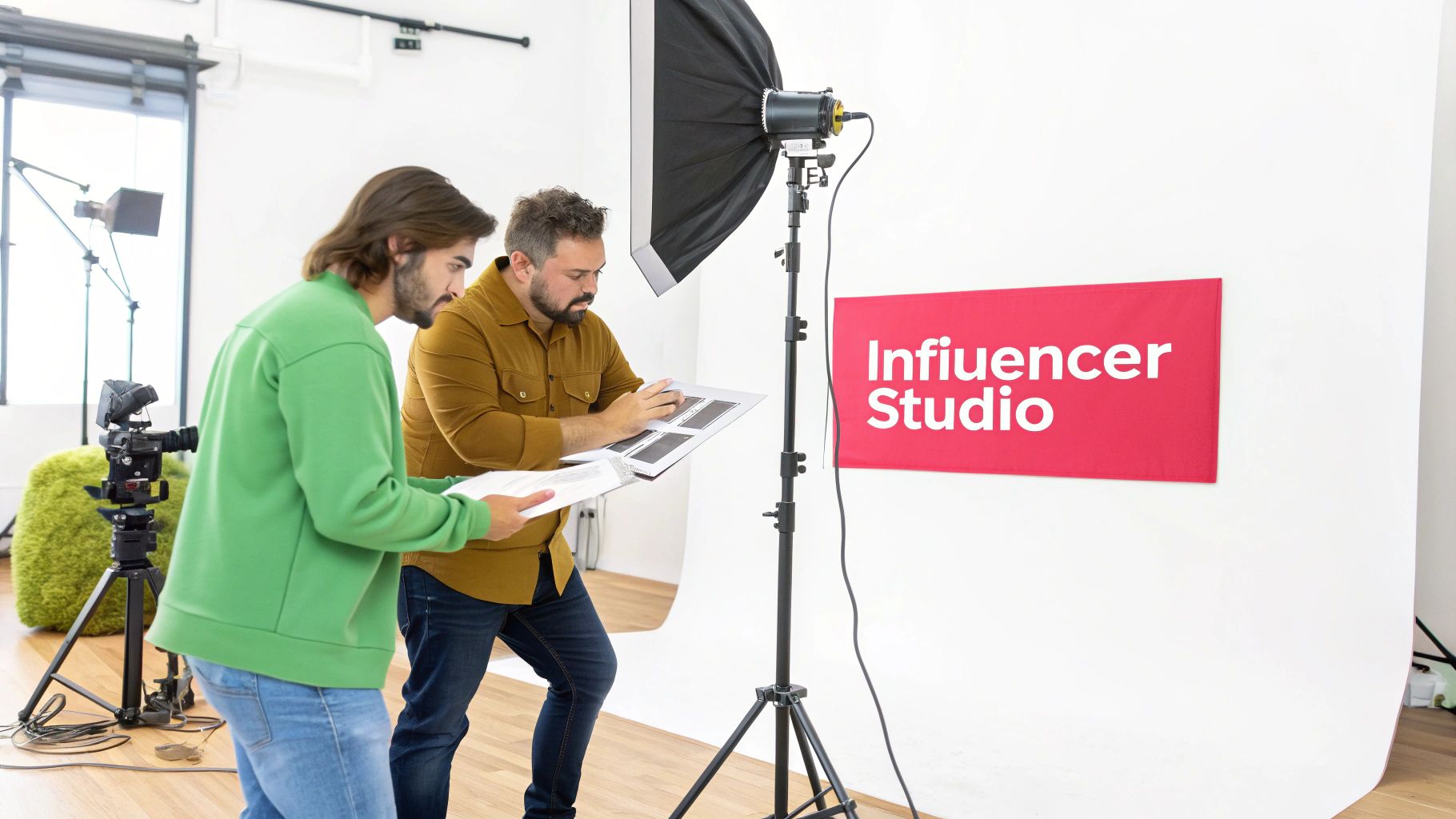
A good way to picture it is to think of an influencer agency as a film production studio for your brand's story. Just like a studio handles casting, scriptwriting, directing, and post-production, an agency pulls together every moving part of your campaign to make sure it’s a hit. They're the ultimate connectors between you and the creator economy, taking all the guesswork and operational headaches off your plate.
Having this kind of expert partner has never been more important. The industry has absolutely exploded, rocketing from just $1.7 billion in 2016 to a staggering $24 billion globally by 2024. And it’s not slowing down, with forecasts pointing toward $33 billion in 2025. This kind of insane growth means the landscape is more crowded and complex, making expert guidance a must-have.
Core Functions of an Agency
So, what are you actually paying for? The value of an agency is in its end-to-end management. They don’t just find you a few influencers; they build and run a complete strategy that’s designed to hit your specific business goals.
Their day-to-day responsibilities usually break down like this:
- Strategy Development: They sit down with you to create a detailed game plan that fits your brand’s goals, target audience, and budget. No cookie-cutter approaches here.
- Creator Sourcing and Vetting: They dive deep to find influencers who are a perfect match. This isn’t just about follower count; they rigorously vet creators to ensure they’re brand-safe, have a real, engaged audience, and genuinely align with your brand's values.
- Campaign Management: This is the heavy lifting. They manage all the logistics—communicating with creators, handling content approvals, scheduling posts, and making sure every piece of content follows FTC guidelines.
- Reporting and Analytics: Once the campaign is live, they track everything. They use key metrics to deliver detailed reports that don’t just show you numbers but give you real, actionable insights for your next move.
The real value of an agency isn't just saving time—it's mitigating risk. They are experts in brand safety, contract negotiation, and compliance, protecting your investment and reputation in a complex creator economy.
This full-service model is the big difference between hiring an agency and using a self-serve platform. With platforms, your team is still on the hook for all those tasks. While platforms give you more direct control and can be great for smaller campaigns, an influencer marketing agency brings the high-level strategy, industry connections, and specialized expertise you need for bigger, more complex initiatives.
Simply understanding how to work with influencers is a great start, but an agency takes that knowledge and turns it into a professional, scalable operation. We'll get into the pros and cons of each approach a bit later on.
The Core Services an Agency Provides

So, what do you actually get when you hire an influencer marketing agency? It's much more than just a list of names. Think of it like this: you can buy all the best ingredients, but that doesn't make you a Michelin-star chef. An agency is the chef—they bring the strategy, the technique, and the execution to turn your campaign idea into a five-star result.
These core services are built to save your team countless hours, protect your brand from messy situations, and ultimately, squeeze more value out of every dollar you spend. Let's get into the specifics of what that looks like day-to-day.
Strategic Creator Sourcing And Vetting
Finding influencers is easy. Finding the right ones is the hard part, and it's where most brands get stuck. An agency acts like an expert casting director, going way beyond vanity metrics like follower counts. Their first job is to dig deep and find creators whose audience is a mirror image of your ideal customer.
This isn't just a quick scan of their profile. It’s a full-on investigation to ensure brand safety and authenticity. Here's what they're looking at:
- Audience Health: They use specialized tools to sniff out fake followers, bots, and engagement pods. This ensures you're paying for access to a real, breathing community, not an army of robots.
- Brand Alignment: They'll meticulously comb through a creator's past content. Does their tone, their values, their whole vibe match your brand's? This step alone can prevent a future PR nightmare.
- Performance History: Good agencies have their own data. They often know which influencers just look popular versus which ones actually drive clicks, sales, and sign-ups.
A key function of an agency is to act as your brand’s first line of defense. By thoroughly vetting creators, they prevent costly partnerships with influencers who have fraudulent audiences or a history of brand-damaging behavior.
Campaign Strategy And Creative Development
A great influencer with a bad strategy is a waste of everyone's time and money. An agency is the architect of your campaign, building a detailed blueprint designed to hit your specific goals, whether that's making noise, driving traffic, or ringing the cash register.
They also handle the creative direction. This is a delicate balance of working with your team's vision and the creator's unique style to develop concepts that feel genuine. No more copy-pasted ad reads that make audiences cringe. They help craft stories that weave your product into the creator's content so naturally that it feels like a trusted recommendation, not a sales pitch.
This is also where their expertise in securing lucrative brand deals and impressing sponsors comes into play. They manage the entire creative process, from the initial brief to the final content approvals, making sure every post hits the mark and follows FTC disclosure rules.
Contract Negotiation And Relationship Management
Let's be honest—the business side of influencer marketing can be a minefield of contracts, payment terms, content usage rights, and exclusivity clauses. An agency takes all of this off your plate. They leverage their experience to negotiate better terms while shielding your brand from legal risks, making sure every detail from deadlines to deliverables is locked down.
But it doesn't stop there. The agency also manages the ongoing partnership. This is critical for building real, long-term relationships that turn a one-off campaign into a lasting brand ambassadorship. Solid influencer relationship management is their bread and butter, fostering the communication and trust needed for authentic collaborations.
Performance Tracking And In-Depth Reporting
At the end of the day, it's all about results. A top-tier agency is obsessed with translating campaign data into insights you can actually use. They look past fluffy metrics like likes and comments to focus on what really impacts your bottom line: click-through rates, conversions, and return on ad spend (ROAS).
You won’t just get a data dump in a spreadsheet, either. A good agency delivers reports that tell a story. They’ll show you what worked, what flopped, and most importantly, why. This analysis gives you clear, actionable takeaways to make every future campaign even smarter than the last.
Breaking Down Agency Pricing Models
Figuring out the financial side of an influencer marketing agency partnership can feel like a maze, but it really just comes down to a few common ways they charge. Getting a handle on how agencies structure their fees is the first step to finding a partner that actually fits your budget and what you’re trying to achieve.
And it’s a good time to be figuring it out. Budgets for influencer marketing are blowing up. Projections show 80% of brands are planning to keep or even grow their spending in 2025. A solid 47% of them are looking to bump their budgets by 11% or more. In fact, 26% of brands and agencies are already pouring over 40% of their total marketing budget into creator collaborations, making it a core part of their strategy. You can dig into more of these 2025 influencer marketing trends over on PR Newswire.
Each pricing model has its own vibe, so the "right" one is all about what you need.
The Monthly Retainer Model
Think of a monthly retainer like a subscription for an expert on your team. You pay a set fee every single month, and the agency delivers a consistent set of services in return. This model is a fantastic fit for brands that are all-in on a long-term, "always-on" influencer strategy instead of just one-off campaigns.
A retainer builds a really deep partnership. It lets the agency truly become an extension of your marketing department. They get to know your brand inside and out, which means they can spot new opportunities and tweak performance on the fly.
- Best For: Brands needing continuous influencer management, content creation, and strategic help.
- Pros: Your costs are predictable, it builds a strong agency-brand relationship, and allows for quick, agile strategy changes.
- Cons: Not the best for short-term projects; it’s a longer commitment to really see the payoff.
The Project-Based Fee Model
Got a specific, time-sensitive campaign on the books, like a product launch or a holiday push? The project-based model is probably your best bet. You and the agency agree on one flat fee for a clearly defined scope of work. Everything is laid out—deliverables, timeline, the works.
This approach gives you a ton of clarity and control. You know exactly what you’re getting and precisely how much it will cost before a single thing happens. It’s a clean, straightforward way to work, perfect for testing the waters with a new agency or for knocking out standalone projects.
The project-based model is the go-to for brands needing concrete outcomes for a single campaign. It removes budgetary ambiguity and focuses all efforts on achieving a specific, measurable goal within a defined period.
Percentage of Spend and Performance Models
Another popular setup is the percentage of spend model. Here, the agency's fee is simply a percentage of your total campaign budget, which includes what you pay creators and any ad spend. This model ties the agency's pay directly to the size of your investment and is often used for bigger, more complex campaigns.
There’s also a performance-based model, which is gaining traction. In this scenario, the agency’s fee is tied to hitting specific goals—think sales, leads, or conversions. It’s a highly results-focused structure that puts the agency’s success right alongside your business outcomes. To get a better feel for this, check out our guide on what is performance-based advertising. With this approach, you’re paying for real, tangible results, not just the effort put in.
Choosing Your Path: Agency vs. Platform
Figuring out how to run your influencer marketing isn't a simple "good vs. bad" choice. It’s all about what fits your brand, your team, and your ambitions right now. You've really got two main roads to go down: partnering with a full-service agency or getting your hands dirty with a self-serve platform.
Let's break it down with an analogy. Think of an influencer marketing agency as hiring a personal chef. They dream up the menu, source the perfect ingredients, cook an incredible meal, and even handle the cleanup. It's a white-glove, end-to-end service built for when the stakes are high and you can't afford any mistakes.
On the flip side, a self-serve platform is like getting a meal-kit delivery service. You still get all the high-quality, pre-portioned ingredients and a step-by-step recipe, but you're the one in the kitchen putting it all together. It gives you total control, flexibility, and it’s usually easier on the budget—perfect for brands that want to own the process.
When to Hire an Agency
A full-service agency is your best move when your campaigns are big, complex, or your internal team is already juggling too much. Agencies bring a ton of strategic know-how, deep-rooted creator relationships, and the sheer manpower to pull off ambitious projects from start to finish.
You should seriously consider an agency if this sounds familiar:
- You need a complete strategy: You’re not just looking for a one-off campaign; you want a partner to build a long-term, multi-channel influencer program that ties directly back to your business goals.
- Your team is tapped out: You don't have a dedicated person who can handle the nitty-gritty of finding creators, negotiating contracts, reviewing content, and pulling all the performance data.
- You're making a big investment: For campaigns with a hefty budget, an agency's expertise in managing risk, navigating tricky negotiations, and squeezing every last drop of performance out of your spend is priceless.
Basically, the agency model gives you a strategic safety net, which is critical for enterprise-level brands or any company launching a major initiative.
When to Use a Self-Serve Platform
Self-serve platforms are made for brands that want to be in the driver's seat. This is the way to go if your team has the marketing savvy but just needs the right tools to work smarter, not harder. These platforms put everything you need—from creator discovery to direct messaging—right at your fingertips.
A platform is probably the right call if:
- You need to move fast: You want to get campaigns off the ground quickly, find the right creators in a flash, and get user-generated content (UGC) back in days, not weeks.
- You want to talk directly to creators: Your team thrives on building genuine relationships and prefers to communicate with creators one-on-one, without a go-between.
- Budget is a top priority: Platforms almost always offer a more cost-effective route by cutting out agency management fees, giving you full transparency and control over where every dollar goes.
The power of this model is all in the tech. And it's a booming market for a reason. The global influencer marketing platform market is expected to reach $23.59 billion in 2025 and could skyrocket to nearly $90 billion by 2034. Enterprises are leading the charge, holding a 47.07% market share as they gravitate toward platforms that bring analytics and campaign management all under one roof. You can read more about these platform trends and their massive market impact.
The choice between an agency and a platform really comes down to one question: Are you looking to outsource the entire process, or are you looking to empower your internal team with better tools?
This infographic lays out a simple decision tree that can help you see which path aligns best with your campaign's budget and structure.
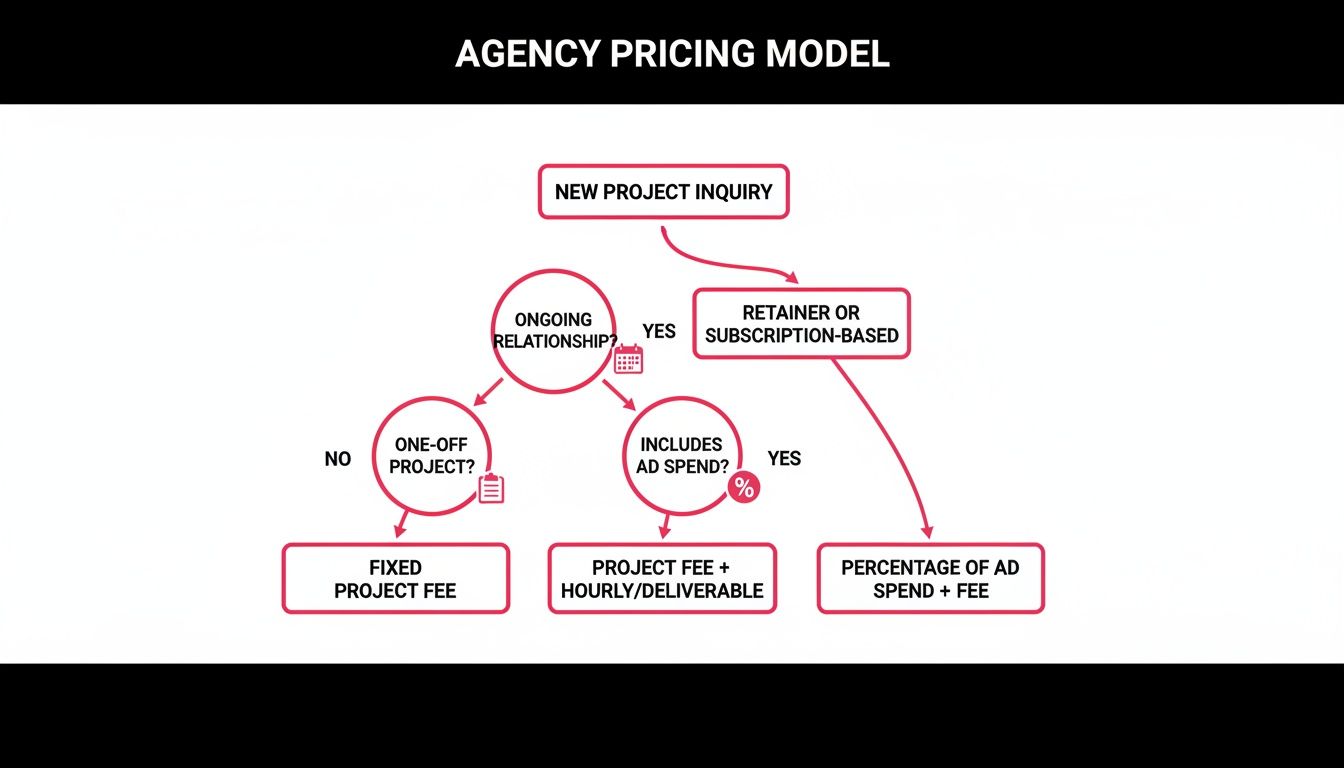
As you can see, the nature of your campaign—whether it's an ongoing retainer, a one-off project, or involves a big ad spend—plays a huge role in determining which model will work best for you.
How to Select the Right Agency for Your Brand
Choosing the right influencer marketing agency is a big deal. Think of it less like hiring a vendor and more like bringing on a key executive. This isn’t about just getting someone to run campaigns; it’s about finding a strategic partner who gets your brand, speaks your industry's language, and can actually deliver results you can measure.
The right choice can be a massive win. The wrong one? A fast track to a wasted budget and maybe even some brand damage.
To make the right call, you need a solid evaluation process. This is where you look past the slick sales decks and dig into what an agency really does—their track record, their day-to-day processes, and where they truly shine. A methodical approach helps you cut through the noise and find a partner that can genuinely move the needle for your business.
Assess Their Niche Expertise and Specialization
Let’s be clear: not all agencies are created equal. The team that crushes it for a CPG brand probably doesn't know the first thing about marketing a B2B SaaS product. Your first filter should be finding an agency that lives and breathes your industry.
An agency with deep niche experience brings some serious advantages to the table:
- Established Creator Relationships: They already have the go-to creators in your space on speed dial. This shaves weeks, if not months, off the sourcing process.
- Audience Insight: They just get what makes your target customers tick, which means better, more effective campaign ideas from the jump.
- Competitive Awareness: They know what your competitors are up to and can cook up strategies to help you stand out, not just blend in.
When you're talking to potential agencies, get specific. Ask them about their work in your vertical. If they can’t point to concrete examples or case studies relevant to your industry, they’re likely not the one.
Scrutinize Their Case Studies and Past Results
A portfolio packed with flashy brand logos looks great, but it doesn't tell you much. You need to hunt for proof of actual performance. When an agency shows you a case study, your job is to play detective and look for real business impact, not just vanity metrics.
A great case study is all about business outcomes. An agency that talks about a campaign’s 25% increase in conversion rate or a 15% decrease in cost-per-acquisition is speaking the right language. If all they're talking about is likes and impressions, they're missing the entire point.
Ask them to walk you through a campaign they ran for a brand similar to yours. What were the original goals? How did they define success? What roadblocks did they hit, and what did they learn? The way they answer these questions will tell you everything you need to know about how deep their strategic thinking goes.
Evaluate Their Creator Vetting and Technology Stack
How an agency finds and vets creators is arguably one of the most critical parts of their entire operation. A sloppy vetting process can expose your brand to all sorts of risks, from influencer fraud to partnering with someone whose past content is a PR nightmare waiting to happen.
Get them to walk you through their screening protocol, step by step:
- Audience Health Analysis: How do they sniff out fake followers, engagement pods, and bots? What tools are they using?
- Brand Safety Checks: What’s their process for digging into a creator's content history to look for potential red flags?
- Performance Vetting: Do they have hard data on how a creator has performed on past campaigns, either for them or other brands?
On top of that, ask about the tech they use. Are they leaning on a sophisticated platform for discovery, analytics, and reporting, or is their process a patchwork of spreadsheets and manual searches? An agency with a solid tech stack is just better equipped to manage campaigns efficiently and deliver the kind of in-depth reporting you need. This technological backbone is often what separates a good influencer marketing agency from a truly great one.
Measuring Real Success with the Right KPIs
Likes and follower counts are nice, but they don’t actually pay the bills. A truly effective influencer marketing agency knows that real success is all about the metrics that drive business growth, not just social media buzz. They cut through the noise of vanity metrics to focus on Key Performance Indicators (KPIs) that show a crystal-clear return on your investment.
To really get a handle on your campaign's impact, you have to learn how to measure marketing performance and prove its value in a way that goes beyond surface-level numbers. This means thinking about your results in tiers that connect directly to your most important business goals. I like to picture it as a pyramid: the broad base is built on awareness, the middle is all about engagement, and the sharp, powerful peak is where you find conversions.
A great agency doesn't just hand you the data; they weave it into a compelling story, showing you exactly how influencer activities are moving the needle for your business.
Tier 1 Brand Awareness Metrics
This is your top-of-funnel, where the main goal is to measure how many new eyeballs your campaign reached. It’s all about expanding your brand’s footprint and getting in front of people who might have never heard of you before. While these metrics don’t translate to direct sales, they’re the foundation for building brand recognition and filling your pipeline for the future.
Key awareness KPIs include:
- Impressions: The total number of times your content was displayed on a screen.
- Reach: The number of unique individuals who actually saw your content.
- Share of Voice (SOV): How much of the online conversation around your industry or specific keywords your brand owns compared to your competitors.
Tier 2 Engagement Metrics
Okay, so people saw your content. What did they do next? Engagement metrics track how your target audience is interacting with the influencer’s posts. High engagement is a fantastic sign that the content is hitting the mark, the creator is a great fit, and the audience is genuinely interested in what you have to say.
An agency will keep a close eye on metrics like:
- Likes, Comments, and Shares: These are the classic signs of audience interaction and show that the content resonated.
- Click-Through Rate (CTR): The percentage of people who clicked a link in the content. This is a big one because it shows clear intent to learn more.
- Engagement Rate: A standardized measure of how compelling the content was, calculated by dividing the total engagements by the reach or impressions.
A strong engagement rate is one of the best leading indicators of future conversions. It proves the influencer has built a community that truly trusts their recommendations, making them an incredibly powerful partner for your brand.
Tier 3 Conversion Metrics
Here we are at the bottom of the funnel—this is where the real magic happens. Conversion metrics are what tie your influencer marketing efforts directly to tangible business outcomes like revenue and new customers. A skilled influencer agency will be obsessed with these numbers because they are the ultimate proof that a campaign worked.
Important conversion KPIs are:
- Leads Generated: The number of new potential customers you captured through things like forms or email sign-ups.
- Sales Attributed: The number of sales made directly from unique promo codes or affiliate links provided to the influencer.
- Cost Per Acquisition (CPA): How much it cost, on average, to gain one new customer through the campaign.
- Return on Ad Spend (ROAS): The total revenue your campaign generated for every single dollar you spent.
A top-tier agency doesn’t just dump a spreadsheet of these numbers in your lap. They deliver a detailed report that analyzes each tier, offering sharp insights and actionable recommendations to make your next campaign even more successful.
Your Burning Questions About Influencer Agencies, Answered
Alright, so you get what an agency does in theory. But when you start thinking about the nitty-gritty of actually signing on, a whole new set of questions pops up. It's completely normal.
Let's walk through the most common questions brands ask right before they pull the trigger. Think of this as getting some straight talk from a seasoned pro, designed to clear up any last-minute doubts so you can move forward with confidence.
How Long Until We Actually See Results?
This is the big one, and the honest answer is: it depends. If your goal is broad brand awareness—getting eyeballs on your product—you'll start seeing things like reach and impression numbers climb within the first couple of weeks as content starts rolling out.
But if you're chasing conversions and sales, you'll need a bit more patience. Realistically, you're looking at one to three months to get enough data, let the agency optimize the strategy, and see a real impact on your bottom line. Influencer marketing isn't a magic switch; it's about building momentum.
So, Do We Own the Content the Creators Make?
This is a huge deal, and the answer comes down to one thing: the contract. By default, the creator who shot the video or photo owns the copyright to it. A major part of what a good influencer marketing agency does is negotiate those content rights for you.
Your contract has to spell out exactly how you can use the content. Can you run it as a social ad? Put it on your website? Use it in an email blast? For how long? Can you edit it? Never, ever assume you own the content without a crystal-clear agreement in writing.
What Happens If a Campaign Is a Flop?
Let's be real—not every campaign is going to be a grand slam. The difference between an amateur and a pro agency is how they handle it when things go sideways. A true partner won't just shrug their shoulders; they'll get to work.
First, they'll dig deep into the analytics to figure out why it's not working. Was the messaging off? Did the content just not land with that creator's audience? Was the call-to-action confusing?
From there, they should come back to you with a data-driven plan to pivot. That might mean:
- Switching up the creative approach based on what the audience is responding to.
- Shifting the budget over to the influencers who are actually delivering.
- Testing new calls-to-action or sending traffic to a different landing page.
The key here is total transparency. The agency should be upfront about what’s failing and have a clear, actionable plan to fix it.
Ready to skip the agency fees and connect directly with over 250,000 creators? JoinBrands is the all-in-one platform that puts you in control. Find the perfect influencers, launch campaigns in minutes, and get high-quality content faster than ever. Start your first campaign on JoinBrands