 Top Influencer Marketing Platforms for 2025: A Comprehensive Guide
So, what is an Instagram influencer, really?
At its heart, an Instagram influencer is a creator who has built a real community around their content and personal brand. They're storytellers who can genuinely sway their audience's buying habits – not with pushy ads, but through an authentic connection and being seen as an expert in their corner of the internet.
Table of Contents
What Are Instagram Influencers, Really?
Forget thinking about influencers as walking billboards. A better way to see them is as trusted guides. They aren't just shouting messages into the void; they're in a constant conversation with a community that genuinely looks to them for advice, a laugh, or a bit of inspiration. That relationship is built brick by brick with consistency, authenticity, and shared interests.
An influencer's real power isn't just about a big follower number. It's about their knack for creating content that hits home with a specific group of people. Think of a home chef nailing a new recipe, a fitness guru breaking down a workout, or a fashion creator putting together the perfect outfit. Their credibility makes a recommendation feel less like a corporate ad and more like a tip from a friend who knows their stuff.
Trust: The Real Foundation of Influence
The only currency that truly matters for an Instagram influencer is trust. They spend months, sometimes years, building that genuine connection with their followers. This isn't an accident; it’s the result of hard work.
- Consistent Content: They show up regularly with high-quality, relevant posts that their audience actually wants to see.
- Authentic Engagement: They’re in the trenches, replying to comments, answering DMs, and being an active part of the conversation. That’s how a following becomes a community.
- Niche Expertise: They live and breathe their topic, whether it's sustainable living or vintage tech, and their passion shines through.
This hard-won trust is exactly why brands are lining up to work with them. It’s a direct line to credibility.
When a brand partners with the right creator, they aren't just buying ad space; they are borrowing the trust that the influencer has meticulously built with their audience.
This is what has turned Instagram into an absolute powerhouse for creator-driven marketing. The platform is still the king of the hill, with the global Instagram influencer market expected to rocket past $22 billion in 2025. On top of that, 68% of marketers see Instagram as a non-negotiable part of their strategy, making it the most valued platform for these kinds of partnerships. You can find more data on the influencer market size here.
This is where platforms like JoinBrands come in, creating a bridge that connects businesses directly to these trusted storytellers and making the whole process a lot simpler.
Choosing Your Influencer Tier for Maximum Impact
When it comes to picking Instagram influencers, looking at raw follower counts is just scratching the surface. Different types of creators bring completely different strengths to the table, and the best fit hinges entirely on what you want to achieve.
Think of it like choosing a vehicle for a trip. You wouldn't take a race car on a cross-country move, and you wouldn't use a moving truck for a quick run to the store. Each influencer tier, from the hyper-local nano-influencer to the celebrity-status mega-influencer, serves a unique strategic purpose. Your goal dictates who will get you the best results, whether that’s driving immediate sales, building credibility in a tight-knit community, or just getting your brand name out there for everyone to see.
Understanding the Tiers
Creators are generally bucketed into tiers based on their follower count. This number usually gives you a ballpark idea of their reach, typical engagement rates, and how much they might charge.
- Nano-Influencers (1K-10K Followers): These are your everyday people – local experts and passionate hobbyists. Their followers are small, tight-knit communities that hang on their every word. This translates to incredibly high trust and engagement, making them perfect for building grassroots buzz and driving real conversions.
- Micro-Influencers (10K-100K Followers): A step up in audience size, micro-influencers still maintain a strong, dedicated following. They strike a great balance between broader reach and authentic community trust, making them ideal for targeted campaigns that need both awareness and genuine engagement.
This diagram helps visualize where influencer marketing fits into the bigger picture.
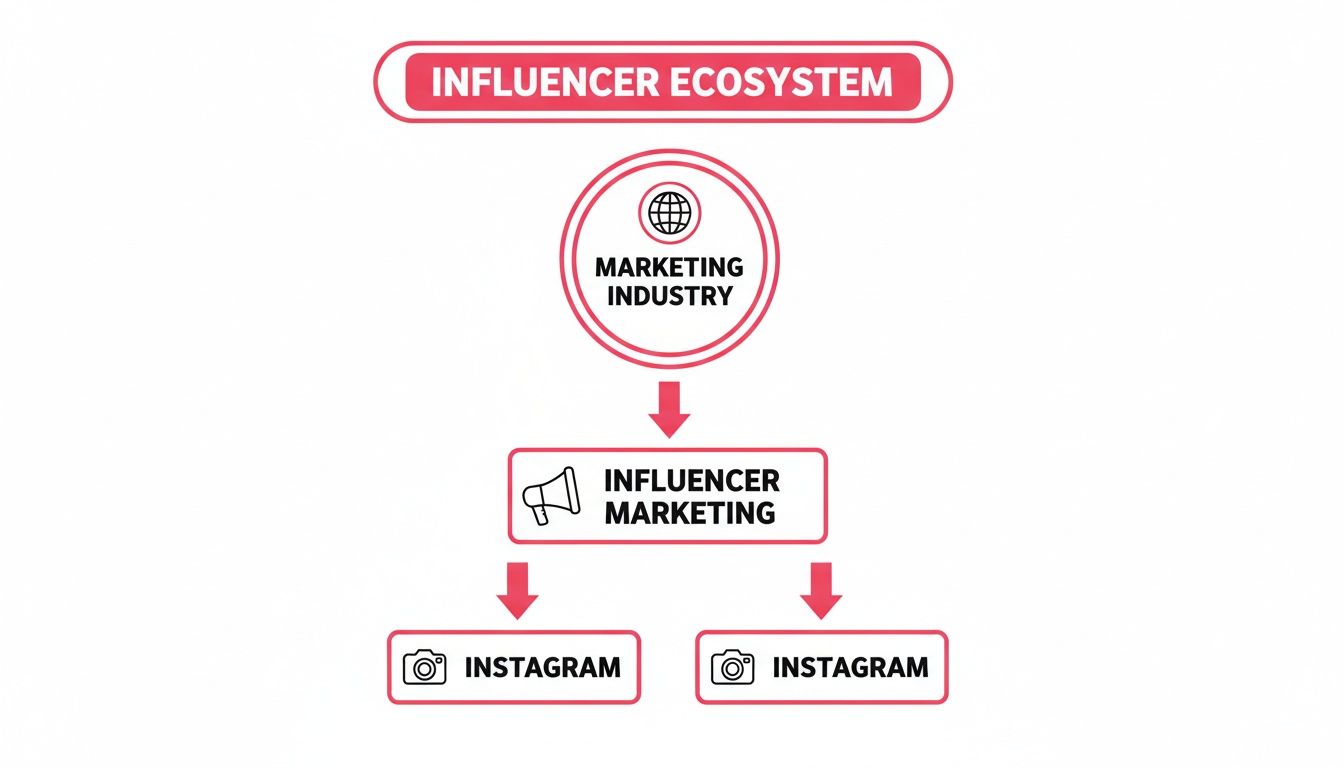
It shows how influencer marketing has become its own specialized field, with Instagram standing out as one of the most powerful platforms to make it happen.
From Niche Power to Mass Appeal
As you move up the ladder in follower count, the strategy shifts from deep, personal connection to massive, widespread reach.
- Macro-Influencers (100K-1M Followers): These are the established pros. Think professional bloggers, YouTubers, and creators who have built a significant brand and a large following on Instagram. They're your go-to for large-scale awareness campaigns designed to introduce your brand to a broad, new audience.
- Mega-Influencers (1M+ Followers): We're talking celebrities, athletes, and major public figures here. Their reach is enormous. Partnering with a mega-influencer is a power move for huge brand announcements when you need to get the maximum number of eyes on your product in a very short time.
Here's a handy table to see how these tiers stack up against each other.
Instagram Influencer Tiers at a Glance
| Influencer Tier | Follower Count | Average Engagement Rate | Best For | Est. Cost Per Post |
|---|---|---|---|---|
| Nano | 1K-10K | 2.5%-5% | Hyper-targeted niche marketing, high trust, local campaigns | $10-$100 |
| Micro | 10K-100K | 1.5%-2.5% | Strong community engagement, targeted awareness, conversions | $100-$1,500 |
| Macro | 100K-1M | 1%-1.5% | Broad brand awareness, large-scale campaigns, product launches | $1,500-$15,000 |
| Mega | 1M+ | <1% | Maximum reach, celebrity endorsements, major announcements | $15,000+ |
This breakdown makes it clear: there's a perfect influencer for every objective, from driving sales in a small community to making a massive splash across the market.
It's fascinating to see how the landscape is distributed. The vast majority of creators on Instagram – a staggering 76-77% – are actually nano-influencers. And here's the kicker: they also boast the highest average engagement rate at 2.19%. For brands looking for authentic partnerships that truly move the needle, this is a massive, often overlooked, opportunity. You can dive deeper into these influencer marketing statistics to see the full picture.
The main takeaway here is simple: match the influencer to the mission. If you need authentic, high-converting endorsements within a specific niche, nano and micro-influencers are your power players. If you're going for broad-stroke brand awareness, macro and mega-influencers deliver the scale you need. The most effective strategies often use a smart mix of tiers to hit multiple goals at once.
How to Find and Vet the Right Influencers

Alright, you've got your strategy and know which influencer tiers make sense for your brand. Now comes the fun part: finding the perfect creators to partner with. Think of this process as part detective work and part data analysis. You’re blending hands-on discovery with some serious vetting to make sure you’re teaming up with authentic, effective people.
You can start by doing some manual digging. This means searching relevant hashtags, seeing who your competitors are tagging, and exploring geotags tied to your business. A lot of brands even have a brand's collaboration page that outlines how they work with partners, which can be a great place to spot potential collaborators. This grassroots approach often uncovers hidden gems who are already genuine fans of what you do.
But let's be real – manual searching can feel like a never-ending rabbit hole. This is where influencer discovery platforms like JoinBrands become a major advantage. They use smart filters and AI to instantly connect you with a huge network of pre-vetted creators, saving you countless hours of scrolling.
Look Beyond the Follower Count
Once you have a shortlist of potential partners, the real evaluation begins. The follower count is just a vanity metric. True influence is all about engagement, the quality of their audience, and how well they align with your brand. A massive follower count can easily hide a disengaged – or worse, fake – audience that won't drive any real results.
Here are the critical metrics and qualitative factors you need to dig into:
- Engagement Rate: Calculate this by adding up the likes and comments on an influencer’s recent posts, dividing by their total followers, and multiplying by 100. A healthy rate is typically 1-3% or higher, which tells you their audience is actually listening.
- Audience Demographics: Does their audience look like your target customer? Check out their followers' age, gender, location, and interests. Most serious influencers will have a media kit with all this data ready to go.
- Content Authenticity: Scroll through their past sponsored posts. Do they feel like clunky, out-of-place ads, or do they blend naturally with their usual content? The best Instagram influencers know how to weave brand messages into their content so it feels genuine and trustworthy.
Spotting Red Flags and Ensuring Brand Fit
Vetting isn’t just about finding the good stuff; it's also about spotting potential problems before they can hurt your campaign. A thorough check helps you dodge creators who might tarnish your brand's reputation or burn through your marketing budget with zero return.
Keep an eye out for these warning signs:
- A sudden, massive spike in followers often points to a bunch of purchased, fake accounts.
- Comments that are super generic ("Nice pic!") or spammy are a clear sign of low-quality engagement.
- A feed that’s almost entirely sponsored posts can mean their audience is tired of being sold to.
The ultimate goal is to find a partner whose values and aesthetic genuinely align with your brand. An influencer is a representative of your company, and their content should feel like a natural extension of your own marketing efforts.
Platforms like JoinBrands make this whole vetting process way simpler by offering up detailed creator portfolios. These profiles are packed with verified performance metrics, examples of past work, and audience data, so you can make smart decisions quickly. It ensures you’re not just finding an influencer, but the right influencer.
Crafting a Campaign Brief That Actually Works

If you want disappointing content, send a vague or overly restrictive campaign brief. It's the fastest way to get there.
Think of your brief less like a set of rigid instructions and more like a strategic guide. It’s a map that shows Instagram influencers the destination without dictating every single turn. The real goal here is to inspire creativity while making sure your brand’s core objectives are met.
A great brief strikes a perfect balance, offering both clarity and creative freedom. It gives creators the space to produce authentic, high-impact content that feels genuine to their audience. This approach sets clear expectations from day one, which drastically cuts down on revisions and gets your campaign performing right out of the gate.
Core Components of a Powerful Brief
To build a brief that actually gets results, there are a few key pieces of information you have to include. Each one helps the influencer understand your vision and exactly how they fit into it. Getting this right is the foundation of any successful partnership.
These components ensure nothing important gets lost in translation:
- Clear Campaign Objectives: What is the single most important goal? Are you trying to build brand awareness, drive traffic to a new landing page, or generate sales for a specific product? Get specific.
- Key Messages and "Do Not Say" List: Nail down the one or two core messages you absolutely need the influencer to communicate. Just as important is a "do not say" list to sidestep any inaccurate claims or brand missteps.
- Target Audience Snapshot: Give them a quick sketch of who you're trying to reach. This helps the creator adjust their language and style to really connect with the right people.
A well-crafted brief is a collaboration tool. It says to the influencer, "Here's what we want to achieve, and we trust your creative expertise to help us get there." That mutual respect is what leads to better, more authentic content.
Defining Deliverables and Disclosures
Beyond the creative vision, you need to lock down the practical details. This is where you outline exactly what you expect to receive and the ground rules for the campaign. Any gray area here can quickly turn into a major misunderstanding.
Your brief absolutely must specify:
- Content Deliverables: Define the exact number and type of posts required (e.g., one Instagram Reel, two Stories, one static post).
- Creative Mandatories: Include any required hashtags, tags (@yourbrand), or specific calls-to-action.
- Timelines: Provide crystal-clear deadlines for draft submissions and the final go-live dates.
- FTC Disclosure Requirements: Mandate the use of clear disclosures like
#ador#sponsoredto stay compliant with advertising regulations.
To get a better handle on structuring all these details, using a comprehensive creative brief template can give you a rock-solid framework for your campaigns. A little preparation here ensures both you and your chosen Instagram influencers are perfectly aligned for success.
Making Sense of Influencer Budgets and ROI
Diving into the world of Instagram influencers means you’ve got to get comfortable with the money talk. It can feel like a puzzle trying to figure out how much to pay creators and whether your investment is actually moving the needle. But don't worry – it all boils down to a few straightforward models and metrics.
There’s no universal rate card for influencer collaborations. The final price tag swings wildly depending on the creator's audience size, how much work is involved, and what you’re trying to accomplish. Getting a handle on these payment options is your first step toward building a budget that makes sense for your brand.
Common Compensation Models
How you pay an influencer should directly reflect what you want them to do for you. If your goal is just to get your name out there and build brand awareness, a simple flat fee usually does the trick. But if you need to drive actual sales, a performance-based deal might be the smarter play.
- Flat Fees: This is the most common approach by a long shot. You agree on a fixed price for a specific set of deliverables – say, one Reel and two Stories. It’s clean, predictable, and makes budgeting a breeze.
- Product Gifting (In-Kind): A popular choice for working with nano and micro-influencers. You send them free products, and they post about their experience. This is a super cost-effective way to get content, but you trade control for savings; the results can be a bit of a gamble.
- Affiliate Commissions: In this pay-for-performance model, influencers get a cut of every sale they generate through a unique link or discount code. This is perfect for tying your marketing spend directly to revenue.
Choosing the right model can be tough. For a much deeper look, our guide on how to pay influencers has some great advice to help you put together fair and effective compensation packages.
Measuring Your Return on Investment
Cutting the check is only half the job. Now you need to find out if the campaign actually worked. Measuring return on investment (ROI) in influencer marketing isn't just about counting sales; it’s about grasping the full value a campaign delivers to your brand.
The true value of an influencer campaign isn’t always measured in immediate sales. Metrics like Earned Media Value (EMV) show the worth of the organic exposure you received – exposure you would have otherwise paid for through traditional ads.
To get a crystal-clear picture of your ROI, you need to track Key Performance Indicators (KPIs) that line up with your campaign goals. If your main objective was to boost engagement, then Cost Per Engagement (CPE) is your north star. Just divide the total campaign cost by the total number of likes, comments, and shares. This simple calculation tells you exactly how much you paid for each person who cared enough to interact, giving you a concrete way to prove the value of your work with Instagram influencers.
Turning Campaign Data into Smarter Decisions
Launching your influencer campaign is the starting line, not the finish. Once the content is live, the real work begins – and that’s turning all that performance data into insights you can actually use.
This isn’t just about looking back to see what worked. It’s about digging in to understand why it worked. That's how you make every future campaign even better than the last.
Think of your campaign data as direct feedback from your target audience. Every single like, comment, click, and sale is a breadcrumb telling you what resonates and what doesn't. By keeping an eye on the right metrics, you can ditch the guesswork and build a data-driven strategy that makes your marketing budget work harder.
Key Metrics to Monitor
To really get a feel for your campaign’s performance, you have to look beyond the surface-level numbers. Sure, reach is a nice vanity metric, but it's the engagement and conversion numbers that tell the true story of the impact your Instagram influencers had.
Make sure you're tracking these essential data points:
- Engagement Rate: This is the lifeblood of an influencer campaign. A healthy mix of likes, comments, shares, and saves is a clear sign that the content genuinely connected with people.
- Click-Through Rate (CTR): For any campaign with a specific call-to-action – like visiting a product page – CTR tells you exactly how compelling the influencer's post was. Did it make people want to learn more?
- Conversion Rate: This is the bottom line for any sales-focused campaign. You need to know how many followers actually took the final step, whether that was making a purchase or using a unique discount code.
When you start analyzing which influencer drove the most clicks or conversions, you'll begin to spot patterns. Maybe you'll find out your audience goes wild for Reels but ignores static posts, or that a certain style of caption generates way more sales.
This is the process that builds long-term success. For a complete walkthrough on this, check out our guide on building an effective social media campaign reporting strategy.
Platforms like JoinBrands make this whole process a lot simpler by pulling all of your campaign analytics into one clean dashboard. You can quickly see which creators are delivering the best results, what content formats are killing it, and how to shift your budget for maximum impact next time around. It turns a pile of raw data into a real strategic advantage.
Common Questions About Instagram Influencer Marketing
As marketers start exploring the world of Instagram influencers, the same questions always seem to pop up. Let's be honest, it can feel like a bit of a minefield at first.
Getting straight, practical answers is the key to building a smart strategy from day one and making sure your hard work actually pays off. Here are the most common questions I hear, with no-fluff answers to help you plan your next campaign with confidence.
How Long Does It Take to See Results?
This really boils down to what you're trying to achieve. If your goal is brand awareness, you’ll see results almost instantly. The moment an influencer posts, you can watch metrics like reach and impressions climb.
But if you're chasing sales or conversions, you need to be more patient. People don't always buy the second they see something; they need time to move from "ooh, that's interesting" to "I'm buying this." For a single campaign, give it at least two weeks to analyze performance. For a long-term strategy, you’ll want to see consistent effort over three to six months to really gauge substantial growth.
What Are the Biggest Mistakes to Avoid?
So many brands stumble over the same hurdles. Sidestepping these common pitfalls is the single best thing you can do to protect your budget and your brand's reputation.
The biggest mistakes I see are:
- Chasing vanity metrics: Picking partners based only on their follower count without digging into their audience demographics and actual engagement rates.
- Killing creativity with a rigid brief: Handing over a script that's too restrictive is a surefire way to get content that feels like a clunky, forced ad.
- Skipping the paperwork: Failing to lock down deliverables, usage rights, and payment terms in a clear, written agreement before anything starts.
- Flying blind: Not tracking performance metrics, which makes it impossible to know if you're getting a return on your investment or how to improve next time.
A partnership is a two-way street. The biggest mistake is treating an influencer like a media buy instead of a creative collaborator. Trust their expertise to connect with their audience authentically.
Can Small Businesses Use Influencers?
Absolutely. In fact, small businesses are often perfectly set up to get incredible results from influencer marketing, especially when the budget is tight. The secret is to focus on nano and micro-influencers.
These creators are way more affordable and are often open to partnerships built on gifting products or affiliate commissions. Their audiences are smaller but hyper-engaged and niche, which can drive serious sales for specialized products.
How Do I Handle Content Usage Rights?
This is non-negotiable: content usage rights must be spelled out in your agreement before the campaign kicks off. Getting this wrong can lead to some serious legal and financial headaches later on.
Your contract has to be crystal clear on exactly where you can use the content (your website, social media, paid ads), for how long (six months, one year, or forever), and whether you have the right to edit it.
Finding the right creators, managing briefs, and tracking results can feel like a full-time job. JoinBrands is built to handle the heavy lifting, connecting you with over 250,000 pre-vetted creators and giving you the tools to manage campaigns from start to finish. Find the perfect Instagram influencers for your brand on JoinBrands.