
 A Marketer’s Guide to Content Creation Websites
Marketing to Gen Z is a whole different ballgame. It’s about plugging into a generation that doesn't see a line between entertainment, community, and shopping. These are true digital natives, born between 1997 and 2012, and they have an almost sixth sense for sniffing out anything that isn't authentic. Forget traditional ads; they're looking for shared values and content from creators they trust.
Table of Contents
Decoding the Gen Z Consumer Mindset
If you're still using the old marketing playbook, it's time to toss it. Gen Z isn't just a new demographic; they represent a massive shift in consumer behavior that forces brands to rethink everything. They grew up with a smartphone practically attached to their hand and have zero patience for inauthentic, corporate-speak content.
This generation is more than just a cultural force—they have serious economic muscle. Their collective spending power is already on track to hit $2.7 trillion USD in the near future and is expected to explode to a staggering $12 trillion by 2030. That's not a typo. This growth means they're set to overtake Boomers in global spending, completely reshaping e-commerce as we know it.
Digital Natives with High Expectations
While Millennials were digital pioneers, exploring the new frontier of the internet, Gen Z are true digital natives. For them, there’s no real distinction between their online and offline lives. This complete digital immersion sets a very high bar for brands.
- Seamless is a Must: They expect every interaction to be frictionless and mobile-first, from discovering a product on TikTok to checking out with a single tap.
- They Speak in Visuals: Their native languages are emojis, memes, and short-form videos. Walls of text? They'll scroll right past.
- Community Trumps Corporations: Trust is placed in creators and peers, not polished brand messages. This makes user-generated content (UGC) an absolute cornerstone of any successful campaign.
Nailing these fundamentals is your first step. If you really want to get granular, performing a detailed social media audience analysis will give you the specific data you need to sharpen your strategy.
This visual really breaks down the Gen Z mindset into three interconnected pillars: their core values, their digital-first nature, and their unique spending habits.
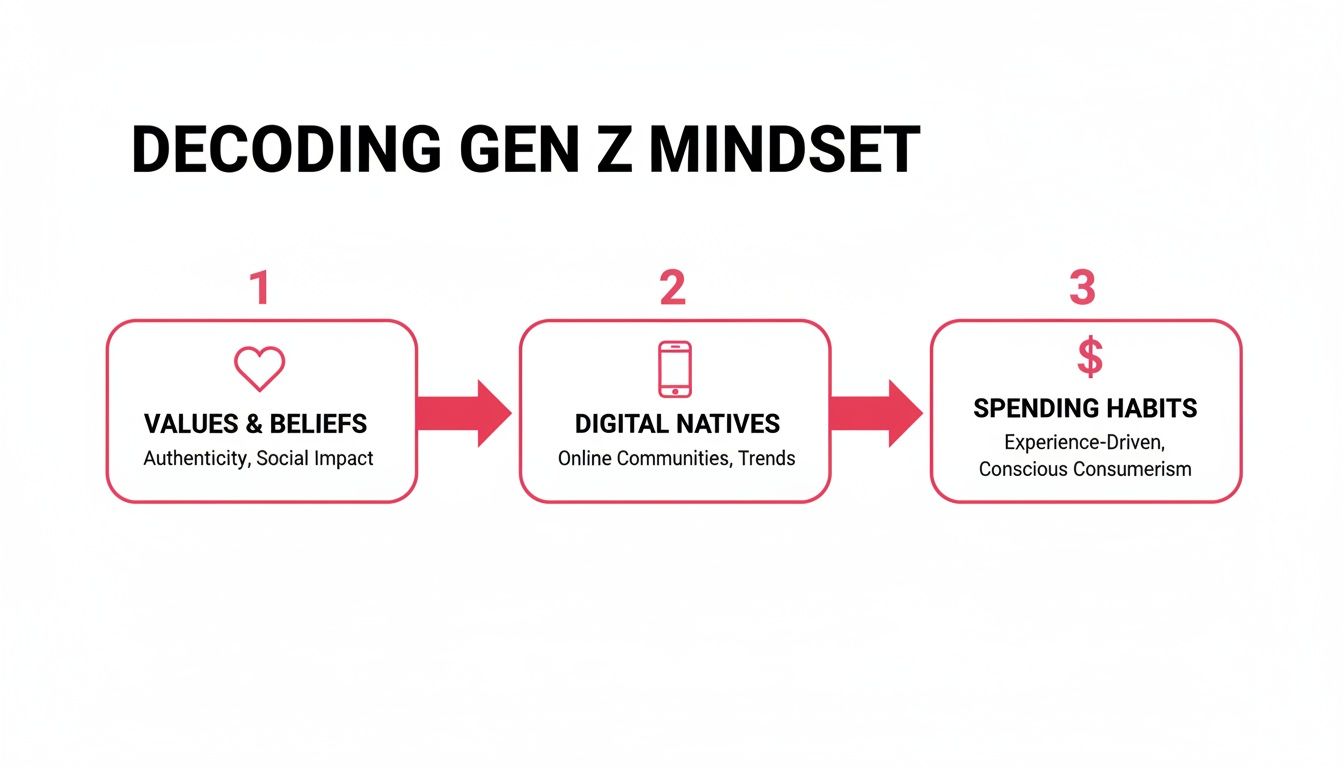
As the infographic shows, you can't just jump to targeting their wallets. To unlock their spending power, you have to first genuinely align with their values and learn to speak their language in the digital spaces they call home.
Gen Z vs. Millennial Consumer Snapshot
While often grouped together, Gen Z and Millennials have distinct differences in how they think, shop, and interact with brands. Here’s a quick look at what sets them apart.
| Characteristic | Gen Z | Millennials |
|---|---|---|
| Primary Platforms | TikTok, Instagram Reels, YouTube Shorts | Instagram (Feed/Stories), Facebook, Pinterest |
| Communication Style | Visual-first (video, memes, emojis) | Text-based with visuals (longer captions) |
| Brand Loyalty | Value-driven; loyal to brands that align with their ethics and are authentic. | Experience-driven; loyal to brands that offer convenience and rewards. |
| Content Preference | Raw, unfiltered, user-generated content (UGC) | Polished, aspirational, influencer content |
| Financial Outlook | Pragmatic and savings-focused; value-conscious | Optimistic but often debt-burdened; seek deals |
| Attention Span | Shorter; content must be immediately engaging | Longer; more tolerant of traditional ad formats |
Understanding these nuances is key. A strategy that works wonders for Millennials might fall completely flat with a Gen Z audience. It’s all about adapting your approach to fit the specific expectations of the generation you’re trying to reach.
Key Takeaway: Marketing to Gen Z isn’t just about being on the right platforms. It’s about becoming a participant in their culture, reflecting their values, and co-creating content that feels real, not like a sales pitch. They’ll reward the brands that actually listen and evolve with them.
Building a Brand on Authenticity and Shared Values

Let's get one thing straight. When you're marketing to Gen Z, authenticity isn't just a nice-to-have buzzword—it's everything. This generation grew up online and has a finely tuned radar for corporate jargon, empty promises, and "woke-washing."
They don't just buy products; they align themselves with brands that reflect their own ethics. Empty statements about sustainability or social justice will get you called out on TikTok, not celebrated. It means your brand's values have to be baked into everything you do, from your supply chain to the creators you work with.
Moving Beyond Performative Allyship
Performative allyship is the quickest way to tank your credibility with this audience. It’s when a brand slaps a rainbow flag on their logo in June or posts a black square on Instagram without taking any meaningful action to back it up. Gen Z spots this a mile away and sees it for what it is: a cheap marketing trick.
So, how do you avoid it? You have to walk the walk. If sustainability is your thing, you need to show the receipts.
- Get specific with materials: Are they recycled? Ethically sourced? Tell the story behind why you made those choices.
- Show, don't just tell: Create behind-the-scenes content that actually highlights your sustainable production methods.
- Own your imperfections: Being transparent about where you’re still working to improve builds far more trust than pretending you're perfect.
For example, don’t just say you're "eco-friendly." Explain how your new packaging reduces plastic waste by 40% or detail your partnership with a specific carbon-offset program. This tangible proof is what turns a marketing claim into something a Gen Z consumer can actually believe in.
Key Takeaway: For Gen Z, trust is earned through consistent, verifiable action. Your brand’s values shouldn't just be a part of your marketing; they should be the core of your operational identity.
Communicating Your Mission Without Preaching
Once you have your actions lined up, the next challenge is talking about them without sounding preachy or like you're patting yourself on the back. The real goal is to weave your values into your brand's voice and content so naturally that they become an inseparable part of your story.
This is where your social media presence and creator partnerships are pure gold. Let authentic voices tell your story for you. Find micro-influencers who genuinely vibe with your mission. An endorsement from them feels like a recommendation from a trusted friend, not a stiff corporate ad read.
Think about how your values show up in different places:
- Product Descriptions: Go beyond features. Explain how a product was made ethically or why a material was chosen for its low environmental impact.
- Creator Briefs: Don't just give them talking points. Encourage creators to share what your brand's mission means to them personally. Give them the freedom to create something that feels genuine.
- Social Content: Run a series highlighting the real people behind your brand—employees, community partners, or the actual impact of your initiatives.
This isn't just about selling; it's about building a community around shared beliefs. It creates a bond that's way stronger than a simple transaction. To truly connect, your brand has to embody what they care about, like supporting ethical and transparent beauty brands.
The Real Cost of Inauthenticity
Getting this wrong is more than just a missed opportunity. It's not about losing a few sales; it's about actively alienating an entire generation of consumers who hold brands accountable with their wallets.
Consider this: a staggering 29% of Gen Zers have switched brands in the past year simply because of how a company treated its employees. That statistic alone shows their intense focus on ethical operations. They demand real social impact over slick slogans, and they use platforms like TikTok as their primary search engine to validate a brand's claims.
Ultimately, marketing to Gen Z means building a brand that actually stands for something. When you embed genuine authenticity and shared values into the core of your business, you're not just gaining customers. You're building a loyal community that will advocate for you, stick by you, and grow with you for years to come.
Choosing the Right Platforms and Content Formats
If you want to reach Gen Z, you have to meet them where they live: on their phones. This isn't just about "having a social media presence." It's about showing up and mastering the specific digital hangouts where this generation builds communities, finds new stuff, and ultimately decides what to buy. A generic, one-size-fits-all approach is a surefire way to get scrolled past.
Everything you do has to be mobile-native from the jump. A staggering 75% of Gen Zers use their phone as their primary device, and they expect a seamless experience on every app. And with social media influencing a massive 55% of their purchases, the pressure is on to get your platform and content mix right.
The secret is understanding the unique culture of each platform. What kills it on TikTok feels weird and out of place on Instagram. What grabs attention on YouTube Shorts won't land the same way on Pinterest. Your content has to feel like it belongs there.
The Short-Form Video Trinity: TikTok, Instagram, and YouTube
Short-form video is the native language of Gen Z. Platforms like TikTok, Instagram Reels, and YouTube Shorts aren't just channels; they're entire ecosystems for culture, humor, and commerce. Each one serves a slightly different purpose, and you need to treat them that way.
- TikTok: The Trend Engine. This is ground zero for viral trends, challenges, and raw, unfiltered creativity. Success here isn't about slick production value; it’s about speed, authenticity, and jumping on whatever's blowing up right now. Brands that win are playful, don't take themselves too seriously, and let creators drive the conversation.
- Instagram Reels: The Polished Story. While it's a huge hub for short-form video, Instagram still has a more curated, aesthetic vibe. Reels are often where TikTok trends show up with a bit more polish. It’s the perfect spot for visual storytelling, behind-the-scenes glimpses, and creator collabs that fit your brand’s look and feel.
- YouTube Shorts: The Discovery Tool. As part of the bigger YouTube world, Shorts are fantastic for top-of-funnel awareness. Think of them as quick, snappy trailers that can lead viewers to your longer videos. They're ideal for tutorials, product teasers, and quick educational bits.
These three might share a format, but their algorithms and user expectations are worlds apart. For a deeper dive, understanding the key differences between TikTok and Instagram is critical for sharpening your strategy.
Key Takeaway: Don't just cross-post the exact same video everywhere. Tweak the captions, sounds, and editing to match the native culture of each app. Those small details are what separate content that blends in from content that feels like a jarring ad.
Top Gen Z Platforms and Content Types
To help you visualize where to focus your efforts, here’s a quick rundown of the top platforms and the content formats that perform best for engaging Gen Z.
| Platform | Primary Gen Z Use Case | Best Content Formats | Key Statistic |
|---|---|---|---|
| TikTok | Entertainment, trend discovery, community | Short-form video, challenges, duets, live streams | 60% of Gen Z users are on TikTok daily |
| Curation, social connection, aesthetic inspiration | Reels, Stories, carousels, creator collaborations | 61% of Gen Z teens prefer Instagram for following brands | |
| YouTube | In-depth learning, entertainment, product reviews | Shorts, long-form videos (tutorials, vlogs), live streams | The most-used social platform by Gen Z overall (95% usage) |
| Visual search, inspiration, product discovery | Idea Pins, static image pins, video pins | 42% of its global user base is now Gen Z |
This table isn't just a list; it's a strategic map. It shows you not only where Gen Z spends their time but why they go there, helping you align your content with their intent.
Beyond Video: Adapting Content for Other Key Platforms
While video is king, a well-rounded strategy needs more. Ignoring other formats means you're leaving valuable touchpoints on the table.
Pinterest, for example, has evolved into a massive visual search engine and mood board for Gen Z, who now make up 42% of its global audience. If you're in fashion, beauty, home decor, or food, this is a non-negotiable platform for showcasing products in a highly aspirational, visual way.
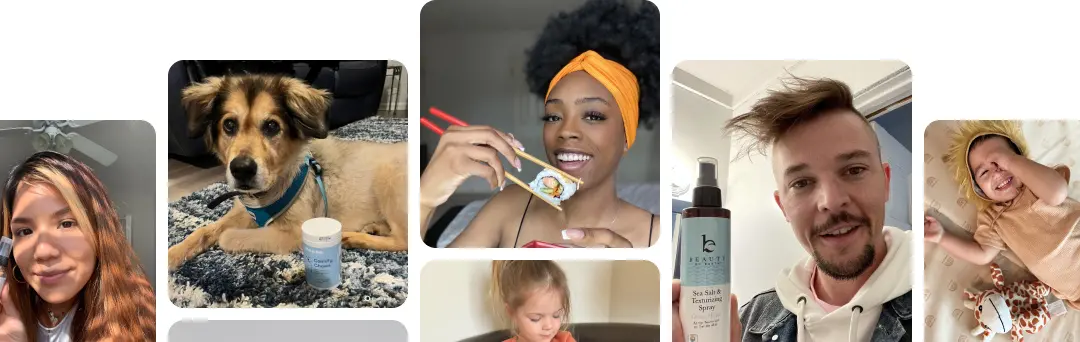
Then there’s user-generated content (UGC). For Gen Z, UGC is the ultimate form of social proof. It’s real, it’s trustworthy, and it feels infinitely more genuine than a slick, branded campaign. Encouraging your customers to post photos and videos with your products builds an incredible library of authentic content and creates a real sense of community.
Aligning Your Brand Voice with the Right Channel Mix
Picking your platforms isn't about chasing the biggest numbers. It's about finding the right home for your brand's personality and goals. A chaotic, meme-filled TikTok presence might be perfect for a snack brand but would feel completely wrong for a luxury skincare line.
Run through this simple checklist to guide your decisions:
- Where does our audience actually hang out? Dig into your own analytics. Where does your best traffic and engagement already come from?
- What's our brand's personality? Are you witty, inspirational, educational, or aesthetic? Match that vibe to the platform that amplifies it.
- What can we realistically create? Be honest about your resources. If you can't pump out daily, trend-driven videos, maybe focus on platforms like Pinterest or Instagram Stories where amazing images still win.
- What's our main goal? If it's direct sales, TikTok Shop and shoppable Instagram posts are your best friends. If it's building a community, maybe a focused Instagram strategy is the better play.
Answering these questions will help you build a smart, focused platform strategy. You'll invest your time and money where it counts, building a genuine connection with your Gen Z audience instead of just shouting into the void.
Mastering Creator Partnerships and UGC Campaigns
When you're marketing to Gen Z, creators aren't just another advertising channel; they're the new gatekeepers of trust. This generation has a finely tuned radar for inauthentic ads and trusts creators far more than they'll ever trust a polished, corporate campaign.
This means you have to ditch the old playbook of sending out rigid, scripted ad reads. The goal now is to co-create content that feels like a natural, welcome part of a creator's feed, not a jarring interruption. This is where your strategy pivots to user-generated content (UGC) and genuine influencer partnerships.

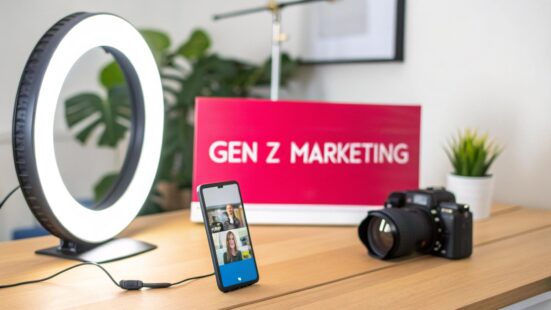
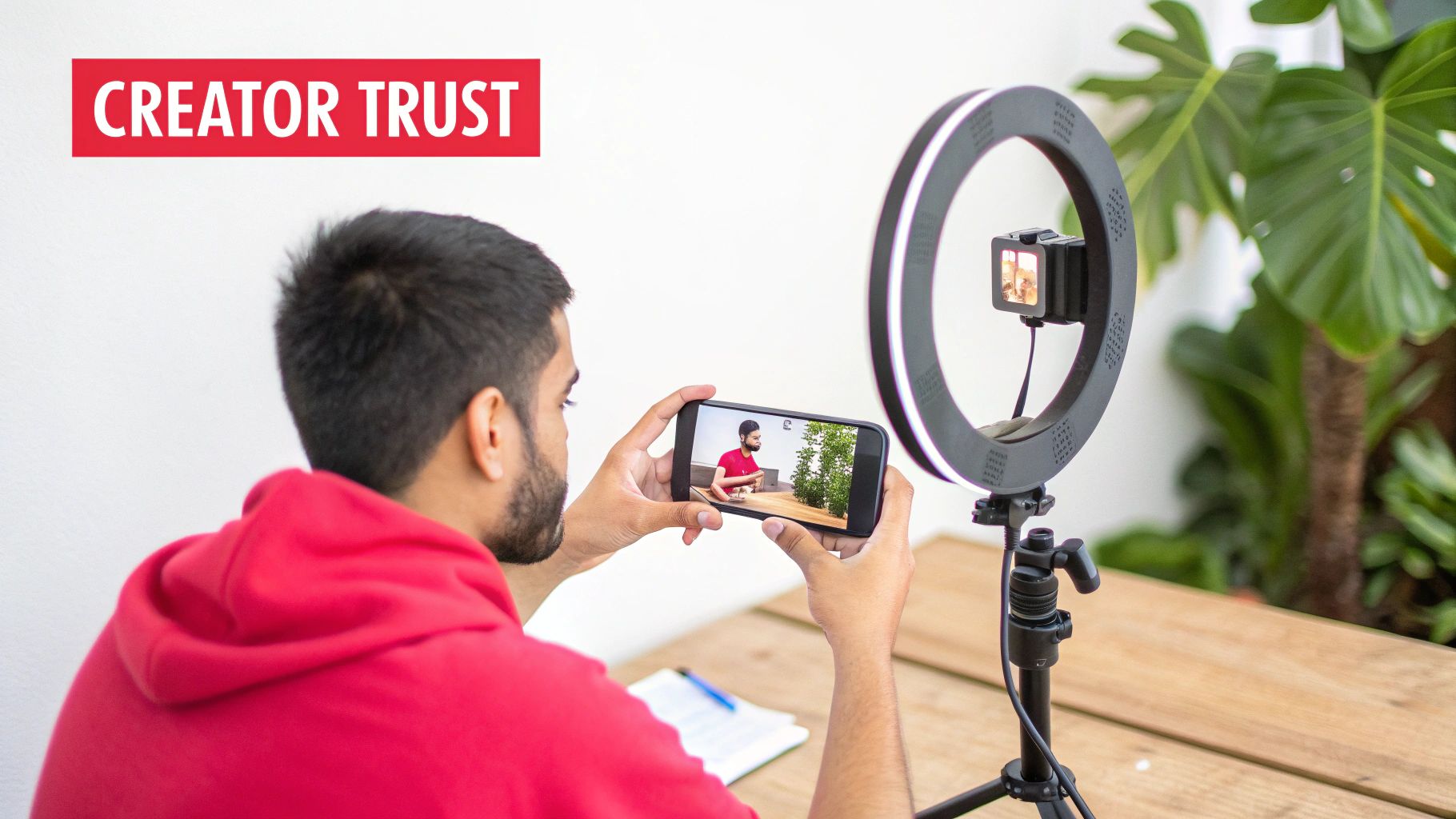
This setup says it all—creator content isn't just a tactic; it's the core of any modern digital marketing strategy aimed at younger audiences.
Finding the Right Creator Partners
Let's be clear: the "right" creator isn't always the one with a million followers. For Gen Z, relatability crushes reach every single time. Your focus should be on alignment—finding creators whose audience, values, and content style are a genuine match for your brand.
- Micro-Influencers (10k-100k followers): These creators are gold. They tend to have hyper-engaged, niche communities where their recommendations are treated like advice from a trusted friend, often leading to much higher conversion rates.
- Nano-Influencers (Under 10k followers): Don't sleep on the power of a small but fiercely loyal following. These creators bring an unmatched level of authenticity and often have the tightest relationships with their audience.
- TikTok Shop Affiliates: If driving sales is your main objective, you need to partner with affiliates who are masters of creating shoppable content. They know how to turn views into purchases right on the platform.
When you're vetting potential partners, look past the follower count. Dig into their engagement rates, read the comments on their posts, and ask yourself if their past brand deals felt authentic. The real test is finding people who would genuinely use and love your product, even without a paycheck.
Crafting a Creative Brief That Empowers, Not Restricts
One of the biggest mistakes brands make is handing creators a strict script. This approach kills creativity on the spot and produces content that screams "forced ad." A great creative brief provides guardrails, not a straitjacket.
Think of your brief as a collaborative guide. Here’s what it should include:
- The Goal: Be upfront about what you want to achieve. Is it brand awareness? Driving traffic? Pushing sales for a new launch?
- Key Talking Points (Not a Script): Give them 2-3 essential messages about your product. These are your non-negotiables, like a standout feature or a unique benefit.
- Creative Freedom: This is critical. Explicitly tell the creator to use their own voice, style, and humor. You hired them for a reason—let them do what they do best.
- The Mandatories: Clearly list any required elements, like specific hashtags, tagging your brand (@yourbrand), or a clear call-to-action ("link in bio!").
- The "Don'ts": Gently steer them away from anything that could misrepresent your brand, like making unverified claims or using off-brand language.
Key Takeaway: The perfect creative brief strikes a balance between brand needs and creator freedom. You have to trust the creators you partner with; they know their audience better than you do. Treat them like creative partners, not billboards.
Turning Collaborations into Long-Term Ambassadorships
One-off campaigns have their place, but the real magic happens when you build long-term relationships with creators. When a creator features your product repeatedly over time, their endorsement becomes more ingrained and believable to their audience.
To build these lasting partnerships, think beyond single-post payments. Offer affiliate codes, gift them new products before anyone else, or even invite them to co-create a product line. When you invest in your creators, they invest right back in your brand, becoming powerful, authentic advocates.
It's also crucial to remember how Gen Z views authenticity. As you work with creators, keep Gen Z's perspective on filtered social media images in mind—they almost always prefer raw, unpolished content over something that looks overly edited.
The Power of User-Generated Content
Beyond professional creators, your most powerful advocates are your actual customers. Encouraging and repurposing UGC is a cornerstone of any smart Gen Z marketing strategy. It's the ultimate social proof, showing real people loving and using your products in their daily lives.
Getting started is simple. You can run a contest, launch a branded hashtag, or just start featuring the best customer content on your own social channels. Building out a solid user-generated content strategy creates a self-sustaining loop of community engagement and authentic marketing. You're not just selling to your customers; you're inviting them to co-create your brand's story—and that’s exactly what this generation wants.
Measuring Success and Optimizing for Growth
So, how do you actually know if your Gen Z marketing is hitting the mark? In a world of fleeting trends and viral moments, relying on vanity metrics like likes and views is a rookie mistake. It’s like trying to navigate a maze blindfolded.
True success isn't about your notification count; it's measured by the KPIs that directly impact your bottom line. To track performance properly, you need a measurement framework built for the unique world of creator-led, community-driven campaigns. This means ditching the old-school metrics and focusing on what signals genuine interest and purchase intent.
Key Performance Indicators for Gen Z Campaigns
When marketing to Gen Z, your dashboard needs to tell a story that goes beyond surface-level engagement. The real goal is to connect what's happening on the platform to tangible business outcomes. I always tell brands to start by prioritizing these metrics to get a clear picture of campaign health.
Engagement Rate (Beyond Likes): Go deeper. Likes are cheap, but saves and shares are gold. These actions show that your content is valuable enough for someone to revisit later or, even better, recommend to a friend. A high share rate is one of the most powerful signs that your message is truly resonating.
Creator Content Conversion Rate: This is non-negotiable. Arm each creator with unique discount codes or UTM-tagged links. This is the only way to directly attribute sales to specific partnerships and see exactly who is driving revenue for your brand.
Return on Ad Spend (ROAS) from Spark Ads: When you find a piece of organic creator content that's killing it, you should be amplifying it with paid spend (like TikTok’s Spark Ads). Tracking ROAS here is crucial. It shows you the direct financial return from putting money behind proven, authentic content.
Watch Time and Completion Rate: On platforms like TikTok and YouTube Shorts, these metrics are everything. A high completion rate means your content was compelling enough to hold a Gen Z viewer's notoriously short attention span from start to finish. That’s a huge win.
These KPIs provide a much clearer signal of a campaign’s effectiveness than a simple view count ever could. They bridge the gap between social media buzz and real business growth.
Key Takeaway: Stop chasing virality for its own sake. The smartest brands focus on metrics that signal genuine connection and purchase intent, such as saves, shares, and creator-attributed conversions.
Real-Time Optimization Checklist
The Gen Z marketing space moves at lightning speed. A trend that’s dominating feeds today is old news by next week. You can't afford to wait until a campaign is over to analyze the results—you have to optimize in real-time.
Use this checklist to constantly refine your strategy and put your budget where it will have the biggest impact:
Review Performance After 72 Hours: Don't wait. After the first three days, dive into the data. See which creator posts are getting the highest engagement, paying close attention to shares and saves. Identify the top 10% of your performers.
Double Down on Winners: This is where you get aggressive. Immediately shift a portion of your budget to boost those top-performing posts. Turn that killer organic video into a Spark Ad and get it in front of lookalike audiences, fast.
Analyze the Creative: Look at your winning videos. What do they have in common? Is it a specific hook in the first three seconds? A trending audio clip? A certain editing style? Pinpoint these elements and bake them into your next round of creative briefs.
A/B Test Your Calls-to-Action (CTAs): Are viewers responding better to a direct "Shop Now" or something softer like "Link in bio to see more"? Test different CTAs with different creators to figure out what actually drives the most clicks and conversions for your audience.
Listen to the Comments: Read them. All of them. The comments section is a goldmine of unfiltered feedback about your product, the creator, and the ad itself. This is free market research—use it to refine your messaging.
By treating your campaigns as living, breathing things, you can adapt on the fly. This iterative process is how you learn, improve, and ensure your budget is always working as hard as it possibly can.
Got Questions About Marketing to Gen Z?
Let's be honest, trying to navigate Gen Z marketing can feel like you’re learning a whole new language. I get asked the same questions all the time from brands wondering where to start, what to avoid, and how to just not be awkward. Here are some real answers to the most common hurdles you'll face.
How Much Should I Actually Budget for Creators?
There's no single magic number, but a solid starting point is to earmark 15-30% of your total marketing spend for creator and influencer partnerships. But don't just set it and forget it. The real answer changes based on where your brand is at and what you're trying to accomplish.
If you're a new brand, that percentage might skew higher. You're leaning on creators to build that initial buzz and get some social proof out there. More established brands, on the other hand, might use creators for hyper-targeted product launches. The trick is to start with a flexible budget and track your return like a hawk.
A smart way to approach this is:
- Start Small: Don't go all-in at once. Test the waters with a handful of micro-influencers to see what kind of content actually moves the needle.
- Track Everything: Give every single creator a unique discount code and a UTM link. You need to know exactly where your sales are coming from.
- Scale What Works: When you find a creator who's crushing it, reinvest the profits you made from their content back into more campaigns with them or creators just like them.
Stop thinking of your creator budget as an expense. It's an investment in authentic storytelling that builds a real community.
Seriously, Do I Really Need to Be on TikTok?
Short answer? Yes. With over a billion active users and an algorithm practically built for discovering new things, TikTok is no longer optional if you want to reach Gen Z. A staggering 63% of US teens are on the platform, making it ground zero for culture, trends, and shopping.
Skipping TikTok means you’re willingly ignoring a massive opportunity to meet this audience where they live. It’s where they find new products, check if a brand is legit, and make buying decisions based on what creators they trust are saying.
Here's the deal: Just being on TikTok isn't enough. You have to get involved in the culture, understand the weird inside jokes, and be quick enough to jump on trends. If you're not there, I guarantee your competitors are.
How Do I Keep My Brand from Sounding Cringey?
This is the big one. It's the ultimate fear for every marketer trying to connect with a younger crowd, and for good reason. The line between being relevant and "how do you do, fellow kids?" is razor-thin. So here's the golden rule: stop trying to act like Gen Z and just focus on giving them something valuable or entertaining.
Here’s how you stay on the right side of that line:
- Let Creators Do the Talking: Let Gen Z creators translate your message into their own voice. Their delivery will always feel more real than a corporate marketing team trying to use the latest slang.
- Listen More Than You Talk: The comments section is your secret weapon. Pay attention to the comments on your own posts and on your creators' videos. The language, the humor, the feedback—it's all a free guide.
- Embrace the Flaws: Super polished, perfect-looking content can feel cold and corporate. Raw, lo-fi videos shot on a phone often perform way better because they feel genuine.
Authenticity isn’t about perfectly copying Gen Z culture. It’s about showing up as your real brand in a way that respects their space and actually adds something to their feed.
What Matters More: Reach or Engagement?
For Gen Z, engagement is the new reach. A video can get millions of views, but if there are no comments, saves, or shares, it’s just noise passing by. This generation craves community and conversation, so the metrics that show a real connection are what you should be chasing.
Saves and shares are especially gold. A "save" means your content was so useful or cool that someone wants to come back to it. A "share" is a personal stamp of approval—basically the holy grail of digital word-of-mouth.
Your job is to create content that makes people feel something—whether it’s a laugh, a question, or a “shut up and take my money” moment. A smaller, highly engaged audience will always be more valuable than a massive, silent one. The goal isn't just to be seen; it's to be remembered.
Ready to stop guessing and start connecting with the right creators for your Gen Z campaigns? JoinBrands is your all-in-one platform to find, manage, and scale your creator partnerships with ease. Discover over 250,000 vetted creators, from TikTok Shop Affiliates to UGC specialists, and launch your next campaign in minutes. Build your brand with JoinBrands today