
 10 Best TikTok Affiliate Outreach Tools for 2026
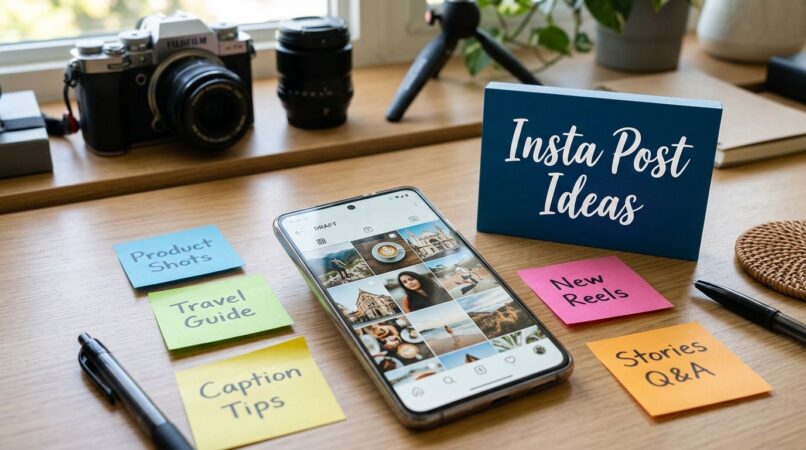
What do you post on Instagram when the actual problem is not ideas, but a system that keeps content useful, varied, and shippable?
Brands rarely struggle because Instagram lacks options. They struggle because the calendar depends on fresh inspiration every day. That approach breaks fast once approvals slow down, product priorities shift, and the team has to produce content that does more than fill space.
Generic advice like “post lifestyle content” or “share quotes” is too vague to run. A working Instagram strategy needs content pillars with a job. Some posts build trust. Some explain the product. Some create interaction. Some help convert demand that already exists. Once those roles are clear, the work gets easier to brief, batch, assign, and measure.
That shift matters more now because attention is tighter and weak posts get ignored quickly. Brands that keep relying on isolated image posts and thin captions usually see the same result. Low saves, low shares, and little movement toward purchase. The fix is usually execution, not volume.
I build Instagram plans around a mix of proof, personality, education, entertainment, and conversion. That gives a team structure without making the feed repetitive. It also creates a production workflow that can scale, especially when creator-led content is part of the mix. If your team needs more real-world product content without chasing creators one by one, a UGC creator workflow like this example shows the kind of input that can keep the calendar moving.
The ten post types below are not random ideas. They are strategic pillars you can reuse across launches, seasonal campaigns, retention pushes, and creator programs. Each one ties to a business outcome, and each one works better when the production process is built for speed and consistency.
Table of Contents
1. User-generated content showcases
If your feed looks too polished, trust drops. Brand photography has its place, but people still want to see how a product looks in real hands, real homes, and real routines.
UGC works because it reduces the distance between brand promise and customer reality. For DTC brands especially, that's hard to beat. One of the clearest angles in recent research is that UGC can outperform branded content on engagement and can drive stronger e-commerce conversions, while many DTC teams still struggle with the workflow side of sourcing and approving it, according to Ivory Mix's discussion of Instagram post ideas and the UGC gap.

Glossier made this style of posting familiar long ago by featuring customer looks that felt native to the platform instead of overproduced. GoPro did the same with adventure footage. Fashion Nova built repetition around customer styling and creator-led wear tests. Different verticals, same principle. Let customers and creators prove the product in context.
How to execute UGC without chaos
The weak version of UGC is reposting random tags with no standards. The stronger version is building a submission and approval system.
- Set a visual brief: Give creators guidance on framing, lighting, talking points, and prohibited claims so the content feels cohesive without looking scripted.
- Secure usage rights upfront: Don't chase permissions after the post is made. Handle that in the creator agreement.
- Tag the person featured: That helps with community building and makes the post feel collaborative instead of extractive.
- Reuse top assets: A good unboxing clip can become a feed post, a Story sequence, a Reel cutdown, and a paid creative asset.
Practical rule: If a customer video feels a little less polished but more believable, keep it. Authentic usually beats over-edited in social proof content.
If you need a benchmark for the type of creator-led content that works, review portfolios like Ali Creates UGC on JoinBrands. The point isn't to copy a style exactly. It's to see how simple creator-shot assets can still look usable for a brand feed.
2. Behind-the-scenes content
Behind-the-scenes content is one of the easiest ways to make a brand feel less anonymous. It gives people a reason to care before they're ready to buy. That can be product development footage, packing-day clips, founder commentary, a studio setup, raw prototype testing, or a quick look at what your team is fixing.
BTS also works because it creates a different kind of proof. You're not just showing the finished product. You're showing the standards, decisions, and people behind it. Reformation has used this angle through manufacturing transparency. Dollar Shave Club leaned into founder personality. Nike has long used “making of” content to build anticipation around design and innovation.
What brands get wrong with BTS
A lot of behind-the-scenes posts are boring because they're inward-looking. The team cares. The audience doesn't. The fix is simple. Tie every BTS post to a customer-relevant point.
Examples:
- why a formula changed
- why a package was redesigned
- what issue a customer kept reporting
- how a fit was adjusted after feedback
- what a creator had to shoot to make a product demo believable
That turns “look at us working” into “here's why this is better for you.”
Show process when it explains quality. Skip process that only proves you were busy.
For implementation, batch this content. Ask your team to capture short clips during normal work instead of scheduling separate shoots for everything. A product manager can film a 20-second update. A warehouse lead can show how orders get packed. A founder can react to a sample revision on camera.
If you need inspiration for how everyday moments can be packaged into usable social content, look at creator examples like Caros Life BTS on JoinBrands. This kind of feed content works best when it stays close to real operations and doesn't try too hard to feel cinematic.
3. Educational and how-to content
What makes someone save an Instagram post instead of scrolling past it? Usually, the post helps them do something specific.
Educational content earns attention because it reduces friction. It answers a question, shows a process, or fixes a mistake before the buyer has to ask support. That makes it one of the strongest content pillars for brands that want Instagram to do more than fill a calendar.

The best educational posts stay narrow. Teach one job, one problem, or one outcome per post. A beauty brand can show the right order for applying products. An eyewear brand can explain how frame width affects fit. A phone accessories seller can demonstrate how to apply a screen protector without dust or bubbles. Even a post tied to a buying decision, like choosing the best place to buy refurbished iPhones, works better when it explains what to check, what trade-offs matter, and what mistakes cost buyers money.
Execution matters as much as the topic. Carousel posts work well for steps, checklists, and before-and-after logic. Reels are better for movement, timing, and hand-based demos. Stories are useful for quick answers pulled straight from DMs, FAQs, and objection handling.
Keep the lesson tighter than your team wants to. Brands often try to fit a full product education sequence into one post, and the result feels bloated. “How to style one oversized blazer three ways” is strong. “How to clean your blender in 30 seconds” is strong. “Everything you need to know” usually underperforms because it asks too much from one asset.
This is also where content operations start to matter. Educational posts should be built as a repeatable system, not brainstormed from scratch every week. Pull questions from support tickets, sales calls, product reviews, and comments. Turn each repeated question into a short brief. Then assign the right format, creator, and CTA before production starts.
A creator who explains clearly on camera can outperform someone with a more polished look but weaker delivery. If you need examples of that teaching style, review creator demos like Kaylee's educational product walkthroughs on JoinBrands and brief for clarity first. Platforms like JoinBrands can also help teams source creator-led tutorials faster, which matters when you need a steady volume of usable demos without building every asset in-house.
This kind of practical demo also works well in video when the product needs movement or hand action to make sense:
A simple rule helps here. If your support team has answered the same question five times, Instagram should answer it once for everyone.
4. Influencer and creator collaboration content
Need Instagram content that reaches new people without making your feed feel like paid placement? Creator collaboration is one of the few post types that can do both, if you treat it as a content pillar instead of a one-off campaign.
Creator posts do a different job than general UGC. UGC shows real customers using the product. Collaboration content adds a creator's audience, delivery style, and framing. That changes both reach and conversion potential. For many brands, creator partnerships now sit inside the content production system, not outside it.
The brands that get this right build repeatable formats. Beats by Dre pairs products with people whose identity already carries meaning. Gymshark built ongoing creator relationships around training content, not random sponsored drops. Daniel Wellington scaled because the product was easy to show, the setup was simple, and the brief could be repeated across dozens of creators without losing clarity.
Execution matters more than creator size.
A smaller creator with strong category fit usually beats a larger account with weak audience overlap. I look for three things first: whether the creator already speaks the customer's language, whether they can demonstrate the product naturally on camera, and whether the asset can be reused in paid, organic, and PDP contexts.
That changes how the brief should be written. Good briefs are specific about the business outcome and flexible about the creator's delivery. Give the creator the angle, required claims, product shots, usage moments, CTA, and compliance notes. Leave room for their pacing, phrasing, and shot choices. If the script sounds like brand copy pasted into a creator's mouth, performance usually drops.
A workable creator brief should answer:
- What customer problem this post is addressing
- What the creator must show on screen
- Which claims or talking points are approved
- What the first three seconds need to communicate
- Where the asset will be reused after posting
This is also an operations decision. If your team needs a steady flow of creator-led assets, build a simple workflow: content pillar, brief template, creator shortlist, review checklist, usage rights, repurposing plan. Platforms such as Kaylee's creator profile on JoinBrands help teams source creators who already know how to film product-first content, which cuts production time and reduces revision cycles.
Creator collaborations also help in practical categories where trust and context matter more than polish. Tech accessories, resale devices, home products, supplements, and personal care all benefit from seeing the item used by a real person in a real setting. The same logic applies whether you are selling a serum or positioning your store as the best place to buy refurbished iPhones. A creator can show condition, setup, confidence, and everyday use faster than a product page can.
The strongest collaboration posts give you more than one feed asset. They produce a usable system: one Reel, a few story cutdowns, still frames for carousels, testimonial-style quotes from the caption, and creative you can test in ads. That is how this pillar pays off.
5. Customer testimonials and success stories
Testimonials still work. Bland testimonials don't.
“Love this product” is filler. A useful testimonial explains the problem, the hesitation, the experience, and the result in plain language. It helps the next buyer see themselves in the story. That's why customer success posts are strongest when they read like a mini case narrative, not a quote tile.
Brands such as Calm and HelloFresh have long benefited from outcome-based storytelling because the value of the product becomes easier to visualize when a customer explains how it fit into real life. The same structure works for apparel, beauty, home goods, SaaS, and wellness. Before and after isn't only for fitness. It can also mean before and after a routine changed, before and after a workspace was organized, or before and after a painful process got easier.

A better structure for testimonial posts
Ask for details that create specificity without forcing numbers you can't verify.
Useful prompts:
- What problem were you trying to solve?
- What made you try this product?
- What changed after you started using it?
- What surprised you?
- Who would you recommend it to?
Then package it in a format that suits the story. A single graphic works for one strong line. A carousel works better if the customer journey has multiple beats. A Reel works best if facial expression, voice, or physical demonstration adds credibility.
- Lead with the tension: Start with the problem the customer had.
- Show the product in use: Static praise without context feels weak.
- Keep the edit tight: Remove fluff, keep the believable details.
- Get explicit permission: Especially for face, voice, and any transformation framing.
A strong testimonial post doesn't overclaim. It lets the customer's experience do the heavy lifting and gives your audience enough context to trust what they're seeing.
6. Trending audio and viral Reel content
Every brand wants reach. Most of them chase it badly.
Trend-based Reels work when you adapt a format to your category fast, with a clear brand fit. They fail when the team forces a meme that has nothing to do with the audience, the product, or the voice of the account. The audience can feel that instantly.
Reels still matter because people spend a huge share of their Instagram time there. Metricool's 2026 analysis notes that Reels command 46% of time spent on Instagram, even as reach and impressions have become more complicated because of saturation and algorithm changes, according to Metricool's Instagram statistics roundup. That's the trade-off. Reels are crowded, but they're still where attention lives.
Ryanair became famous for embracing absurd, low-friction humor in a way that matched its online voice. e.l.f. Cosmetics has done well by entering trends without stripping away brand identity. Dunkin' and Target have both shown that even mainstream retail brands can move quickly when the social team has approval freedom.
How to use trends without looking late
Speed matters, but relevance matters more. If the audio is trending and you have no natural angle, skip it.
Use trends when you can connect them to:
- a common customer frustration
- a product reveal
- a niche inside joke
- a founder or employee personality moment
- a side-by-side comparison
If you're in a niche industry, trend participation can still work. You just need to frame it through your buyer's world. An indie publishing brand, for example, might use short-form patterns to showcase launches or reading culture, then refine posting cadence using guidance like this look at the ideal Reel schedule for indie authors.
Don't join a trend because it's big. Join it because your audience will instantly understand why your brand is using it.
Also keep production light. The best-performing trend content often looks native, not expensive. A phone, decent light, tight hook, and confident edit usually beat a polished video that arrives after the trend has cooled.
7. Product launch and new release announcements
Launch posts shouldn't begin on launch day. If the first time people hear about a new product is the announcement post, you've already made the sale harder.
Good launch content builds familiarity before the ask. Apple is effective at this because anticipation is part of the campaign, not an afterthought. Fashion and footwear brands do this well too. Teasers, partial reveals, waitlist prompts, creator seeding, first-look reactions, feature breakdowns, and countdown Stories all shape demand before the cart opens.
Instagram format choice matters here. Reels have remained a top engagement driver, with strong sharing behavior and wide user reach, according to ByRadiant's Instagram statistics roundup. That makes them useful for fast, attention-grabbing launch assets. But don't stop there. Reels create awareness. Carousels often handle detail better.
A simple launch content sequence
For most brands, I'd build launch posting in phases.
- Tease the problem: Show the need or frustration before you show the product.
- Reveal selectively: Give one feature, angle, or use case at a time.
- Let creators validate it: Early reactions make the launch feel real.
- Clarify the buying details: Price, timing, access, variants, and availability should never be buried.
One practical rule. Don't make every launch asset look like a billboard. Some of your best launch posts will be simple creator demos, founder walkthroughs, or customer waitlist reactions. Those often carry more credibility than a polished hero video alone.
A launch week should feel coordinated, not repetitive. One Reel can create curiosity. One carousel can explain features. One Story sequence can handle urgency and FAQs. One creator post can show real-world use. That's a launch system, not just a post.
8. Interactive content and polls/questions
If your audience only sees finished posts, you miss one of Instagram's biggest advantages. The platform lets brands ask, test, and learn in public.
Interactive content is useful because it does two jobs at once. It lifts engagement through participation, and it gives you market feedback you can use. Stories are the obvious place for polls and question stickers, but interactive thinking should shape feed content too. Ask people to choose a favorite, vote on packaging, comment with a preference, or answer a simple use-case question.
Sephora has used quiz-style recommendation logic effectively because beauty shoppers often need help choosing. Warby Parker can turn style preference into a poll. Nike can invite people to react to colorways or design details. Those posts don't just drive activity. They reduce guesswork for future creative and product messaging.
Questions worth asking
Most audience questions are too broad. “What do you want to see from us?” sounds democratic, but it usually gets vague answers or silence.
Ask narrower questions:
- Which version would you wear more often?
- What's your biggest issue with this type of product?
- Would you rather have neutral or bold colors next?
- Do you want a tutorial, a comparison, or a review first?
- Which feature matters most when you buy this?
A useful Instagram question produces a content brief, not just engagement.
Feed comments are especially valuable when the answer reveals language buyers already use. Save those phrases. They often become better hooks, ad copy, and product page lines than anything written internally.
Interactive content also makes your account feel more human. People are more likely to buy from a brand that listens than from one that only broadcasts.
9. Carousel posts with multi-part narratives
Carousels deserve a permanent slot in your content mix. Not because they're trendy, but because they're efficient. One post can explain, persuade, compare, and convert without asking the viewer to leave the platform.
SocialInsider's benchmark analysis found carousels leading Instagram posting strategies with an average engagement rate of 0.55% while overall engagement declined to 0.48% in 2025, according to SocialInsider's Instagram benchmarks. That resilience matches what many teams see in practice. Carousels reward clarity and sequencing.
HubSpot, Canva, Buffer, and wellness brands like Calm all use them for one reason. A narrative sequence is easier to consume than a dense caption. Slide one earns the swipe. Slides two through five do the teaching or persuading. Final slide tells the reader what to do next.
How to build a carousel people actually finish
The first slide matters most. If the hook is weak, the rest of the design doesn't matter.
Try these structures:
- problem, mistake, fix
- before, during, after
- myth, reality, takeaway
- one result, three steps, one CTA
- question, answer, example
Then keep the design disciplined.
- Make slide one specific: “3 reasons your serum pills under sunscreen” is stronger than “skincare tips.”
- Use fewer words per slide: Dense text lowers swipe momentum.
- Create visual continuity: Same typography, spacing, and color logic across the sequence.
- Close with one action: Save, comment, shop, compare, or DM. Don't ask for everything.
Carousels are especially useful when your team needs to repurpose one idea across channels. A blog section, customer question, product FAQ, or creator script can all be turned into a swipe sequence with relatively low production overhead.
10. Limited-time offers and urgency-driven content
What makes someone buy today instead of saving your post and forgetting it by Friday?
A deadline can do that, but only when the reason feels legitimate. Real urgency comes from constraints your audience already understands. Inventory runs out. Launch bonuses expire. Seasonal products lose relevance. Early-access pricing ends. If the limit is vague or recycled every week, the post may get clicks, but it weakens trust.
This post type works best as a conversion pillar, not a content pillar you publish too often. The job is simple: turn existing interest into action. That means urgency content performs better after your audience has already seen proof. Creator demos, customer results, and product education do the heavy lifting. The offer closes the gap.
Execution matters more than format. A Reel can create momentum fast. A carousel can explain bundle details, terms, and product use cases in a cleaner way. Stories handle countdown reminders and common objections. Strong teams plan all three together instead of asking one post to do everything.
How to run urgency content without training people to wait for discounts
Use urgency only when the limit is specific and defensible.
- Name the constraint clearly: End date, stock level, bonus cutoff, or shipping deadline.
- Lead with the product outcome: Show what the buyer gets and why it matters before listing the offer mechanics.
- Keep the offer easy to process: One post should answer price, contents, deadline, and intended buyer.
- Match the creative to the buying trigger: Scarcity suits restocks and drops. Time limits suit launches, seasonal campaigns, and event-based promotions.
- Build reminder assets in advance: Feed for announcement, Stories for countdowns, creator clips for proof, comment replies for objections.
A practical sequence looks like this. Day one, publish a creator-led Reel that shows the product in use and frames the offer. Day two, post a carousel that breaks down what is included, who it is for, and when the offer ends. On the final day, use Stories for countdown stickers, FAQs, and social proof pulled from customer comments or creator content. If your team needs more creator assets on short notice, platforms like JoinBrands can help source product demos and testimonial-style content without building the workflow from scratch.
The trade-off is margin and brand perception. Frequent promotions can lift short-term revenue while lowering full-price conversion and making the brand feel inconsistent. That is why the strongest urgency campaigns are selective, operationally tight, and tied to a real business moment rather than a generic “last chance” post.
Top 10 Instagram Post Types Comparison
| Content Type | Implementation Complexity 🔄 | Resource Requirements ⚡ | Expected Outcomes ⭐📊 | Ideal Use Cases 💡 | Key Advantages |
|---|---|---|---|---|---|
| User-Generated Content (UGC) Showcases | 🔄 Medium, requires creator vetting and rights workflows | ⚡ Low–Medium, creator sourcing and rights management | ⭐ High engagement & conversions; strong social proof 📊 | DTC e‑commerce, lifestyle & fashion brands | Authentic, cost‑effective content pipeline |
| Behind-the-Scenes (BTS) Content | 🔄 Low–Medium, regular production and careful messaging | ⚡ Low, staff time and basic equipment | ⭐ Improves authenticity and brand loyalty 📊 | Startups, DTC brands, companies with production stories | Humanizes brand; builds emotional connection |
| Educational and How‑To Content | 🔄 Medium–High, needs expertise and structured planning | ⚡ Medium–High, SME time, production for clarity | ⭐ Establishes authority; reduces returns; evergreen 📊 | SaaS, beauty, complex product e‑commerce, services | Long‑term discoverability and support value |
| Influencer & Creator Collaboration | 🔄 High, vetting, contracts, coordination required | ⚡ Medium–High, creator fees, briefs, campaign management | ⭐ Expanded reach and authentic endorsements 📊 | Product launches, niche targeting, limited budgets | Access to creator audiences; scalable via platforms |
| Customer Testimonials & Success Stories | 🔄 Medium, recruit customers and secure permissions | ⚡ Low–Medium, outreach and editing time | ⭐ Very high conversion and credibility 📊 | SaaS, health/wellness, fitness, outcome‑driven brands | Strong social proof; answers buyer objections |
| Trending Audio & Viral Reels | 🔄 Medium, trend monitoring and rapid execution | ⚡ Low–Medium, fast editing and creator agility | ⭐ High organic reach and discovery 📊 | Gen Z audiences, fashion, food, entertainment | Algorithmic boost; fast audience growth potential |
| Product Launch & New Release Announcements | 🔄 High, cross‑team coordination and timing critical | ⚡ High, multi‑format content, creators, landing pages | ⭐ Drives immediate sales and buzz; measurable ROI 📊 | Tech, apparel drops, product-heavy e‑commerce | Generates urgency and PR opportunities |
| Interactive Content & Polls/Questions | 🔄 Low, easy to create but needs response plan | ⚡ Low, native Stories/Reels tools | ⭐ Increases engagement and gathers first‑party data 📊 | E‑commerce with options, beauty, consumer brands | Direct feedback loop; builds community participation |
| Carousel Posts (Multi‑Part Narratives) | 🔄 Medium, design consistency and storytelling planning | ⚡ Medium, design and copy resources | ⭐ Higher dwell time, saves, and information retention 📊 | SaaS education, product breakdowns, tutorials | Deep storytelling; ideal for complex messages |
| Limited‑Time Offers & Urgency Content | 🔄 Medium, planning, legal and ops alignment needed | ⚡ Medium, promo coordination with inventory | ⭐ Highest immediate conversion and revenue impact 📊 | E‑commerce, FMCG, subscription services, drops | Drives fast sales; easy to measure ROI |
From Ideas to Impact Your Instagram Action Plan
A good Instagram strategy isn't built on inspiration. It's built on repeatable content pillars that each do a distinct job.
Some posts create trust. That's where BTS, customer stories, and creator-led UGC earn their place. Some posts create utility. Educational carousels, how-to Reels, and question-driven content help people solve something and remember your brand for it. Other posts create momentum and conversion. Launch sequences, trend-based Reels, and urgency posts push action when the timing is right.
The mistake I see most often is imbalance. Brands either over-index on sales content and exhaust the audience, or they post endless “engagement” content that never helps the customer move toward purchase. Neither works for long. The stronger approach is a content mix where each post type supports the others.
A practical way to run this is to assign every upcoming post one primary role:
- trust
- education
- interaction
- reach
- conversion
If a week of content leans too heavily into one role, rebalance it before you publish. That simple filter prevents a lot of weak calendars.
Efficiency matters too. If your team is constantly starting from zero, you'll either burn out or default to safe, forgettable posts. Build a workflow instead. Turn customer questions into educational posts. Turn testimonials into carousels. Turn creator footage into both UGC showcases and launch support. Turn BTS clips into Reels and Stories. One raw asset should lead to multiple finished pieces of content.
That's also why creator operations deserve more attention than most brands give them. Sourcing, briefing, approvals, usage rights, and repurposing are not side tasks anymore. They're core to maintaining volume without sacrificing authenticity. Recent reporting has highlighted how many DTC teams still struggle with UGC workflow efficiency while trying to keep up with creator-led demand, as noted earlier. If you want to scale content without building a huge internal studio, you need a process for creator production.
Reels still deserve steady investment, but don't treat them like the answer to everything. They're powerful for reach and shareability, but they're not always the best place for detail. Carousels remain strong when you need structured storytelling or education. Stories remain useful when you need interaction and immediacy. Single images can still work, but they need a clear reason to exist. Don't post one just because it's easier.
If you're choosing where to start, begin with the four pillars that usually give brands the broadest return:
- UGC showcases
- educational content
- creator collaborations
- carousel narratives
That mix gives you trust, saves, distribution, and depth. Then layer in BTS, testimonials, and launch content based on your sales cycle.
The broader point is simple. Stop asking, “What should we post today?” Start asking, “Which pillar does the business need this week, and what format gives it the best chance to perform?” That shift turns Instagram from a content treadmill into a content engine.
If your team wants help producing creator-led assets at scale, a platform like JoinBrands can be one relevant option. It connects brands with a network of over 250,000 creators and supports workflows around campaign management, approvals, and asset production. For many DTC and e-commerce teams, that's useful when UGC and creator content become a regular part of the calendar instead of a one-off experiment.
If you're trying to build a more consistent Instagram content engine, JoinBrands can help you source creator-made UGC, Reels, feed posts, and other assets without managing the entire workflow manually. It's a practical fit for brands that want more authentic content in the calendar and a clearer process for briefing, approvals, and reuse.