
 How to Calculate Cost Per Acquisition: A Simple Guide
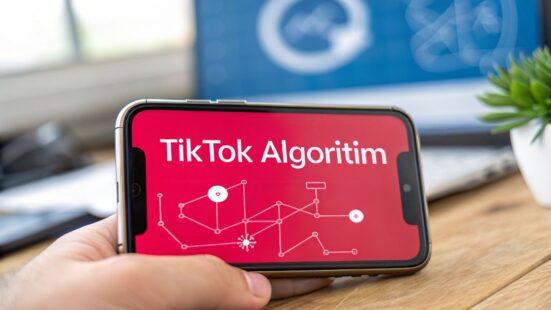
Here's the simple explanation: the TikTok algorithm is a powerful recommendation system that personalizes every single video you see on your For You Page (FYP). Think of it like a super-smart DJ that learns your tastes with every interaction, creating a perfectly curated feed designed to keep you locked in and scrolling.
It uses your activity to figure out what you’ll love next.
Table of Contents
Decoding the TikTok Algorithm
Ever scroll through your FYP and feel like it's reading your mind? That uncanny accuracy comes from a meticulously designed system built on one core principle: personalization. The algorithm's main goal isn't just to show you popular videos, but to show you videos you will find popular, interesting, and worth your time.
It’s less of a mysterious black box and more of a predictable learning machine. Every like, comment, share, and even the seconds you spend re-watching a video sends a clear signal. This data helps the algorithm build a rich profile of your interests, which it then uses to serve up a continuous stream of relevant content.
The Foundation of Personalization
The system has transformed dramatically since its launch, becoming one of social media’s most influential recommendation engines. By September 2021, TikTok had already rocketed to 1 billion monthly active users—a milestone it hit faster than any other platform. This explosive growth was fueled by its algorithm's knack for creating an addictive, hyper-personalized experience. For a deeper dive, the experts at Traackr have excellent insights on this topic.
The algorithm’s learning process is constant and dynamic. It considers a few main pillars of information to make its decisions.
Here's a breakdown of the key signals that the algorithm analyzes to decide what shows up on your For You Page. Understanding these categories is the first step to creating content that the system wants to promote.
Key Signals Fueling the For You Page Algorithm
| Signal Category | What It Includes | Why It's Important for Your Content |
|---|---|---|
| Direct User Interactions | Likes, comments, shares, saves to favorites, video completions, re-watches, and even marking content as "Not Interested." | These are the strongest signals. Your goal is to create content so engaging that it triggers these positive actions right away. |
| Video Details | Captions, hashtags, trending sounds/audio, and effects used. | These elements provide crucial context. Using relevant hashtags and trending audio helps TikTok categorize your video and show it to the right audience. |
| Account & Device Settings | Language preferences, country setting, and device type. | While these carry less weight, they help the algorithm with initial audience targeting and localization. For example, a video in English is more likely to be shown to users with their language set to English. |
Ultimately, your direct interactions matter most. The algorithm prioritizes what you actively engage with over passive signals like your device settings.
The Initial Testing Ground
When you upload a new video, it doesn't get blasted to millions of people right away. Instead, it enters a critical "testing pool." The algorithm shows your content to a small, initial audience to see how it performs.
The algorithm is always asking one simple question: "Is this video engaging?" The data from this initial test audience—how quickly they watch, like, comment, and share—provides the answer. That answer determines if the video's reach expands or dies out.
If your video performs well and shows a high engagement velocity, the algorithm promotes it to a larger audience. This process can repeat, potentially rocketing your content to viral status. If it flops, its distribution is quickly cut off. Understanding this foundation is essential if you want to work with the algorithm, not against it.
The Core Ranking Signals That Drive Viral Reach
Not every interaction on TikTok is created equal. While a sudden rush of likes feels great, the algorithm is actually looking for much deeper signals of viewer investment. Think of it like an internal scorecard—some actions are worth way more points than others.
Let's use an analogy. Imagine your video is a brand-new restaurant on a busy street.
- A "like" is someone glancing at the storefront and thinking, “Looks nice.”
- A "comment" is someone stopping to ask about the menu.
- A "share" is that person calling a friend and telling them they have to check this place out.
- But a high completion rate—someone watching your entire video—is the equivalent of a customer walking in, ordering a three-course meal, and staying for coffee. That’s the gold standard.
The Power of Watch Time and Completion Rate
The single most important signal you can send the algorithm is that people are watching your video all the way through. A high completion rate is a direct message to TikTok that your content is compelling enough to hold attention, which is exactly what the platform wants. The algorithm sees this as a huge sign of quality and viewer satisfaction.
This is precisely why those first three seconds are make-or-break. If you don't hook someone immediately, they're gone. They'll swipe away, tanking your average watch time and telling the algorithm your content just wasn't engaging enough. A video watched to 100% completion is worth exponentially more than one that gets a quick like before the viewer moves on.
When the TikTok algorithm explained its ranking factors, it became clear that a strong indicator of interest, like watching a longer video from beginning to end, receives much greater weight than a weak indicator, like whether the viewer and creator are in the same country.
Even better than a full watch? A re-watch. When someone loops your video to see it again, that’s a massive signal. It tells TikTok your content was either hilarious, incredibly useful, or just so good it needed a second viewing. This is one of the strongest positive signals you can get, and it’s what prompts the algorithm to really start pushing your content out to a much, much bigger audience.
Deconstructing the Hierarchy of Engagement
After watch time, all other interactions fall into a pretty clear hierarchy. If you understand this pecking order, you can start building your content to encourage the actions that matter most, which is how you fuel viral growth. To really get a handle on this, it helps to understand the fundamentals of what makes a viral video, since these principles are pretty universal.
Here’s a breakdown of how TikTok generally prioritizes user actions, from most valuable to least:
- Re-Watches: The absolute pinnacle. This tells the algorithm your video has high replay value and is a must-see for others.
- Shares: When someone shares your video—whether through a text, another app, or by saving it—they're personally vouching for it. It's a high-intent action that gives your reach a serious boost.
- Saves: A user saving a video to their favorites signals that it was valuable enough to come back to. This is a huge win for any educational, useful, or inspirational content.
- Comments: Comments show that people are actively participating and building a community around your video. A buzzing comment section proves your content is sparking a real conversation.
- Likes: While still a good thing, a "like" is the easiest, lowest-effort interaction. It’s just a quick double-tap, so it carries the least weight of all the metrics.
This is exactly why a video with 1,000 shares will almost always blow past a video with 10,000 likes and not much else. If you want to go viral, your goal isn't just to get passive likes. It's to create something that makes people watch, re-watch, share, and comment. Digging into your TikTok engagement rate is the best way to track how well you're hitting those high-value metrics.
Winning the First Hour of Your Video's Life
The moments right after you hit "post" are the most intense, high-stakes minutes of your video's entire existence. That first hour is a rapid-fire audition where the TikTok algorithm decides its fate. During this crucial window, your content isn't just live; it's being actively tested on a small, initial audience.
Think of it like a movie premiere in a single, packed theater. The algorithm is in the back row, watching the audience's every reaction. Are they hooked? Are they laughing? Or are they getting up to leave halfway through? This initial test is all about measuring engagement velocity—the sheer speed at which your video racks up interactions.
A video that gets a sudden flurry of views, likes, and comments right out of the gate is a huge green light for the algorithm. This quick surge signals that the content is immediately engaging, which prompts the system to push it to a larger and larger audience. A slow start, on the other hand, can stop a video's reach dead in its tracks.
Mastering the Initial Surge
The key to winning this first hour is sparking immediate interaction. Your one and only goal is to interrupt the endless scroll and convince that initial test group to stop, watch, and engage. Every single element of your video has to be optimized for instant impact.
- Craft an Irresistible Hook: You have less than three seconds to grab someone. Start with a provocative question, a surprising visual, or a bold statement that makes them need to know what happens next.
- Use Pattern-Interrupt Editing: Quick cuts, zoom effects, and text pop-ups are your best friends. They keep the viewer’s brain engaged. A static, unchanging shot is the enemy of high watch time.
- Optimize for Replays: Shorter videos that loop seamlessly often do incredibly well. Why? They encourage re-watches, which is one of the most powerful signals you can send the algorithm.
The first hour isn't about reaching millions; it's about convincing a few hundred. If you can prove your content is a hit with a small group, the TikTok algorithm will happily show it to the world.
This infographic breaks down the hierarchy of engagement signals the algorithm values most. It all starts with watch time but moves up to actions that show much deeper interest.
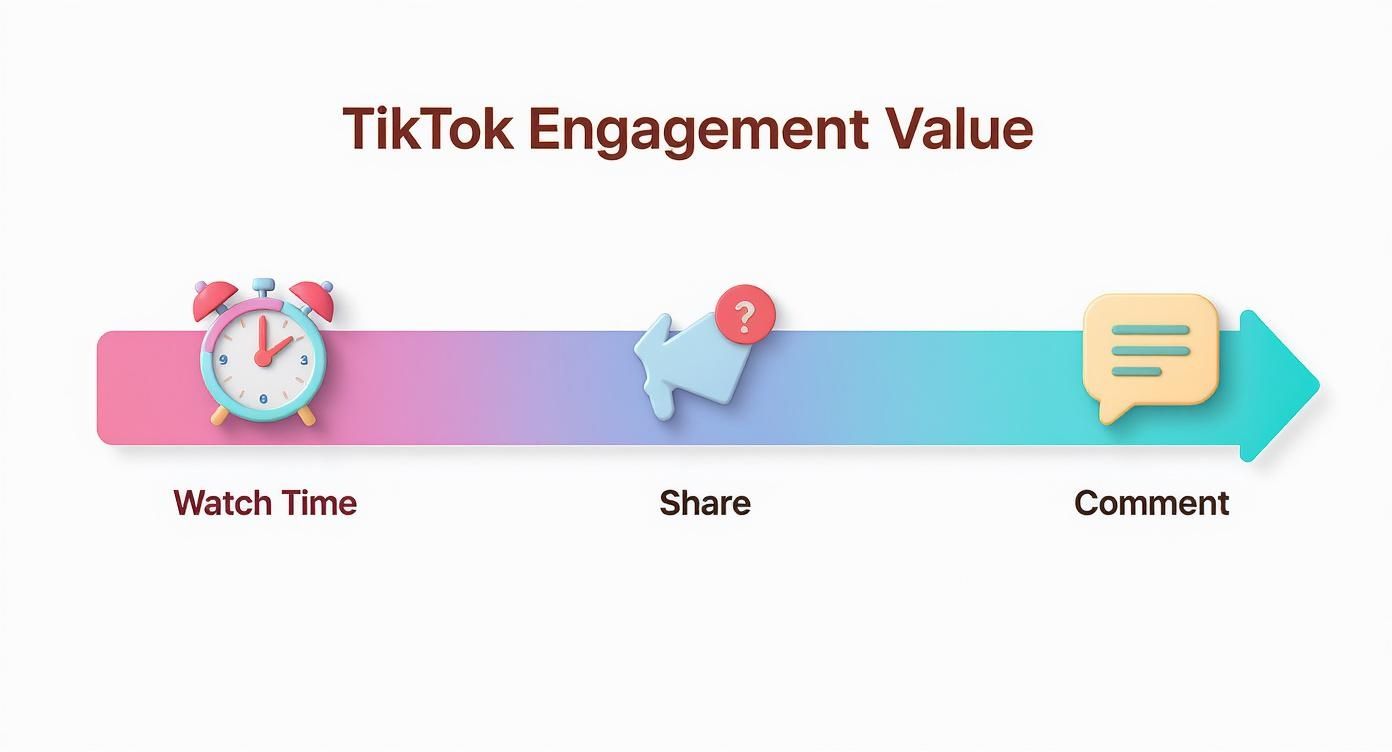
As you can see, while watch time is the foundation, actions like shares and especially comments signal a much deeper level of audience investment.
Posting Time and Performance Velocity
For years, creators have chased the myth of "perfect posting times." And while timing does matter, its importance is often misunderstood. Knowing the optimal posting times for TikTok can give your video a nudge, but it's the velocity of engagement that truly matters more than the specific hour you post.
Interestingly, some creators have found a sweet spot by posting during off-peak hours. One theory suggests that posting between 2-4 a.m. EST can lead to a 60% increase in engagement. The idea is that with less competition, fresh content gets a more focused look from both the algorithm and the night-owl users who are still scrolling.
Ultimately, consistency is a much bigger piece of the puzzle. Understanding how often to post on TikTok helps you build a predictable rhythm for your audience and the algorithm alike. This teaches the system when to expect new content from you, potentially giving your videos a better shot in that critical first hour. The real goal isn't just to post at the "right" time, but to post content so compelling that it ignites an immediate reaction, no matter when it goes live.
Advanced Algorithm Strategies for Brands and Marketers
Alright, let's move past the basics of a single viral video. For brands and marketers, truly getting a handle on the TikTok algorithm means you stop playing the content lottery and start building a real, sustainable presence.
Think of it less like a slot machine and more like a unique kind of search engine. The goal isn't just one big win. It's about consistently teaching the algorithm who you are and, just as importantly, who you want to reach. You do this by blending smart organic tactics with paid amplification and tapping into the platform’s powerful e-commerce tools.
Mastering TikTok SEO for Targeted Reach
Here's something that surprises a lot of marketers: for Gen Z, TikTok is a primary search engine. They aren't just scrolling for entertainment; they're actively searching for "how-to" guides, product reviews, and recommendations for just about everything. This shift in user behavior makes TikTok SEO an absolute game-changer.
When you strategically place relevant keywords in your video captions, on-screen text, and even say them out loud in your audio, you're sending crystal-clear signals to the algorithm. These signals are crucial for helping it categorize your content and serve it up to users who are literally looking for it.
A well-optimized video doesn't just hope for a lucky break on the For You Page. It also shows up in search results, giving it a much longer lifespan and connecting it with a highly motivated audience. Start by figuring out the core keywords for your niche and make it a habit to weave them into every piece of content.
Amplifying Success with Spark Ads
So, what happens when one of your organic videos starts to take off? You pour some gas on that fire. That's exactly what Spark Ads are for. This ad format is brilliant because it lets you boost your own top-performing organic videos or even promote content from creators you're collaborating with.
The algorithm loves Spark Ads because they don’t feel like ads. They’re native to the platform. Instead of a glossy, overproduced commercial, users see a genuine TikTok that has already proven its entertainment value. That authenticity is what drives such incredible results.
Spark Ads bridge the gap between organic discovery and paid reach. By promoting content that has already demonstrated high engagement, you're working with the algorithm's preferences, not against them, leading to more efficient and impactful campaigns.
This approach is just smart marketing. You're putting your budget behind a proven winner. You can take a video that your audience already loves and push it out to a much wider, yet still precisely targeted, group of people. To get it right, make sure you're up to speed on the latest TikTok ad specifications so your formats are always on point.
For brands trying to decide between a purely organic push and using Spark Ads to amplify their best content, it's helpful to see a direct comparison of what each approach offers.
Comparing Organic Content and Spark Ads
| Feature | Organic Content | Spark Ads |
|---|---|---|
| Primary Goal | Building community, testing content, and fostering authenticity. | Scaling reach, driving conversions, and targeting specific audiences. |
| Reach | Dependent on the algorithm, initial engagement, and content quality. | Guaranteed reach based on budget and targeting parameters. |
| Audience | Primarily reaches existing followers and new users via the FYP. | Can be targeted to specific demographics, interests, and behaviors. |
| Lifespan | Typically has a short peak performance period (24-72 hours). | Can be run for extended periods, from 7 to 365 days. |
| Cost | Free to post, but requires time and creative resources to produce. | Requires a direct ad spend, but leverages proven, engaging content. |
| Call-to-Action | Limited to profile links or organic prompts in the video/caption. | Can include clickable CTAs that drive traffic to websites or shops. |
Ultimately, the best strategies often use both. Organic content is your testing ground to find what resonates, and Spark Ads are the rocket fuel you use to send your winners into orbit.
Unlocking Revenue with TikTok Shop and Affiliates
The final piece of this advanced puzzle is turning all that attention into actual revenue. The explosion of TikTok Shop and the affiliate marketing ecosystem has officially turned the app from a discovery platform into a full-blown sales channel.
And of course, the algorithm is the engine driving it all. It has become incredibly good at identifying users with buying intent based on their behavior. When someone starts watching unboxing videos, liking product reviews, or engaging with shoppable posts, the algorithm learns and starts showing them more content that leads to a sale.
For brands, this creates a super smooth journey from a user discovering your product to making a purchase. Here’s how you can plug into this system:
- Set Up a TikTok Shop: This lets customers buy your products without ever leaving the app—directly from your videos, your profile, or a dedicated shop tab.
- Leverage Affiliate Marketing: You can partner with creators who will promote your products to their followers and earn a commission on any sales they drive.
- Utilize Shoppable Video Ads: Run paid campaigns where products are tagged directly in the ad, making it dead simple for a viewer to tap and buy.
When you integrate these features, you're perfectly aligning your marketing goals with the algorithm's own push toward social commerce. You start creating content that doesn't just entertain—it closes the loop and drives real, measurable revenue for your business.
Common TikTok Algorithm Myths Debunked
There's a ton of misinformation out there that can seriously sabotage your growth on TikTok. When you’re trying to understand how this algorithm actually works, it’s way too easy to get caught up in rumors that just waste your time and energy.
Let's clear the air and tackle the most persistent myths head-on. Speculation runs wild, but real success comes from focusing on what's proven, not just what's popular to say.
The Truth About the TikTok Shadowban
Ah, the dreaded "shadowban." It's one of the most talked-about myths, painting a picture of TikTok secretly suppressing your reach without ever telling you.
The reality? There is no evidence a secret, punitive shadowban system actually exists.
A sudden drop in views is almost always a content issue, not a platform-wide conspiracy against you. It usually means the algorithm pushed your video to an initial test audience, and it just didn't perform well. Low watch time or minimal engagement are the usual culprits.
Your content can also be deprioritized if you violate TikTok’s community guidelines. The platform is very clear about what it won’t recommend, like unoriginal content or dangerous stunts. If your reach suddenly plummets, take a hard look at your content quality and reread the platform’s guidelines before you go blaming a phantom ban.
Debunking Common Content Fallacies
Beyond the shadowban ghost story, a few other pieces of bad advice make the rounds. Believing them can lead straight to burnout and poor results. Let’s set the record straight on a few of the big ones.
Myth #1: You Must Post Multiple Times a Day
Quality will always, always beat quantity. Posting five low-effort videos a day won't help you if none of them actually connect with people. The algorithm rewards engaging content, not just a relentless posting schedule. It's better to create one truly great video than several mediocre ones.Myth #2: Deleting Underperforming Videos Hurts Your Account
Nope. There is no algorithmic penalty for removing a video that flopped. In fact, cleaning up your feed can be a good move to make sure your profile only showcases your best work to new visitors. The algorithm evaluates each video on its own; one dud isn't going to doom your future content.Myth #3: You Need a Professional Camera Setup
Overly polished, corporate-style content often bombs on TikTok. Users are there for authentic, less-produced stuff. Your smartphone is more than enough. Good lighting and clear audio matter, of course, but relatability is way more valuable than a high-end production budget.
The core takeaway is simple: the TikTok algorithm isn't out to get you. It’s a system built to find and promote engaging content. Stop chasing ghosts like shadowbans or sticking to rigid, unproven rules. Instead, pour that energy into creating high-value videos your audience genuinely wants to watch and share.
When you focus on authentic, high-quality content, you’re aligning your strategy with exactly what the algorithm is designed to reward. This frees you up to build a plan based on solid principles, not baseless rumors.
Your Tactical Checklist for TikTok Algorithm Success
Alright, we've unpacked the theory behind the TikTok algorithm. But knowing how it works is only half the battle. The real secret sauce is turning that knowledge into a repeatable process. That’s what separates the pros from everyone else.
This is your battle plan. Think of it as your pre-flight, in-flight, and post-flight workflow for every single video you create. This isn’t about chasing a one-hit wonder; it’s about building a solid system that gives the algorithm every reason to push your content, time and time again.
Phase 1: Pre-Production and Planning
Before you even dream of hitting that red record button, the groundwork for success is laid. This is where you match your killer ideas with what the algorithm is hungry for. Nail this stage, and you’re already miles ahead.
- Become a Trend Spotter: Dive into the TikTok Creative Center. Look for the trending sounds, effects, and hashtags buzzing in your niche. The key isn't just to copy them, but to put your own unique spin on them so they feel authentic to your brand.
- Script That Killer Hook: You have three seconds. That’s it. Write down your opening line or visual. Does it ask a provocative question? Present a relatable problem? Show off a jaw-dropping result? If it doesn't stop a thumb mid-scroll, rewrite it.
- Think Like a Search Engine: Pinpoint 3-5 main keywords your ideal viewer is typing into the search bar. Your mission is to weave these naturally into your caption, on-screen text, and even what you say out loud.
Phase 2: Production and Optimization
Now you’re rolling. Your entire focus here is to grab that viewer's attention and refuse to let it go. Every cut, every sound, and every word on screen should be geared toward maximizing watch time and sparking a reaction.
The content that truly pops on TikTok feels native to the platform. Don't overthink it. Clear audio, decent lighting, and snappy edits almost always beat a glossy, over-produced video. The algorithm rewards content that looks and feels like a TikTok.
- Keep Their Eyes Moving: Use quick cuts, punchy zooms, and text callouts to keep the energy high. Long, static shots are an invitation for viewers to swipe away. Keep it dynamic.
- Caption Everything: A huge chunk of users—over 30%—watch videos with the sound off. Use TikTok’s auto-caption feature or add your own text overlays. Don't let your message get lost in silence.
Phase 3: Post-Publication and Analysis
Hitting "Post" is the starting line, not the finish line. That first hour is make-or-break for building momentum, and digging into your data afterward is how you get smarter for the next round.
- Engage Like Crazy: For the first 60-90 minutes after your video goes live, be in the comments. Respond to people, ask questions, and get conversations started. This tells the algorithm your video is building a community, which is a massive green flag.
- Become a Data Detective: Give it 24 hours, then open your analytics. Look past the vanity metrics. What was your average watch time? Your completion rate? Where did the views come from—the For You Page or search? This is the intel that will shape your next winning video.
Your Top TikTok Algorithm Questions, Answered
Even after you get the hang of how TikTok's algorithm works, there are always those lingering questions. Let's dig into some of the most common ones that pop up for creators and brands trying to get an edge.
How Long Does It Take for the Algorithm to Push a Video?
There's no secret countdown clock, but every video follows a similar path. Within minutes of posting, your video gets a trial run with a small, handpicked audience. The algorithm is watching closely: how long are they sticking around? Are they liking, commenting, sharing?
If the feedback is good—especially strong watch time—your video graduates to a bigger audience. This process can repeat over and over, creating a "slow burn" effect where a video picks up steam for days. That massive viral explosion you're hoping for? It can happen in a few hours, a few days, or even weeks later, but only if the video keeps impressing the algorithm at every single level.
Don't get discouraged if your video doesn't blow up on day one. The algorithm is always re-evaluating content. A great video that connects with its first audience has a real shot at gaining momentum long after you've posted it.
Is Using a Trending Sound a Guaranteed Win?
Jumping on a trending sound is a smart move, but it's not a golden ticket to virality. It's a powerful signal that helps the algorithm quickly understand and categorize your video, showing it to people who already love that sound. Think of it as a nice little head start.
But that boost doesn't mean you can slack on the content itself. The videos that truly take off use a trend as a launchpad, not a crutch. They add their own spin—a unique joke, a clever insight, a new perspective—that makes their video stand out from the thousands of others using the exact same audio. Originality within the trend is what drives high watch time and shares, and those are the metrics that really matter to the algorithm.
Does the Algorithm Give New Accounts a Boost?
You’ll hear a lot of talk about a "new account boost," where TikTok supposedly gives brand-new profiles an initial push. While some people swear by it, the real factor isn't newness—it's consistency. The algorithm doesn't care if you're new; it cares about engagement.
A new account that starts posting high-quality, niche-specific videos from the get-go can see explosive growth because it’s feeding the algorithm clear, positive signals right away. Your job is to teach the algorithm what you're all about and prove that you can keep an audience hooked. A fresh account has the same shot at success as anyone else, but only if the content is truly compelling.
Ready to stop guessing and start connecting with creators who truly understand the algorithm? JoinBrands provides the tools and talent to amplify your message. Find the perfect TikTok Shop Affiliates and UGC creators to drive real results for your brand. Discover your next creative partner at JoinBrands.