
 Maximizing ROI in 2025: The Strategic Advantage of Micro-Influencers in Influencer Marketing
Mastering video production for social media isn’t some "nice-to-have" skill anymore—it's the absolute core of your growth engine. The secret? A "two-speed" approach. You need to combine quick, trend-driven vertical videos for massive reach with high-value anchor content that builds deep, lasting trust.
For most e-commerce brands, this boils down to one simple truth: prioritize authentic user-generated content (UGC) over slick, polished corporate ads.
Table of Contents
The Modern Blueprint for Social Video Success

In a world where everyone is drowning in content, the brands that win are the ones moving at the speed of culture. The old model of spending months and a fortune on a single, "perfect" video is completely broken.
Today's social feeds, especially on TikTok and Instagram Reels, are a different beast. They reward speed, authenticity, and volume. This guide isn't about generic advice; it's a modern framework to help your e-commerce brand stop just participating and start actually thriving. We’re digging into the actionable systems top-performing brands use to build an efficient content engine that balances two critical types of video.
Understanding the Two-Speed Production Model
The most effective video strategies I've seen all operate on two parallel tracks. Think of it like having a sprinter and a marathon runner on the same team—you need both to win.
The Sprinter (High-Velocity Content): This is your daily and weekly grind of short, snappy vertical videos. These clips are built to grab attention in seconds, jump on trends, and feed the hungry algorithms on platforms like TikTok. They are almost always low-lift, shot on smartphones, and led by creators who speak the native language of the platform.
The Marathon Runner (Anchor Content): These are your more polished, high-value videos that build brand equity and trust over the long haul. We're talking detailed product demos, powerful customer testimonials, or compelling brand story videos. While you produce them less frequently, this content becomes a foundational asset you can reference and repurpose for months.
By balancing these two speeds, you create a constant stream of fresh content that keeps you top-of-mind while simultaneously building a library of assets that drive long-term value.
A winning social video strategy isn't about chasing one viral hit. It's about building a consistent, scalable system that produces a steady drumbeat of authentic content your specific audience actually wants to watch.
Why Authenticity Outperforms Polish
The pivot to creator-led content isn't a trend; it's a fundamental shift in consumer behavior. Your customers are experts at sniffing out overly produced ads from a mile away and are far more drawn to authentic, relatable voices.
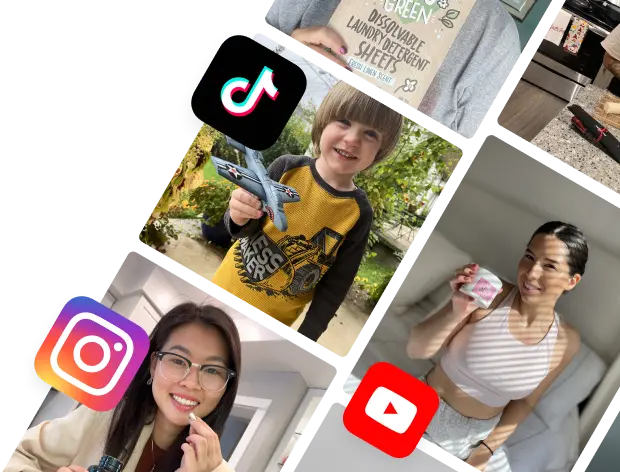
This is exactly where user-generated content and creator collaborations become your superpower. Working with a network of creators is essential for scaling this up. Platforms like JoinBrands are built for this, connecting brands with verified creators who are ready to produce on-brand, high-performing video assets that feel real.
The numbers don't lie. Short-form video has completely rewritten the rules of engagement. Just look at the data: TikTok creators with fewer than 100,000 followers see an average engagement rate of 7.5%. That absolutely crushes the 3.65% engagement rate on a typical Instagram carousel post.
For DTC brands, this proves that investing in authentic, short-form video production for social media isn't just a smart move—it’s now essential for survival. Want to dive deeper? You can discover more insights about social media trends and engagement to stay ahead of the curve.
To help you get started, here's a quick cheat sheet for the top platforms.
Social Video Platform Snapshot Key Specs and Creative Angles
Think of this table as your go-to reference for planning your content. Each platform has its own quirks and what works on one might completely flop on another. Knowing the specs is half the battle.
| Platform | Optimal Aspect Ratio | Ideal Video Length | Best For | Creative Angle |
|---|---|---|---|---|
| TikTok | 9:16 (Full Vertical) | 15-60 seconds | Trend-driven content, UGC, brand challenges, behind-the-scenes | Lean into trending sounds and meme formats. Keep it raw and unpolished. Humor and personality win big here. |
| Instagram Reels | 9:16 (Full Vertical) | 15-90 seconds | Aesthetically pleasing content, tutorials, product showcases, influencer collaborations | More polished than TikTok but still needs to feel native. Use high-quality visuals, quick cuts, and on-screen text overlays. |
| YouTube Shorts | 9:16 (Full Vertical) | Under 60 seconds | Educational "how-to" clips, repurposed long-form content, quick tips | Repurpose valuable snippets from your longer YouTube videos. Focus on providing quick value or a "wow" moment. |
| Facebook Video | 1:1 (Square) or 4:5 (Vertical) | 1-3 minutes | Community building, brand storytelling, customer testimonials, live streams | Great for slightly longer narratives. Videos often play without sound, so strong visuals and captions are a must. |
| Pinterest Video Pins | 2:3 or 9:16 (Vertical) | 15-60 seconds | DIY tutorials, inspirational content, product discovery, "how-to" guides | Think beautiful, actionable, and inspiring. Create content that feels like a mini-guide or a solution to a problem. |
Remember, these are guidelines, not rigid rules. The best approach is to test constantly, see what your audience responds to on each platform, and double down on what works.
Building Your Strategic Video Plan
Great video content doesn't just happen by accident—it's planned with surgical precision. Without a solid strategic foundation, you're just making noise online. Think of this plan as your blueprint; it makes sure every clip you shoot, every edit you make, and every dollar you spend is pushing you closer to your real business goals.
Too many brands skip this part and jump straight to brainstorming trendy video ideas. This is a huge mistake. A winning video production for social media strategy starts by asking the tough questions way before anyone even thinks about picking up a camera.
Define Your Video Objectives
First thing's first: what does success actually look like for you? You have to define the primary job of your video content before you do anything else. This one decision will guide everything that follows, from the creative concept all the way down to the call-to-action.
For most e-commerce brands, the goals usually fall into one of three buckets:
- Driving Awareness: The main objective here is simply getting your name out there. You're introducing your brand to new audiences who've never heard of you. Success is measured by things like impressions, views, and follower growth.
- Generating Leads: This is all about capturing interest and pulling potential customers into your world. You'll be tracking metrics like email sign-ups, demo requests, or free trial registrations.
- Pushing Direct Sales: This is the most bottom-line-focused objective. Your videos are designed to make people click "Add to Cart," period. The key metrics are click-through rates (CTR) and, of course, cold, hard sales revenue.
Here's the key: choose one primary objective for each campaign. A video that tries to do everything at once usually ends up accomplishing nothing. For example, a campaign focused on awareness might be a series of fun, non-salesy TikToks, whereas a sales-focused campaign would lean into direct-response UGC ads.
Understand Your Audience's Content Habits
Once you know your "why," it's time to figure out your "who." Who are you actually trying to reach, and where are they hanging out online? Don't just settle for broad demographic data. You need to get into the weeds of how they behave on social media.
Ask yourself these questions:
- Which platforms do they actually use to discover new products?
- What type of content makes them stop scrolling—is it funny, educational, or inspirational?
- Who are the creators they already follow and trust?
Getting answers to these questions stops you from creating content in a vacuum. If your audience loves authentic, behind-the-scenes stuff on Instagram Stories, but you’re pouring all your resources into polished ads for Facebook, you’re missing a massive opportunity to actually connect with them. Your plan has to meet them where they are, with content that feels like it was made just for them.
Crafting the Perfect Creative Brief
This is, without a doubt, the most important document in the entire video production process. A great creative brief is your single source of truth, the one thing that gets your internal team and external partners—like UGC creators—on the exact same page. A vague brief is a recipe for off-brand content, missed deadlines, and wasted money.
A strong creative brief is clear, concise, and gives a creator everything they need to knock it out of the park. It's the instruction manual that empowers them to produce exactly what you're picturing.
Think of a creative brief not as a set of restrictive rules, but as a clear map to a shared destination. It gives creators the guardrails they need to be creative while ensuring the final product aligns perfectly with your brand's strategic goals.
Your brief absolutely must include these key components:
- Project Overview: A quick summary of the campaign and its main goal.
- Key Message: What's the one single idea you want the viewer to walk away with?
- Target Audience: A detailed profile of who this video is for.
- Brand Voice & Tone: Are you funny and a little bit snarky, or are you more aspirational and educational?
- Visual Guidelines: Lay out any specific "do's and don'ts," brand colors, or even link to examples of aesthetics you love.
- Call-to-Action (CTA): What, specifically, should the viewer do after watching? Be direct (e.g., "Shop Now," "Learn More," "Use code SAVE20").
- Platform & Specs: Clearly state where the video will live and the required format (e.g., 9:16 for TikTok).
To nail this right from the start, a structured approach is your best friend. For a more detailed walkthrough, check out our guide with a downloadable creative brief template that will help you streamline your entire workflow. This tool makes sure you've covered all your bases, which makes collaborating with creators way smoother and more effective. When you set clear expectations upfront, you're paving the way for content that doesn't just look good, but actually delivers results.
Mastering the Social-First Production Workflow
Once your strategy is locked in, it’s time to actually make the thing. This is where your creative brief gets turned into tangible, scroll-stopping content. A killer social-first production workflow isn’t about massive budgets or Hollywood-level crews; it’s about being nimble, authentic, and laser-focused on the formats that are native to social feeds.
Modern video production has become a must-have skill for any serious marketing team. It's not a fringe activity anymore—a whopping 91% of businesses now use video as a core marketing tool. The old agency model isn't the only game in town, either. Today, 59% of businesses handle their video creation entirely in-house. Another 32% use a hybrid approach, mixing their internal teams with external partners.
Brands that are all-in on video publish an average of 18 videos per month. That kind of pace demands a scalable system. For fast-moving DTC brands, the only practical way to hit that cadence is often by collaborating with a network of vetted creators.
This process breaks down into a few key phases, flowing directly from the strategy you've already built.

As you can see, everything starts with your goals and audience. That understanding feeds directly into the creative brief, which is the roadmap that keeps your entire production process on track.
Finding Authentic Talent and Creators
Let's be blunt: the single most important element of a social video is the person on camera. Your audience can smell a fake a mile away. You need talent who genuinely reflects your brand and can connect with your community. Forget traditional casting calls—your best partners are already online, making content they love.
Creator platforms are your best friend here. They let you filter through thousands of profiles to find UGC creators and influencers who match your brand’s niche, aesthetic, and values. Look beyond the follower count. Focus on engagement rates and the quality of their content. Does it feel like a natural fit for your product?
Pre-Production with a Vertical Mindset
Before anyone hits "record," you need a solid pre-production plan built for social media. That means thinking vertically from the get-go. Storyboarding or creating a shot list that prioritizes the 9:16 aspect ratio is an absolute must.
Your shot list should be more than a simple checklist. Get detailed with it:
- The Hook (First 3 Seconds): What's the immediate visual or action that will stop the scroll?
- Key Visuals: What are the non-negotiable product shots or demonstrations?
- Text Overlay Areas: Plan for "negative space" where you can add captions or headlines without blocking the important stuff.
- Call-to-Action (CTA): How will you visually prompt the viewer to do what you want them to do at the end?
This planning stage is what saves you from the classic mistake of trying to awkwardly crop a horizontal video for a vertical feed. It rarely looks good and almost always cuts off critical information. If you're looking for more guidance on the narrative side, we've got a deep dive on how to write video scripts that actually convert.
Practical Tips for Shooting Social Video
Whether you're using a pro-level camera or just your smartphone, the principles of good shooting don't change. The goal is clean, clear, and engaging footage—not a cinematic masterpiece.
The best camera for social media is the one that lets you create authentic, high-quality content quickly and consistently. More often than not, a modern smartphone is all you need to produce a video that connects with millions.
Focus your energy on these three key areas:
- Lighting: Good lighting is the fastest way to make your footage look professional. Natural light from a window is your best friend. If you're stuck indoors, a simple ring light can be a game-changer, eliminating harsh shadows and creating a clean, polished look.
- Audio: People will forgive slightly grainy video, but they will not put up with bad audio. It's an instant scroll. If your creator is talking, an inexpensive lavalier mic that clips onto their shirt will give you far better sound than the phone's built-in microphone.
- B-Roll: Always, always, always capture extra footage. Get close-ups of the product, different angles of the main action, and shots of the environment. This B-roll is what gives you flexibility in the edit, letting you create dynamic, fast-paced sequences that hold attention.
Post-Production Workflows and Templates
The edit is where your social video really comes to life. Speed and relevance are everything. Your workflow should be built to turn raw footage into a polished, platform-ready video as fast as possible.
One crucial piece of the puzzle is using royalty-free music for social media. Using licensed tracks means you won't have to worry about copyright strikes getting your content taken down—a total nightmare after all your hard work.
Great social edits almost always include these elements:
- Fast-Paced Cuts: Keep your edits snappy. Aim to change the shot every 1-3 seconds to maintain momentum and energy.
- Engaging On-Screen Text: Use text overlays to highlight key benefits or call out important info. This is critical, since so many people watch videos with the sound off.
- Accurate Captions: Add captions to all spoken dialogue. This isn't just about accessibility; it also boosts comprehension and watch time.
To really speed things up, build out some editing templates in whatever software you prefer. These templates can have your brand colors, fonts, logo placements, and even common text animations pre-set. This lets you or your creators just drop in new footage, update the text, and export a finished video in minutes instead of hours. It’s a total game-changer for staying consistent and prolific.
Getting Your Video Seen: Optimization and Distribution
Look, you can create the most incredible video in the world, but it’s completely useless if the right people never see it. The real magic happens after you hit "export." Optimization and distribution are where your creative assets start pulling their weight and driving actual business results.
This is the bridge between production and performance. Think of your video as a high-performance engine. Optimization is the fine-tuning, and distribution is the fuel. Without both, you've just got a very expensive paperweight sitting in the garage.
Your Platform-Specific Game Plan
Every social platform is its own universe. User behavior, algorithms, what works and what flops—it’s all different. Slapping the same video everywhere with the same copy is a surefire way to get ignored. Before you publish anywhere, run through this quick gut-check.
Nail the Captions & Copy: On Instagram, you might get away with a longer, more story-driven caption. But on TikTok? You need something short, punchy, and designed to spark conversation in the comments. And for the love of all things marketing, always have a clear call-to-action (CTA).
Get Smart with Hashtags: Don’t just chase whatever’s trending. A good strategy mixes broad, niche, and branded hashtags. If you're a skincare brand, that might look like
#skincare(broad),#winterskincareroutine(niche), and your own#GlowUpChallenge(branded). For TikTok and Reels, a sweet spot is 3-5 super relevant tags.Thumbnails Matter. A Lot: Your thumbnail is the billboard for your video. On YouTube Shorts and Instagram Reels, you can pick a frame or upload a custom image. Choose something bright, clear, and intriguing that makes people need to know more. We've seen massive click-through lifts just by A/B testing different thumbnail styles.
Timing is Everything: Post when your audience is actually online and scrolling. Dive into your native analytics on Instagram or TikTok—they’ll show you exactly when your followers are most active. Catching that initial wave of engagement is what tells the algorithm, "Hey, people like this!"
Pouring Gas on the Fire with Paid Ads
Organic reach is fantastic, but it's a fickle friend. If you want to guarantee your best content gets in front of a bigger, highly-targeted audience, you need to put some money behind it. This isn't about "boosting" a dud post; it's about strategically amplifying your winners.
Paid tools are your secret weapon for getting your video production for social media in front of thousands of new people who look just like your best customers.
Paid amplification isn’t a crutch for bad organic content. It’s an accelerator. Use it to supercharge your top-performing videos and make sure they reach thousands more of your ideal customers.
Two of the most powerful tools in your arsenal right now are:
TikTok Spark Ads: This format is a game-changer. It lets you run ads using a creator's organic post, so it shows up in the feed as a native video from a real person, not a stuffy brand account. The authenticity is off the charts, and the engagement usually follows.
Instagram Reel Boosts: This works in a similar way. You can take a Reel that's already popping off organically and push it out to a targeted audience. You can set goals like more profile visits, website clicks, or DMs, turning your creative into a direct line to your business goals.
The "Create Once, Distribute Everywhere" Mindset
One of the smartest moves you can make is to stop thinking of videos as one-and-done assets. A single, solid video—like a customer testimonial or a product demo—is actually a content goldmine.
This is how you squeeze every last drop of value out of your production budget. To really get the most out of your videos, you should have a solid content repurposing strategy that turns one asset into many.
For instance, that 5-minute product tutorial you shot? That can easily become:
- Three separate 30-second TikToks or Reels, each focused on a different key feature.
- A handful of static image posts with text overlays pulling out key quotes.
- A "behind-the-scenes" GIF from the shoot to drop in your Instagram Stories.
This approach gives you a constant flow of fresh content without the constant headache of starting from scratch.
Feed the Algorithm with Community Management
Your job isn't done when you hit "publish." That first hour is absolutely critical. How you engage in the comments is a massive signal to the algorithm that your content is worth showing to more people.
Make it a top priority to respond to comments and questions as soon as they roll in. This isn't just good customer service; it's a distribution tactic. Every reply, every conversation, breathes new life into your post and keeps it circulating in the feed.
Measuring Success and Iterating for Growth
Making great video is just the first part of the job. The real magic happens when you can prove it works and use that data to make the next one even better. This is where we close the loop, turning cold, hard metrics into a powerful engine for growth. If you aren't measuring, you're just guessing.
The ROI from video marketing has absolutely exploded, and the data is impossible to ignore. A staggering 93% of marketers now see a strong return on their video efforts. The business impact is clear: video has helped 93% of marketers improve user understanding of their products, 85% generate more leads, and 83% straight-up increase sales.
For anyone deciding where to put their budget, these numbers are a flashing green light. Investing in a smart video production for social media strategy delivers, period. You can see the full breakdown of these video marketing statistics to get the complete picture. This process ensures every dollar you spend and every video you create is smarter than the last.
Moving Beyond Vanity Metrics
First things first: you have to track the right Key Performance Indicators (KPIs) for your specific campaign goals. It's so easy to get caught up in likes and views, but those "vanity metrics" rarely tell you what’s actually moving the needle for your business. To get the real story, you need to dig into the numbers that show how your audience is actually behaving.
Let's tie the metrics back to the goals we talked about earlier:
- For Awareness: Don't just look at Views. The real gold is in Watch Time and Audience Retention. A high average watch time means people are genuinely hooked, not just scrolling past.
- For Lead Generation: Your north star metric here is the Click-Through Rate (CTR) on your call-to-action. Just as important, you need to track Landing Page Conversions to make sure the traffic you're driving is actually valuable.
- For Direct Sales: This is all about the bottom line. You should be laser-focused on the Conversion Rate from video viewers, Add-to-Carts, and of course, the Revenue attributed to your video ads.
True success isn't measured in viral views; it's measured in tangible business outcomes. A video with 10,000 views that drives 100 sales is infinitely more valuable than a video with a million views that drives none.
Using Native Analytics Tools
You don’t need to drop a ton of cash on fancy software to get started. The analytics tools built right into platforms like Instagram, TikTok, and YouTube are incredibly powerful. They offer a treasure trove of actionable data just waiting to be analyzed.
Get into the habit of checking your dashboards weekly. Look for the patterns. What do your best videos all have in common? Is it a certain creator? A particular style of hook? A specific topic? These are the insights that should be fueling your next creative brief.
Mastering this requires a system. To get your process dialed in, check out our deep dive on how to track social media analytics.
Systematically Improving with A/B Testing
Once you have a baseline of what works, you can start running controlled experiments to systematically make your content better. This is what A/B testing is all about. The concept is dead simple: change one single variable at a time and see which version performs better.
You can test almost anything, but here are a few high-impact elements I always recommend starting with:
- Thumbnails: Test a clean product shot against an image with a person's face. The results might surprise you.
- Captions: Pit a short, punchy caption against a longer one that tells more of a story.
- Calls-to-Action (CTAs): Compare a direct CTA like "Shop Now" against something softer like "Learn More."
- The First 3 Seconds: This one is huge. Test two completely different opening hooks and see which one grabs and holds attention longer.
Document everything. When a test is done, analyze the data and roll the winning element into your future videos. This methodical approach takes the guesswork out of creative and builds a repeatable formula for success. It's how you turn your video strategy from a series of creative gambles into a predictable growth machine.
A Few Common Questions About Social Video
Jumping into video for social media always brings up a ton of questions, especially when you're trying to make sure every dollar and minute you spend actually drives results. Let's run through some of the most common things we hear from brands and agencies trying to build a solid video strategy. Getting these fundamentals right can help you avoid some major headaches down the road.
We’ll cover everything from figuring out a realistic budget to sorting out the confusing alphabet soup of UGC, influencer, and creator content.
How Much Should I Actually Budget for Social Media Video?
This is always the first question, but the answer isn't a single number—it's a spectrum. A high-end, polished commercial-style video can easily run you $5,000 or more for just one asset. But here's the good news: social-first video doesn't need that Hollywood budget to crush it.
The most cost-effective (and frankly, highest-performing) approach is working with user-generated content (UGC) creators. It’s the secret to getting authentic video at scale without breaking the bank.
- Cost per video: You're typically looking at anywhere from $50 to $500.
- Monthly budget: A smart starting point is between $1,000 – $5,000 per month.
- What that gets you: This range allows you to work with several creators consistently, building a reliable pipeline of fresh content.
Remember, the goal here is a high volume of authentic content, not one perfectly polished masterpiece. Some of the best-performing ads on TikTok and Reels are shot on a phone in someone's living room. The idea and the person delivering it matter way more than the camera.
What's the Difference Between UGC, Influencer Marketing, and Creator-Led Content?
You hear these terms thrown around a lot, sometimes all in the same sentence, but they mean very different things. Nailing down the distinction is crucial for building a smart video strategy.
- UGC (User-Generated Content): This is the holy grail of social proof. It's genuine content made by your actual customers—often for free—just because they genuinely love your product. Think unboxing videos or rave reviews they post on their own.
- Influencer Marketing: This is a paid partnership where you tap someone with a large, engaged following to promote your product to their audience. You're essentially borrowing their credibility and reach for a campaign.
- Creator-Led Content: This is a strategic collaboration. You're hiring a talented content creator to produce high-quality, authentic-style videos for your brand to use on your own social channels and in your ad campaigns.
For most DTC brands, the winning formula is a blend of all three. You want to encourage organic UGC from your community, run targeted influencer campaigns for big brand awareness pushes, and maintain a roster of go-to creators for a steady stream of ad-ready assets.
Creator-led content is your engine for consistency. While UGC provides raw authenticity and influencers offer massive reach, your creator partners are the ones who will reliably produce high-quality, on-brief assets week after week.
How Many Videos Should I Be Posting a Week?
There's no single magic number that works for everyone, but one thing is certain: consistency is way more important than frequency. The algorithms on platforms like TikTok and Instagram Reels are built to reward accounts that show up on a regular, predictable schedule.
A solid goal to aim for is 3-5 short-form videos per week on your primary platform. It’s far better to post three great videos every single week like clockwork than it is to post ten one week and then disappear for the next two.
The secret to pulling this off without burning out your team? A content calendar and a backlog of approved videos from your creator partners. This proactive approach means you always have something awesome in the chamber, ready to go live.
Can I Just Post the Same Video on Every Platform?
It's tempting, I get it. But blindly cross-posting the exact same video everywhere is a recipe for mediocre results. Each social platform has its own unique vibe, audience expectations, and technical requirements. A raw, trend-heavy TikTok video is going to stick out like a sore thumb on a professional platform like LinkedIn.
At the bare minimum, you need to re-edit your videos for each platform's native aspect ratio. Think 9:16 for Reels and TikTok versus a 1:1 square for a Facebook feed post.
But if you really want to win, you should be thinking about platform-specific concepts from the get-go. An easy way to do this at scale is to build it right into your creative briefs. Ask creators for a few variations of the same core idea, each tailored to feel native to a specific platform. It’s a small step that makes a huge difference in performance.
Ready to scale your content and get ahead of the competition? JoinBrands is the all-in-one platform that connects you with over 250,000 verified creators to produce high-performing social video content quickly and affordably. Find your next creator on JoinBrands.