

 Instagram for Fashion: The Ultimate Guide to Sales & Style
You're probably in one of two situations right now. Either your team has already tested creators in-house and the results were mixed, or you're staring at a budget line for influencer and creator campaigns and trying to avoid buying a lot of activity that never turns into sales. That's the primary problem with choosing among the best influencer marketing agencies. Most lists rank agencies as if every brand needs the same thing.
They don't.
A DTC brand that needs TikTok Shop affiliates, fast UGC, and reusable ad creative should not buy the same partner model as a global brand planning a tightly governed, multi-market campaign. Some teams need strategy, contracts, reporting, and brand safety handled for them. Others need speed, lower overhead, and direct control over briefs, product shipping, approvals, and asset ownership. That's why the better question isn't only which agency is best. It's which type of partner fits your budget, timeline, and operating style.
The category is large and still expanding. The global influencer marketing market is projected to top $32 billion in 2025, up 35% year over year, according to Statista's influencer marketing market overview. That growth explains why the best firms now look very different from the old “we know some creators” model. Some run global service teams. Some lean hard into analytics and paid amplification. Some look more like software platforms with agency support layered on top.
If you're still refining campaign structure, it helps to understand the basics of effective influencer campaign promotion before you choose a partner. Then the shortlist becomes much clearer.
Table of Contents
1. joinbrands Homepage

JoinBrands is the strongest fit on this list for brands that want speed, control, and a modern creator workflow without building an agency-sized internal operation. That distinction matters. A lot of companies searching for the best influencer marketing agencies don't need a traditional agency. They need a system that helps them launch more campaigns, source more creator content, and keep approvals from turning into a bottleneck.
JoinBrands sits in that middle ground between self-serve platform and managed partner. It gives brands access to a network of over 250,000 creators across TikTok Shop, Instagram, Amazon, YouTube, AI creators, and UGC specialists, based on the company background provided. For e-commerce teams, that breadth is useful because short-form creator needs rarely stay in one channel for long. A product launch might start with UGC, move into Spark Ads, then spill into Amazon or creator-led affiliate pushes.
Why it works for lean teams
The biggest practical advantage is consolidation. You can create briefs, find creators, handle product delivery, review submissions, approve content, and activate assets without stitching together separate systems and spreadsheets. That removes a lot of the friction that slows smaller marketing teams.
The platform is especially attractive if you care about owning usable assets, not just paying for a post that disappears in-feed. That's often the difference between a creator program that feels expensive and one that keeps feeding paid social, PDP content, email, and marketplace listings.
Practical rule: If your team says “we need more creator content” more often than “we need a big strategy deck,” a platform-first partner is usually the smarter buy.
JoinBrands also aligns well with a broader market gap. One of the clearest holes in “best agency” roundups is weak coverage of TikTok Shop and multi-platform affiliate workflows. A background analysis from Linqia's roundup of agency market gaps notes that many lists ignore the need to connect TikTok Shop affiliates, Amazon influencers, Instagram creators, and paid activation in one place.
Best use cases
JoinBrands excels in practice here:
- Fast content production: You need Reels, Shorts, B-roll, unboxings, demos, or testimonial-style UGC without long agency setup cycles.
- Product seeding with structure: You want shipping, briefs, submissions, and approval workflows in one place.
- Performance creative pipelines: You plan to reuse creator assets in ads, especially Spark Ads and other short-form paid placements.
- Multi-brand or agency operations: You manage several storefronts or client brands and need cleaner operational control.
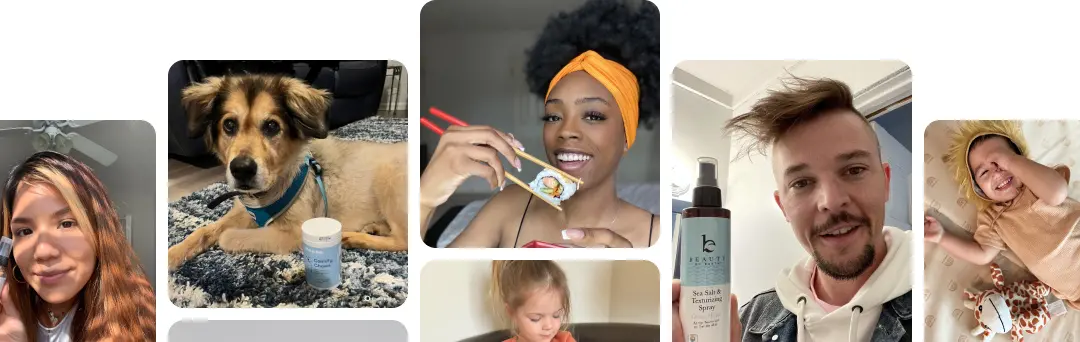
A practical way to evaluate creator quality on the platform is to review live portfolio examples before scaling spend. You can see one example creator profile through this JoinBrands creator page.
Trade-offs to know before you buy
JoinBrands isn't magic. Creator quality still varies, and teams that write vague briefs usually get vague content back. You also need someone internally who can curate talent, tighten feedback loops, and decide what winning content looks like.
For larger organizations, implementation can take time because legal, paid social, social commerce, and brand teams often all want input. That's normal. It doesn't make the platform worse, but it does mean enterprise buyers should plan onboarding instead of expecting instant organizational adoption.
The brands that get the most from JoinBrands usually know their content angles, shipping workflow, and approval standards before they scale invitations.
If you want one partner that combines creator access, workflow management, and practical execution for e-commerce, JoinBrands is one of the smartest options in this category.
2. Obviously (a VML company)

Obviously is built for brands that want a full-service operator with enterprise discipline. If JoinBrands is about agility and direct control, Obviously is about governance, scale, and repeatable systems across large creator programs.
That makes it a better fit for teams with procurement, legal review, regional stakeholders, and stricter brand guardrails. You're not hiring Obviously because you need a few quick UGC clips. You hire them when influencer marketing has to work inside a broader corporate machine.
Where Obviously stands out
The agency focuses on brand-exclusive creator networks, large product seeding programs, and repurposing creator assets for commerce uses such as retailer PDPs. That last piece matters more than many teams expect. Content that performs socially can also reduce creative bottlenecks in retail and marketplace environments if rights and workflows are handled correctly.
Obviously also benefits from being part of VML, which gives it enterprise credibility that many smaller influencer shops can't match. For larger companies, that usually translates into more comfortable procurement conversations and stronger integration with broader brand and media efforts.
A practical upside is its emphasis on custom dashboards and reporting. Big teams rarely struggle with getting data. They struggle with getting clean, stakeholder-ready views of what's happening without pulling from six systems.
Best fit and likely friction
Obviously is a strong option when your team needs all of this at once:
- Large-scale seeding: Sending product to many creators in a coordinated way
- Cross-platform programs: Running structured campaigns across Instagram, TikTok, and YouTube
- Commerce reuse: Turning creator content into assets for retailer pages and other owned channels
- Brand safety controls: Keeping approvals and workflows tight in regulated or reputation-sensitive categories
The trade-off is that enterprise service usually comes with enterprise process. Programs are custom quoted, and that's normal for this level of service. But it also means smaller brands can lose momentum if they approach an agency like this with a lightweight test budget and vague campaign scope.
If your internal team already moves slowly, don't assume a big agency will speed things up. It often improves execution quality, but only after stakeholders agree on goals, approvals, and reporting.
Obviously is one of the best influencer marketing agencies for companies that need a governed, high-volume creator engine. It's less compelling for brands that need flexible experimentation and hands-on control over every campaign detail.
3. HireInfluence

HireInfluence is a white-glove agency. That's the simplest way to think about it. Some partners are built to help your team move faster. HireInfluence is built to take operational burden off your team almost entirely.
That model works best when the internal marketing team is already stretched thin, the campaign matters politically inside the organization, or the activation includes more than digital posting. Product launches, tentpole moments, experiential programs, and branded events are where agencies like this tend to justify their cost.
What HireInfluence does well
The agency combines creator sourcing with manual vetting, experiential ideation, paid amplification, and detailed reporting. The manual curation angle is worth paying attention to. Database filtering can surface options, but it doesn't always catch tone mismatch, weak sponsored content habits, or creators who look right on paper and wrong in the feed.
HireInfluence is also a good match for brands that want influencer content designed for paid reuse. Many teams still make the mistake of separating “influencer” from “performance creative.” A stronger program plans for both from the start, especially when content rights, hooks, and ad-safe edits matter.
When this agency makes sense
HireInfluence is usually a practical choice in these situations:
- You need a managed launch: The campaign has enough visibility that mistakes will be expensive.
- You want experiential tie-ins: Creator content has to connect with an event, activation, or onsite moment.
- Your internal team is small: You'd rather outsource logistics, coordination, and reporting.
- Creative polish matters: You need strong content direction, not just creator outreach.
The downside is time. Experiential and high-touch campaign work tends to require more planning, more approvals, and longer lead times than pure digital seeding or platform-led UGC programs. Pricing also isn't listed publicly, so expect a scoping process.
The hidden cost in premium agency work isn't only the fee. It's the calendar. If your launch date is tight, ask for a realistic production path before you sign.
HireInfluence is one of the best influencer marketing agencies for brands that need polish, oversight, and campaign orchestration. It's less suitable for scrappy testing or high-volume creator content at speed.
4. Linqia
Linqia is one of the more compelling choices for brands that care about measurement, workflow structure, and paid amplification. It operates in that useful middle ground where managed services meet serious software support, rather than relying only on people or only on a marketplace.
Influencer programs break down in predictable places. Discovery gets messy. Approvals stall. Reporting lands too late. Paid and organic teams use different success definitions. Linqia has spent a lot of its positioning solving those operational gaps.
The measurement angle
Linqia's performance orientation is a primary differentiator. According to Linqia's agency technology overview, the company has built proprietary systems that combine audience demographics, influencer performance data, and content engagement signals to track real-time content performance and optimize toward measurable business goals such as app installs and multi-channel attribution.
That's a better framing than simple creator “reach” reporting. Most mature marketing teams don't need another dashboard full of vanity metrics. They need a partner that can tell them which creators, formats, and amplifications are helping business outcomes.
Linqia also fits the broader industry trend toward technology-heavy operations. The same source notes that the agency sector now includes enterprise-scale creator databases, fraud detection, and compliance automation. Those features aren't flashy, but they save teams from expensive mistakes.
Who should choose Linqia
Linqia is strongest when you need process and proof, not just creator access:
- Cross-functional reporting: Paid, brand, and analytics teams all want campaign visibility
- Full-funnel thinking: You need influencer activity tied to broader acquisition or conversion goals
- Governed workflows: Approvals, reviews, and partner integrations matter
- Paid amplification plans: Creator content won't live only in organic feeds
The trade-off is that Linqia is better for brands with defined budgets and stakeholder alignment. If you're still experimenting with messaging, don't have clear KPIs, or need low-friction testing, a tighter platform-led model may be easier to manage.
Practical take
Linqia works best when influencer marketing is already becoming a program, not a side experiment. Teams that can define outcomes and involve the right internal owners tend to get more value from this kind of partner.
It's one of the best influencer marketing agencies for marketers who care as much about attribution and governance as they do about creator selection.
5. Carusele

Carusele is a performance-minded agency. If your team is tired of campaigns that generate screenshots for recap decks but don't move traffic, conversions, or retail outcomes, this is the type of agency to look at.
Its positioning is less about celebrity access and more about optimization against business goals. That's an important distinction. Not every brand needs a cultural moment. Many just need creator campaigns that behave more like accountable media.
Why performance teams like Carusele
Carusele emphasizes daily optimization and measurable outcomes. That alone makes it appealing to retailers and CPG brands that already run disciplined media programs and don't want influencer work treated as a separate, softer channel.
The agency's style usually suits brands that ask hard questions early. What happens after posting? How is traffic quality evaluated? What gets changed mid-campaign if assets underperform? Those are stronger questions than “How many creators can we afford?”
Where to be careful
Performance positioning sounds great, but buyers should always inspect the operating assumptions behind it. If an agency offers guaranteed frameworks or strong outcome commitments, get clarity on campaign scope, spend thresholds, creative requirements, and how much control the agency has over paid support.
That doesn't mean skepticism for the sake of it. It means buying carefully. A performance-first agency can be a strong partner, but only if everyone agrees on what success is and which levers can be adjusted.
- Best for retail-minded brands: Especially those that want influencer to support e-commerce or omnichannel sales goals
- Best for KPI-driven teams: Useful if leadership cares more about conversions and qualified visits than broad awareness
- Less ideal for talent-led campaigns: If the campaign depends on celebrity cachet or culture-building, another agency may be a better fit
Campaigns fail when the brief asks for “authentic creator content” and the reporting asks for hard performance outcomes, but nobody planned paid support, landing page alignment, or testing criteria.
Carusele earns its place among the best influencer marketing agencies because it treats creator marketing as something that can and should be optimized. That won't appeal to every brand. For the right team, it's exactly the point.
6. The Outloud Group

The Outloud Group is a good reminder that not every influencer program should be built around short-form bursts. Some brands sell products that need explanation, repeated endorsement, or host-read credibility. That's where YouTube sponsorships and podcast advertising still matter.
A lot of teams default to TikTok and Instagram because they're visible and fast. That's not always where purchase intent develops best. If your product needs education, trust transfer, or a stronger narrative arc, The Outloud Group is a more natural fit than a pure short-form shop.
Best for long-form persuasion
The agency is known for performance-driven YouTube sponsorships, podcast ads, ambassador programs, and related measurement work. That combination can be effective for DTC brands that already understand their offer and need creators who can explain use cases rather than just demonstrate them quickly.
Its in-house talent management is also useful. Closer creator coordination can improve execution when ad reads, talking points, compliance needs, and timing all matter. That's especially relevant in podcasts and longer videos, where a weak integration is obvious.
Where it fits in a modern mix
The Outloud Group makes the most sense for brands in these scenarios:
- You need more explanation: Products with a learning curve or stronger objection handling needs
- You sell through consideration, not impulse: Longer content can build confidence before the click
- You want recurring creator partnerships: Ambassadors often matter more here than one-off posts
- You're willing to trade speed for depth: Long-form programs usually take more planning
The mismatch happens when brands only need a burst of short clips for paid social testing. In that case, a platform or short-form specialist will often be more efficient.
Short-form is great for attention. Long-form is often better for conviction. The right agency depends on which problem you're trying to solve.
Among the best influencer marketing agencies, The Outloud Group stands out because it doesn't chase the same playbook as everyone else. That's a strength if your channel mix includes YouTube or podcasts in a meaningful way.
7. August United (a McKinney company)
August United is a sensible choice for brands that want influencer marketing connected to a broader social and content operation. Some companies don't need a pure-play influencer specialist. They need a partner that can support creator programs while also helping with always-on social, content production, and channel continuity.
That integrated model can be especially valuable for lean in-house teams. Instead of hiring one shop for influencers, another for social content, and a third for creative support, August United can sit closer to the center of the marketing workflow.
Why the integrated approach matters
As part of McKinney, August United can support creator-led campaigns with broader creative and production resources. That's useful when influencer content is only one piece of a larger brand push and the campaign needs a unified creative standard.
The agency also signals campaign scale clearly. Its public budget intake framing helps pre-qualify whether there's a realistic fit before lengthy sales conversations. That kind of transparency is underrated. Many teams waste time talking to agencies that were never right for their budget or operating model.
Good fit, clear limits
August United is a strong option if your team needs:
- Influencer plus social support: Not just campaign execution, but ongoing content and channel help
- Larger program planning: Campaigns that need more than a quick creator sprint
- Agency depth: Access to broader production and strategy resources through a larger company structure
It's less attractive if your main need is a micro test or narrow performance play. The budget framing suggests a focus on mid-to-large programs, which means early-stage brands may find it too heavy for their current stage.
The practical appeal here is coordination. Brands often underestimate how much value there is in reducing handoffs between social, content, and creator partners. If internal alignment is already hard, fewer vendor seams can help.
Final read on August United
August United belongs on a list of the best influencer marketing agencies because it solves a broader operational problem than creator sourcing alone. It's best for brands that want influencer marketing to live inside a fuller social ecosystem, not as a disconnected experiment.
Top 7 Influencer Marketing Agencies Comparison
| Product / Agency | Implementation Complexity 🔄 | Resource Requirements ⚡ | Expected Outcomes 📊 | Ideal Use Cases 💡 | Key Advantages ⭐ |
|---|---|---|---|---|---|
| joinbrands Homepage | Moderate, platform is plug‑and‑play; enterprise integrations may take time | Moderate, subscription, creative assets, team to manage campaigns | High velocity short‑form content and measurable campaign ROI via predictive analytics | E‑commerce teams and agencies needing fast, scalable creator sourcing | Massive verified creator pool, AI matching, end‑to‑end workflow |
| Obviously (a VML company) | High, custom enterprise programs and brand‑owned networks | High, enterprise budgets, legal/compliance, product seeding logistics | Large‑scale, governed reach with commerce‑ready assets and robust measurement | Large brands needing global, governed influencer programs and retailer readiness | Brand‑exclusive networks, proprietary AI reporting, enterprise safety |
| HireInfluence | Moderate‑High, manual curation and experiential logistics add complexity | High, production, experiential activation costs, paid amplification | Creative‑led launches with strong EMV, sentiment and conversion reporting | Product launches, experiential activations, white‑glove campaigns | Strong creative/experiential capabilities and detailed performance reporting |
| Linqia | Moderate, Resonate platform plus managed services; integrations required | Moderate‑High, platform fees, integration effort, defined budgets | Full‑funnel measurement and transparent analytics across partners | Enterprise/mid‑market brands needing rigorous analytics and governance | Resonate AI platform, deep integrations, end‑to‑end service |
| Carusele | Moderate, performance framework with ongoing optimization needs | High, paid media spend and minimums likely required for guarantees | Measurable sales impact: conversions, qualified traffic, brand lift with real‑time optimization | Retailers and CPGs focused on sales‑driven influencer programs | Guaranteed‑results framework, advanced audience targeting |
| The Outloud Group | Moderate, specialized long‑form workflows and talent management | Moderate, podcast/YouTube production and talent coordination | Mid‑to‑lower funnel impact from long‑form video and podcast endorsements | YouTube sponsorships, podcast ads, ambassador programs for DTC brands | In‑house talent management, performance‑driven long‑form expertise |
| August United (a McKinney company) | Moderate, integrated influencer + social programs; scalable processes | Moderate‑High, content production, social management, campaign budgets | Always‑on social content and influencer programs with outcome focus | Brands needing influencer marketing plus ongoing social/content resources | Integrated services, transparent budget intake, McKinney creative support |
Final Thoughts
The best influencer marketing agencies aren't universally “best.” They're best for a specific operating model.
That's the filter smart buyers should use. If you start with brand size or agency reputation alone, you can end up paying for sophistication you won't use, or choosing a lightweight setup that breaks the moment internal complexity increases. The right choice depends on how your team works.
For enterprise brands with strict governance, global stakeholders, and high sensitivity around compliance, partners like Obviously and Linqia make sense. They're built for structure, process, and multi-layer reporting. HireInfluence also fits this world when campaign polish, experiential execution, and white-glove handling matter more than speed.
For performance-oriented retail and DTC teams, Carusele offers a sharper angle. It's a better match when influencer has to support measurable business outcomes and creative optimization, not just awareness recaps. The Outloud Group is the smart specialist pick when YouTube and podcasts play a serious role in conversion. August United works well when your creator program needs to connect tightly with broader social and content support.
But there is a separate conclusion that more brands should be willing to say out loud. Many companies searching for the best influencer marketing agencies do not need a traditional agency relationship. They need a platform that gives them creator access, workflow control, asset ownership, and enough support to run campaigns efficiently without the overhead of a classic full-service engagement.
That's why JoinBrands stands out. It's not trying to replicate the old agency model. It solves the day-to-day execution problems that slow e-commerce teams down. Finding creators. Shipping products. Managing approvals. Generating short-form assets. Activating Spark Ads. Keeping campaign motion without waiting on layers of account management. For brands that care about speed and content velocity, that often matters more than a large agency name.
There's also a broader market reason this decision framework matters. Background research highlights two recurring gaps in agency coverage. First, many roundups still underplay TikTok Shop, affiliate-style creator workflows, and cross-platform commerce integration. Second, pricing transparency remains weak, especially for startups and mid-market teams trying to compare agency models against platform-led alternatives. Those are real operational issues, not minor details.
So choose your partner based on the bottleneck you need to remove.
If the bottleneck is strategy, governance, and high-touch management, hire an agency built for that. If the bottleneck is campaign speed, creator sourcing, and reusable content production, a platform-first option is often the better answer. If the bottleneck is performance alignment, choose a partner that treats creator content like part of your media system, not a separate brand exercise.
One final practical point. Before signing with anyone, ask to see how the work gets done. Not just campaign examples. Ask how briefs are built, how creators are vetted, how product shipping is tracked, how usage rights are handled, how feedback is delivered, and how content becomes paid media or commerce creative. The best influencer marketing agencies earn trust in those details.
That's usually where good programs are won or lost.
If you want a faster way to launch creator campaigns, source UGC, manage product seeding, and keep control of your assets in one place, JoinBrands is worth a close look. It's a strong fit for DTC brands, in-house marketers, and agencies that need creator speed without giving up workflow control.