

 Influencer Marketing for CPG: The 2026 Playbook
You’re probably asking the wrong question.
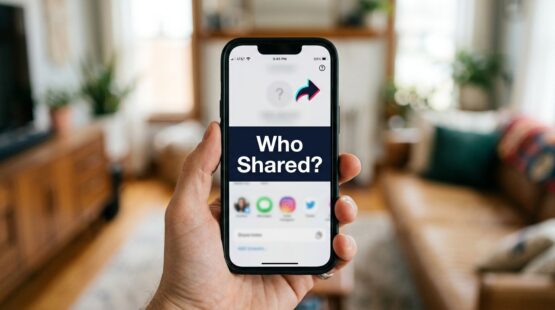
Most brand managers ask, “does tik tok show who shared your video?” because they want attribution. They want to know which person passed a post around, which affiliate helped push it, or which share turned into revenue. That instinct makes sense. It’s just not how TikTok works.
Table of Contents
The Short Answer and the Better Question for Brands
No. TikTok doesn’t show who shared your video. It shows aggregate share counts, not the identities behind them, and that hasn’t changed even as the platform scaled to 1.59 billion ad-reachable users by January 2025, with average engagement in the 2.65% to 4.25% range, according to DataReportal’s essential TikTok stats.

For brands, that answer matters less than people think.
The better question is this: If TikTok hides who shared, how do you measure what those shares did? That’s the question that affects budget allocation, creator selection, TikTok Shop affiliate reporting, and whether a campaign gets scaled or cut.
A lot of teams waste time trying to force user-level visibility out of a platform that was built to avoid it. That’s a dead end. The practical move is to treat shares as an impact signal, then connect that signal to view spikes, profile traffic, off-platform clicks, and conversion behavior.
Practical rule: Stop looking for a list of sharers. Start building a reporting model that explains what happened after shares rose.
That shift changes how you brief creators. It changes what you watch in the first day of a post. It also changes which tools matter. If you’re managing creator output through a platform such as this creator profile on JoinBrands, your job isn’t to identify every sharer. Your job is to understand whether the content got passed around enough to move awareness, traffic, or sales.
That’s the primary operating question on TikTok.
The 'Why' Behind TikTok's Anonymous Sharing Policy
TikTok’s share system isn’t missing detail by accident. It’s built that way.
The platform keeps sharing low-friction. A user can send a video into a group chat, text thread, or another app without feeling like they’re making a public endorsement. That difference matters. On some platforms, sharing feels like attaching your name to a statement. On TikTok, it feels closer to forwarding something interesting.
That design choice supports volume. TikTok’s anonymous sharing model is tied to 92% of users taking action after viewing content, and the platform’s 4.25% average engagement rate is tied to that lower friction, with creators seeing only aggregate share counts rather than individual identities, according to Bull and Wolf’s TikTok video statistics roundup.
Shares on TikTok function more like private votes
A “like” is lightweight. A comment is visible. A follow is a commitment.
A share sits in a different category. It says, “This is worth passing on.” On TikTok, users can make that choice without exposing themselves to the creator. That reduces hesitation.
Think of it this way:
| Platform behavior | User feeling |
|---|---|
| Public share with identity attached | Endorsement |
| Private share with no identity shown to creator | Recommendation |
| Repost tied to profile activity | Semi-public signal |
That privacy creates a trade-off brands need to accept. You get more organic spread, but less user-level attribution.
Why TikTok prefers this trade-off
Brands usually dislike missing attribution. Users usually dislike being tracked too visibly. TikTok has clearly chosen the user side of that equation.
That choice fits the app’s broader behavior model. Short-form content moves fast. People save, send, and repost in moments. If TikTok made every share visible to creators, some users would pull back. Others would think twice before sending a product video to friends, sharing a joke, or passing along a controversial opinion.
Anonymous sharing isn’t a reporting flaw. It’s part of the product experience.
For marketers, that means two things.
First, share volume matters more than share identity on TikTok. A piece of content that gets passed around quickly often creates second-order effects you can see elsewhere, even if you never know the usernames involved.
Second, your creative strategy has to respect the platform’s social mechanics. Content that earns shares usually gives the viewer a reason to send it to someone else. That might be utility, humor, comparison, surprise, a product fix, or social proof. Content that only asks for a sale rarely gets the same behavior.
What this means for brand expectations
If a brand manager comes from Meta, LinkedIn, or referral programs, the instinct is often, “Show me the person who did the sharing.” TikTok won’t do that.
What it will do is reward content that creates enough interest to trigger private distribution. That’s why TikTok campaigns should be judged by patterns, not by identity logs.
A practical framing helps:
- Bad expectation: “We need to know exactly who shared this.”
- Better expectation: “We need to know whether shares drove distribution beyond the original audience.”
- Best expectation: “We need to know whether that extra distribution produced awareness, traffic, or purchases.”
That last question is where campaign strategy becomes useful.
What TikTok Analytics Actually Reveals About Shares
TikTok does give you share data. It just gives it in a limited form.
If you open video analytics, you can see the share count for a post. That number tells you how many times the content was shared through TikTok’s sharing actions. What you won’t get is a user list, a notification naming the sharer, or a clean breakdown of every private path the content took.

TikTok’s system processes shares server-side and updates the aggregate analytics count without sending a real-time share notification to the creator, as described in TikTok Shop’s explanation of share notifications.
What you can actually see inside TikTok
At a practical level, organizations typically work with a small set of native indicators:
- Shares count: The total number of times a specific video was shared.
- Views: The post’s total reach signal.
- Likes and comments: Surface-level engagement that can help interpret whether the content was appreciated or merely seen.
- Profile activity: Useful when a post causes people to investigate the brand or creator after seeing the video elsewhere.
That sounds simple because it is. TikTok’s native dashboard is useful for direction, not forensic attribution.
Shares versus reposts
Teams often get sloppy at this stage.
A share is a broader action. It can mean someone sent the video privately, copied the link, or pushed it outward through the share menu. A repost is more visible inside TikTok’s own ecosystem. Reposts can leave public clues that you can inspect manually, while many other shares stay fully anonymous.
Here’s the clean way to treat them:
| Metric | What it means | What it does not mean |
|---|---|---|
| Shares | The video was passed along through TikTok’s sharing mechanics | You know who sent it |
| Reposts | The content was re-circulated in a more visible in-app way | You have a complete record of all sharing activity |
If your team treats reposts as a full share log, your reporting will be wrong.
Where marketers overread the dashboard
The biggest mistake is assuming that a share count explains itself.
It doesn’t.
A high share count can mean the content was useful, funny, controversial, or sent to private chats. It can also mean the post traveled off-platform in a way TikTok doesn’t fully spell out for you. The number is important, but only in context.
Use it alongside:
- View velocity
- Profile visit changes
- Follower movement
- Traffic or conversion shifts off-platform
That’s when the metric becomes operational.
Here’s a useful walkthrough if your team needs a visual refresher on finding analytics and reading the dashboard:
What native analytics won’t solve
Native TikTok analytics won’t tell you:
- Which user shared the post
- Which creator affiliate personally triggered a specific private share
- Which single share led directly to a purchase
- How many private recipients saw the content before acting
That matters for DTC brands, especially those running multiple creators at once. If five affiliates post in the same window and one video starts spreading through private chats, TikTok won’t hand you perfect attribution.
If you need certainty at the person level, TikTok analytics will frustrate you. If you need enough signal to optimize campaigns, they’re useful.
The practical use of TikTok analytics is simple. Read shares as a directional metric. Don’t treat them as an identity map. Then layer in outside data where it counts.
Debunking Common Myths About Tracking TikTok Shares
There’s a whole mini-industry built around false promises here.
If a tool claims it can show you exactly who shared your TikTok video, treat that claim with suspicion. TikTok doesn’t expose that information to creators in native reporting, so any app promising a backdoor view is selling fantasy, scraping unreliable signals, or asking for access it shouldn’t need.
Myth one says profile views reveal sharers
They don’t.
A person who shared your video might visit your profile. A person who visited your profile might never have shared anything. Those are different actions. Conflating them creates bad reporting and worse decisions.
Myth two says repost activity equals all sharing activity
It doesn’t.
Reposts can offer visible clues, but they represent only one slice of how content spreads. Most of the behavior brands care about on TikTok happens in ways that aren’t tied to a public identity trail.
Myth three says “share tracking” apps can expose usernames
That’s the easiest one to dismiss. If TikTok itself doesn’t provide creator-facing sharer identities, third-party apps don’t have a legitimate source for them either.
A few reasons these tools fail:
- They guess from surface behavior: For example, they may infer likely sharers from engagement timing.
- They confuse visible actions with private ones: Reposts, comments, or profile visits get mislabeled as shares.
- They create security risk: Some ask for account permissions that aren’t justified by the feature they promise.
Don’t buy software to chase a metric TikTok intentionally hides.
Myth four says you can “spot” sharers through the For You Page
You can’t identify sharers by watching where a post appears or by guessing from audience overlap. The For You Page is a distribution environment, not a disclosure tool.
A marketer may notice that a video suddenly picks up traction in a new audience pocket. That can suggest sharing. It does not name the users responsible.
What’s worth doing instead
A simple filter helps. If a tactic promises direct identity data, ignore it. If it helps you detect patterns after shares rise, it’s worth evaluating.
Use this decision table:
| Claim | Reality |
|---|---|
| “See who shared your TikTok” | Not available in creator-facing reporting |
| “Know whether sharing likely increased” | Possible through performance analysis |
| “Identify public repost behavior” | Sometimes possible |
| “Attribute all private shares precisely” | Not realistic |
That’s the line. Stay on the right side of it.
Advanced Strategies for Brands to Infer Share Impact
If direct share identity is off the table, the job becomes inference.
That sounds weaker than attribution, but in practice it’s how strong TikTok teams operate. You build a system that ties share movement to business movement. Not perfectly. Reliably enough to make better decisions.

One useful benchmark from EM360’s breakdown of TikTok data behavior is that brands can infer meaningful sharing activity through cause-effect patterns, including a high share-to-view ratio such as 3.2x in the US/UK or a 10% to 50% hourly view spike that isn’t explained by For You Page impressions.
That’s the core idea. Don’t ask, “Who shared this?” Ask, “What changed right after people started sharing?”
Use traffic architecture that can absorb imperfect attribution
The cleanest setup starts outside TikTok.
If your creator campaign includes product links, landing pages, or creator-specific destinations, add UTM parameters, dedicated paths, or offer-level distinctions before the content goes live. That won’t identify private sharers, but it will help you catch traffic and conversions that arrive after content gets passed around.
For a DTC example, imagine a skincare brand running three creator videos around the same product angle:
- Creator A posts a routine demo
- Creator B posts a before-and-after story
- Creator C posts a “things I’d buy again” list
All three videos can drive awareness. But if each creator points toward a distinct landing path or tagged destination, the brand can compare which traffic pool surged after a share spike.
This matters even more when private sharing pushes viewers to search later rather than click instantly. Your analytics won’t be perfect, but they’ll be better than looking at TikTok shares in isolation.
Watch for the signature pattern of off-platform spread
Experienced teams know the shape of an off-platform sharing event.
It often looks like this:
- Shares increase
- Views accelerate outside the usual pattern
- Profile visits or branded search interest rises
- Site traffic or assisted conversions follow
Not every viral-looking jump is a share event. Sometimes the algorithm picked up the post. The clue is mismatch. If views climb in a way that doesn’t line up cleanly with your expected in-app distribution, private sharing becomes a strong explanation.
Field note: The most useful question in post analysis is often “What changed that the For You Page alone doesn’t explain?”
That’s where hourly monitoring helps. Brands that care about TikTok attribution should watch the first day of performance more closely than the seventh. The early movement often tells you whether the content is being consumed or being passed around.
Pair TikTok metrics with on-site behavior
A share only matters commercially if it changes what buyers do next.
That’s why your website analytics matter as much as TikTok analytics. Look for alignment between content windows and behavior such as:
- Direct traffic lifts
- Landing page surges
- Add-to-cart clusters
- Coupon or offer usage tied to creator paths
- Return visits from branded search
Brand managers often gain more clarity than expected. You may not know the person who shared the post, but you can still see whether a wave of attention translated into shopping behavior.
A similar attribution mindset shows up in audio marketing too. Teams working across music and creator campaigns often rely on partial signals and downstream behavior, which is why resources like Spotify analytics for SoundCloud premieres are useful reading. The platforms differ, but the reporting problem is familiar. You rarely get one perfect source of truth, so you learn to connect exposure signals to later actions.
Build creator-level proxy models
If you’re running affiliate or creator campaigns, you need a per-creator method, not just a campaign-level one.
A practical model usually combines these inputs:
| Signal | Why it helps | Limitation |
|---|---|---|
| Share count trend | Captures pass-along behavior | No identity data |
| View velocity | Flags unusual distribution speed | Can be algorithmic, not just shares |
| Link traffic by creator | Connects content to site visits | Misses people who search later |
| Promo code or creator offer use | Helps tie purchases to creator exposure | Many viewers never use codes |
| Profile and follower movement | Shows curiosity after exposure | Indirect, not transactional |
This doesn’t create perfect attribution. It creates a better confidence model.
For example, if one creator’s post shows rising shares, unusual view acceleration, a matching landing page bump, and a pickup in offer use, that creator likely contributed more than a post with similar views but no downstream movement.
Manual checks still have value
Manual review is limited, but it’s not useless.
Search for:
- Visible reposts
- Duets
- Stitches
- Comments that mention sending the post to friends
- Mentions on other social platforms
These won’t capture the full spread. They will help you understand why people shared. That qualitative layer matters when you’re trying to repeat a result.
I often find that the comments explain the share motive better than the share metric itself. People will tell you the audience use case in plain language. “Sent this to my roommate.” “This is exactly what my sister needs.” “Our team chat is going to lose it over this.” Those are creative signals.
Use account-level tools where available
Some business accounts may have access to newer reporting layers that show anonymous demographic insight around sharing behavior. Those kinds of tools don’t solve identity, but they can help you understand whether the people circulating a post resemble your target buyer.
For teams working across multiple creators, platforms that centralize creator campaign reporting can help reduce the manual burden. For example, this JoinBrands creator workflow view reflects the kind of setup brands use when they need creator coordination, asset tracking, and campaign-level visibility in one place. That still won’t reveal private sharers. It does make it easier to compare creator outputs against the same reporting frame.
What works and what doesn’t
A direct summary is useful here.
What works
- Link tagging before launch
- Watching first-day anomalies
- Comparing share count movement with view and traffic movement
- Using creator-specific destinations or offers
- Reading qualitative evidence from comments and repost behavior
What doesn’t
- Expecting TikTok to name private sharers
- Treating reposts as full share data
- Judging a creator only by views
- Trying to assign every sale to a single share event
- Waiting until the campaign ends to inspect performance
Brands that get good at TikTok don’t solve the privacy limit. They design around it.
Building a Share-Aware Creator Campaign Workflow
A strong TikTok workflow doesn’t try to defeat anonymous sharing. It plans for it from the start.
That changes the campaign brief, the creator selection process, the tracking setup, and the post-campaign report. If your team handles shares as an afterthought, you’ll end up with a vague narrative instead of a usable read on performance.

Start with a brief that asks for shareable behavior
The brief should specify content patterns that tend to get passed around.
That doesn’t mean writing “make it go viral.” It means asking for creative formats people forward: problem-solution demos, side-by-side comparisons, “send this to a friend” utility, sharp reactions, giftable product moments, or surprising use cases.
A good brief also sets reporting expectations. Ask creators to note timing, post URLs, key hooks, and any visible public responses such as reposts, duets, or stitches they can observe from their side.
Set up tracking before any post goes live
Most attribution problems originate from this practice. Teams post first and instrument later.
Before launch, prepare:
- Creator-tagged links: So traffic can be segmented by source pattern.
- Dedicated landing pages or paths: Helpful when several creators push the same product.
- On-site conversion tracking: To catch downstream behavior after content spreads.
- Offer logic: Codes, bundles, or creator-specific entry points when appropriate.
If your team works across creator education too, broader monetization resources can help non-specialists understand the economic logic behind social campaigns. A practical example is Klink Finance's social media earning guide, which gives context for how creators and brands think about revenue pathways even when attribution isn’t fully transparent.
Monitor the first wave, not just final totals
The most useful review window is usually the earliest one.
Watch for mismatches between expected in-app performance and what happens. If a post starts generating unusual reach, traffic, or conversation relative to its visible distribution path, treat that as a sign to investigate creative fit and buyer response.
A compact in-campaign checklist helps:
| Timing | What to check | Why it matters |
|---|---|---|
| Early after publish | Share count movement and view acceleration | Flags possible pass-along behavior |
| Same day | Profile visits, comments, branded search activity | Shows curiosity beyond passive watching |
| Next reporting window | Site traffic and conversion movement | Connects exposure to business outcomes |
Use proxy metrics for affiliate programs
For TikTok Shop affiliate work, the situation becomes tricky. Brands can’t see who shared affiliate content, so they need proxy metrics.
Accio’s guide to what you can actually track on TikTok notes that brands can use proxy methods, including newer Share Insights beta views showing anonymous demographics, while manual checks for reposts capture only about 20% of total shares.
That means affiliate evaluation should combine multiple signals, not one. A creator with modest direct clicks may still be helping a product spread if the content produces downstream sales lift, demographic alignment, or visible content echoes across the platform.
The right question for affiliate reporting is not “Who shared it?” It’s “Which creator’s content created the strongest chain reaction?”
Finish with an inference-based report
The final report should separate direct attribution from inferred influence.
That distinction protects your credibility internally. Don’t pretend you can prove more than the platform allows. Show what you know directly, then show what likely happened based on aligned evidence.
A practical post-campaign report often includes:
- Direct metrics: views, clicks, conversions, creator-level outputs
- Amplification signals: share trends, repost evidence, comment themes
- Behavioral correlation: traffic lifts, product page engagement, conversion timing
- Creative findings: hooks, formats, and use cases that appeared to trigger sharing
If you need a central system for handling creator operations, JoinBrands is one example of a platform brands use to manage creator campaigns, approvals, and related reporting in a single workflow. The key point isn’t the platform name. It’s that share-aware campaigns work better when the operational data lives in one place.
Conclusion Shifting Your Focus from 'Who' to 'What'
If you came here asking does tik tok show who shared your video, the answer is still no.
But that’s not the limit that matters most. The bigger issue is whether your team knows how to measure the effect of sharing when TikTok keeps the identities private.
The brands that struggle on TikTok keep chasing user-level certainty. The brands that improve treat shares as a distribution signal, then connect that signal to what happened next. They look at share movement alongside views, traffic, creator outputs, and conversion behavior. They accept that attribution on social platforms is often directional, then build better decision-making around that reality.
That mindset is more useful than a username list would be.
It also makes creative evaluation sharper. If a post got passed around, what made it worth sending? If another post got views but no spread, what stopped the audience from recommending it? Those questions improve the next campaign far more than knowing that one specific account tapped Share.
For creators and brands alike, TikTok’s privacy model forces a more mature analytics habit. Measure what changed. Measure what spread. Measure what sold.
That’s the standard worth adopting, whether you’re running one creator or a full roster through this UGC creator example on JoinBrands.
If your team needs a cleaner way to run creator campaigns, track outputs, and organize TikTok performance data across multiple creators, JoinBrands gives brands a structured workflow for managing creator collaborations from brief to reporting.