

 TikTok Content Creator Jobs: A 2026 How-To Guide
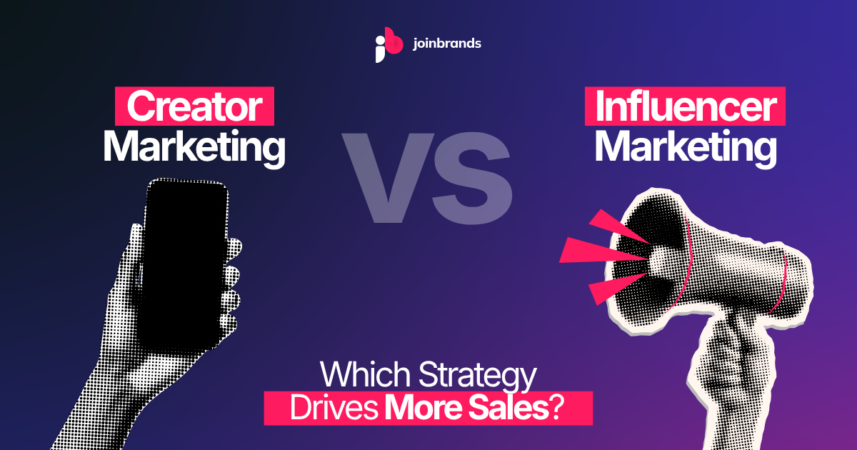
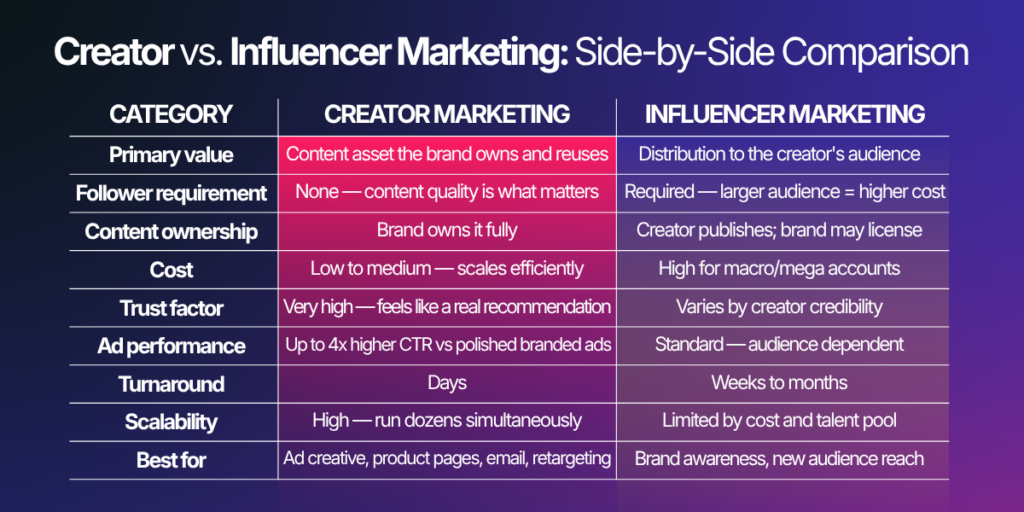
Brands running paid social campaigns face the same fork in the road every quarter: put the budget into creator marketing — content produced by real people, owned by the brand — or into influencer marketing, where you pay for access to someone’s audience. Both work. But they work differently, cost differently, and convert differently.
Knowing which to use, and when, is the difference between content that moves products and content that sits in a folder.
This guide breaks down both strategies with real data, a side-by-side comparison, and a clear framework for deciding which fits your current goal.
Table of Contents
What Is Creator Marketing?
Creator marketing is a strategy where brands partner with content creators to produce video, photo, or written content that promotes their products. The brand typically owns the content and uses it across its own marketing channels — in paid ads, on product pages, in email campaigns, and on social media. The creator does not need a large audience. What matters is their ability to produce content that looks and feels authentic.
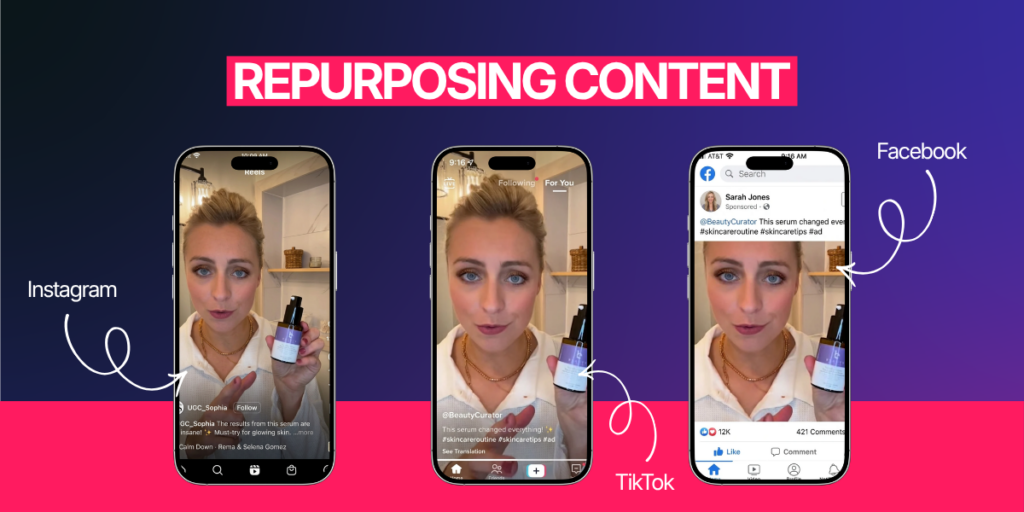
The defining feature of creator marketing is content ownership. A brand briefs a creator, the creator produces the asset, and the brand runs it wherever it performs. One creator video can become a TikTok ad, a Meta Spark Ad retargeting creative, an Amazon listing video, and an email header — all from a single brief.
What Is Influencer Marketing?
Influencer marketing is built around reach. A brand pays a creator with an established audience to feature their product in a post or video published to that creator’s followers. The value is distribution — the brand borrows the creator’s credibility and access to a specific community for a defined period.
Follower count, engagement rate, and audience demographics are the primary selection criteria. The creator publishes the content to their channel. The brand may or may not receive the raw asset for reuse. For a full breakdown of how to evaluate creators before committing to a budget, see our guide on how to choose the right influencer for your brand.
When Brands Should Use Creator Marketing
Creator marketing is the stronger choice when the goal is performance. If the content is going into a paid ad, a product listing, or any channel where click-through rate and conversion rate are the metrics that matter, creator content consistently outperforms studio-produced branded content.
- You need ad creative at scale. Running 15 creator videos and optimising toward the top performers will outperform a single polished production almost every time. Learn how to turn creator content into high-converting ads.
- You sell on Amazon or Shopify. Creator video content on Amazon product pages increases conversion rates. A brand can brief five creators today and have tested listing content within the week.
- You want to control the message. With creator marketing, the brand writes the brief, approves the content, and owns the asset. There is no dependency on a creator’s posting schedule.
- Your budget is limited. Creator content costs a fraction of agency production. New creators typically charge $50–$300 per video. Experienced creators with strong portfolios charge $300–$1,000.
Ready to build your creator content library? JoinBrands connects brands with 250,000+ vetted creators for fast, affordable content production. Start at joinbrands.com/brands
When Brands Should Use Influencer Marketing
Influencer marketing earns its place when the primary objective is reach — specifically, reaching an established, loyal community that you do not yet have access to. A macro-influencer in your niche can introduce your brand to hundreds of thousands of pre-qualified buyers in a single post.
- You are launching a new product and need rapid awareness in a specific niche.
- You are entering a new market where a trusted creator already owns the audience you want.
- Community credibility matters more than content volume — for example, a luxury or heritage brand where exclusivity is part of the positioning.
- You want to understand influencer marketing ROI before committing. Start with micro-creators at lower cost to build benchmarks before scaling spend.
How to Combine Both for Maximum ROI
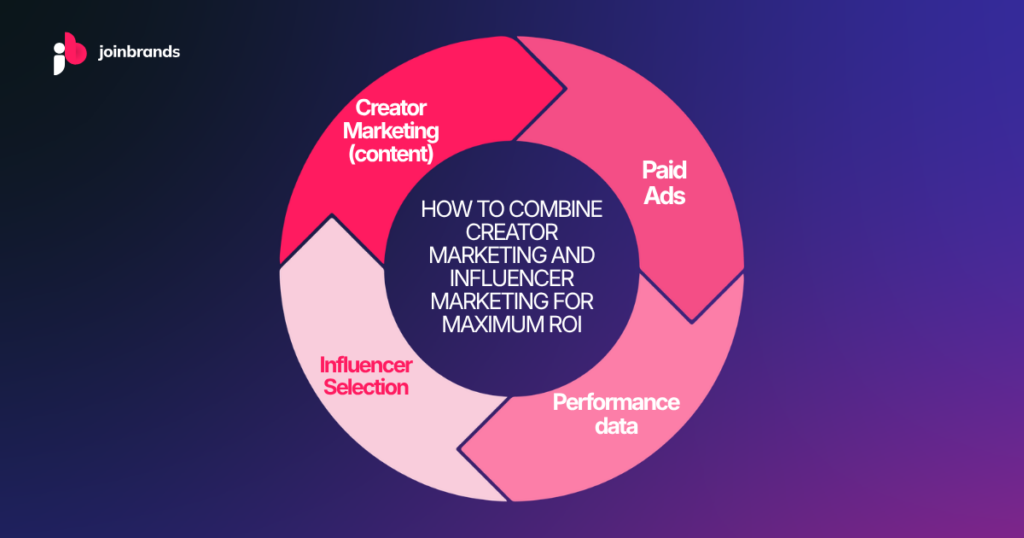
The brands that get the best results do not choose one or the other. They use both in a connected system:
- Use creator marketing to build your content library. Brief 10–20 creators per quarter to produce video and photo assets. Run the top performers as paid ads. See how to find content creators for your brand.
- Use influencer marketing for reach events. Identify two or three macro-influencers per year for product launches or seasonal campaigns where audience size justifies the spend.
- License influencer content as creator marketing assets. When an influencer post performs well organically, license the content and boost it as a TikTok Spark Ad or Meta dark post.
- Activate TikTok Shop affiliates. A TikTok Shop affiliate program combines creator content production with performance-based commission — one of the highest-ROI formats in e-commerce right now.
JoinBrands gives brands direct access to 250,000+ creators across TikTok, Instagram, and Amazon. No agency fees. No minimums. Post your first campaign at joinbrands.com/brands