

 Micro-Influencer Marketing Agency – Top 10 Agencies, FAQs & More
Follower count is still the first thing most brands look at when choosing an influencer. It is also the least useful metric for predicting whether a campaign will perform. A creator with 400,000 followers and a 0.5% engagement rate will deliver fewer real interactions than a micro-creator with 12,000 followers and a 7% engagement rate and cost significantly more.
Choosing the right influencer is a structured decision, not a gut call. This guide walks through the six-step vetting process that brands use to find creators who actually convert. Before you start vetting, make sure you understand what type of partnership you are looking for, our guide on creator marketing vs. influencer marketing explains the key differences.
Table of Contents
What Makes an Influencer Right for Your Brand?
The right influencer is not the most popular one in your category. It is the creator whose audience is closest to your actual buyer, whose content quality matches your brand’s standards, and whose engagement patterns suggest a real community rather than a passive viewership.
Four non-negotiable fit criteria before any other metric matters:
- Niche alignment. The creator’s primary content topic should overlap directly with your product category. Use our how to find content creators guide to filter by niche before evaluating individual profiles.
- Audience demographics. The creator’s audience age, gender, location, and income level should match your target buyer profile. This data is available through any platform analytics or creator media kit.
- Content quality. Would you be comfortable with this video appearing as a paid ad on Meta or TikTok? If not, it will not perform in a paid context regardless of organic reach.
- Brand safety. Review the creator’s recent content for anything that conflicts with your brand’s values or positioning. One controversial post can create association problems that outweigh any campaign benefit.
The 6-Step Influencer Vetting Process
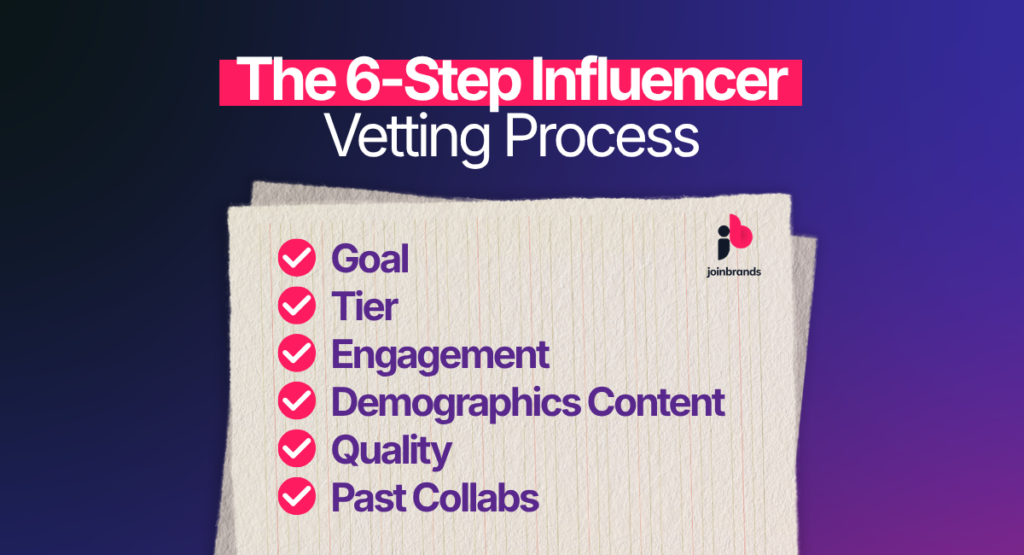
Step 1: Define Your Campaign Goal Before You Look at Anyone
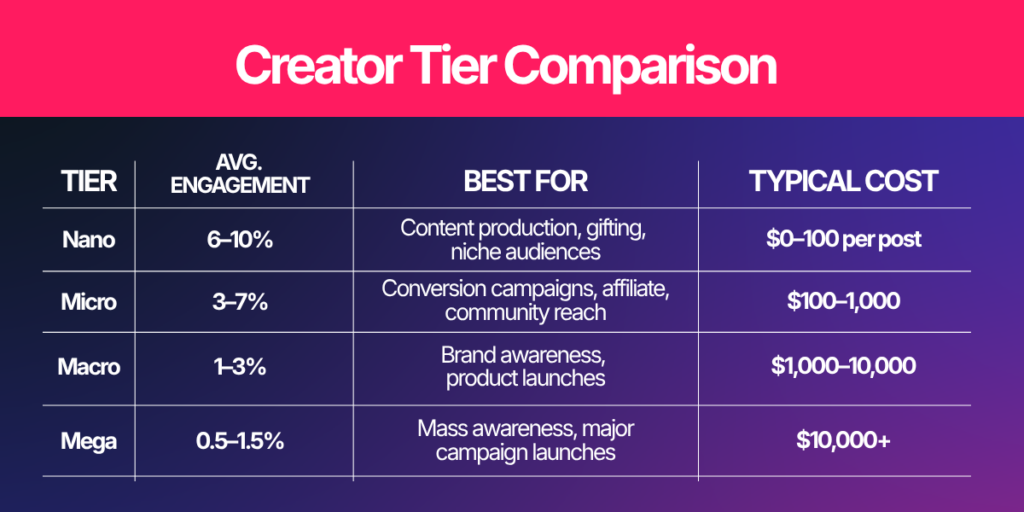
The goal determines everything that follows. A brand awareness campaign calls for macro-creators with broad reach. A direct-response campaign needs micro-creators with high engagement and conversion-oriented audiences. A content production campaign needs skilled videographers regardless of follower count. Understand your influencer marketing ROI target before you select anyone.
Step 2: Match the Creator Tier to the Goal
Nano creators (1K–10K) deliver the highest engagement rates and are most cost-effective for content production. Micro creators (10K–100K) balance reach and engagement well for conversion campaigns. Macro creators (100K–1M) suit brand awareness launches. See our full breakdown on what brands should pay influencers for cost benchmarks at each tier.
Step 3: Vet Engagement Rate — Not Follower Count
Calculate engagement rate as total interactions (likes + comments + shares) divided by total followers, multiplied by 100. Healthy benchmarks: 3–6% on Instagram, 5–9% on TikTok for micro-creators. Below 1% on Instagram is a red flag. See our guide on how to measure engagement rate like a pro for the full calculation and what the numbers mean by platform.
Step 4: Audit Audience Demographics
Ask for the creator’s media kit or platform analytics screenshot. Verify that the top audience locations, age range, and gender split match your buyer profile. For creators with under 10,000 followers, demographic data may be limited — assess based on the content topic and comment quality instead.
Step 5: Evaluate Content Quality and Brand Alignment
Watch the creator’s last five to ten posts. Ask: Is the production quality consistent? Do they make content similar to what you would brief? Does their communication style fit your brand’s tone? The content produced should be ready to use directly — for a benchmark on what good creator content looks like in paid ads, see our guide on turning creator content into high-converting ads.
Step 6: Review Past Brand Collaborations
Look at how the creator has handled paid partnerships in the past. Does the sponsored content feel natural or forced? Did the audience respond positively? A creator with a track record of authentic brand integrations carries significantly less delivery risk than one doing their first collaboration.
On JoinBrands, creators apply to your campaign with their portfolio, niche, and content samples visible upfront. Select from pre-vetted applicants — no manual search. joinbrands.com/brands
Red Flags to Watch for When Vetting an Influencer
- Follower-to-engagement mismatch. A creator with 200,000 followers and 300 likes per post has either bought followers or lost their audience. Use our engagement rate calculator guide to flag these accounts before they waste campaign budget.
- Generic comments. Comment sections filled with fire emojis and one-word responses from accounts with no profile photos suggest purchased engagement.
- Inconsistent niche. A creator posting about fitness, cooking, travel, and crypto in the same week has no defined audience. Their followers are not a target market.
- No outreach response. If a creator does not reply after one message and one follow-up, move on. Our guide on how to reach out to influencers covers when to follow up and when to stop.
- Declining engagement trend. If recent posts show consistently lower engagement than posts from six months ago, the creator’s audience is disengaging. This matters more than the average engagement rate.
JoinBrands gives you access to 250,000+ vetted creators who apply to your campaigns with niche, content samples, and platform data visible upfront. No guesswork. joinbrands.com/brands