

 Master how to be brand ambassador in 2026
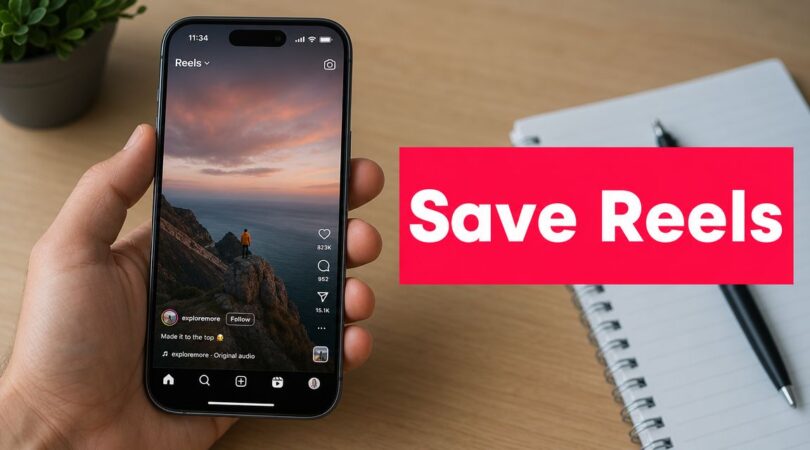
You open Instagram, find a customer Reel that nails your product better than your last studio shoot, and hit Save. Then you realize nothing landed in your camera roll. You bookmarked it inside Instagram, which is useful, but not the same as having a file your team can review, archive, or repurpose.
That mix-up happens constantly. For personal use, it's mildly annoying. For brands, agencies, and creators, it's a workflow problem. A Reel might need to move from Instagram into a campaign folder, a paid social handoff, a product page test, or a creator approval thread. If you don't know exactly which save method you're using, you can lose quality, lose audio, or lose track of rights.
Table of Contents
Why Saving Instagram Reels Is a Core Marketing Skill
Most guides on how to save reels on instagram focus on which button to tap. For brands and creators, the bigger question is what happens after the Reel is saved.
A social team might spot a customer Reel that explains the product better than the brand's polished edit. That one post can serve several purposes at once: creative reference for the next shoot, proof of message-market fit for the team, and a candidate for paid or organic reuse if rights are cleared. If the Reel is saved the wrong way, the team ends up with a bookmark when it needed a file, or a low-quality file when it needed a clean asset for repurposing.
What brands need from a saved Reel
A saved Reel can support different parts of a marketing workflow:
- Internal reference: An in-app save works for swipe files, creator research, competitor tracking, and content review.
- Asset preservation: A downloaded copy gives the team a file it can rename, store, send for approval, and repurpose across channels.
- Rights and compliance review: A saved Reel may need usage terms, creator permission, music restrictions, and campaign dates checked before anyone republishes it.
This distinction matters because a save is not just a convenience feature. It often signals that the content has ongoing value, whether that means inspiration, analysis, or future distribution.
Teams that handle Reels well waste less time later. Editors are not chasing missing files. Paid social managers are not pulling assets from a phone thread. Brand managers can review the exact version that was approved instead of whatever someone managed to find again in the app.
The mistake that causes confusion
On Instagram, save can mean two different actions. One saves a Reel inside Instagram for later viewing. The other creates or stores a file outside the app.
For a casual user, that difference may not matter much. For a brand, agency, or creator with an active content calendar, it affects file quality, handoff speed, approval workflow, and repurposing options. A bookmarked Reel is useful for research. A downloaded Reel is useful for operations.
That is why saving Reels belongs in the same conversation as naming conventions, rights tracking, and asset storage. It is part of content management, not just a platform trick.
Mastering Your Own Content Saving Your Reels
If the Reel is yours, you have the best shot at getting a clean copy. The key is knowing whether you need a draft, an automatic backup, or a master file for repurposing.

Drafts are for unfinished work
Instagram's help documentation distinguishes between saving a Reel as a draft inside Instagram and saving it to your device in Instagram Help Center guidance on drafts and saved content. That distinction matters if you batch-produce content.
Use a draft when the Reel is still in progress. Maybe legal hasn't approved the claim yet. Maybe the caption is waiting on a promo code. Maybe your editor wants to revisit cover text tomorrow. A draft keeps the work inside Instagram, tied to the account and its editing flow.
Use a device save when you need the actual file outside the app.
A simple rule works well here:
- Choose draft if the content is still being edited inside Instagram.
- Choose device save if another person, tool, or channel needs the file.
- Choose both if the Reel is valuable and you want protection against last-minute app issues.
Turn on automatic camera roll saving
Instagram's Reel creation flow includes an option to save content automatically to the camera roll. In a creator walkthrough on YouTube showing Reel save settings and the in-editor save control, the process is to start a new Reel, open settings, and enable auto-save to camera roll.
That's useful as a default backup. Teams that create from phones benefit from this because the content doesn't stay trapped in the app. It also helps when social managers need a quick handoff to a designer or media buyer.
There's a real limitation, though. That same walkthrough notes that the exported Reel often saves without audio. If your video depends on music, voiceover, or timing against sound, don't assume the saved file is ready to publish elsewhere.
Practical rule: If audio is important, test one export before you build your whole workflow around auto-save.
Here's a good use case. A founder records product demos natively in Instagram during a launch week. Auto-save gives the team a visual backup every time they create. But if those Reels will later become ads or Shorts, someone should still verify whether the audio came through.
To see the process in action, this walkthrough is helpful:
Download before posting if you want the cleanest master
For professional repurposing, the most dependable move is to download the Reel from the final editing screen before you publish it. That's the native workflow highlighted in Postiz's guide to saving Instagram Reels.
This is the version social teams usually want in their asset folder. It's the file you can reuse for TikTok, YouTube Shorts, paid social variants, internal edits, or product-page video tests.
Download the Reel before it goes live if you think it has any chance of being reused later. You'll thank yourself when someone asks for the source file two weeks from now.
That same source also makes an important distinction: the in-app Save button only bookmarks the Reel inside Instagram. It doesn't download a file to your camera roll.
A practical workflow for owned Reels looks like this:
| Need | Best option | Why |
|---|---|---|
| Finish later inside Instagram | Draft | Keeps edits and posting flow intact |
| Basic backup while creating | Auto-save to camera roll | Useful for mobile-first production |
| Cross-platform repurposing | Download before publishing | Most reliable native path for a clean master |
Bookmarking vs Downloading Others Reels
When the Reel belongs to someone else, the first question isn't “How do I download it?” It's “What am I trying to do with it?”

Bookmarking is for research and reference
Instagram's native save feature works well when you want to keep a Reel inside the platform. For marketers, that usually means building private Collections for things like:
- Competitor tracking: Save Reels that show creative trends, offers, hooks, or comment patterns worth watching.
- UGC sourcing: Save customer posts featuring your product so you can review them later and decide whether to request permission.
- Creative mood boards: Group examples by format, such as founder-led, testimonial, before-and-after, or product demo.
For many social managers, bookmarking yields significant benefits. A bookmarked Reel is fast, low-friction, and enough for many research tasks. You don't need a file on your phone just to remember a strong opening hook or compare edit styles.
Downloading is for actual asset use
Downloading means you want the video file itself. That's a different threshold.
You might need the file because your creative team wants to inspect cuts frame by frame. You might need it because a creator approved paid usage and your media buyer needs the asset. Or you might need an offline archive of campaign-related UGC.
Those uses create two new responsibilities:
- You need to know whether you have permission.
- You need to know whether the file quality is good enough for reuse.
Bookmark first when you're collecting ideas. Download only when there's a concrete reason to work with the file.
A simple decision filter
If you're not sure which route to take, use this quick comparison:
| Scenario | Bookmark in Collections | Download file |
|---|---|---|
| Competitor research | Yes | Usually no |
| Inspiration for future briefs | Yes | Usually no |
| Internal campaign archive | Maybe | Often yes |
| Approved UGC repurposing | Not enough on its own | Yes |
| Offline review by editors or buyers | No | Yes |
The distinction sounds small, but it keeps teams from cluttering devices with files they can't use and from assuming a bookmark equals ownership.
Downloading Reels The Right Way With Third-Party Tools
A common scenario for social teams is simple: a creator sends approval, paid media needs the asset by end of day, and Instagram gives you no direct download option from the post you're reviewing. At that point, third-party tools become a practical part of the workflow.
The mechanics are simple. Copy the Reel URL, paste it into a downloader, and export the file. The Silicon Review's guide to saving Instagram Reels walks through that process. The harder part is choosing a method your team can defend later if someone asks about rights, file quality, or account safety.

Get permission before you save the file
Third-party tools solve access. They do not solve usage rights.
That distinction matters for UGC, influencer content, testimonials, event footage, and any Reel your brand wants to reuse outside the original post. If the file is headed into ads, email, landing pages, retail screens, or another channel, the approval needs to match that use.
A clean process looks like this:
- Request explicit approval: Get a clear yes for the specific use case, not a vague “sure.”
- Save the proof: Store the DM, email, contract, or platform approval with the asset.
- Tag the asset by rights: Note whether the file is cleared for organic use, paid use, website use, or internal reference only.
- Record the source: Keep the original post URL and creator handle with the file so your team can trace it later.
Professional workflow distinguishes itself from casual downloading because a saved Reel without rights documentation is just a file your team may not be able to use.
Vet the tool before it touches your workflow
Some downloaders are fine for one-off saves. Others introduce avoidable risk.
Use a basic filter before your team adopts any tool:
- No Instagram login required: If a downloader asks for credentials to process a public Reel, close it.
- Clean export: Check whether the downloaded file keeps the correct aspect ratio, audio, and playback quality.
- No aggressive redirects or fake buttons: Those sites waste time and create security problems for teams working fast.
- Consistent output naming: If the tool spits out random filenames, rename files immediately before they disappear into a shared drive.
For brands handling multiple channels, standardizing this process saves time later. A team that archives Reels, Stories, and creator posts often benefits from using the same naming and storage rules across platforms. If that includes Facebook assets, it helps to keep a parallel process for how to download Facebook content to iPhone so mobile-saved files do not end up in a separate, untracked workflow.
Check the file before you pass it downstream
Do not assume the export is ready because the download finished.
Open the file right away. Review the first seconds, the last seconds, captions burned into the video, audio sync, and resolution. If an editor, media buyer, or ecommerce team picks up a flawed file later, the handoff slows down and the Reel often gets re-downloaded from a weaker source.
For repurposing, I recommend keeping two versions when possible: the untouched downloaded file and a working copy for edits. That preserves the original asset in case someone needs to crop, transcode, or relabel it for another channel.
Use screen recording only for reference copies
Screen recording has its place. It is useful when a direct downloader fails, when a Reel may disappear, or when you need a quick internal reference for review.
It is still the weakest file source for production work. Screen recordings can pick up interface elements, compress the image, and reduce flexibility for later edits. Use them for proof, inspiration, or rough internal circulation. Use a clean file download for anything headed into a polished campaign.
Building Your Brand Asset Library from Reels
A Reel that sits in a camera roll is easy to lose. A Reel stored with the right file name, rights notes, and version history can keep paying off across organic, paid, email, ecommerce, and retail.
That difference matters for brands and creators with any volume.

Treat Reels as assets, not posts
Teams get more value from saved Reels when they manage them the way they manage product photos, ad creatives, and UGC deliverables.
Use a simple review standard:
- Original file: Do you have the cleanest version available?
- Usage rights: Is it approved for organic only, paid use, whitelisting, or internal reference?
- Findability: Can another teammate locate it by campaign, creator, or product in a few seconds?
- Performance signal: Did the Reel earn enough saves or repeat use internally to justify repurposing?
Save behavior is useful here, as noted earlier. A Reel people want to revisit often has more shelf life than one that only picked up passive views. In practice, those are the posts I review first for product pages, ad testing, creator briefs, and sales collateral.
A library structure your team will actually maintain
Expensive software is not the starting point. Consistent rules are.
A practical setup usually includes:
- Folders by campaign or content pillar: product launch, UGC, tutorials, testimonials, seasonal offers
- Standard file names: brand, creator, concept, platform, status, date
- Rights tracking: a spreadsheet or DAM field for approved uses and expiration terms
- Version control: source file, edited cut, captioned export, paid media variant, archive copy
- Owner field: who approved it, who uploaded it, and who to ask before reuse
The trade-off is simple. More detail takes a little longer at upload, but it saves hours later when paid media, ecommerce, and social teams all need the same asset in different formats.
One useful option for teams sourcing creator content at scale is JoinBrands. It keeps campaign management, approvals, and content delivery tied together. The tool matters less than the habit. The file and its usage context need to stay connected.
Preserve quality and rights before repurposing starts
Repurposing usually breaks down in two places. The team either saved the wrong file, or they cannot confirm what they are allowed to do with it.
Keep both problems out of the workflow:
- Store the highest-quality owned file first
- Keep source files separate from working edits
- Log where each Reel has been reused
- Record licensing terms next to the asset, not in a buried email thread
- Flag files with platform limitations, music restrictions, or creator approval conditions
Music is a common failure point. A Reel may be fine on Instagram but unusable in paid ads, on Amazon, or on a product page if the audio rights do not carry over. For professional repurposing, save the asset, the caption, the approval context, and any licensing notes at the same time.
The best Reel library is the one your team can search, trust, and reuse without production delays or rights confusion.
A good system stays boring on purpose. Save intentionally. Name files clearly. Attach permissions. Keep the master file untouched. Then pull winning Reels into the rest of your content operation without guessing what is usable.