


 Micro-Influencer Strategy – Full Breakdown, Strategy Tips, FAQs & More
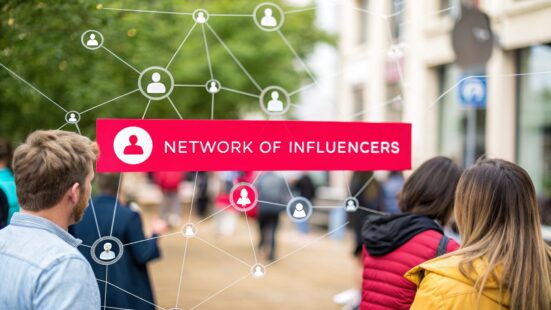
Let’s get one thing straight: a modern network of influencers isn’t just a fancy contact list. It's a living, breathing ecosystem of creators you build and manage to get real, predictable results for your business.
Think of it this way: you could hire a different freelance photographer for every single product shoot. Or, you could build an in-house creative team that just gets your brand, your voice, and what you’re trying to achieve. That's the difference we're talking about.
Table of Contents
The Evolution of the Influencer Network
It’s time to stop seeing influencers as individual transactions and start treating them like a core part of your marketing engine. A true network is all about creating a system for repeatable success, moving past the old-school, one-off campaigns into something far more powerful. It’s how modern brands launch campaigns that not only generate authentic content but consistently drive actual sales.
The old way was a grind. The new way is a strategic asset.
From Manual Outreach to Strategic Asset
Not too long ago, "influencer marketing" meant spending endless hours scrolling through hashtags, sliding into DMs with a copy-pasted pitch, and haggling over rates one by one. It was tedious, inefficient, and honestly, almost impossible to do at any real scale.
Today’s winning brands have flipped the script. They treat their creator network as a fundamental marketing channel, right alongside paid ads and email. This shift is made possible by creator platforms that handle all the heavy lifting – the discovery, the negotiations, the payments – so your team can focus on the big picture. Instead of chasing a viral moment that might never come, you can build lasting relationships that produce a steady stream of amazing content.
This approach turns a marketing gamble into a predictable growth engine. Getting a handle on this is key to mastering modern social influence marketing.
The Economic Power of Influencer Networks
And this isn't just some niche marketing tactic; it's a massive economic force. The global influencer marketing space is set to explode into a $32.55 billion industry by 2025. To put that in perspective, it was valued at just $1.7 billion back in 2016. That’s an 18-fold increase.
This crazy growth is being fueled by the rise of social commerce and the absolute dominance of short-form video. The industry has matured, too, with nearly 7,000 agencies and platforms now dedicated to helping brands navigate this world.
A network of influencers is more than a list of contacts; it's a community of creators who are aligned with your brand’s mission. It’s about cultivating relationships that lead to authentic advocacy and measurable business impact, turning one-time collaborations into a sustainable content pipeline.
The Four Creator Archetypes in Your Network

A powerful network of influencers isn't just a random group of creators. Think of it more like building a championship sports team; you can’t win with only quarterbacks. You need a mix of players, each bringing a unique skill to the field to cover offense, defense, and special teams.
Each type of creator, or "archetype," has a distinct role to play. By understanding what makes each one tick, you can assemble a well-rounded roster that drives everything from brand awareness all the way down to direct sales.
Niche Creators: The Trust Builders
Often called micro or nano-influencers, these creators are the heart and soul of authentic community building. They operate in highly specific worlds – like sustainable fashion, vegan cooking, or retro gaming – and have cultivated small but fiercely loyal followings.
Their true power isn't their reach; it's their credibility. An audience sees a niche creator as a peer, not a celebrity. So when they recommend a product, it feels less like an ad and more like genuine advice from a trusted friend, making them absolute gold for building brand trust.
The modern creator economy is built on this trust. Smaller creators now make up 75.9% of Instagram's influencer base and a staggering 87.68% of TikTok's. Their engagement rates consistently blow larger accounts out of the water, proving that authentic connection is far more valuable than diluted mass reach.
Affiliate Creators: The Sales Drivers
Affiliate creators are your performance marketing MVPs. They are laser-focused on one thing: turning their audience's interest into sales. This makes them a non-negotiable part of any e-commerce or DTC brand's network.
They operate on a commission-based model, so they only make money when you do. These creators are pros at crafting content with a clear call to action, usually armed with unique discount codes and trackable links. They know how to demonstrate value and create urgency, offering a low-risk, high-reward way to boost your bottom line.
Brand Ambassadors: The Loyal Advocates
Brand ambassadors are what happens when a one-off collaboration evolves into a long-term, official partnership. They become a genuine extension of your brand, living and breathing its values over an extended period.
This isn't just about a few sponsored posts. Ambassadors might create exclusive content, host brand events, or even have a say in product development. They are your most dedicated advocates, providing the kind of consistent, positive messaging that builds unshakable brand equity. For a deeper look into this role, explore our guide on what it means to be a digital creator.
UGC Producers: The Content Engines
Finally, you have your UGC (User-Generated Content) producers. These are the content workhorses of your network. Their specialty is churning out high volumes of authentic, relatable content that looks and feels native to social media feeds.
This content isn't about building their personal brand; it's all about showcasing your product in the wild. Brands then take this content goldmine and use it for social proof on their website, in email campaigns, and – most importantly – as high-performing creative for paid ad campaigns. They give you a scalable way to flood your marketing channels with authentic visuals that truly connect with people.
Comparing Creator Types in an Influencer Network
To make it even clearer, let's break down how these four creator types stack up against each other. Each one serves a different purpose, and knowing when to deploy them is key to a winning strategy.
| Creator Type | Primary Strength | Best Use Case | Common Compensation |
|---|---|---|---|
| Niche Creator | Deep trust and authenticity | Building credibility, driving consideration, and community engagement. | Product gifting, flat fees, or a mix of both. |
| Affiliate Creator | Sales and conversion focus | Driving direct e-commerce sales and tracking marketing ROI. | Commission on sales (revenue share), cost-per-acquisition (CPA). |
| Brand Ambassador | Long-term brand loyalty | Building sustained brand equity and consistent positive messaging. | Monthly retainer, free products, exclusive access, performance bonuses. |
| UGC Producer | Scalable content creation | Fueling ad creatives, social proof for websites, and email marketing. | Pay-per-video/image, project-based fees, or platform credits. |
As you can see, a balanced network leverages all of these archetypes. You might use niche creators to build initial buzz, affiliates to drive a holiday sale, UGC producers to supply your ad team, and ambassadors to maintain a steady, positive presence year-round. The magic is in the mix.
How Influencer Networks Drive Business Growth
Building a network of influencers is what separates brands that get lucky with a one-off viral hit from those that build a predictable engine for growth. The business impact is real and measurable, creating huge advantages for both direct-to-consumer (DTC) brands and the agencies that support them.
Think of it as moving from hoping for lightning to strike to building a machine that consistently generates authentic content and drives sales.
The DTC Advantage: Scalable Social Proof
For any DTC brand, the biggest hurdle is often scaling trust. A well-managed influencer network tackles this head-on, becoming a powerful engine for generating social proof.
Imagine launching a new skincare line. Instead of scrambling to find ten creators and hoping they deliver, you tap into a pre-vetted network of 50. Suddenly, you have a continuous flow of authentic content showing real people using and loving your products. This is the kind of trust that polished, branded ads just can't buy.
The benefits stack up quickly:
- Scalable Content Generation: Need a hundred new photos and videos for your ad campaigns? No problem. A network gives you on-demand access to a diverse pool of creators ready to produce high-volume creative for every channel.
- Authentic Social Proof: You can flood your social feeds, website, and ad campaigns with relatable content. This genuine enthusiasm from real users crushes purchase hesitation and builds massive consumer confidence.
- Direct Conversion Impact: By equipping creators with unique discount codes and affiliate links, you can directly trace sales back to their efforts. This makes measuring your return on investment crystal clear.
When you pair this authentic content with proven persuasive advertising techniques, your creators' messages transform from simple recommendations into powerful sales drivers.
The Agency Edge: Efficiency and Profitability
For marketing agencies, managing influencer campaigns can feel like herding cats. Spreadsheets, endless email chains, and manual tracking make it slow, clunky, and nearly impossible to scale profitably.
An influencer network changes the game entirely.
By centralizing creator management onto a single platform, agencies can ditch the chaos for a streamlined, repeatable workflow. This efficiency boost allows them to manage multiple client campaigns at once without needing to hire more staff, which directly pumps up their profit margins.
The best agencies build their own private, curated networks of top-performing creators. When a new client brief lands on their desk, they can skip the weeks-long discovery and vetting process and immediately activate the perfect talent for the job. This speed isn't just a convenience; it's a massive competitive advantage.
This structured approach also makes reporting a breeze. Instead of manually compiling data, agencies can provide clients with clean, consolidated reports on campaign performance, key engagement metrics, and the overall value of the content produced. It turns influencer marketing from a complicated, low-margin service into a core, profitable offering that fuels growth for both the agency and its clients.
Vetting Influencers for Quality and Brand Fit
Building a solid network of influencers feels a lot like casting for a movie. You wouldn't just hire the biggest names; you need the right actors who can bring your story to life authentically. The first step – and honestly, the most important one – is to stop obsessing over vanity metrics like follower counts. That's how you make sure every creator you bring on board is actually an asset.
This whole process is about digging deeper to find that genuine brand alignment. Sure, a creator might have a massive audience, but if their followers aren't your target customers, the partnership is pretty much dead on arrival. Real vetting means looking past who the creator is and focusing on who they talk to and whether that conversation feels right for your brand.
Beyond the Follower Count
Let’s be clear: the most important metric isn't the size of an influencer's audience, it's the relevance. I’d take a creator with 10,000 super-engaged followers in a specific niche over someone with a million generic followers any day of the week.
Your vetting checklist needs to nail three key things:
- Audience Demographics: Do their followers line up with your ideal customer? Think age, location, interests, and maybe even their buying habits.
- Content Authenticity: Does their content feel real? You're looking for a consistent style and voice where your product would feel like a natural part of the conversation, not a clunky, out-of-place ad.
- Engagement Quality: Are people actually interacting with their posts? Don't just look at the likes. explore the comments. Are they having real conversations, or is it just a sea of fire emojis and bot spam?
Quality vetting is your best defense against brand misalignment. If a creator's values, content style, and audience trust aren't in sync with yours, the whole thing falls apart. Even the best-planned collaboration will feel forced and could end up hurting your credibility.
Spotting Red Flags and Ensuring Authenticity
Unfortunately, the creator world has its fair share of people trying to game the system. Spotting these red flags early on protects your budget and makes sure you're partnering with people who have built a real, breathing community. That means fraud detection has to be part of your process.
Keep an eye out for these tell-tale signs of a fake-it-till-you-make-it creator:
- Sudden Follower Spikes: If you see huge, overnight jumps in their follower count, it’s a good sign they probably bought a bunch of fake accounts.
- Low Engagement-to-Follower Ratio: A massive following with barely any likes or comments is a huge red flag. It just doesn't add up.
- Generic or Spammy Comments: When the comment section is full of one-word replies or totally unrelated remarks, you might be looking at bot activity or an engagement pod.
Trying to manually check every single potential partner is a massive time sink, which is why a lot of brands lean on creator platforms to handle the fraud checks automatically. These tools dig into historical data to verify audience quality and can save you hours of headache. To get a better handle on this whole discovery phase, check out our guide on how to find influencers for your brand.
By focusing on both the numbers and the vibes, you can build a network on a foundation of trust and genuine influence.
Your Campaign Workflow from Brief to Results
Okay, so you've built your dream team – a solid network of influencers who are ready to create. Now what? This is where the real work begins. A successful campaign is much more than just shipping out free products. It's a structured process that turns a cool idea into bottom-line results for your business.
Think of this workflow as the operating system for your entire influencer program. It keeps things consistent, protects your brand, and most importantly, gives creators the freedom and clarity they need to produce their best, most authentic content.
Crafting the Perfect Creative Brief
Your creative brief is the single most important document you'll create for any campaign. Period. This isn't a long list of rigid rules; it's a source of inspiration. It’s the north star that gets everyone – your team and your creators – aligned on the mission. A great brief provides direction without strangling the creativity that made you want to work with them in the first place.
Make sure your brief clearly nails down:
- Campaign Goals: What's the end game? Are we trying to get eyeballs on the brand, drive direct sales, or just generate a ton of content for our own ads?
- Key Messaging: If a creator can only say one or two things about your product, what are the absolute non-negotiables?
- Content Deliverables: Get specific. How many assets do you need? For example, two Instagram Reels and one static post.
- Dos and Don'ts: Lay out the guardrails. Provide clear brand guidelines to keep the content on-brand without being overly restrictive.
Once your influencers are selected and vetted, the next critical phase is putting the collaboration into motion. For a much deeper dive, check out our guide on running effective influencer marketing campaigns.
Managing Contracts and Content Approvals
Contracts might not be the sexiest part of the job, but they are essential. They formalize the partnership and clearly outline compensation, content usage rights, and deadlines. This simple step protects both you and the creator, making sure everyone is 100% on the same page before a single piece of content is made.
This flow chart breaks down the core process of aligning with, engaging, and reviewing content from your network.
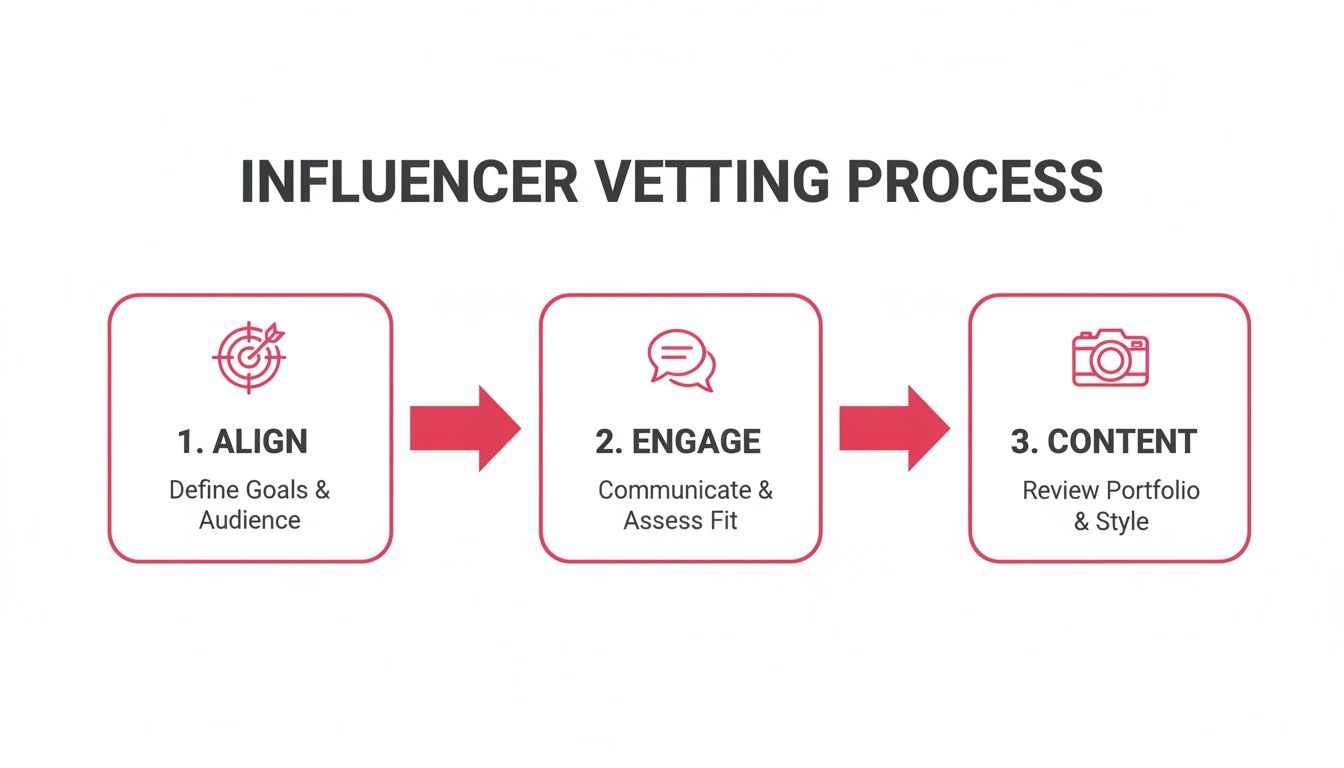
As you can see, it all flows from strategy to execution to review. The content approval stage, in particular, requires a delicate touch. You absolutely need to review every submission for brand safety and message accuracy. But if you micromanage the creative process, you’ll kill the authenticity that makes influencer content so powerful. A good creator platform can help streamline feedback and keep a documented trail of all communication.
Measuring Performance and ROI
This is the final – and arguably most crucial – step. It's where you tie all your influencer activities back to real, tangible business outcomes. It’s time to look past vanity metrics like likes and views. Instead, focus on the data that truly shows the impact on your bottom line.
The proof is in the numbers. By 2025, an estimated 86% of marketers will be using influencer marketing, and for good reason. The average ROI is a staggering $5.78 for every $1 spent. Even better, top-performing campaigns can pull in returns as high as $18 for every dollar, highlighting just how profitable a well-oiled program can be.
Start tracking the metrics that matter: click-through rates on custom affiliate links, conversion rates from unique discount codes, and your overall cost per acquisition. Analyzing this data isn't just about grading your last campaign; it gives you priceless insights to fine-tune your next one, turning your influencer network into a predictable and highly profitable engine for growth.
Common Questions About Building Your Influencer Network
So, you're ready to build or scale your network of influencers. As you move from the drawing board to the real world, a few practical questions are bound to pop up. It’s one thing to talk theory, but execution means getting real about budgets, measuring what actually works, and knowing what you can handle.
Let's explore the most common things marketers wonder about when they start this journey. These aren't just minor details; they hit on the three pillars of any great marketing plan: what you invest, what you get back, and whether it's even doable. Getting these right from the get-go is the key to building an influencer program that lasts.
What Is a Realistic Budget for an Influencer Network?
This is usually the first question on everyone's mind: "How much is this really going to cost?" The honest-to-goodness answer? There's no magic number. You can build an incredible network of influencers with a budget anywhere from a few hundred bucks a month to a massive multi-million dollar investment. The secret isn't how much you start with, but how smart you are about it.
If you're a startup or just dipping your toes in, your budget might be nothing more than the cost of your own products. By connecting with micro-influencers and UGC producers who are hungry to build their portfolios, you can generate a ton of valuable content and social proof without spending much cash.
A great way to start is by setting aside a small, testable budget – maybe what you'd drop on a minor paid social campaign – and dedicating it to a group of 5 to 10 creators. This lets you see what works, gather real performance data, and then build a case for a bigger investment based on proven ROI, not just a hunch.
On the flip side, a big enterprise brand might set aside six or seven figures for long-term contracts with top-tier brand ambassadors and to fuel large-scale affiliate programs. The most important thing to remember is to start smart and scale with success.
How Can I Measure the ROI of My Campaigns?
Once you've got a budget, the next big question is proving that it’s actually working. It's time to look past vanity metrics like likes and follower counts and zero in on what really matters: tangible results that affect your bottom line. True ROI is all about connecting a creator's post to your bank account.
Your measurement toolkit should have a few essential tools:
- Unique Discount Codes: Giving each influencer their own code (like "SARAH15") draws a straight line from their content directly to a sale. It’s simple and effective.
- Affiliate Link Tracking: This is non-negotiable for performance-based creators. You need to be able to track every click, conversion, and dollar that comes from their unique URLs.
- UTM Parameters: By adding these little tracking tags to links in creator bios or stories, you can see exactly how much traffic and revenue their campaigns are driving right inside your analytics platform.
- Content Value Calculation: Don't overlook the value of the actual content you're getting. Figure out what it would have cost you to hire a traditional creative agency to produce that much high-quality, authentic content. This "earned media value" is a huge part of your return.
When you put all these methods together, you get a crystal-clear picture of your influencer network's financial impact.
Can a Small Business Build an Effective Network?
Yes. A thousand times, yes. The creator economy and the powerful platforms that support it have completely leveled the playing field. In fact, small businesses often have a secret weapon: authenticity. They can forge genuine connections with niche communities in a way that giant corporations can only dream of.
Micro-influencers are a small brand's best friend. These creators have super-engaged, trusting audiences in very specific areas. A partnership with a micro-influencer in your niche doesn't feel like a clunky ad; it feels like a real recommendation from a friend, which is pure gold for building trust and driving those first crucial sales.
Technology is the other great equalizer here. You don't need a massive team to juggle dozens of creator relationships anymore. A dedicated platform can automate finding creators, sending emails, shipping products, and handling payments. This means one person can efficiently run a powerful network of influencers, allowing small businesses to compete with their creativity and community connection, not just the size of their wallet.
Ready to build and scale your own high-performing network of influencers? JoinBrands provides the all-in-one platform to find vetted creators, manage campaigns efficiently, and measure your ROI with clarity. Start building your network today at JoinBrands.