
 How to Save Reels on Instagram: A 2026 Guide
You're probably looking at an Instagram campaign right now and wondering why the creator post went live, but the reporting feels thin, the disclosure looks inconsistent, or the content can't be reused the way your media plan needs. That's the gap the Paid Partnership label closes. It gives brands a native disclosure, makes creator content easier to measure, and helps turn an organic post into a paid asset without starting from scratch.
Table of Contents
Why Paid Partnership on Instagram Matters
A common failure point is simple. A social media manager launches a creator collaboration, the post performs, and then the team realizes the partnership wasn't tagged correctly, so the brand loses the cleanest path to Insights and has a messier compliance story to untangle. That's frustrating because the label is doing more than one job at once.
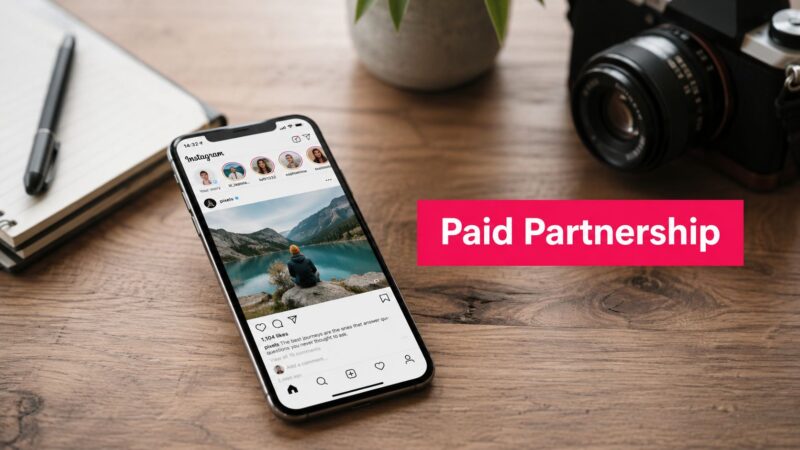
Paid Partnership is not just a badge on a post. It's the bridge between transparency, measurement, and paid media use. When a creator tags a business partner, Instagram gives the brand access to performance data such as reach and engagement on feed posts, and Story metrics like taps forward, taps backward, replies, and exits through Insights, with a 14-day reporting window for Story insights when the account is tagged as a business partner, as described in Sked Social's overview of the feature.
Why marketers care beyond compliance
Many teams treat disclosure as a legal checkbox and stop there. That's too narrow. The label also helps connect creator content to a measurable campaign structure, which matters when you want to compare organic creator posts with boosted distribution or paid partnership ads.
Practical rule: if the creator content is part of a real campaign, tag it as a partnership early, not after publishing. Once the post is live, you can't retroactively recover the clean setup, and your reporting gets harder to trust.
The reason this matters is operational. Instagram partnership ads let the brand use the creator asset without recreating it, while keeping the creator identity visible and the official disclosure in place, according to guidance on Instagram branded content ads. That means the label is part of the ad workflow, not an afterthought.
For marketers, the business case is straightforward. Skipping the tag can leave you with weaker attribution, less usable content governance, and a reporting window that's easy to miss. Using it well gives you a cleaner handoff from creator collaboration to analytics, media buying, and optimization.
Understanding Paid Partnership Ig
Instagram introduced the Paid Partnership label in 2017 as part of its branded-content tools, which gave creators a built-in disclosure format and gave brands access to performance data in Insights, including a 14-day Story reporting window, according to Sked Social's feature breakdown. That origin matters because it shows the label wasn't built as decoration. It was built to formalize branded content.
The label acts as a visible receipt attached to a post. The audience can tell the content involves a material relationship, and the brand gets a cleaner measurement trail. Instagram's help guidance says the label can appear as “Paid partnership with [brand]” when the brand has approved the creator, and it applies to eligible formats such as posts, Stories, Reels, and Live, according to Instagram's branded-content help page.
The policy piece is broader than cash. Independent guidance summarizing Instagram's branded-content rules says the tag should be used whenever there's any compensation or material value exchange, including gifted products, services, or other incentives, as noted by Reshift Media. That's where a lot of creators get tripped up. They assume only cash triggers disclosure, but the material-connection standard reaches further.
The mental model that keeps teams honest
A good way to think about the label is as a three-part system.
- Disclosure. It tells the audience the content is sponsored or otherwise paid for.
- Permission. It lets the brand approve branded content use on the platform.
- Measurement. It opens the door to Insights that are tied to the tagged collaboration.
That's why marketers shouldn't treat paid partnership as only a legal or trust issue. It's also a data mechanism. At the same time, the presence of the label doesn't magically answer every performance question. A legal note from D.G. Law's analysis of Instagram's transparency tool points out a real gap in most guidance, whether the label changes reach or ad performance. The smart approach is to treat disclosure as required, then test performance against your own benchmarks.

How Paid Partnership Ig Works
The workflow starts with account setup. The creator needs an Instagram Creator or Business account, and the brand side has to be ready for branded content, meaning the brand account must be a business account with branded-content tools enabled before it can approve the partnership, according to Meta guidance summarized here. If either side is configured wrong, the tag won't behave the way marketers expect.
The creator then tags the brand through the app's partnership flow, commonly found in Advanced Settings or through the tagging interface. After that, the brand reviews and approves the partnership so the disclosure can appear on the post. That approval step is important because it's what turns a regular collaboration into an official branded-content placement.
From organic post to paid asset
Once the content is approved, the brand can use it in Meta Ads Manager as a partnership ad. That's where the workflow becomes more than disclosure. Instagram partnership ads are built as a two-step system, first branded-content permissions, then paid promotion through Ads Manager with controls such as targeting, budget, bid strategy, placements, and scheduling, as explained in this branded-content ads guide.
The useful part is that the brand doesn't need to recreate the content. It can promote the creator asset while preserving the creator handle and the disclosure. That keeps the ad feeling native while making it easier to manage as paid media.
For creative specs, the inventory supports several common formats. A partnership asset can be adapted into single-image feed ads at 1080×1080 px, video ads at 1080×1080 px with a maximum file size of 4 GB and maximum length of 60 minutes, and carousel ads with up to 10 images or videos, with vertical delivery also supported for Reels and Stories, according to the spec sheet provided in the brief. That flexibility is useful, but it also means teams need to match format to placement before launch.
A clean setup beats a clever workaround. If the creator, brand account, and ad manager aren't aligned, the campaign still runs, but reporting and reuse get sloppy fast.

Best Practices You Need to Know
The strongest paid partnership workflows start before the first draft. A creator brief should spell out disclosure language, where the brand wants the label used, what the content needs to say, and how the asset may be reused later. If you leave those details vague, the creator guesses, and the brand ends up rewriting, reapproving, or rejecting work that should've been clean on the first pass.
Contract language matters just as much. Good agreements cover content ownership, usage rights, exclusivity, and approval expectations. That's especially important when the content may move from a feed post into an ad, a Story, or a cross-channel repurpose. Industry guidance for paid partnerships also emphasizes rights management and contract terms, including disclosure requirements and content ownership, which is why reusable assets need clearer paperwork than one-off endorsements, as reflected in IQfluence's guidance on paid partnerships.
Who should you partner with
Teams frequently adopt a narrow perspective. A large following can be useful, but it's not always the most operationally efficient choice. In AI-heavy and UGC-heavy campaigns, smaller creators and niche producers can be more valuable when the goal is rights-cleared content that can be reused in ads and across channels, not just a quick audience burst.
That's the logic behind treating paid partnerships as an asset pipeline. A creator who can produce approved, reusable content on schedule may be more useful than a bigger creator who can't accommodate iterations or licensing needs.
The label itself also applies more broadly than many teams assume. Instagram's policy requires the Paid Partnership tag whenever there is any compensation or material value exchange, including gifted products, services, or other incentives, according to Reshift Media's summary. That means you need a disclosure process that covers both paid and non-cash collaborations.
For practical execution, use this quick checklist.
- Clear briefs: Define the exact label language and placement before the creator starts.
- Contract clarity: Lock ownership, exclusivity, and reuse rights in writing.
- Mutual understanding: Make sure the creator and brand team agree on approval timing and deliverables.
- Authenticity: Let the creator speak in a voice their audience recognizes, instead of forcing a stiff brand script.
Pro tip: if your campaign will generate reusable assets, write the approval path before you assign the first deliverable. That keeps creative edits from becoming the hidden bottleneck.
One platform option for handling this kind of workflow is JoinBrands, which manages creator matching, content approval, and campaign workflows in one place for brands working with Instagram creators.

Measuring and Reporting with Paid Partnership Ig
The reporting value starts with what Instagram surfaces after the tag is in place. For feed posts, brands can see metrics like reach and engagement in Insights. For Stories, the branded-content setup can also surface taps forward, taps backward, replies, and exits, with the earlier-mentioned 14-day Story reporting window, according to Sked Social's coverage.
That makes the label useful in a way many teams overlook. It gives you a consistent measurement layer for content that began as creator-led but may end up in paid distribution. The right question isn't whether the label is pretty. It's whether the label gives you cleaner data for deciding what to scale.
How to read the numbers
Use the metrics based on the campaign goal.
- Awareness: Look at reach first, because the post has to get seen before it can do anything else.
- Engagement: Look at interactions and Story replies to see whether the content is resonating.
- Optimization: Look at taps forward, taps backward, and exits to find where attention falls off.
The harder question is whether the label itself changes performance. A legal analysis from D.G. Law says that gap is still open, so the cleanest method is to compare organic creator posts, partnership-boosted content, and dark-ad placements against your own benchmarks. That way, you're not guessing at the effect of disclosure.
Reporting rule: don't compare one tagged post to another untagged post and call it a test. Compare like for like, then isolate the label, the placement, or the media spend you changed.
If you're building a reporting dashboard, keep the framework simple. Track the creator asset, the approval status, the placement, and the outcome. Then look at how the same content behaves before and after paid distribution. That gives you a more honest view of what the Paid Partnership label is doing for your campaign, instead of assuming it's either always a lift or always a drag.

Common Mistakes to Avoid
The most common mistakes aren't dramatic. They're small setup errors that break the workflow.
| Mistake | Cause | Fix |
|---|---|---|
| Brand can't approve the post | Brand account isn't set up for branded content | Switch to a business account and enable branded-content tools |
| Label doesn't appear | Creator skipped the partnership tag or used the wrong workflow | Re-tag through the approved branded-content path |
| Ad setup breaks later | Content wasn't configured with reuse in mind | Confirm permissions before turning the post into a paid asset |
| Creative specs fail review | File or format doesn't match placement requirements | Match the asset to the ad spec before upload |
The spec problem deserves special attention. Partnership inventory supports single-image feed ads at 1080×1080 px, video ads up to 4 GB and 60 minutes, and carousel ads up to 10 images or videos, according to the supplied creative-spec reference. If your team uses the wrong aspect ratio or forgets the file limits, the campaign can stall before it gets useful data.
The practical fix is boring, but it works. Standardize the approval flow, confirm account type early, and check the asset spec before launch. That way, the partnership post is measurable, reusable, and ready for paid distribution without a last-minute scramble.
Examples of Paid Partnership Ig Use Cases
A DTC brand launching a new product line can have micro-creators publish Reels, then reuse the strongest assets as partnership ads. The brand gets creator voice, the post keeps its disclosure, and the media team gets a cleaner path to scale. That setup works especially well when the brief is built around reusable footage instead of one-time reach.
A startup can also work with UGC producers who may not have huge audiences but can turn around rights-cleared content quickly. In that model, the creator's value is operational, not just audience size. The important question becomes whether the asset can move from approval to ad use without a lot of rework.
An agency can use the same creator asset across feed, Stories, and Ads Manager, as long as permissions and specs are sorted in advance. That's where the workflow starts to resemble a content supply chain instead of a one-off sponsorship. The Paid Partnership label sits at the center of that chain because it connects disclosure, approval, and measurement.
Conclusion and Next Steps with Paid Partnership Ig
The cleanest paid partnership workflows are the ones that start with setup, not cleanup. If the creator has the right account type, the brand has branded-content tools enabled, the disclosure is visible, and the asset is measured against a real benchmark, the campaign becomes much easier to manage.
The bigger shift is strategic. Paid Partnership isn't only a disclosure label. It's a way to formalize creator content, make it easier to promote, and turn influencer work into a reusable media input. Brands that operationalize it well can build simpler approvals, clearer analytics, and less friction between organic social and paid distribution.
If you want to turn creator collaborations into reusable, measurable campaign assets, JoinBrands gives you a way to match with creators, manage approvals, and move from content creation into paid social workflows in one place. Visit JoinBrands to see how it can support your next paid partnership campaign.