

 How to Edit TikTok Videos After Posting: 2026 Guide
You've got a folder full of strong photos from a launch shoot, customer unboxing, or creator campaign. The problem isn't a lack of content. It's that a single image often can't carry the whole story on Instagram.
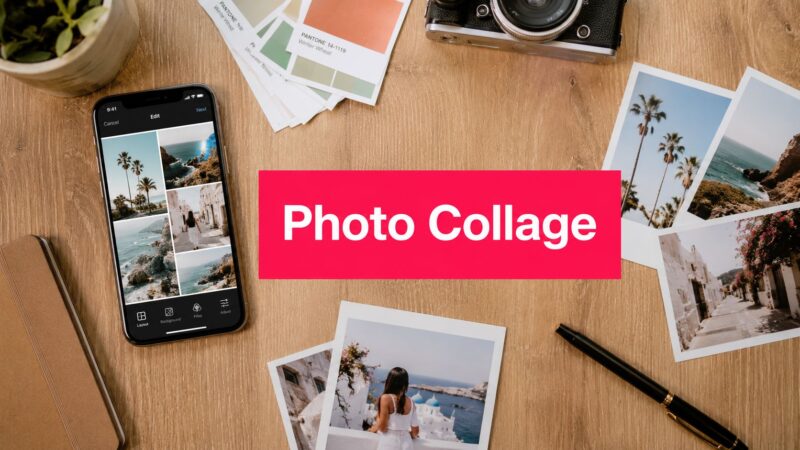
A collage can. It can show product details, sequence a tutorial, compare before-and-after shots, or package creator content into one asset that feels intentional instead of dumped into a carousel at the last minute. That's why photo collage apps for Instagram matter more than most “best app” roundups admit. They're not just design tools. They're workflow tools.
Instagram's early move in this space made that clear. When Instagram launched Layout in 2015, the app let users combine up to 9 photos across 16 layouts, and Instagram said 1 in 5 monthly active users had already tried a photo-collage app at least once. That tells you collage behavior wasn't fringe. It was already normal social behavior, and Instagram chose to support it directly.
For brands, the key question isn't “which app has the most templates?” It's which app fits your content pipeline, your approval process, and the kind of Instagram storytelling you publish. Some are best for quick creator assets on mobile. Others are better for campaign systems, desktop review, and brand consistency across posts, Stories, and carousel slides.
Table of Contents
1. Canva

Canva is a reliable option for many groups because it solves more than the collage itself. It gives you templates, brand controls, shared folders, and quick resizing in one place. If you manage content across product launches, creator whitelisting, and weekly promos, that matters more than having the flashiest effects.
I like Canva most when multiple people touch the same asset. A social manager can build the first draft, a designer can clean up spacing and typography, and a brand lead can review without asking for exported screenshots back and forth. That's hard to beat for fast-moving DTC teams.
Where Canva fits best
Use it when you need a repeatable system, not just a one-off collage. For example, if you're collecting lifestyle images from creators and want them turned into matching launch graphics, Canva keeps the layout style consistent even when the source content quality varies.
- Best for teams: Shared brand assets, fonts, and reusable templates reduce drift across campaigns.
- Best for mixed formats: You can prep feed posts, Stories, and carousel covers from the same creative base.
- Watch out for template overload: Canva gives you lots of options, but that can slow teams down if nobody owns the visual direction.
Practical rule: Build three master collage templates only. One for product proof, one for UGC quotes, and one for launch teasers. More than that usually creates approval chaos.
If you work with creators regularly, Canva also pairs well with a clear intake workflow. Pull selected assets from a creator brief, then route them into campaign-ready templates. If you need a reference point for what polished creator-led visuals look like, this creator portfolio example is useful for calibrating style before you start building.
Export-wise, Canva works best when you decide the destination first. Feed post, Story, and carousel cover need different spacing discipline. The mistake I see most is designing a dense collage and then trying to force it everywhere.
2. Adobe Express

Adobe Express is for marketers who want polished output without opening full Adobe apps for every asset. It sits in a useful middle ground. Faster than a traditional design workflow, but more brand-conscious than many purely mobile collage apps.
Its biggest advantage is handoff. If your team already uses Adobe fonts, libraries, or related tools, Express keeps the creative process cleaner. A strategist can build a collage draft for Instagram, then pass it to a designer for final refinement without rebuilding the whole thing elsewhere.
Best use cases for Adobe Express
Adobe Express is strong when the collage needs to feel less scrapbook and more campaign. Think launch announcements, premium product drops, or creator partnerships where the output needs to sit comfortably beside paid creative and landing page visuals.
A useful strategic angle comes from Adobe's own framing of the category. Their discussion of Instagram collages points out a bigger gap in the market: most app comparisons focus on features, not whether collages outperform other formats, even though Instagram has over 2 billion monthly active users and 61% of users say the platform helps them discover products. That's why I treat collage apps as format tools, not just design tools.
- Use for product launches: Pair a hero image with detail shots and one short line of copy.
- Use for creator recaps: Combine a creator portrait, product-in-use photo, and testimonial snippet.
- Skip for rough UGC dumps: If the source assets are messy and spontaneous, Adobe Express can feel too polished unless you intentionally loosen the layout.
For teams already using shared design subscriptions, it's also worth comparing workflow overlap with tools such as AccountShare's Canva Pro, especially if you're deciding whether standardization matters more than creative flexibility.
If you want a style reference for beauty, skincare, or soft-luxury aesthetics, this creator profile example shows the kind of visual consistency Adobe Express handles well.
3. Picsart

Picsart is the tool I'd reach for when the brief is fast, social-first, and a little trendier. It's not the cleanest environment, and the free experience can feel pushy, but it gives you a lot of creative range in one app.
That range matters when your Instagram content isn't purely brand-built. If you're mixing creator selfies, product close-ups, screenshots, stickers, text, and reactive social content, Picsart can move faster than a more structured design suite.
What works and what doesn't
Picsart is strong for collages that should feel native to Instagram instead of looking like they came out of a formal campaign system. That can be an advantage for creator brands, beauty drops, fashion edits, and limited-time promos.
- Works well for reactive content: Trendy text, layered visuals, and looser layouts are easy to build.
- Useful for hybrid social teams: One person can edit, collage, and export without switching tools.
- Less ideal for strict brand systems: If every asset needs locked fonts and disciplined spacing, Canva or Adobe Express usually age better.
When a collage is meant to feel organic, a little visual imperfection often helps. Over-designed creator content can lose the thing that made it persuasive in the first place.
For influencer campaigns, Picsart works best after content selection, not before. Don't dump every creator asset into the app and improvise. Shortlist the few images that each play a role: one hook image, one proof image, one context image, one detail image. Then build.
If your team needs help sourcing that creator content in the first place, JoinBrands is the part of the workflow to look at before the collage stage. The app helps once the assets already exist.
4. PicCollage

PicCollage does one thing well. It helps you assemble multi-photo collages quickly. That sounds basic, but speed is the point. If your team needs a simple promo graphic, seasonal post, or behind-the-scenes roundup without opening a full design system, PicCollage stays efficient.
I wouldn't put it at the top for advanced brand campaigns. I would absolutely use it for fast social packaging, especially when the collage itself is doing most of the communication and the typography is light.
Where PicCollage earns its place
This is a practical app for marketers who publish often and don't want every asset to become a design project. It's especially handy for holiday campaigns, event recaps, and creator-content mashups where the collage should feel warm and informal.
A simple example: after a sampling campaign, you can pull creator unboxings, product-in-hand shots, and a close-up of packaging into one post. That gives your audience more context than a single image, without requiring a designer to build a custom layout from scratch.
- Good fit for seasonal retail: Template variety helps when you need fast themed posts.
- Good fit for social managers on mobile: It's easier to build on the fly than larger design suites.
- Weak fit for heavy brand governance: Watermarks and premium gating can interrupt the workflow if you rely on the free tier.
If your approval process is lightweight and your publishing cadence is high, PicCollage often makes more sense than a larger platform. If your content needs to be reusable across ads, feed, and lifecycle channels, it starts to feel limiting.
5. SCRL

SCRL is the most specialized app on this list. It's built for Instagram carousels, not just static grids, and that difference matters. If your brand uses swipe-based storytelling, SCRL is closer to a narrative tool than a classic collage maker.
The category has clearly evolved in this direction. Google Play's listing for SCRL describes it as the #1 app in the US for original photo collages and continuous Instagram carousels, and notes that users can add more than 10 photos in one post. That tells you where modern collage behavior is going. Not just one canvas with multiple images, but multi-slide storytelling built for swiping.
Why SCRL stands out
SCRL is best when the sequence matters as much as the visuals. Product education, step-by-step creator demos, launch teasers, and before-and-after narratives all benefit from continuity across slides.
- Best for carousel storytelling: Design one idea across multiple panels instead of cramming everything into a single collage.
- Strong for product education: Use the first slide as the hook, the middle slides for proof, and the final slide for offer or CTA.
- Less useful for desktop-first teams: SCRL feels most natural on mobile.
A good SCRL carousel doesn't try to say everything on slide one. It gives the viewer a reason to keep swiping.
For Instagram workflows, this is one of the few tools where I'd actively design for the carousel first and repurpose later. Don't force it into a square-feed mindset. Build a swipe arc. Hook, detail, proof, CTA.
6. Unfold

Unfold is for brands that care about restraint. It doesn't try to be loud, playful, or overloaded with effects. Its strength is clean composition, elegant typography, and template packs that make a set of Instagram assets feel cohesive.
That makes it especially useful for Stories, vertical collages, and campaign aesthetics where the layout should support the imagery instead of competing with it. Fashion, wellness, interiors, and premium DTC brands tend to get more from Unfold than discount-heavy retail accounts.
When Unfold is the smarter choice
Use Unfold when the content already looks good and you don't want the tool to over-style it. Strong photography, creator travel content, and refined lifestyle imagery hold up well here.
The app is also useful for campaign consistency. If you're coordinating multiple creators for one promotion, giving your team one restrained template system can stop the content from looking fragmented once it hits Stories.
- Best for Story series: Behind-the-scenes shoots, moodboards, teaser sequences, and event diaries.
- Best for premium-looking UGC: It keeps creator content polished without stripping out personality.
- Not ideal for manual tinkerers: If you want deep frame-by-frame control, another app will feel better.
Aesthetic-sensitive brands should also review creator style before the collage stage. This creator example is a good benchmark for the kind of clean visual material that works well in Unfold.
7. Kapwing

Kapwing is one of the better choices if your team works on desktop and wants photos and video in the same editing flow. That matters more now because Instagram content planning doesn't happen in neat silos anymore. A product launch might need a feed collage, Story cutdowns, and a Reel cover built from the same asset set.
Kapwing is good at that practical middle ground. It isn't trying to be a mobile-first collage toy, and it isn't a full design suite either. It's a working editor for marketers who need speed and flexibility in-browser.
Best for cross-format production
Kapwing pulls ahead because the main challenge with photo collage apps for Instagram isn't making a nice layout once. It's keeping layouts usable across feed posts, Stories, Reels covers, and ad creative without starting over each time.
That gap shows up in broader category coverage too. Recent discussion around collage tooling highlights growing demand for AI-assisted suggestions and browser-based editing while many reviews still ignore export dimensions, safe zones, collaboration, and batch-friendly workflows. Kapwing is one of the tools that at least pushes in the right direction.
- Strong for desktop teams: Easier review and revision than many phone-only apps.
- Strong for mixed media: Useful when your “collage” includes stills plus short clips.
- Weak for low-spec setups: Larger projects need a stable browser and decent machine.
If your workflow already includes campaign review on desktop, Kapwing often feels more realistic than forcing everything through a phone.
8. Pixlr
Pixlr is the practical pick for simple desktop collages. It's not the most brand-forward option and it's not the most social-native. But for quick layout work without installing software, it gets the job done.
Some teams don't need a giant creative suite. They need a browser tab, a few images, adjustable borders, and a clean export. That's Pixlr's lane.
Where Pixlr works best
Pixlr is useful when you're assembling straightforward grids for product comparisons, ingredient breakdowns, or event recaps. If the creative idea is already clear, the app doesn't add much friction.
I'd also consider it for teams that occasionally need collage capability but don't want to commit to a heavier platform. It's a low-resistance tool for “we need this live today” moments.
- Use for simple side-by-side visuals: Great for before-and-after, color comparisons, or product bundles.
- Use for quick desktop exports: Helpful when mobile editing isn't practical.
- Avoid for high-touch branding: The experience is more utility-focused than identity-focused.
Pixlr is not where I'd build a signature campaign look. It is where I'd solve a content need quickly and move on.
9. Fotor

Fotor sits in a useful middle tier. It gives you lots of starter templates, decent spacing controls, and enough editing capability to make batch social work manageable. That makes it attractive for lean teams publishing repetitive but necessary content.
Think weekly roundups, collection posts, testimonial graphics, promo recaps, or catalog-driven social where the structure repeats even if the photos change. Fotor handles that kind of cadence well.
A smart option for batch content
The best reason to use Fotor is operational. It helps when your social calendar includes recurring collage-based formats and you don't want every version rebuilt by hand.
For example, an ecommerce brand can use one base structure for “new arrivals,” one for “customer favorites,” and one for “how to style it.” Swap images, keep spacing consistent, update text, export, publish.
- Best for repeatable social formats: It's fast to duplicate and adapt.
- Best for balanced control: Enough customization without becoming slow.
- Watch for free-tier friction: Watermarks and gated assets can interrupt a production rhythm.
If a content format repeats every week, the app should reduce decisions, not create new ones.
That's why Fotor works best when a marketing lead has already defined the content framework. The app supports the system. It doesn't create the strategy.
10. Diptic

Diptic on the App Store is narrower than most tools here, but that's also why some marketers still like it. It focuses on classic frame-based collage building with precise control over joints, borders, and cell-level adjustments.
If you care less about templates and more about exact framing, Diptic is appealing. It's one of the better fits for editors who want to place images deliberately rather than browse through lots of prebuilt looks.
Best for classic collage control
Diptic works well for comparison visuals, editorial-style grids, and layouts where border shape and spacing matter. It's also one of the few options on this list that appeals to users who prefer a more contained app purchase model over an all-in subscription ecosystem.
This style of collage still has a place on Instagram. Product texture comparisons, ingredient panels, side-by-side use cases, and event snapshots don't always need flashy motion or template packs. Sometimes the cleanest frame wins.
As a category callback, Instagram's own collage lineage started with a lightweight approach. The current App Store listing for Layout for Instagram: Collage still emphasizes free access, in-app purchases, and quick mobile-first composition rather than desktop-style complexity. Diptic appeals to the same instinct, but with more frame control.
- Best for precise cell editing: Good when you care about border behavior and image balance.
- Best for classic grid aesthetics: Useful for timeless layouts that don't chase trends.
- Less suited for broad campaigns: It won't replace a collaborative team workflow.
Top 10 Instagram Collage Apps Comparison
| Tool | Core features ✨ | UX / Quality ★ | Value / Price 💰 | Target audience 👥 | Standout / USP 🏆 |
|---|---|---|---|---|---|
| Canva | ✨ Templates, brand kit, one‑click resize, real‑time collaboration | ★★★★☆ Beginner‑friendly, scalable | 💰 Free + Pro & team plans | 👥 Solo creators → teams | 🏆 Massive template library & team workflows |
| Adobe Express | ✨ Collage maker, Adobe fonts/libraries, Firefly AI, brand controls | ★★★★☆ Polished, Adobe ecosystem handoff | 💰 Free + Premium features | 👥 Brands & designers in Adobe workflows | 🏆 Tight Adobe integration & pro templates |
| Picsart | ✨ Grid/freestyle collages, stickers, filters, mobile+web | ★★★★☆ Fast, trendy edits | 💰 Free w/ ads → Subscription for full assets | 👥 Social creators wanting style + speed | 🏆 Broad creative toolkit beyond collages |
| PicCollage | ✨ Grids, scrapbook freeform, seasonal packs, quick presets | ★★★☆☆ Very quick assembly, simple UI | 💰 Free w/ watermark/ads → VIP subscription | 👥 Casual users assembling multi‑photo collages | 🏆 Fast holiday/seasonal template variety |
| SCRL | ✨ Seamless carousel builder, slide continuity, video layers | ★★★★☆ Mobile‑first; excellent carousel preview | 💰 Free basic → Premium templates | 👥 Instagram storytellers & carousel creators | 🏆 Purpose‑built multi‑slide continuity |
| Unfold | ✨ Minimalist templates, Story/Reel covers, cohesive packs | ★★★★☆ Elegant, brand‑focused outputs | 💰 Free + Membership for premium packs | 👥 Creators/brands seeking refined aesthetics | 🏆 Sophisticated, campaign‑ready template packs |
| Kapwing | ✨ Browser editor, image+video layers, IG size presets | ★★★★☆ Desktop/team friendly, no install | 💰 Free (watermark) → Pro for teams | 👥 Teams & desktop video/photo editors | 🏆 Easy web video+photo collage workflow |
| Pixlr | ✨ Browser collage tool, AI‑assisted layouts, quick exports | ★★★☆☆ Fast desktop edits, no signup needed | 💰 Mostly free → Paid for advanced assets | 👥 Desktop users wanting quick, free edits | 🏆 Instant AI layout options without install |
| Fotor | ✨ 2,000+ templates, auto‑alignment, HDR/retouch tools | ★★★☆☆ Simple batch workflow | 💰 Free w/ watermark → Paid tier unlocks assets | 👥 Marketers creating batch social content | 🏆 Auto‑alignment + large starter template catalog |
| Diptic | ✨ 190+ precise layouts, adjustable joints, video in collage | ★★★★☆ Precise control; iOS‑focused | 💰 One‑time app purchase + small add‑ons | 👥 iOS users wanting granular frame control | 🏆 Precise frame controls + one‑time pricing |
Choosing Your Creative Partner From Collage to Campaign
The best photo collage apps for Instagram aren't all trying to solve the same problem. That's why so many generic “best app” lists fall flat. A solo creator, an in-house social team, and a brand running influencer campaigns all need different things.
If your priority is team collaboration and brand consistency, Canva and Adobe Express are usually the smartest starting points. If you publish mobile-first content with a trendier or more creator-native look, Picsart and PicCollage can be faster. If your Instagram strategy leans heavily on swipe storytelling, SCRL deserves serious attention because it treats the carousel as the core format instead of an afterthought.
For cleaner aesthetic brands, Unfold is often the better call. For desktop workflows and mixed image-video builds, Kapwing is more practical. Pixlr and Fotor are useful when your needs are simpler and more operational. Diptic remains a good niche pick for precise, classic collage framing.
The strategic part starts after you choose the app. A collage should earn its place in the content mix. Use it when you need density, comparison, sequence, or proof in one visual system. Don't use it when the message needs motion, a single strong hero image, or a more spacious premium feel.
A few workflow choices improve results fast:
- Match the app to the campaign: Product launches often need cleaner composition. Behind-the-scenes content can be looser. UGC proof often works better when the collage feels slightly native, not over-designed.
- Design for the destination first: Feed post, Story, carousel, and Reel cover all have different cropping risks and safe areas.
- Build a small template system: Most brands need a few reliable structures, not endless design variation.
- Start with asset roles: Pick a hook image, a detail image, a proof image, and a context image before you open the app.
- Protect readability: The more images you add, the less room you have for text that people can read on mobile.
One more practical note matters for marketers. Existing coverage still tells you more about templates and editing speed than about business outcomes. That gap is real. Marketers need to judge collage formats by use case. Product launches, before-and-after proof, customer testimonials, seasonal promos, and creator recaps all ask for different visual decisions. The app is only part of the answer. The format choice is the bigger lever.
Start with one tool from this list. Use the free version if it's available. Build one launch collage, one Story set, and one creator-content recap. You'll know quickly whether the app fits your team's pace and your brand's visual standards.
If you need the creator content that makes these collages work in the first place, JoinBrands is built for that workflow. Brands can source creators, manage campaigns, collect UGC, and turn that content into Instagram-ready assets faster, without juggling disconnected tools across briefing, approvals, and delivery.