

 Top 10 Hashtags for Music in 2026: A Pro Guide
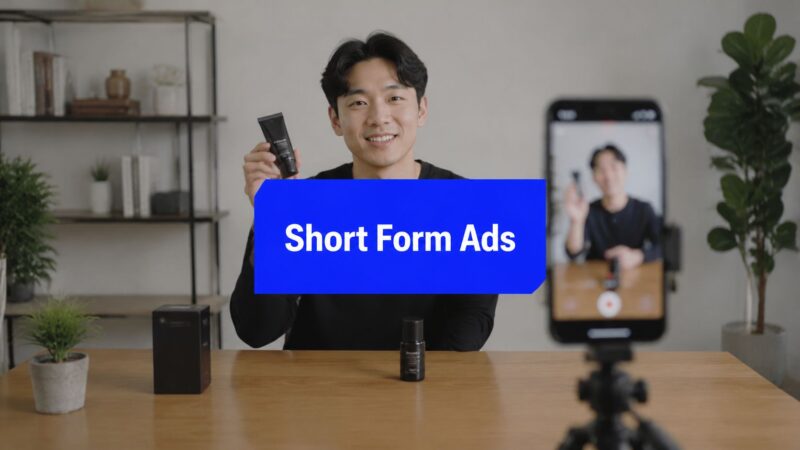
$14.7 billion. That's the size of the short-form video advertising market in 2025, with projections reaching $67.8 billion by 2034 and an 18.3% CAGR, according to Market Intelo's short-form video advertising market report. That number matters because it changes how brands should think about creative. Short form video ads aren't a side format anymore. They're the format many teams build around first.
In practice, the shift is bigger than platform trends. It changes staffing, production, media buying, and even how brands source creators. The teams that win aren't just making better videos. They're building a repeatable system across three connected pillars: creative strategy, production workflow, and paid distribution.
Most short form video ads fail for a simple reason. Brands treat them like tiny commercials. The feed doesn't reward that. People scroll fast, judge faster, and ignore anything that feels delayed, over-explained, or too polished for the environment. The ads that keep working tend to look native, get to the point immediately, and fit the platform's viewing behavior.
Table of Contents
The Unstoppable Rise of Short Form Video Ads
Short form video ads now command enough budget that they shape how teams build creative systems, not just campaign calendars. The market growth noted earlier matters because it reflects a buying shift inside paid social. In-feed placements are no longer an add-on for awareness campaigns. They are where many brands test hooks, validate offers, and find scalable customer acquisition angles.
That changes the operating model.

Why this matters for operators
Teams that treat short form as a single creative format usually hit the same ceiling. They produce a few strong ads, performance spikes, fatigue sets in, and the system stalls because sourcing, editing, approvals, and media testing were never built to support volume.
Short form works best when three pieces are connected from the start:
- Creative strategy. Clear hooks, offers, and audience angles tied to a buying stage.
- Production workflow. A repeatable way to brief, source, edit, review, and refresh assets every week.
- Paid distribution. Fast testing, clean naming, and a feedback loop that tells the creative team what to make next.
That connection is a significant shift. Creative quality still matters, but distribution speed and production capacity often decide whether a winning concept becomes a scalable campaign or a one-week outlier.
Many e-commerce teams also miss the prospecting angle. If short form video ads are generating comments, profile visits, or creator interest on Instagram, tools like HarvestMyData for Instagram prospects can help paid social activity feed outbound and partnership workflows instead of sitting in a separate reporting lane.
Where brands usually get stuck
The failure point is rarely strategy on its own. It is handoff friction. One creator submits a usable cut. Another misses the brief. Legal is still reviewing usage rights. The media buyer needs five new variations by Thursday, but the only approved footage was shot horizontally and now needs a salvage edit for vertical placements.
I see the same trade-off in mature accounts. Studio content gives tighter control over lighting, framing, and brand consistency. Creator content usually gives better speed, lower production cost, and a more believable delivery. The strongest programs use both, then assign each to the job it does best.
That is why creator sourcing now sits closer to ad operations than to influencer marketing. Reviewing a working creator profile like this UGC example from Aimee Auset shows what matters in practice. The person on camera feels credible, the footage matches the feed, and the product story gets across fast enough to support paid testing.
Short form video ads win when creative strategy, production workflow, and distribution are managed as one system. When those pieces are disconnected, even strong videos struggle to scale.
Anatomy of a High-Performing Video Ad
The strongest short form video ads usually follow a simple structure. Hook. Proof. Action. Not every ad uses the same script, but almost every converting ad respects that order.
A 2025 survey summary reported that 78% of people prefer learning about a product through a short video, and videos under one minute see an average engagement rate of 50%, based on SundaySky's 2025 video marketing statistics roundup. That's why weak openings are so expensive. If the first beat drags, the rest of the ad never gets a chance.

The hook has one job
The first moments don't need to explain the brand. They need to stop the scroll.
What usually works:
- Direct problem callout. “My skin looked dry by noon until I changed this.”
- Demonstration-first opening. Show the product in use before naming it.
- Strong opinion or contrast. “Most protein bars taste like cardboard. This one doesn't.”
- Outcome preview. Start with the after, then explain the before.
What usually doesn't:
- Slow greetings.
- Brand history.
- Over-designed intro cards.
- A setup that takes too long to reveal the point.
The middle needs proof, not fluff
After the hook, the ad needs a believable reason to keep watching. It's common for brands to overtalk here. They cram in every benefit, every claim, every feature. The result feels scripted and defensive.
A better pattern is problem-solution progression:
- Name the friction.
- Show the product doing the work.
- Add one or two concrete reasons it's different.
- Let the visual carry part of the explanation.
If you're briefing creators, ask for specific story frames instead of broad prompts. “Show how this fits into your morning routine” is better than “make a lifestyle video.” Reviewing a creator-style profile like Abby Does UGC is useful because it shows the kind of delivery brands should brief for: clear, native, and product-centered without sounding like a memorized ad read.
Practical rule: If the viewer can't understand the product benefit with the sound off, the edit probably needs stronger visuals or captions.
The CTA should feel like a next step
A call to action doesn't need to shout. It needs to match intent.
For colder audiences, “See why people keep buying this” often works better than a hard sell. For warmer audiences, a direct shopping CTA can work fine if the proof already landed. The key is timing. Don't wait until the final frame to introduce the desired action. Start setting it up earlier with product visibility, on-screen text, or a spoken prompt.
Platform Formats and Technical Specifications
Most technical mistakes in short form video ads come from reuse. Teams shoot once, resize later, and assume TikTok, Reels, and Shorts behave the same. They don't. The core layout overlaps, but the viewing environment and ad behavior differ enough that you should edit with each platform in mind.
Industry guidance recommends vertical 9:16 creative and 15 seconds or less for TikTok in-feed ads because the format is built for mobile auto-play and lower abandonment before the CTA, according to True Digital's guide to short-form video ads.
The non-negotiable format basics
At a practical level, start here:
- Shoot vertical from the start. Cropping horizontal footage usually hurts composition.
- Keep key text away from edges. Platform UI can cover captions, buttons, and lower-third text.
- Design for silent viewing. Captions and text overlays matter.
- Cut faster than you think. Dead air feels longer in-feed than it does in a review call.
For teams running multiple placements, it also helps to keep a separate reference for high-impact takeover units. If you're comparing premium placement options, TikTok TopView ad specs are worth reviewing alongside standard in-feed requirements.
Short Form Video Ad Specs TikTok vs. Reels vs. Shorts
| Specification | TikTok In-Feed Ads | Instagram Reels Ads | YouTube Shorts Ads |
|---|---|---|---|
| Aspect ratio | Vertical 9:16 is the working standard | Vertical 9:16 is the working standard | Vertical 9:16 is the working standard |
| Creative priority | Fast hook, native pacing, immediate clarity | Polished native look, strong visual storytelling | Quick value delivery, clean framing, simple message |
| Recommended runtime approach | Keep it very short. Guidance favors 15 seconds or less for in-feed | Short, tight edits generally perform better than stretched scripts | Short edits work best when the point is obvious early |
| Text placement | Leave room for captions and bottom UI | Protect lower and edge areas from overlays | Keep central text readable around player UI |
| Best production habit | Record creator reads vertically with first line ready | Build cleaner edits and remove platform watermarks | Keep a self-contained message that works without context |
Platform culture matters as much as the spec
TikTok tends to reward immediacy. Reels usually punish obvious repost energy, especially if the edit feels lazy or recycled. Shorts often benefit from cleaner structure and a more distilled value proposition.
That means one raw asset can become three usable ads, but only if you edit each version differently. Don't just export variants. Rebuild pacing, on-screen text, and opening line for the destination.
Creative Production Workflows That Actually Scale
The biggest bottleneck in short form video ads isn't ideas. It's throughput. Most brands can come up with angles. Fewer can produce enough usable creative, with enough variation, fast enough for paid testing.

The four operating models
Each production model solves a different problem:
- In-house team. Better brand control, slower content velocity, higher coordination load.
- Agency production. Useful for campaign concepts and polished hero assets, less useful for constant creative refresh.
- UGC creators. Usually the most natural fit for native ad styles because creators already know how to talk to camera in-feed.
- AI-generated creators or AI-assisted video. Useful for speed, iteration, scripting support, and low-cost testing when realism isn't the main trust lever.
The trade-off that matters most is trust over time. The verified data on AI creator performance is clear: a 2025 McKinsey report found AI-generated short-form ads had 22% lower production costs but saw a 31% drop in click-through rates after 3 weeks as audience trust declined, while human-led ads maintained stable CTRs.
A hybrid model usually works better
That doesn't mean AI has no role. It means AI shouldn't carry the whole account.
Use AI where it helps the workflow:
- concepting
- scripting
- rough cuts
- versioning
- B-roll assembly
- captioning
- early angle testing
Use human creators where trust matters:
- testimonials
- demos with nuance
- face-to-camera persuasion
- founder-style authority
- objection handling
A lot of creators now think about their content like performance assets, not just social posts. That's one reason resources like SponsorRadar's guide for TikTok creators are useful even for brands. They show how creators position themselves, which helps marketers write better briefs and spot who can deliver ad-ready content.
Here's a practical example. If you're launching a supplement, use AI-assisted edits to generate several hook and caption variants around one product promise. Then hand the winning angle to human creators for credible face-to-camera delivery. If you're evaluating creator styles, a portfolio like Alex Creates Content helps illustrate what scalable creator-first production looks like in the wild.
After the concept is set, workflow discipline matters more than gear.
What a scalable workflow looks like
A production engine usually breaks down into repeating stages:
- Angle planning. Build concepts around objections, use cases, and buyer motivations.
- Creator matching. Pick people whose delivery fits the audience, not just the aesthetic.
- Briefing. Define hook territory, key claims, must-show moments, and usage rights.
- Review and revision. Judge based on stopping power and clarity, not personal taste.
- Editing for variants. Cut multiple intros, CTAs, and text overlays from one raw asset.
- Paid handoff. Name files cleanly and route assets into ad testing quickly.
The brands that scale short form video ads well don't chase one perfect video. They build a machine that keeps producing the next useful variation.
How to Streamline Creator Sourcing and Management
Teams often don't struggle with finding creators. They struggle with managing the work after the first message. Briefs live in docs, approvals get buried in email, revisions happen in DMs, and usage rights become a problem right when a winning ad needs more spend.
That gets riskier once the content moves across platforms. A 2024 Content Marketing Institute study found that 68% of DTC brands face legal uncertainty when repurposing UGC, and 35% of campaigns get paused because of copyright fears. The same verified data also notes that platform-specific requirements, including TikTok Spark Ads consent rules, create a fragmented compliance environment.

The operational problem behind bad ad velocity
When sourcing is manual, a media team loses time in five places:
- Discovery delays. You find creators one by one instead of filtering by fit.
- Brief drift. Different creators interpret the same instruction differently.
- Approval lag. Feedback loops stretch because there's no central review process.
- Rights confusion. Paid usage, whitelisting, and reposting permissions get missed.
- Activation friction. Winning organic-style assets sit idle while the team chases access.
A platform-based workflow usually beats spreadsheets. A centralized system gives the brand one place to find creators, distribute briefs, review drafts, manage approvals, and keep usage terms visible. For teams that need a single workflow for creator sourcing and campaign operations, JoinBrands is one example of that model. It connects brands with creators across short-form video formats and supports campaign setup, content review, and Spark Ads-related workflows in one interface.
What to standardize before you scale
Even with a platform, you still need operating rules. The brands that move fastest usually standardize these items first:
- Creative brief template. Include the hook direction, product talking points, forbidden claims, and visual must-haves.
- Revision policy. Define what counts as a revision versus a reshoot.
- Usage language. Spell out where the asset can run and in what form.
- File naming and asset tagging. Make it easy for paid media buyers to identify variants.
- Approval owner. One person should make the final creative call.
If a creator asset performs and you can't legally repurpose it where you need it, you don't have a winning ad. You have a temporary post.
Paid Distribution and Performance Measurement
Publishing a short form video ad isn't the finish line. It's the start of the actual work. Distribution decides whether strong creative gets enough signal to prove itself.
A practical launch plan is usually simpler than people make it. Start with a small batch of creatives built around different hooks, not minor edits of the same intro. If the first line, first frame, and first promise are identical, you're not really testing concepts. You're testing editing preferences.
What to launch first
For a new campaign, separate your variables:
- Test the hook. Different opening claims or scenes.
- Test the creator. Same concept, different delivery style.
- Test the offer framing. Discount-led, problem-led, result-led, or proof-led.
- Test the CTA language. Softer discovery CTA versus direct purchase CTA.
Keep the product page and targeting stable during early creative testing if possible. Otherwise, you won't know what caused the result.
The metrics that matter
Views and likes can help with diagnosis, but they aren't the scorecard. Paid teams need to watch business metrics first.
Use a simple dashboard with:
- CTR. Tells you whether the ad drives action, not just attention.
- CPA. Shows whether the traffic can convert efficiently.
- ROAS. Useful when you have enough conversion volume to trust it.
- Hold rate and completion behavior. Helpful for understanding where the story loses people.
- Landing page behavior. If CTR is healthy but conversion is weak, the creative may be overpromising or the page may be underdelivering.
How to use creator content in paid
Native-looking creator content often works well in paid because it reduces the “ad alert” response. But the handoff needs to be disciplined. Make sure your buyer gets the clean asset, the caption options, the approved claims, and any required authorization steps for creator-linked placements.
Spark Ads are a good example. They can be effective because they preserve the feel of a real creator post while letting the brand add budget behind it. But they also introduce workflow requirements around permissions, account connections, and approvals. Treat that setup as part of campaign ops, not an afterthought.
Field note: The easiest way to waste spend is to force scaling on a decent ad before you've tested enough genuinely different hooks.
A practical optimization rhythm
Early on, optimize for signal quality. Cut obvious losers quickly. Keep anything that earns attention and clicks, even if the conversion rate still needs work. Once you've found a concept with traction, then move into tighter iterations like CTA language, scene order, text overlay style, and offer framing.
Short form video ads usually improve through volume of informed iteration. The account rarely turns on because one editor found the magic font. It improves because the team keeps learning from the first seconds of viewer behavior and feeds those lessons back into the next batch.
Frequently Asked Questions About Short Form Ads
How much budget should a brand start with
Start with a budget that lets you test multiple creative angles without forcing one ad to prove too much too early. The key is coverage across concepts, not spending heavily on a single version.
What's the biggest mistake beginners make
They confuse content they personally like with content that performs in-feed. A clean, brand-safe video can still be a weak ad if the hook is slow and the benefit arrives late.
How long should the first ad be
Short enough to make the point before attention drops. In practice, that usually means cutting harder than your first instinct. If a line doesn't help the viewer understand, trust, or act, remove it.
Should you use trending audio or original audio
Use whichever supports clarity. If the sound trend helps the ad feel native without overpowering the message, use it. If the spoken script is doing the heavy lifting, original audio is often the better choice.
Should you boost organic creator posts or run dark posts
Use both strategically. Organic posts are helpful for testing real audience response. Dark posts give you tighter control over variations and scaling. The best approach depends on your workflow, permissions, and how quickly you need to iterate.
How many versions of one concept do you need
More than most brands produce. One strong concept can generate multiple hooks, captions, CTAs, and edit styles. That's usually more efficient than constantly inventing entirely new angles from scratch.
If your team needs a cleaner way to produce and manage creator-led short form video ads, JoinBrands is worth evaluating. It gives brands one place to source creators, organize briefs, review content, and move approved assets into paid workflows without juggling disconnected tools.