
 Boost Instagram Interaction Rate with Proven Strategies
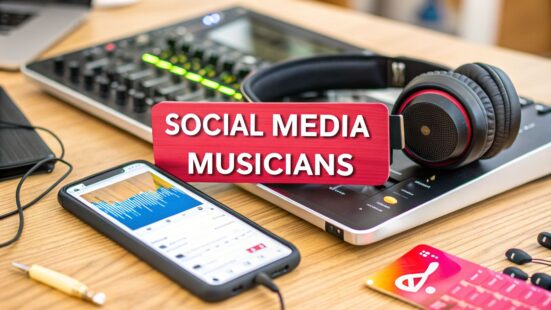
Forget what you know about traditional record labels and gatekeepers. The new power players in the music world are social media musicians, and they're building massive fanbases and driving culture right from their phones. These creators on TikTok, Instagram, and YouTube are your brand’s next secret weapon—an authentic partner with a direct line to audiences who hang on their every word.
Table of Contents
The Rise of Social Media Musicians in Brand Marketing
The creator economy has completely flipped the script on how music is made, shared, and monetized. The old path of getting discovered and signed to a major label is no longer the only way to the top. Today, an artist can write a song in their bedroom, post a 15-second clip to TikTok, and wake up to a viral hit with millions of streams.
This shift is huge for brands. It opens up an incredible opportunity to partner with genuine, high-engagement talent without wading through the complex layers of the traditional music industry.
These creators aren't just artists; they're incredibly savvy digital marketers who have mastered the art of building a community. They get the algorithms, they know the content formats, and they understand exactly what makes their audience tick. When you work with them, you’re not just licensing a song—you’re partnering with a cultural influencer who can:
- Launch products with unbelievable speed and authenticity.
- Spark viral user-generated content (UGC) campaigns that take on a life of their own.
- Connect your brand to niche fan communities in a way that feels like a real recommendation, not a forced ad.
From Bedroom Producers to Global Stars
The sheer scale of this movement is staggering. The music world has seen an explosion of artists who built their careers on social platforms and streaming services. In fact, Chartmetric now tracks over 11.3 million artist profiles worldwide, with around 4,600 new artists popping up every single day. This democratization of music means amazing talent is everywhere, just waiting for the right brand collaboration.
The key is to see them as more than just musicians. They are full-fledged content creators. Their ability to produce Reels, Shorts, and TikToks that resonate with millions is one of the most powerful tools a marketer can have.
Why Partner With Social Media Musicians? Key Advantages
Collaborating with musicians who've built their own following on social media offers a unique blend of benefits that traditional advertising often can't match. Here's a breakdown of why these partnerships are so effective.
| Advantage | Description | Business Impact |
|---|---|---|
| Authentic Connection | These artists have built trust with their audience over time. A product feature from them feels like a genuine recommendation from a friend. | Higher trust and credibility for your brand, leading to increased purchase intent and brand loyalty. |
| Niche Audience Access | Musicians often cater to very specific subcultures and fanbases, from indie folk lovers to hyperpop enthusiasts. | Allows for hyper-targeted marketing to highly engaged communities that are otherwise difficult to reach. |
| Built-in Content Engine | They are expert content creators who know how to produce engaging videos, stories, and posts that fit the platform's native style. | Provides a steady stream of high-quality, on-brand content that performs well organically and can be boosted with ads. |
| Cultural Relevance | Partnering with a trending artist instantly taps your brand into the cultural zeitgeist, making you part of the conversation. | Boosts brand relevance and perception, showing that your company has its finger on the pulse of modern culture. |
| Cost-Effectiveness | Collaborating with emerging or mid-tier musicians can offer a significantly higher ROI compared to A-list celebrities or large-scale ad buys. | More efficient use of marketing budget, allowing for broader campaign reach or multiple creator partnerships. |
Ultimately, these creators offer a direct link to the heart of modern culture, giving your brand a voice that feels both current and trustworthy.
Why This Matters for Your Brand
When you partner with a social media musician, you're tapping into the very pulse of what's cool right now. When a creator seamlessly weaves your product into their world—whether it’s a new pair of headphones in a music video or your energy drink in a "get ready with me" a cappella session—it lands as a natural suggestion, not a disruptive ad.
For any brand looking to get started, it’s crucial to understand how these artists successfully use their platforms. Learning the ins and outs of social media for music artists will give you valuable insight into what really makes a partnership click. This is the "why" behind this explosive marketing trend, and it sets the stage for the "how"—which we’ll dive into next.
Finding and Vetting the Right Music Creators
Finding the perfect social media musician for your brand goes way beyond just glancing at follower counts. It’s really an art form, blending cold, hard data with a gut feeling for whether a creator actually fits your brand. The real goal is to find artists who don't just have an audience, but have the right audience and a genuine connection that makes a partnership feel natural.
First things first, you need to shift from a broad, hopeful search to a laser-focused discovery process. You need a framework to sift through the millions of artists out there and pinpoint the ones who truly vibe with your brand's identity. This means digging past the surface-level stats and into the details that signal a strong potential partner.
Building Your Ideal Creator Profile
Before you even type a single name into a search bar, you have to define what a "win" looks like for your campaign. Are you trying to tap into a specific genre, like lo-fi hip-hop or indie pop? Who is your ideal customer, and what are their demographics? Answering these questions first gives you a clear profile to measure potential creators against.
A great place to start is with platform-native tools and dedicated creator marketplaces. These are absolute goldmines of data if you know what to look for.
- TikTok Creator Marketplace: Use its surprisingly powerful filters to search for musicians by country, audience demographics (age, gender), and even by keywords they mention in their videos. This is huge for finding creators already talking about things your brand cares about.
- Instagram's Branded Content Tools: Poke around and see which creators have tagged brand partners in the past. This gives you an instant look at who’s open to collabs and, more importantly, how they actually integrate products into their content.
- Third-Party Platforms: A service like JoinBrands can seriously speed this up. It lets you set precise filters for genre, engagement rates, and even audience interests, handing you a curated list of vetted creators who are a great match for your campaign goals.
Moving Beyond the Numbers
Once you’ve got a shortlist, the real work begins. This is where you switch gears from data analyst to content critic. A massive follower count is completely useless if the engagement is dead or the audience is a terrible fit for your brand.
The most important metric to look at is the engagement rate. A quick and dirty formula is (Likes + Comments + Shares) / Followers * 100. The industry average hovers around 1-3%, but for social media musicians—especially on TikTok—you should expect to see something higher. If a rate is suspiciously low, it could be a red flag for fake followers. On the flip side, abnormally high spikes might just be a one-hit viral video, not a sign of sustained influence.
Key Takeaway: Consistency is everything. A creator with 50,000 engaged followers who reliably pulls in 2,000-3,000 likes and dozens of real, meaningful comments is often far more valuable than someone with 500,000 followers and the same numbers. The first creator has a much more dedicated and loyal community.
This infographic breaks down the simple but powerful process a musician uses to connect with their audience and ultimately drive action.

As you can see, genuine engagement is the critical bridge between simply reaching an audience and getting them to do something for your brand.
Analyzing Content for Authenticity and Quality
Your final check is a qualitative one. This is where you have to actually watch the content and scrutinize a creator's feed for the things metrics can't show you.
- Production Quality: Does their video and audio quality meet your brand's standards? You’re not looking for a Hollywood blockbuster, but the content should be clear, well-lit, and—most importantly for a musician—have crisp audio.
- Brand Alignment: Do their values, tone, and overall aesthetic match yours? If you’re an upbeat, family-friendly brand, a musician with an edgy, counter-culture vibe is probably not the right person, no matter how many followers they have.
- Past Partnerships: Check out their previous sponsored posts. Do they weave products in naturally, or do their ads stick out like a sore thumb? You want creators who treat partnerships like a fun collaboration, not just a paid-to-post chore.
And don't forget to read the comments. Are fans genuinely hyped about the creator's music and content, or is it just a wall of generic "nice" and "cool video" posts? Authentic, back-and-forth interaction is one of the strongest signs of a healthy, supportive community.
For a deeper dive into this whole process, check out our guide on how to find music influencers who can truly make a difference for your brand. This careful, hands-on vetting is what separates a forgettable campaign from one that genuinely connects with people and delivers real results.
Crafting an Outreach and Brief They'll Actually Read

Alright, you've done the hard work of vetting and have a solid shortlist of creators. Now comes the moment of truth: the first impression. How you slide into a social media musician's DMs can be the difference between a "let's do it" and being left on read forever.
These artists, especially the ones with real communities, get bombarded with partnership requests. Most of them are just generic, copy-paste DMs that get ignored. Your outreach has to be the one that cuts through all that noise. It's about showing you've actually listened to their music and respect their art, not just their follower count.
Making Your First Message Count
Think of your first message less like a cold pitch and more like the start of a real collaboration. Artists are creators first, and they want to work with brands that see them as partners, not just walking billboards.
Keep your message short, but make it personal. Mention a specific song, a video, or even a lyric that caught your attention. Then, connect the dots. Explain why you think their unique style fits your brand’s personality. This instantly shows you're not just spamming a list but have a genuine, strategic reason for reaching out.
Key Takeaway: A musician's inbox is a battlefield for attention. To win, lead with respect for their craft. A message like, "We love the vibe of your 'Sunday Morning' acoustic series and think it would be a perfect fit for our coffee brand" will always beat, "Hey, we have an influencer opportunity for you."
Your call to action should be clear and low-pressure. Don't ask for a full-blown proposal right away. Just ask if they're open to the idea and suggest a quick chat to explore the creative possibilities. This respects their time and opens the door for a much better conversation.
Building a Brief That Inspires Creativity
Once a musician says yes, the creative brief is your next big move. The biggest mistake I see brands make is creating a brief that's a creative straitjacket—dictating every camera angle and word. That approach kills the very creativity you hired them for and results in content that feels totally fake.
A great brief gives them guardrails, not a cage. It defines the campaign's core goals and messages but leaves room for the artist to work their magic.
Essential Elements of an Inspiring Brief:
- The Goal: Get specific. Is it about driving traffic to a new product? Getting a certain number of UGC submissions with a custom sound? Reaching a new demographic? When the creator knows the target, they can help you hit it.
- The Core Message: What's the one thing you want the audience to feel or know? Boil it down. For example, "Our headphones make your music sound exactly like it did in the studio."
- Deliverables: Be crystal clear. Lay out exactly what you need. For example, one 60-second TikTok, two 15-second Instagram Reels, and five high-res photos. If you need a custom jingle, spell that out, too.
- Mandatories & No-Gos: This is where you list the absolute non-negotiables. Include any required hashtags, tags (
@yourbrand), specific product features to show, or words to avoid. But seriously, keep this list short.
Instead of scripting out the whole thing, give them creative prompts. Don't say, "Film yourself drinking our energy drink." Instead, try something like, "Show us how our drink fuels your late-night songwriting session." This gives the artist a creative starting point that feels authentic to their world and will lead to way more compelling content.
You hired them for their voice and the trust they've built with their fans. Let your brief empower them to use it.
Navigating Contracts and Content Rights Like a Pro
All the creative energy in the world won’t save a campaign if the legal side is shaky. Sure, a great brief gets you incredible content, but a solid contract is what truly protects your investment and prevents those nightmare scenarios we all want to avoid.
This is especially true when working with social media musicians. Legal clarity isn't just a boring formality—it's the bedrock of a successful, drama-free partnership.
Too many brands get tripped up here. They dive headfirst into a project, only to get tangled in confusing terms around content ownership, usage rights, and music licensing. Let me be clear: a handshake deal or a vague email chain is a recipe for disaster. You need a clear, fair agreement that spells everything out before a single note is played.
Building an Airtight Creator Agreement
Think of your contract as your campaign’s rulebook. It needs to be thorough enough to cover every "what if" but simple enough that it doesn’t scare off the creative talent you want to work with. While I always recommend a final review by a legal pro, your agreement should be built on a few non-negotiable pillars.
Here’s a practical checklist of what every music creator contract absolutely must have:
- Content Ownership: Who owns the final video and audio? This is a big one. Ideally, the brand should secure full ownership of the assets created specifically for the campaign. This is your key to using the content down the road.
- Usage Rights (The Big One): Be incredibly specific about where and how you can use the content. Are we talking organic posts on your channels? Paid ads like TikTok Spark Ads or Instagram Boosts? Your website? Email marketing? Get granular.
- Exclusivity Clause: Can the musician turn around and work with your direct competitor right after your campaign launches? An exclusivity window, often 30-60 days, is a standard and smart way to make sure your message stands alone.
- Payment Terms: No room for ambiguity here. Clearly state the total compensation, the payment schedule (a 50% upfront, 50% on completion split is common), and how they’ll get paid. It shows you’re a professional and builds immediate trust.
- Revision and Approval Process: How many rounds of edits are included? What’s the timeline for giving feedback and getting the final sign-off? Defining this from the start prevents the dreaded endless cycle of tweaks and changes.
If you’re starting from scratch, a well-structured content creator contract template can be a fantastic resource to build upon.
Licensing Existing Music vs. Commissioning Original Tracks
One of the biggest forks in the road is deciding between licensing a creator's existing song and commissioning a brand-new, custom track. This choice has massive implications for your budget and, just as importantly, how you can actually use the final content.
Licensing an existing song might seem like the faster, easier option, but it can be a legal minefield. You have to be absolutely sure the artist holds 100% of the rights—that means both the master recording and the publishing. If they have a publisher, a label, or co-writers, you could find yourself needing to negotiate multiple additional licenses, which adds complexity and drives up costs.
Commissioning an original, custom track with a full buyout is often the cleanest and safest route. This means you pay a higher fee for the musician to create a new song specifically for your brand, and in return, you typically get perpetual, worldwide rights to use it however you want, including in paid advertising.
This distinction matters more than ever. The average time it took for a song to hit one billion streams on Spotify plummeted from 2,729 days in 2015 to just 197 days in 2026, largely thanks to viral moments on TikTok. That virality is an incredible opportunity, but you can only capitalize on it and turn an organic hit into a scalable paid ad if you have the proper rights locked down.
Getting this wrong can lead to serious legal and financial blowback. We've all seen high-profile musician contract disputes play out in public. Your goal is to forge a partnership so clear and fair that those issues never even have a chance to surface. By putting in the work on a solid contract, you're not just covering your bases; you're building a foundation of trust that empowers musicians to do their best work for you.
Measuring Campaign Success and Proving ROI

The creative work is done, the content is live, and the views are rolling in. Now comes the hard part—the moment that defines future budgets and strategy. You need to prove that your partnership with a social media musician actually worked.
Great content is one thing, but hard data is what justifies the investment and gets you the green light for the next campaign. Measuring success isn't about chasing vanity metrics. It’s about connecting the creator’s content directly to your business goals and demonstrating a tangible return on investment (ROI). This is how you turn a one-off collaboration into a repeatable, data-driven growth engine.
Establishing Your Key Performance Indicators
Before a single video goes live, you need to define what success looks like. Your Key Performance Indicators (KPIs) must tie directly back to your original campaign goals. Are you trying to build brand awareness, boost audience engagement, or drive direct sales? Each goal demands a different set of metrics.
Let's break down the essential KPI framework for measuring your music creator campaigns. This table will help you connect your goals to the right metrics, no matter what stage of the funnel you're focused on.
| KPI Category | Metric | What It Measures | Platform Example |
|---|---|---|---|
| Reach & Awareness | Views, Impressions, Reach | How many unique people saw your content. Great for top-of-funnel brand awareness. | A TikTok video hitting 1 million views means it reached a massive new audience. |
| Engagement | Likes, Comments, Shares, Saves | How deeply the audience connected with the content. Shows they didn't just see it, they acted on it. | High Saves on an Instagram Reel indicate users found the content valuable enough to revisit. |
| Conversion | CTR, Website Traffic, Sales | Actions that directly contribute to business results, like leads or revenue. | Tracking Sales from a unique promo code shared in a YouTube Short. |
This framework gives you a clear path from social media activity to bottom-line impact.
It’s easy to get lost in a sea of data. That’s why our detailed guide on measuring influencer marketing ROI provides a structured approach to tracking what truly matters.
Pro Tip: The best insights come from combining metrics. High views with low engagement might mean your video's hook was strong, but the content didn't hold attention. On the other hand, moderate views with a ton of shares and saves tells you you’ve struck gold with a core audience.
Using Platform Analytics and Third-Party Tools
Your first stop for data will always be the native analytics dashboards within TikTok, Instagram, and YouTube. These platforms offer a goldmine of information on video performance, audience demographics, and watch time. Always ask creators to share screenshots of their post-performance data—they have access to deeper insights than what you can see publicly.
If you’re running paid ads, TikTok's Creator Center and Meta's Ads Manager become your command center. This is where you can precisely track cost per click (CPC), cost per acquisition (CPA), and the all-important return on ad spend (ROAS).
The commercial power of these creators is undeniable. Look at how Bad Bunny shattered records on Spotify, pulling in 19.8 billion streams globally in 2026. Hits like Lady Gaga and Bruno Mars' 'Die With A Smile' were rocketed to over 1.7 billion streams by viral TikTok trends. This shows a direct line from social buzz to commercial success, which translates directly to e-commerce when high-engagement creators drive massive sales through TikTok Shop and affiliate links.
Optimizing and Amplifying What Works
Measurement isn’t the final step; it’s the beginning of an optimization loop. Once the data starts coming in, you can quickly spot your top-performing content and double down on it. This is how you maximize your budget and turn a good campaign into an unforgettable one.
A high-performing organic Reel isn't the end of the story—it's a proven concept ready for a bigger stage. Putting ad spend behind it lets you target lookalike audiences who are highly likely to love it, too.
Actionable Amplification Strategies:
- Boost with Spark Ads: On TikTok, use Spark Ads to put ad spend behind the creator’s original post. This keeps all the organic social proof (likes, comments, shares) while pushing it to a wider, targeted audience. The ad feels far more native and authentic.
- Repurpose for Different Formats: Did a 60-second video knock it out of the park? Edit it down into a punchy 15-second clip for Stories or a pre-roll ad. You've already validated the creative; you're just adapting it for new placements.
- Inform Future Briefs: Dive into the comments and shares. What specific lyrics, visuals, or jokes did the audience latch onto? Use this qualitative feedback to make your next creative brief even sharper and more aligned with what your audience craves.
By constantly analyzing performance, understanding what resonates, and reinvesting in your winners, you create a powerful cycle of growth. This data-driven approach ensures every dollar you spend on social media musicians works harder, delivering results that echo long after the campaign ends.
Common Questions About Musician Partnerships
Diving into a new kind of partnership always brings up a few questions. When it comes to working with social media musicians, I’ve found that brands and agencies tend to hit the same walls.
Getting those roadblocks cleared up before you start can save a ton of time, prevent headaches, and make sure your collaboration is a success from outreach to the final report. This is your quick-reference guide to the practical details that make or break a music campaign.
What Is the Typical Cost to Hire a Social Media Musician?
This is the million-dollar question, and the honest-to-goodness answer is: it’s all over the map. There’s no standard rate card. The cost to hire a musician hinges on their audience size, engagement, the project's scope, and—this is a big one—the usage rights you need.
For instance, a micro-creator with 10,000 to 50,000 followers who have a really tight-knit community might charge a few hundred bucks for a single TikTok or Reel. On the flip side, a macro-creator with over 500,000 followers and a history of driving real results could easily command thousands for the same thing.
The scope of work is where the price can really change. Asking a creator to write a completely original, custom song for your brand will always be a bigger investment than having them just feature your product in one of their existing video formats.
You have to think about the whole value exchange.
- Are you just getting an organic post, or are you buying rights to use the content in paid ads?
- Do you need an exclusivity period where the creator can't work with your direct competitors?
- Do you need the rights to use the content across TikTok, Instagram, and YouTube?
All these little details add up and directly impact the final price. The key is to define your needs and budget from the start and get everything crystal clear in the contract.
How Do I Handle Music Licensing for Paid Ads?
Pay close attention to this one, because it’s a legal minefield. Your contract must explicitly grant your brand the right to use the music in paid advertising. If you don't nail this down, you’re opening yourself up to serious legal and financial trouble later.
For a platform like TikTok, this means you either need a direct license from the artist or you need to make sure their track is cleared for the official Commercial Music Library. Simply getting their okay for an organic post isn't enough if you plan to put ad spend behind it.
The absolute safest bet is to commission a "buyout" track. This means your contract gives your brand perpetual, worldwide rights to the music they create for you. It completely erases any gray areas and gives you the freedom to turn a viral organic video into a high-performing, scalable ad without any future legal drama.
What Actually Makes a Music Campaign Go Viral?
Let’s be real: virality is never guaranteed. But you can absolutely stack the deck in your favor. It’s almost always a powerful mix of three things: a catchy, repeatable sound; a simple, replicable visual trend; and an authentic fit between the creator and your brand.
The real magic happens when you empower social media musicians with creative freedom. The content has to feel like it belongs on their channel and speaks to their community—not like a polished corporate ad you forced on them. Their audience will spot an inauthentic post from a mile away.
A great place to start is to either jump on a pre-existing trend or create a new, super-simple challenge that invites people to participate. From there, it’s a mix of sharp timing, the algorithm gods smiling down on you, and, yes, a little bit of luck.
How Long Does a Musician Collaboration Take?
Project timelines can be anywhere from a single week to over a month. It all comes down to the complexity of what you're asking for.
A straightforward user-generated content (UGC) campaign, where a creator just features your product in a standard video, can be turned around in just 7-10 days from first contact to the final video.
But if you’re planning something more involved—like commissioning a custom song, going through a few rounds of revisions, and having your legal team do a thorough contract review—you should expect it to take closer to 4-6 weeks.
Using a creator marketplace can definitely speed things up by keeping all the communication, approvals, and payments in one place. My best advice? Always budget at least 2-3 weeks for a standard campaign. That gives you enough breathing room for proper vetting, thoughtful negotiation, and creative development without rushing the artist and sacrificing quality.
Ready to connect with talented social media musicians who can bring your brand's story to life? With JoinBrands, you can find, vet, and collaborate with over 250,000 creators in one streamlined platform. Start your campaign today.