

 TikTok Shop Agency: Master ROAS & Avoid Mistakes in 2026
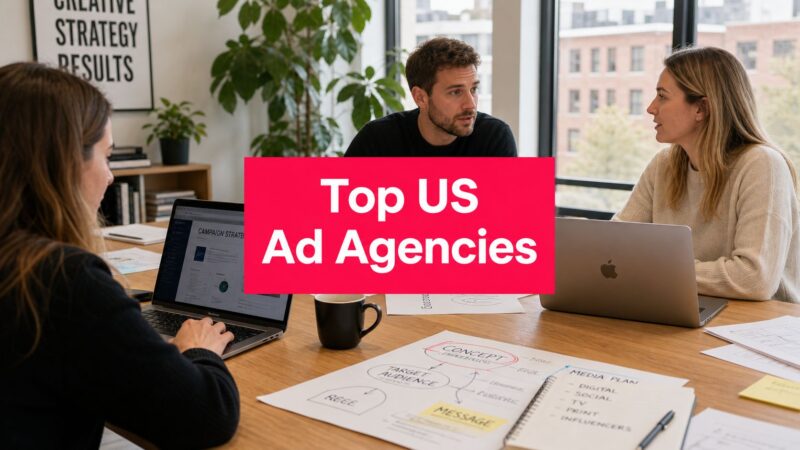
Your brand is growing, but your message may be getting harder to scale. The hard part isn't finding an agency, it's finding the right kind of partner, because the top us ad agencies are built for very different jobs, from culture-shaping creative to always-on social and commerce execution. The U.S. advertising market is large and still expanding, with IBISWorld estimating $88.7 billion in 2026 and about 114,000 businesses in the space, which means the challenge is choosing a team that fits your brief, budget, and operating model instead of chasing a famous name alone (IBISWorld).
For brands that need a fast answer, the rule is simple. Use a big agency when the brief demands strategic depth, cross-channel firepower, and a campaign that has to land at scale. Use a creator platform like JoinBrands when the work is specific, social-native, and built around UGC, product seeding, or repeatable content production. The market is also moving toward integrated digital delivery, with Mordor Intelligence estimating that digital-first integrated services accounted for 42.02% of U.S. marketing-agency revenue in 2025 and projecting the market to reach $251.07 billion by 2031 at a 5.46% CAGR, so your shortlist should favor agencies that can prove measurement across paid social, search, commerce, and CRM (Mordor Intelligence).
Table of Contents
1. Wieden+Kennedy
Wieden+Kennedy is the agency you hire when the brand needs to feel bigger than the media plan. Its reputation is built on ideas that travel, campaigns that people remember, and work that can move from a single hero film into social, digital, and production-led extensions without losing the core idea. The best-fit brief is not “make us pretty,” it's “give us a platform people will talk about.”

Its value is strongest for brands that need cultural relevance and long-term brand memory. That makes it a strong choice for sports, QSR, CPG, and tech brands that want more than a campaign, they want a point of view that can stretch across channels and seasons. If you're a challenger brand trying to look established, or an established brand trying to look freshly relevant, this is the kind of partner that can do both.
Best use case
- Launch a tentpole campaign: Use Wieden+Kennedy when you need one idea to carry TV, social, and earned media.
- Refresh a heritage brand: Choose it when the category is familiar, but the brand needs a sharper cultural edge.
- Build fame, not just clicks: This is the right fit when recall and conversation matter as much as performance metrics.
Practical rule: If the brief needs a memorable platform that can survive beyond one launch window, shortlist Wieden+Kennedy first.
The tradeoff is cost and selectivity. This is not a shop for casual experimentation or loose scopes. The work is premium, the bar is high, and the budget has to match the ambition. If your team can't support a bold creative process with real media and production backing, you'll underuse what the agency does best.
2. Droga5, Part of Accenture Song
Droga5 fits brands that need one idea to work across the customer journey, not just in a single ad placement. Its value comes from combining high-craft creative with Accenture Song's design, commerce, and technology depth, which gives enterprise teams a cleaner path from brand story to business execution. That matters when the brief is bigger than awareness and the work has to support experience, product, and performance at the same time.

Use Droga5 when the creative idea has to hold up inside a larger system. A campaign concept is only part of the job here. The agency is built to connect messaging with the site experience, commerce flow, and the operational pieces that make a launch work. If your internal teams are already treating CX, media, and commerce as one problem, this is a strong fit. If you need a smaller, self-contained brand project, the setup can be more agency than you need.
Why brands hire it
- Big ideas with operational depth: It can connect a campaign concept to commerce and digital experience decisions.
- Enterprise-ready structure: It works for organizations that need senior coordination across several functions.
- Strong bridge from brand to performance: It is useful when creative has to support measurable downstream outcomes.
Practical example: If a relaunch needs a flagship film, a refreshed site experience, and a commerce path that still feels on-brand, Droga5 belongs on the shortlist.
The tradeoff is process. A larger parent structure can add layers, and that is the cost of its broader capability set. For brands that want fast, light, or highly autonomous work, it can feel heavier than necessary. For enterprise teams, that structure is often the point.
3. BBDO
A brand calls BBDO when the work has to carry real weight in public. This is a network built for major launches, high-stakes brand moments, and long-term account work where the creative has to hold up across media, markets, and layers of approval. Its “Do Big Things” position is not just a slogan. It points to what the agency is built to do, deliver business-impact creative that can scale.
That matters most for brands that need visibility and reach at the same time. A Super Bowl-level moment, a major product launch, or a broad campaign across CPG, beverage, retail, tech, or automotive fits the BBDO model. It also makes sense for companies that want the reach of the broader Omnicom system without giving up a core creative agency relationship.
The agency's real advantage is coordination. Large brands usually have many decision-makers, and BBDO is set up to keep creative, media, and internal approvals moving in the same direction. It also brings broad category fluency, which helps when the brief has to work across very different business contexts. Access to specialized units inside the holding company can cover narrower needs without forcing a brand to rebuild the whole team.
Direct advice: Hire BBDO when the campaign needs to feel big, move through a large organization, and stay strategically disciplined.
The fit is weaker for smaller brands. The scale of the team, the process, and the pricing can overwhelm lean organizations that need hands-on attention and quick iteration. BBDO is a premium choice for premium problems. If the challenge is a single product story or a modest retainer, this is too much agency for the job.
4. TBWA\Chiat\Day
TBWA\Chiat\Day is the right choice when a brand needs to break out of a tired category. Its Disruption approach is built to challenge convention, find a sharper growth path, and turn that strategy into work people notice. If the brand feels stale, the message is too cautious, or the category is crowded with lookalike advertising, this agency pushes the brief in a more useful direction.
The shop is strongest when the idea has to live in more than one place. Film, social, experiential, and earned media work better here when they are shaped together from the start. That matters because modern campaigns rarely succeed as single-channel executions, and TBWA\Chiat\Day knows how to build an idea that can carry across formats without losing its edge.
It also brings a clear point of view to the table. The disruption model gives the team a disciplined way to find a different angle, and that matters for brands that need a new story instead of another polished version of the same thing. The work usually feels current, culturally aware, and built to move beyond safe category norms.
Practical tip: Use TBWA\Chiat\Day when the real problem is sameness, not basic awareness.
Where it fits best
- Strategic disruption: The agency gives the team a framework for finding a fresh angle, not just a louder message.
- Cultural relevance: The work tends to feel current and connected to what people are paying attention to.
- Cross-format creative: One idea can support film, social, and experiential work without losing consistency.
The fit is strongest for ambitious briefs that need a point of view. It is a poor match for leadership teams that want something safe, familiar, and tightly contained. TBWA\Chiat\Day's challenger mindset can clash with conservative approvals, because the agency is built to push the brief forward instead of smoothing it out.
Pricing sits in the premium tier, so the business case has to match the ambition. Brands that need a modest retainer or a limited campaign should look elsewhere. TBWA\Chiat\Day makes sense for companies ready to back a bold idea with the budget and internal alignment to support it.
5. Goodby Silverstein & Partners
Goodby Silverstein & Partners fits brands that need a lasting platform, not a one-time burst of attention. The agency is known for ideas that can hold up across TV, digital, social, and content without losing their shape. That matters for brands that want fame, consistency, and a voice people recognize over time.

Its real strength shows up when the brief calls for sharp strategy and bold creative. GS&P is a strong choice for categories where storytelling, wit, and craft can carry a message across multiple years. Brands that want a platform kept alive, rather than constantly rebuilt, should keep this agency high on the list.
One reason GS&P stands out is its ability to make a simple idea feel memorable without making it brittle. The work can travel across formats because the core concept is clear, and the creative team knows how to protect that core as the campaign expands. For leadership teams that care about long-term brand equity, that discipline is a real advantage.
Reasons to shortlist it
- Platform thinking: It builds ideas that can travel across channels and campaigns.
- Craft-led storytelling: The work usually aims for memorability, not just coverage.
- Good category breadth: Entertainment, telecom, snacks, beverages, and tech all fit the model.
Practical example: If your brand needs one campaign idea that can turn into a long-lived creative system, GS&P stands out.
The agency is selective, and that affects fit. It usually favors larger budgets and full AOR relationships, so it is not the cleanest option for smaller or transactional assignments. If your team wants broad access, fast turnarounds, and low-friction project work, a boutique or specialist shop is a better choice.
6. R/GA
R/GA fits brands that need more than a campaign. It is strongest when brand, experience, and commerce have to work together, especially for DTC and e-commerce teams that want messaging, product flow, CRM, and loyalty to support one another. The agency tends to think in systems, so the output often feels more consultative than purely ad-driven.
That matters most when the brief touches adaptive digital experiences, emerging tech, or AI-shaped interfaces. If the business problem sits inside the product, the platform, or repeat purchase behavior, R/GA belongs near the top of the shortlist.
Where R/GA makes the most sense
- Brand plus commerce: It connects positioning with conversion and retention.
- Tech-forward execution: It is a fit for AI, generative interfaces, and connected customer journeys.
- Global coordination: The talent model can support work across markets when the assignment calls for it.
Practical rule: Choose R/GA when the job needs to behave like a product experience, not just an ad.
The tradeoff is tone and scope. The work can skew technical instead of emotional, which suits performance-minded teams but leaves pure storytellers cold. Enterprise scoping also pushes it out of reach for many smaller brands. Startups and lean DTC teams often find that the ambition makes sense, but the budget does not.
7. VaynerMedia
A brand that needs social to drive demand cannot afford a slow agency model. VaynerMedia is built for that reality. Creative, media, strategy, and analytics sit in the same operating model, which helps teams keep pace with platform changes and constant content demand. For DTC and e-commerce brands that need a steady flow of platform-native output, that setup is the point.
VaynerMedia is strongest when the work has to be tested, iterated, and adjusted quickly. It fits always-on content systems, creator collaboration, influencer-style execution, and paid social programs that need clear performance feedback. It can handle bigger brand moments too, but its real strength is volume, speed, and a social-first operating cadence.
Why VaynerMedia fits social-first brands
Social-first teams get the most value when strategy and execution stay tightly connected. VaynerMedia keeps creative and media close together, so campaign planning does not drift away from what gets published and optimized. That matters for brands that need TikTok, Instagram, and YouTube-style output that feels native to each platform rather than repackaged from a broader campaign.
The agency also works well for brands that care about measurable output, not just polished creative. Its model is built around relevance, testing, and iteration, which makes it a strong option for paid social and content systems that need to keep producing fresh variations. If your team needs creator cuts, ad versions, and recurring content drops, this is the kind of shop that can keep the machine moving.
Practical example: A brand that needs a constant stream of TikTok-ready assets, creator edits, and paid social variations will get more value here than from a traditional campaign-only agency.
The tradeoff is commitment. VaynerMedia makes sense for brands that are prepared to support always-on content with enough budget, enough volume, and a team that accepts frequent testing. A company that wants one finished asset to carry the entire quarter will fight the model. Brands that want speed, platform fluency, and a direct connection between content and performance will find a much better fit.
Top 7 US Ad Agencies Comparison
| Agency | Process / Complexity 🔄 | Resource Requirements ⚡ | Expected Outcomes 📊 | Ideal Use Cases 💡 | Key Advantages ⭐ |
|---|---|---|---|---|---|
| Wieden+Kennedy | Selective, high-touch creative process; cross-office collaboration | Enterprise-level budgets; in-house production teams | Cultural, fame-driving platforms with strong recall | Brand-defining launches, tentpole campaigns, heritage brand modernization | Iconic, conversation-driving work and scalable creative firepower |
| Droga5 (Accenture Song) | Rigorous strategy integrated with parent-company processes | Enterprise budgets; access to CX, commerce, and tech resources | Award-winning creative tied to measurable digital experiences | Enterprise brands seeking brand + digital/commerce transformation | Big-platform creativity + deep commerce/technology integration |
| BBDO | Process-heavy, scalable operations across global network | Enterprise resourcing; specialized Omnicom units available | High-visibility launches and sustained AOR impact | Marquee launches, long-term AOR relationships | Business-impact focus with broad category expertise |
| TBWA\Chiat\Day | Structured “Disruption” methodology with bold creative execution | Premium budgets; full-funnel production capabilities | Distinctive, news-generating repositioning and growth work | Brands aiming to reposition, modernize, or relaunch disruptively | Proprietary Disruption approach that creates standout moments |
| Goodby Silverstein & Partners | Selective onboarding; end-to-end creative and content labs | Favors larger budgets for full AOR engagements | Platformable campaigns that sustain talk value over years | Brands seeking enduring platforms and high craft storytelling | Strong craft, storytelling, and long-running brand platforms |
| R/GA | Consultative, tech-forward workflows linking product and marketing | Enterprise scoping; specialized tech, AI, and commerce teams | Adaptive digital experiences tied to commerce and performance | DTC/e-commerce needing integrated product, data, and AI | Integrated brand + experience + commerce capabilities; AI expertise |
| VaynerMedia | Fast, iterative social-first processes focused on volume/testing | Significant always-on content investment; in-house media & analytics | Rapid platform-native reach and measurable growth through testing | Social-first brands prioritizing creators, speed, and measurement | Social platform expertise with rapid iteration and performance focus |
Your Next Step in Building a Famous Brand
The right agency depends on the job in front of you. If you need a culture-defining platform, Wieden+Kennedy and TBWA\Chiat\Day are strong creative bets. If you need enterprise depth tied to digital experience, Droga5 and R/GA make more sense. If your brand lives on social and needs constant iteration, VaynerMedia is the clearer fit.
A lot of brands get this wrong by hiring for prestige instead of fit. The better question is whether you need a full-service agency relationship or a specialized content engine. For ongoing UGC, creator collaborations, and ad-ready social assets, a direct creator platform can be the more efficient choice than a large agency retainer. The broader market backs that logic, with agency pricing varying widely, from small and mid-sized retainers to premium global-network engagements that can reach $100,000+ per month for full-service work (Web Tonic).
The same applies to execution structure. Ad Age's data shows how concentrated the top end of the market is, with the top 200 U.S. advertisers increasing spend on ad and marketing services by 2.5% in 2023 to a record $213 billion, while the biggest networks still generate substantial domestic revenue through large agency brands like JWT at $476.5 million, Leo Burnett at $362.7 million, and Digitas at $112.0 million (Ad Age). That scale is useful when you need heavyweight coordination, but it doesn't automatically solve creator content, social proof, or rapid testing.
If your next move is UGC, creator licensing, or ad-ready social content, JoinBrands gives brands a direct way to work with creators without building a full traditional agency stack. Use it when you need scale, speed, and content that can move into paid social quickly.
JoinBrands helps brands run creator campaigns, source UGC, and manage social-ready content in one place. If you're comparing the top us ad agencies against a creator-led workflow for UGC and paid social assets, visit JoinBrands to see how it fits your next campaign.