


 Content Creator Jobs: The Ultimate Guide to Landing Them in Today’s Market
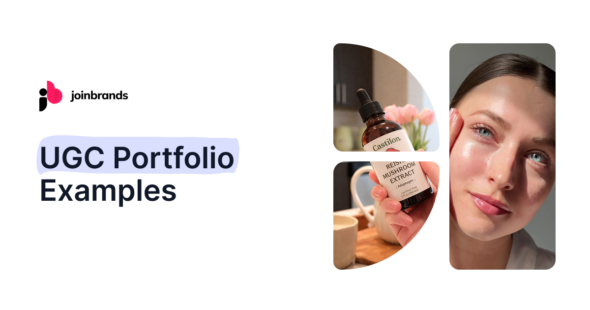
Your UGC portfolio is your business card. It’s what separates brands who invest in your work from those who move on to the next creator. A mediocre portfolio won’t get you hired, no matter how good you are. A great one opens doors.
The problem? Most UGC creators build portfolios the wrong way. They throw together their best videos, cross their fingers, and wonder why brands ghost them. Or they overcomplicate it with fancy design work that distracts from the actual content.
Here’s what actually works: Show brands exactly what they’re buying. Make it easy for them to say yes.
Table of Contents
Why Your UGC Portfolio Matters (More Than You Think)
Brands don’t know you. They have 30 seconds to decide if you’re worth their time and money. Your portfolio either makes that decision easy or impossible.
A strong portfolio serves multiple purposes simultaneously:
– Proves you can deliver. Brands see your work quality, your consistency, and your professionalism in one place.
– Shows versatility. You demonstrate you can film different product categories, styles, and ad angles.
– Builds trust quickly. Before they spend $500-$5,000 on your work, they need confidence you can execute.
– Sets rate expectations. Your portfolio justifies why you’re worth $200 per video, not $50.
Without a solid portfolio, you’re competing on price alone. That’s a losing game.
The UGC Portfolio Checklist: What Brands Look For
Here’s exactly what brands evaluate when they review your work:
Format & Professionalism
– Videos are properly lit and framed (not shot in bad lighting or weird angles)
– Audio is clear (no background noise, awkward pauses, or muffled dialogue)
– Editing is intentional (cuts are smooth, on-beat, purposeful – not lazy)
– Branding is minimal (they want to see you, not your logo plastered everywhere)
Content Specificity
– You show ads for actual products (not generic demos or vague examples)
– Your portfolio covers 3-5 different product types or niches
– Hook-to-call-to-action flow is visible in every piece
– You nail the storytelling angle (solving a problem, showing benefit, creating desire)
Diversity & Range
– Different hooks: questions, surprising statements, relatable struggles
– Different paces: some fast, some slower and more emotional
– Different outfits/settings: shows you can adapt and deliver variety
– Different product angles: beauty products, tech, clothing, e-comm, SaaS
On-Brand Performance Markers
– Conversational tone (not robotic sales pitch)
– Natural hand movements and body language
– Authentic reactions (you believe what you’re saying)
– Clear CTAs (what does the viewer do next?)
If your portfolio checks these boxes, you’re ahead of 80% of creators.
How to Structure Your Portfolio (The Blueprint)
Brands want to evaluate you quickly. Make it frictionless.
The minimum viable portfolio:
– 8-12 best-performing videos (quality over quantity)
– Organized by category or niche (group beauty videos together, tech videos together, etc.)
– One-line context on each (what product, what platform it ran on, optional metrics if you have them)
– Your rates and availability
– Contact info and turnaround time
Don’t include:
– Personal TikTok dance videos
– Vlogs or lifestyle content
– Anything unrelated to UGC
– Videos longer than 60 seconds (unless you specify it’s for YouTube)
– 20+ videos (it overwhelms them; quality wins)
The goal? They should find, understand, and decide in under 2 minutes. Make it obvious, organized, and action-oriented.
5 UGC Portfolio Formats Compared
Not all portfolios are created equal. Here’s what works, what doesn’t, and when to use each:
| Format | Pros | Cons | Best For |
|---|---|---|---|
| Simple Google Drive/Folder | Free, easy to share, works for everyone | Looks unprofessional, hard to organize at scale | Starting out, testing with friends |
| Dedicated Website (Webflow, Wix) | Branded, professional, full control, SEO-friendly | Takes time to build, requires some design skills | Established creators, agency outreach |
| Portfolio Platform (Notion) | Clean, organized, easy updates, looks polished | Limited customization, can feel generic | Professionals, corporate inquiry handling |
| Video Compilation (YouTube Private Link) | All videos in one feed, shows volume, easy to curate | Minimal context per video, less professional framing | Quick reference, existing audience showing |
| Creator Marketplace Profile | Built-in trust, brand discovery, direct messaging | Limited customization, depends on platform | Platform-based brand deals, passive opportunities |
Pro move: Use a dedicated portfolio website + maintain your creator marketplace profile. Each serves a different part of the funnel.
The 5 Real-World Portfolio Structures That Work
1. The Minimalist (Notion Template)
Brands see a simple table with:
– Video thumbnail
– 10-word description
– Platform it ran on (TikTok, Instagram Reels, YouTube)
– Optional: engagement metrics or conversion stats
Why it works: No distraction. Just content and context. Brands can scroll, scan, and decide in 90 seconds.
2. The Niche Specialist (Organized by Category)
Your website has clear sections:
– Beauty & Skincare (5 videos)
– Tech & Electronics (4 videos)
– Fashion & Apparel (3 videos)
Why it works: Brands in beauty can immediately see if you’ve done that niche. No hunting. No guessing.
3. The Storyteller (Narrative Portfolio)
Each video has a short story:
– The ask: “Client needed a hook that stops thumb-scroll”
– The approach: “Led with a problem statement”
– The result: “Ad ran for 6 weeks, strong CTR”
Why it works: Shows your thinking, not just your output. Brands see you’re strategic, not just talented.
4. The High-Volume Professional (Video Compilation)
A YouTube unlisted playlist with 30-50 videos organized by:
– Most recent first
– Genre/category playlists
– Performance tiers (best, good, portfolio-builders)
Why it works: Shows you’re prolific. Proves consistency. Agencies love seeing volume.
5. The Creator Brand (Personal Website + Embedded Videos)
Your own domain with:
– About section (who you are, what you specialize in)
– Portfolio gallery (videos embedded, not just linked)
– Testimonials from past brands
– Contact form + rates
Why it works: You become a brand yourself. Premium positioning. Attracts better-paying clients.
Tools for Hosting Your Portfolio
You don’t need a complicated setup. Pick one and move forward:
Free Options:
– Notion: Build a beautiful portfolio in 30 minutes, share a link. Zero friction.
– Google Drive: Organize folders by niche, share the main folder. It’s not pretty, but it works.
– YouTube Private Playlist: Free, searchable, easy to organize. Minimal branding.
Low-Cost Options ($5-50/month):
– Webflow: Professional website, great templates, full design control. Overkill for many creators.
– Wix: Drag-and-drop simplicity, looks polished, beginner-friendly.
– Squarespace: Design-forward, portfolio-focused, feels premium.
Creator Platforms (Built-In):
– JoinBrands: Portfolio built in, brands discover you. No hosting needed.
– Billo, Insense, Later: Creator marketplaces with portfolio features.
My recommendation: Start with Notion or a creator platform like JoinBrands. When you’re landing consistent deals, invest in a basic Webflow site to look premium.
Common Portfolio Mistakes (And How to Fix Them)
Mistake #1: Portfolio Is Too Long
You included 30 videos because you’re proud of them. Brands scroll through 5, get fatigued, and move on.
Fix: Brutal curation. Pick your 10 best. If you’re unsure, ask: “Would I recommend this to a friend?” If not, cut it.
Mistake #2: Videos Are Poor Quality
Bad lighting, shaky camera, muffled audio. It screams “I don’t care about professionalism.”
Fix: Every video in your portfolio should pass the “would I be proud to show a Fortune 500 brand this” test. If not, re-shoot.
Mistake #3: No Context or Metadata
Videos sit there with zero explanation. Brands have to guess what product it is or why it matters.
Fix: One-line description per video: “Skincare product launch – 60-second hook-focused ad.” That’s it.
Mistake #4: It’s All One Niche
You only have beauty videos. A fashion brand sees it and keeps scrolling.
Fix: Diversify. 3-5 different niches/product categories minimum. Show range.
Mistake #5: Outdated or Irrelevant Content
Videos from 2 years ago with outdated trends, formats, or quality standards.
Fix: Refresh quarterly. Remove anything older than 1 year unless it’s exceptional. Keep it current.
Mistake #6: Overly Designed, Distracting Branding
Your logo appears on every video. Excessive filters. Too many graphics.
Fix: Let the content speak. Light branding (watermark is fine). Heavy branding distracts from what brands are actually evaluating: you.
Your Next Move
Your portfolio is live product. Treat it that way. Review it quarterly. Remove underperformers. Add new work. Keep it sharp.
This month: Audit your current portfolio. If you don’t have one, pick Notion or JoinBrands and get started. 10 videos is enough to launch. Quality beats quantity.
Ready to land your first paid deal? Get discovered by brands actively hiring UGC creators on JoinBrands. Sign up as a creator
Key Takeaway: Your portfolio should prove three things in under 2 minutes: you deliver quality, you’re versatile, and you’re professional. Everything else is noise.