


 A Practical Guide to UGC for Local Businesses
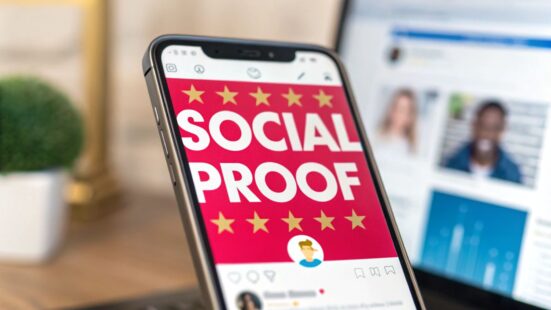
In marketing, social proof is the simple idea that people copy the actions of others. It's a psychological shortcut. When we're not sure what to do, we look around and assume that what the crowd is doing must be the right thing. If everyone is buying it, talking about it, or lining up for it, it must be good.
This powerful principle builds instant trust and makes decisions easier for your customers.
Table of Contents
What Is Social Proof in Marketing?
Ever walked past two cafes, one buzzing with people and the other completely empty, and instinctively felt drawn to the busy one? That's social proof in its purest form. In the digital world, it’s like word-of-mouth marketing on steroids, guiding online shoppers just like a crowd guides foot traffic on a busy street.

At its heart, social proof taps into our fundamental human need to belong and make the "correct" choice. When we're faced with uncertainty online—like trying a new brand—we look for signals from others to validate our decision. Brands that master this don't just sell products; they build movements.
Why Social Proof Is a Superpower for Brands
Let's be honest: modern shoppers are tired of traditional ads. We've all become experts at tuning them out. Social proof cuts right through that skepticism because it isn't the brand talking—it's real people. It offers authentic, third-party validation that a polished ad campaign could only dream of achieving.
This creates a powerful flywheel effect for your business. The more people who buy and love your product, the more social proof you generate, which in turn attracts even more customers. It works by hitting on a few key psychological triggers:
- Building Instant Credibility: Seeing that others trust a brand dramatically lowers the perceived risk for a new customer.
- Validating Purchase Decisions: It acts as a final nudge, reassuring shoppers they’re making a smart choice and helping them avoid buyer's remorse.
- Creating FOMO (Fear of Missing Out): When a product seems to be everywhere, people naturally want in on the action so they don't feel left behind.
Social proof isn't just a "nice-to-have"—it's an essential trust signal. It's what turns an anonymous visitor into a confident buyer by showing them they aren't just buying a product, but joining a community of happy customers.
The Six Core Types of Social Proof
Social proof isn't a one-size-fits-all concept. It comes in several different flavors, each with its own unique way of building trust and driving action. Understanding these types is the first step to strategically weaving them into your marketing.
Here’s a quick snapshot of the primary forms we’ll explore, showing how each one works its magic.
The Six Core Types of Social Proof at a Glance
| Type of Social Proof | What It Represents | Why It's Effective |
|---|---|---|
| Reviews & Ratings | The collective opinion of past customers. | Provides a quick, scannable measure of product quality and satisfaction. |
| Testimonials | A detailed, personal endorsement from a happy customer. | Offers a relatable story that builds an emotional connection and trust. |
| Creator/Influencer Endorsements | A stamp of approval from a trusted expert or personality. | Borrows credibility and transfers the trust from the creator to the brand. |
| User-Generated Content (UGC) | Authentic content created by your actual customers. | Shows the product in real-world use, making it feel genuine and attainable. |
| Social Signals & Metrics | Follower counts, likes, shares, and subscriber numbers. | Demonstrates popularity and widespread acceptance, creating a "wisdom of the crowd" effect. |
| Case Studies | In-depth success stories showing tangible results. | Provides concrete, data-backed evidence of value, perfect for B2B or high-ticket items. |
Each of these types plays a crucial role in building a well-rounded social proof strategy that resonates with different customers at different stages of their journey.
The Numbers Don't Lie
The impact of social proof isn't just theory; the data is crystal clear. Today’s shoppers depend heavily on the experiences of others to guide their own decisions.
Consider this: a staggering 97% of consumers now read reviews before making any purchase. Even more telling is that a product with just five or more reviews sees its purchase likelihood jump by an incredible 270% compared to a product with none. That shows just how much a little validation can influence a buyer's confidence.
This deep reliance on peer feedback underscores the massive benefits of user-generated content, where your best marketers are your own customers. By showcasing their genuine experiences, you build a foundation of trust that no amount of advertising can replicate.
Exploring the Six Pillars of Social Proof
Social proof isn't some single, magic marketing trick. It's a whole toolkit of psychological triggers you can pull. When you understand the different forms it takes, you can build a strategy that connects with customers no matter where they are in their buying journey.
Think of these six pillars as the foundational supports for a bridge of trust between your brand and your audience.

Each pillar works a little differently, tapping into everything from the wisdom of the crowd to the authority of a trusted expert. Let's break down each one and see how to put it to work.
Customer Reviews and Ratings
This is the one you see everywhere, and for good reason—it might just be the most powerful type of social proof out there. Reviews and star ratings are basically the digital version of asking a friend for a recommendation. They give potential buyers a quick, easy-to-scan snapshot of what everyone else thinks.
A high average rating is an instant signal of quality, making a new customer feel much less anxious about hitting "buy." But the sheer volume of reviews is just as critical. A product with 500 glowing reviews feels like a much safer bet than one with only three, even if the average star rating is identical. That's the "wisdom of the crowd" in action; we instinctively trust that hundreds of people probably aren't all wrong.
User-Generated Content
This is the holy grail of authentic social proof. User-Generated Content (UGC) is any content—photos, TikToks, Instagram stories, unboxing videos—created by real customers featuring your product. It’s raw, it feels genuine, and it’s incredibly persuasive.
Unlike a polished brand ad, UGC shows your product being used in a messy, real-world context. This authenticity helps potential buyers actually picture themselves using it, making the benefits feel way more tangible and achievable. When a brand re-shares UGC (with permission, of course), it sends a powerful message: "Our customers love this stuff so much, they're basically doing our marketing for us."
Expert and Creator Endorsements
When a recognized expert, influencer, or creator gives your product their stamp of approval, their credibility instantly rubs off on your brand. This is a shortcut to trust. It helps consumers skip the usual hemming and hawing because they already trust that person's judgment.
An endorsement from a trusted voice acts as a powerful validator. If a respected tech reviewer praises a new gadget, their followers are more inclined to believe in its quality, bypassing their usual skepticism.
This pillar is so effective because it taps into the pre-existing relationship and trust between the creator and their audience, giving your brand an immediate boost of legitimacy.
Testimonials and Case Studies
While reviews are quick hits, testimonials and case studies are the deep dives. A testimonial is a personal story from a happy customer, usually explaining a specific problem they had and how your product swooped in to save the day. It creates an emotional connection and makes your brand’s promises feel real.
Case studies take this to the next level by backing it up with hard data. They are the ultimate social proof for B2B brands or big-ticket items. A detailed case study showing how your software boosted a client's revenue by 40% is the kind of concrete evidence that seals a high-stakes deal.
Here’s the main difference:
- Testimonials: All about the emotional journey and personal satisfaction.
- Case Studies: Laser-focused on the quantifiable results and business impact.
Social Signals and Metrics
This type of social proof is all about the numbers. It’s the digital equivalent of seeing a long line outside a new restaurant—it creates a sense of buzz and a serious case of FOMO (Fear of Missing Out).
The key metrics that act as social signals include:
- Follower Counts: A huge following on TikTok or Instagram suggests your brand is relevant and worth checking out.
- Likes, Shares, and Comments: Lots of engagement on a post signals that people are connecting with your content.
- Subscriber Numbers: A massive email list or YouTube subscriber base shows people are actively choosing to hear from you.
Plastering these numbers on your site, like "Join our community of 50,000+ happy customers," reinforces the idea that picking your brand is a safe, popular, and smart decision.
Certifications and Awards
Finally, we have institutional social proof. This pillar doesn't come from customers but from the validation of a formal, respected third-party organization. Think of it as an official seal of excellence.
When a brand displays an industry award, a "Made in the USA" badge, or a security seal like "Norton Secured," it communicates instant credibility and a commitment to high standards. This is especially crucial for building trust in industries where quality, safety, or security is a big deal. It tells customers that your brand has been vetted and approved by someone who knows what they're doing.
Seeing Social Proof in Action on Different Channels
Knowing the types of social proof is one thing. Seeing how they actually work on the platforms you scroll through every day? That's where the lightbulb really goes on. The best brands are masters at weaving these trust signals into their channels so naturally that you often don't even realize the psychological pull you're feeling.
Let's jump from theory to reality and break down how social proof plays out on some of the biggest marketing stages, from the lightning-fast feeds of social media to the high-stakes world of e-commerce. Each channel has its own unwritten rules, and smart brands know exactly how to follow them.
Amazon: The Ultimate E-commerce Proving Ground
On Amazon, social proof isn't just a clever tactic; it's the very foundation of the entire shopping experience. Every product page is a battlefield of trust signals, all designed to help you make a quick decision with confidence.
The most obvious signal is the star rating and review count sitting right under the product title. It’s the first thing most of us look at. A product with a 4.6-star rating from 12,000+ reviews feels infinitely more reliable than one with a perfect 5 stars from just three people.
But Amazon doesn’t stop there. They expertly layer in other forms of proof:
- Customer Photos and Videos: This is User-Generated Content (UGC) at its best. It shows the product in a real-world setting, not some sterile photo studio, answering questions you didn't even know you had about size, color, or true quality.
- "Frequently bought together": This little section subtly suggests that other smart shoppers have already figured out the perfect product combo, nudging your own purchase decision.
- Best Seller Badges: This is a crystal-clear signal of mass approval. It taps into the "wisdom of the crowd" and creates a powerful sense of both security and FOMO.
TikTok and Instagram: The Hubs of Authentic Endorsements
On visual-heavy platforms like TikTok and Instagram, the most powerful social proof feels completely unscripted and genuine. This is where creator collaborations and UGC really shine, building an authentic buzz that a polished ad campaign could only dream of.
A brand can literally go viral overnight on TikTok when a creator posts an unsolicited video gushing about a product. That raw, unfiltered excitement feels like a recommendation from a friend. Brands tap into this by partnering with creators to produce content that feels just as organic, making sure it connects with an audience that's tired of slick ads.
Key Takeaway: The magic of social proof on these platforms boils down to authenticity. A creator’s genuine excitement or a customer’s unboxing video is a far more convincing endorsement than anything a brand can say about itself.
Instagram Stories and Reels are also prime real estate for social proof. Brands will encourage customers to tag them by offering to feature them on their page or running contests. This tactic generates a constant flow of UGC that acts as a living, breathing gallery of happy customers, instantly validating the brand for any newcomers.
B2B Marketing: Building Authority on LinkedIn and Websites
For B2B companies, social proof isn't about chasing viral trends. It's about methodically building deep, unshakable authority and trust. The sales cycles are longer, and the decisions are bigger, so the proof has to be more substantial.
LinkedIn is a critical channel for this. Here, social proof manifests as:
- Expert Endorsements: When a respected industry leader shares or comments positively on a company's case study, it provides an instant dose of credibility.
- Company Follower Count: A large follower base signals that the company is a trusted voice in its space.
- Employee Advocacy: When employees proudly share company content, it demonstrates internal belief in the mission and expertise.
Beyond social media, a B2B company's own website is the main stage for showcasing its strongest proof. Detailed case studies packed with hard data and compelling video testimonials from well-known clients are the gold standard here. They deliver the concrete evidence needed to persuade another business to make a major investment.
This all circles back to the power of personal recommendations. After all, a staggering 84% of consumers trust them over all other advertising. That trust translates directly to the digital world, making peer validation an absolutely critical asset. Want to dig deeper? Discover more insights about social proof in marketing.
Your Step-By-Step Framework to Implement Social Proof
Knowing what social proof is gets you halfway there. But actually putting it to work? That’s what separates the brands that thrive from the ones that just get by.
Think of this as your roadmap. We're going to break down the entire process into clear, actionable steps. This will turn social proof from a vague marketing buzzword into a real, powerful engine for your brand's growth.
Step 1: Identify the Right Social Proof for Your Brand
Not all social proof is created equal. The most powerful kind depends entirely on what you sell and who you’re selling it to. The first move is always to match the proof to your product and audience.
A data-heavy, multi-page case study isn't going to convince someone to buy a trendy t-shirt, just like an influencer's unboxing video probably won't seal the deal for a B2B software subscription.
Start by asking yourself a few simple questions:
- Is your product a considered purchase? For bigger ticket items like mattresses or electronics, people need confidence. In-depth reviews and detailed testimonials are your best friends here.
- Is your product visual and experiential? If you sell beauty, fashion, or home decor, User-Generated Content (UGC) is king. Nothing is more persuasive than seeing real people using and loving your products in their own space.
- Is your brand the new kid on the block? For newcomers, expert endorsements can lend instant credibility. Highlighting the number of early adopters who have already signed up or purchased also works wonders.
Choosing the right tool for the job ensures your efforts hit home with your target audience, making the whole process massively more effective.
Step 2: Actively Encourage and Collect Customer Feedback
Amazing, authentic social proof rarely just falls into your lap. You need a system to actively go out and get it. The secret is to make it incredibly easy for happy customers to share their thoughts right when they're feeling most excited about their purchase.
Don't just sit back and hope for feedback—build a process to ask for it.
Here are a few proven ways to gather that gold:
- Automated Post-Purchase Emails: This is non-negotiable. Set up an email that automatically goes out a week or two after a customer gets their order. Keep the ask simple and direct: "Loving your new [product]? Leave a review and let us know!"
- Social Media Contests and Campaigns: Run a fun contest asking customers to share photos or videos of them using your product with a unique hashtag. This is a fantastic way to generate a ton of high-quality UGC fast.
- Offer Small Incentives: You'd be surprised what a small discount on a future purchase or an entry into a giveaway can do. It's often the little nudge people need to share their experience.
Building a steady flow of fresh social proof is a marathon, not a sprint. A product with reviews from last week always feels more trustworthy than one whose latest feedback is from two years ago.
Step 3: Strategically Display Your Social Proof for Impact
Okay, you've collected some great social proof. Now what? Where you put it is just as important as what it says. You need to sprinkle these trust signals at critical decision-making moments all along the customer journey. The goal is to knock down objections and build momentum toward the "buy" button.
Think strategically about placement:
- Product Pages: This is ground zero. Put star ratings right under the product title. Drop a killer testimonial below the description. Add a gallery of UGC photos to show the product in the wild.
- Homepage: Feature logos of media outlets that have mentioned you. Showcase a live feed of positive social media posts. This builds immediate credibility for first-time visitors.
- Checkout Flow: A simple message like "Join 50,000+ happy customers" or one powerful testimonial right next to the "Complete Purchase" button can be the final push someone needs, dramatically reducing cart abandonment.
Getting your UGC implementation right is a cornerstone of this step. For a deeper dive, our guide on creating a powerful user-generated content strategy covers more advanced techniques. For an even more comprehensive look at using authentic customer content, check out this ultimate guide to using UGC in marketing.
Step 4: Measure Your Success and Optimize
Finally, remember that social proof isn't a "set it and forget it" tactic. To figure out what's really moving the needle, you have to track its impact on your most important business metrics. Measuring allows you to refine your approach, double down on what works, and actually prove the ROI of your efforts.
Start by keeping an eye on these core metrics:
- Conversion Rate: Use A/B testing. Create two versions of a product page—one with social proof and one without. Do the pages with customer photos convert better? The data will tell you.
- Time on Page: Are visitors sticking around longer on pages that feature engaging testimonials or UGC galleries? This is a great indicator of engagement.
- Cart Abandonment Rate: Track whether adding trust signals to your checkout process lowers the number of shoppers who bail before buying.
By constantly measuring and optimizing, you turn social proof from a static page element into a dynamic tool that actively pushes your business forward.
How to Scale Your Social Proof with Creator Marketing
Manually collecting reviews and testimonials is a fantastic start, but let's be honest—it doesn't scale. If you want a continuous, predictable flow of social proof, you need to build an engine. This is where creator marketing becomes your most powerful tool for growth, turning sporadic customer feedback into a reliable stream of authentic content.
Think of it this way: asking individual customers for reviews is like fishing with a single rod. You might get a bite here and there. Partnering with creators is like casting a massive net. Platforms like JoinBrands connect you with a huge network of creators, letting you operationalize your entire social proof strategy from start to finish. All that manual friction is replaced with speed and efficiency.
You can go from hoping for a decent photo to commissioning dozens of high-quality videos and images on demand. Suddenly, your marketing channels are always filled with fresh, relatable content that speaks directly to new audiences.
From Manual Effort to an Automated Engine
The old way of gathering social proof is slow and unpredictable. You send out emails, cross your fingers, and hope a few customers get back to you. A creator marketing platform completely transforms this process into a streamlined workflow.
This flowchart breaks down the fundamental process of putting social proof to work in your marketing.
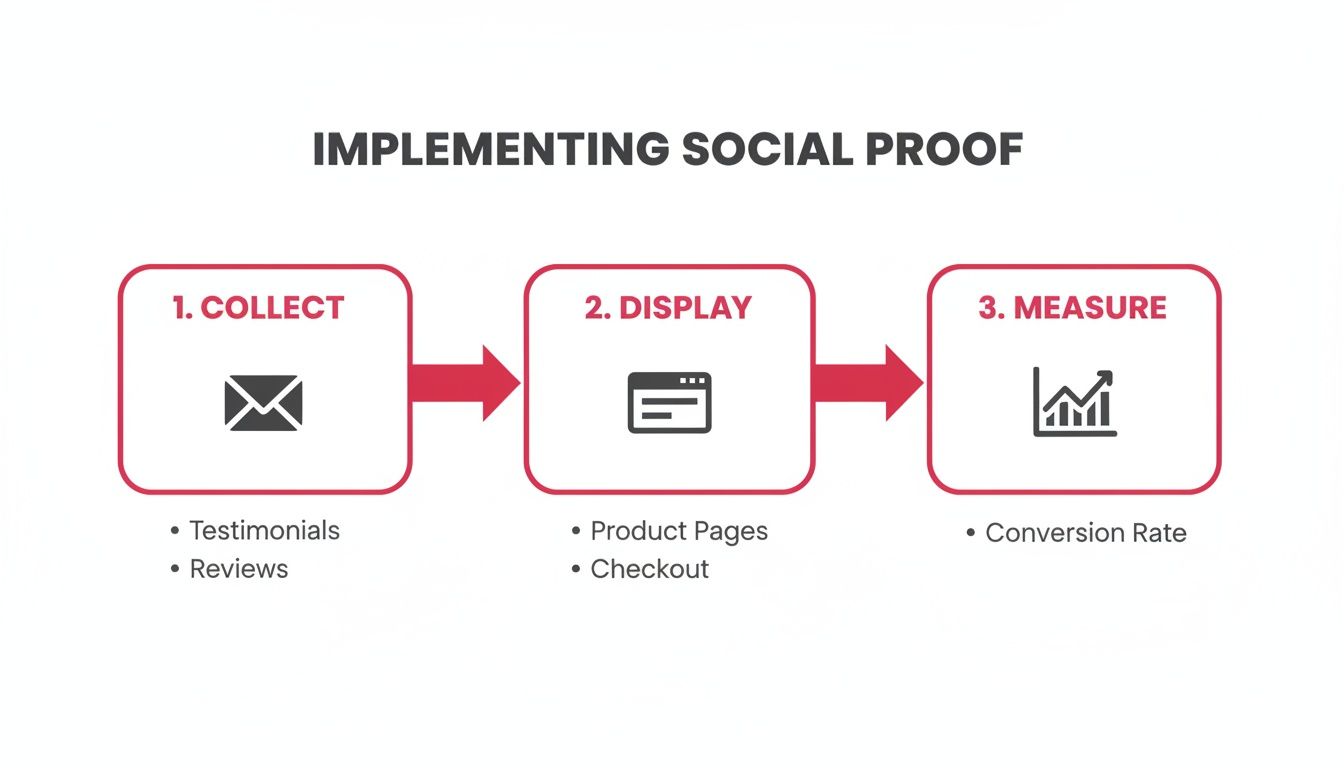
Creator platforms essentially automate the "Collect" phase, ensuring you always have a fresh pipeline of content ready to "Display" and "Measure."
This shift lets you focus on high-level strategy instead of tedious, one-off outreach. You just set your campaign goals and creative brief, and the platform’s AI matches you with creators who are a perfect fit for your brand's voice and target demographic. This is how you build a truly scalable system for generating powerful User-Generated Content (UGC) and endorsements.
By partnering with creators, you're not just getting content; you're accessing new, highly engaged audiences. A single creator can introduce your brand to thousands of potential customers who trust their recommendations implicitly.
The Tangible Benefits of Scaling with Creators
Moving to a creator-centric approach offers some serious advantages over the old methods. We're talking about real, measurable business results that go way beyond just getting a few nice pictures.
The key advantages are pretty clear:
- Cost-Effectiveness: Sourcing content from a network of creators is almost always cheaper than producing it in-house or hiring a traditional agency. You get a diverse library of high-quality assets without the massive overhead.
- Speed and Agility: Need fresh content for a product launch next week? A creator platform can deliver it in a matter of days, not months. This speed means you can jump on market trends while they're still hot.
- Authenticity at Scale: Creators produce content that feels genuine and native to each social platform. This builds a level of trust that polished, corporate-style advertising simply can't buy. Our guide on https://joinbrands.com/blog/social-influence-marketing/ dives deeper into this dynamic.
- Niche Market Access: Creators often have deep, meaningful connections with very specific communities. This is your ticket to reaching highly targeted niche markets with a message that actually resonates.
To really dig into scaling social proof on major platforms, learning how to find influencers on Amazon is a great next step. This kind of hands-on approach is essential for dominating competitive e-commerce spaces where trust signals are everything. Ultimately, scaling social proof with creator marketing isn't just a tactic; it's the next logical step for any brand serious about growth.
Where Social Proof Goes Wrong (And How to Keep It Ethical)
Social proof is an incredible tool for building trust, but when it’s misused, it can blow up in your face and do serious damage to your brand’s reputation. With great power comes great responsibility, as they say. Understanding the common mistakes and ethical lines is the key to building a strategy that customers actually respect.
The absolute worst thing you can do is use fake reviews or testimonials. It might feel like a shortcut to credibility, but today’s shoppers can sniff out fakes from a mile away. It only takes one phony review to completely shatter a customer's trust, and it can get you slapped with serious penalties from platforms like Amazon or Google. Authenticity isn’t just a buzzword; it has to be non-negotiable.
Another surprisingly common mistake is accidentally creating negative social proof. This happens when you unintentionally highlight a lack of engagement. Think about a website widget that says, "0 people are currently viewing this item." Ouch. That does more harm than good, drawing attention to unpopularity and basically telling potential customers to go look somewhere else.
Staying Transparent and Respectful
Truly ethical social proof is built on a foundation of total honesty. When you bring creators or influencers into the mix, clear disclosure isn't just a nice-to-have—it's often a legal requirement.
Paid partnerships need to be clearly marked with hashtags like #ad or #sponsored. This doesn't weaken the endorsement; it actually makes it stronger by showing you respect the audience. People appreciate being treated with honesty, and trying to hide a paid relationship is a fast pass to losing the trust of both the creator's followers and your own customers.
The goal of social proof is to build genuine confidence, not to trick people. Ethical practices make sure the trust you earn is real and lasts, turning shoppers into loyal fans who feel respected, not manipulated.
Finally, you have to respect your customers' content. User-Generated Content (UGC) is a gift, not a guarantee. Before you even think about sharing a customer’s photo, video, or review on your own channels, you must get their explicit permission.
Here’s a simple ethical checklist to keep in your back pocket:
- Always Ask for Permission: Never assume you can use a customer's content just because they tagged your brand. Slide into their DMs and ask clearly.
- Give Proper Credit: When you re-share, always tag the original creator in the image and the caption. It shows you value their work and gives them the exposure they deserve.
- Never Alter Content: Don’t edit or tweak a customer's photo or review in a way that twists its original meaning. Keep it real.
By steering clear of these pitfalls and committing to ethical practices, you’ll build a social proof strategy that makes your brand not only look popular but feel deeply trustworthy.
Your Top Social Proof Questions, Answered
Alright, you've got the concepts down, but putting a new marketing play into action always brings up a few "what if" scenarios. Let's tackle some of the most common questions that pop up.
Think of this as a quick-reference guide to clear up any lingering doubts so you can move forward with confidence.
How Much Social Proof Is Too Much on One Page?
This is a great question. The goal is to build confidence, not create a wall of noise that overwhelms your visitors. Instead of cramming every review and testimonial onto one page, think about strategic placement.
The key is to sprinkle different types of social proof at critical decision points along the customer's journey. For instance, you might place star ratings right under the product title, a powerful testimonial just below the description, and a gallery of user-generated photos further down the page.
Remember, strategic placement will always beat sheer volume. The best way to find that sweet spot is to A/B test different combinations to see what resonates with your audience and boosts conversions without causing decision fatigue.
What Is the Best Way to Handle Negative Reviews?
Honestly? You should see negative reviews as a massive opportunity, not a crisis. A prompt, professional, and public response can completely reframe the situation.
The first step is to always respond publicly. Acknowledge their issue, offer a genuine apology for their experience, and give them a clear path to make things right. This one act shows every potential customer browsing your site that you stand behind your product and truly care about satisfaction. A page with nothing but glowing five-star reviews can actually feel a bit suspicious; a few resolved negative reviews build real-world authenticity and trust.
Can New Businesses Use Social Proof Without Customers?
Absolutely. You just have to get a little creative. New businesses can lean on other powerful forms of social proof that don't depend on a huge customer base. Start with "expert" proof—showcase the founder's background, highlight industry certifications, or get an endorsement from a respected figure in your niche.
You can also use the "wisdom of the crowd" on a smaller scale. A simple line like, "Join 50+ early adopters who have already signed up!" can be surprisingly effective. Another fantastic strategy is to offer your product to a small group of beta testers or micro-influencers in exchange for their honest feedback. This is a brilliant way to build your initial library of social proof from the ground up.
Ready to stop hoping for social proof and start generating it on demand? JoinBrands connects you with over 250,000 creators to produce authentic UGC and influencer content that drives sales. https://joinbrands.com