



 What Does KOL Stand For And How Do They Drive Growth
Not all creator ads convert. Building creator ads that convert consistently comes down to four things: hook quality, message clarity, visual authenticity, and how the content is deployed. This guide covers what top-performing DTC brands consistently get right, so you can apply those principles to your next campaign instead of learning them the expensive way.
For a full campaign setup guide, see our post on how to run a creator marketing campaign from brief to deployment.
Table of Contents
Why Creator Ads Outperform Branded Creative
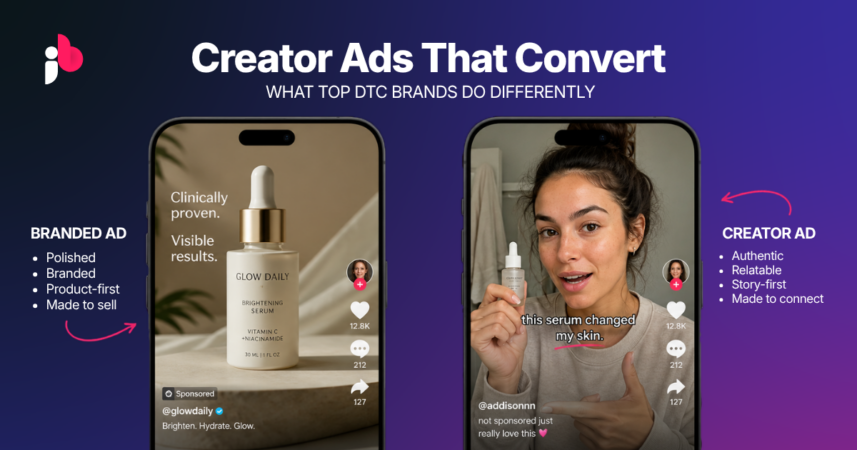
Creator ads outperform branded creative in paid channels for a structural reason: they look like content, not ads. On TikTok and Meta, scroll behaviour is fast and automatic users train themselves to skip anything that reads as an advertisement in the first half-second. Creator content that looks native to the feed does not trigger that skip response. The result is a longer average watch time, a higher CTR, and a lower cost per click versus branded creative in most DTC categories.
Meta’s own data consistently shows that creator content outperforms standard branded ads on CTR — particularly in the beauty, fitness, food, and home categories. TikTok Spark Ads amplify organic creator posts, meaning the content retains its native appearance even when running as a paid placement.
The Hook: Everything Happens in 3 Seconds
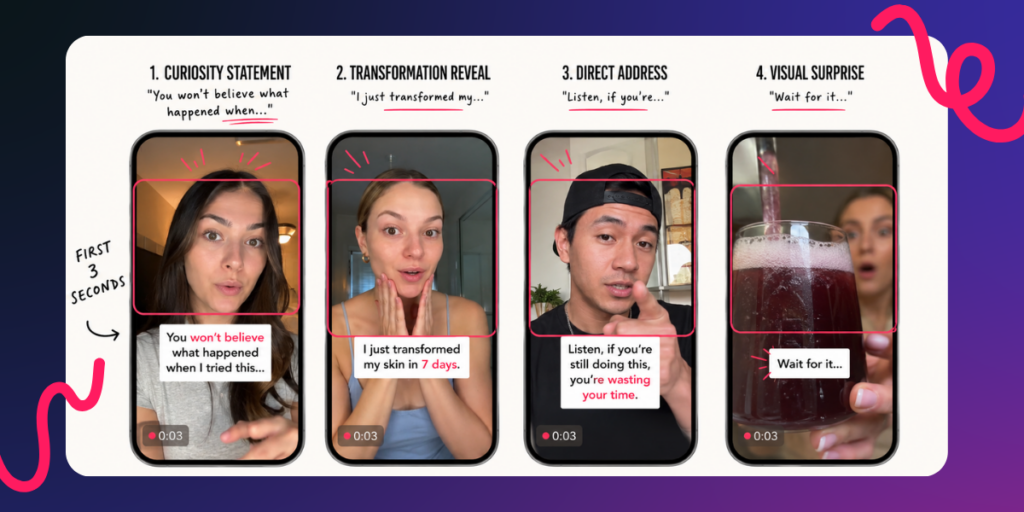
The first three seconds of a creator ad determine everything. If the hook does not stop the scroll, nothing that follows matters. Top-performing creator hooks share common structures: a bold statement that creates curiosity (“I stopped using moisturiser for 30 days”), a transformation reveal (“This is what happened to my skin after 2 weeks”), a direct address (“If you are dealing with [problem], watch this”), or a visual surprise (something unexpected in the frame). Brief your creators to deliver the hook before they say anything else the product reveal and message come after the scroll is stopped.
Authenticity vs Production Value
The most common brief mistake brands make is over-producing creator content. Instructing creators to film in specific locations, use branded backdrops, or deliver scripted lines verbatim removes the authenticity that makes creator content perform. The content starts to look like an ad — which is exactly what you are trying to avoid. Authenticity guidelines should be minimal: good lighting, product clearly visible, and key message delivered in the creator’s own words. Everything else should be the creator’s choice.
Message Clarity: The One-Thing Rule
The most effective creator ads communicate one thing, not three. Brands that pack multiple product benefits, a brand story, and a CTA into a 30-second video end up with content that communicates nothing clearly enough to drive action. Pick the single most compelling reason someone should buy your product, the biggest pain point solved, the most impressive result, or the most surprising fact and build the entire brief around communicating that one thing. Separate briefs for separate messages produce better results than one brief trying to do everything.
Best-Performing Creator Ad Formats by Platform
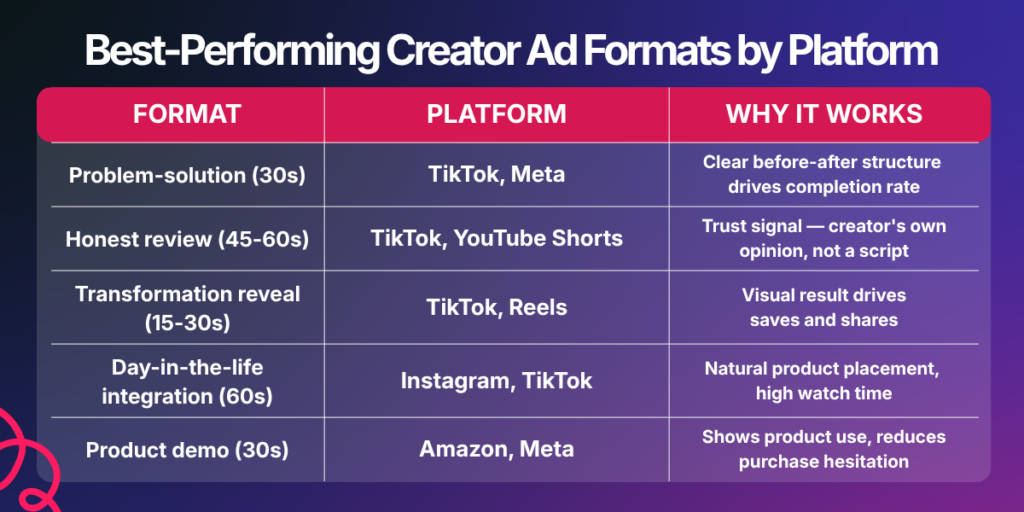
How Top Brands Deploy Creator Ads
Top DTC brands run creator ads in two modes: as Spark Ads (TikTok) or dark posts (Meta), and as standard paid creative split-testing multiple creator variations. In both cases, they test a minimum of three creative variations per campaign, different creators, different hooks, or different messages and scale budget toward the top performer within the first week. They also repurpose top-performing creator content across multiple placements rather than treating each piece as a single-use asset. One strong creator video can run on TikTok, Meta feeds, Meta Stories, and an Amazon listing simultaneously.
JoinBrands connects brands with creators who produce content built for paid performance. Launch your creator ad campaign at joinbrands.com/brands
Frequently Asked Questions
How many creator ad variations should I test per campaign?
A minimum of three variations per ad set, ideally five to eight across a product launch. Test one variable at a time: different creators with the same message, or the same creator with different hooks. Running too many variables simultaneously makes it impossible to identify what is driving performance differences. Once you identify a top performer, scale it and then test the next variable.
What CTR should I expect from creator ads vs branded creative?
On TikTok, strong creator content in DTC categories typically delivers 1.5 to 3% CTR versus 0.5 to 1% for branded creative. On Meta, creator dark posts deliver 1.5 to 4% CTR versus 0.8 to 1.2% for standard branded ads. These are directional benchmarks actual performance varies significantly by product category, audience targeting, and creative execution.
Should I tell creators the content will run as an ad?
Yes, always. This affects usage rights creators need to consent to their content running as paid advertising. It also affects how they should approach the brief: content intended for paid ads needs stronger hooks and clearer CTAs than organic content. Hiding the ad intent from creators is a rights violation and often results in content that does not meet paid performance requirements.
Ready to run creator ads that convert? JoinBrands connects you with performance-focused creators. joinbrands.com/brands