

 Content Quality Assurance: Drive Sales & Delight Customers
You've got a TikTok clip that's doing the job, but the watermark keeps ruining the repurpose. Maybe you need a clean version for Instagram Reels, a scheduler, a client review, or just a folder that doesn't scream “borrowed from TikTok” every time you open it. The fastest answer isn't always the safest answer, though, and the right method depends on who owns the video and where it's going next.
There are three workable paths. TikTok's own export tools are best when the video is yours. Third-party downloaders are the common workaround when you're dealing with already-posted public clips. Rights-respecting creator workflows are the brand-safe route when the content needs to live in ads, paid placements, or on a company channel.
Table of Contents
You Want a Clean Clip and You Want It Now
A marketer usually does not search for tutorials in the abstract. The task is immediate, because a post is performing, a trend is hot, or a client wants a clean version of a video that already exists. That urgency is why search results often surface sketchy downloader sites before they explain the basic options.
The cleanest way to think about saving TikTok videos without a watermark is to split the problem into three lanes. First, if the content is yours, TikTok has a native no-watermark export path. Second, if the content is already posted and public, browser-based downloaders are the common workaround. Third, if the clip needs to be used by a brand, the better move is often to request the original file or run the asset through an authorized creator workflow.
Practical rule: if you own the upload, start inside TikTok. If you do not own it, stop and ask whether you should be downloading it at all.
That last point matters because the watermark is not just a visual annoyance. It also shows where the file came from and reminds you that ownership and usage rights still matter, especially when the clip leaves personal reference territory and moves into brand work. TikTok's own tutorials published in 2024 and 2025 show that watermark-free saving is supported natively for original uploads, which is the path that avoids third-party extraction entirely.
Using TikTok's Built-In No Watermark Save

A creator who wants a clean copy of their own TikTok video should start inside the app, not with a downloader site. TikTok keeps the no-watermark path in the posting flow, so it is easy to miss if you go straight to sharing or search for a workaround first. Open the posting screen, go into More options, switch on Save to device, and enable Save posts without watermark before you publish. That way, TikTok writes the clean file locally instead of adding a second export step later.
The setting path that matters
The clean save only works while the clip is still under your control. Once the video has been copied, reposted, or handed off, the built-in export path is no longer the cleanest route. For original uploads, TikTok supports a no-watermark save directly in the app, so you can export a usable MP4 without sending the file through another tool first. A practical workflow is simple: finish the edit, open the posting screen, turn on the save toggles, then publish only after the local file is ready for reuse in a scheduler or cross-posting tool.
The local save setting can trip people up. Save to device may need to be on alongside the no-watermark option, so one switch alone is not always enough. If the file does not appear in your camera roll or device storage, check both settings before you assume the export failed.
Keep the workflow inside the app when the content is yours. It avoids extra conversion steps and reduces the chance of quality loss from repeated downloading and re-saving.
A draft export route also exists. Some guides show creators opening Drafts, selecting the clip, and using the download or save icon on the editing screen to export a local copy before the post goes live. That works well when you want a polished MP4 for later use and prefer to avoid extraction after publication (draft export guide).
The Copy Link and Downloader Workflow

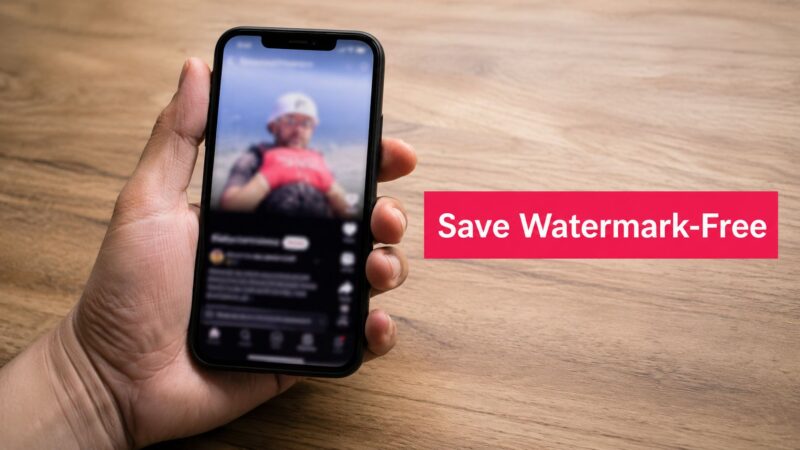
When the video is already posted and you don't have the original file, the standard workaround is simple. Open the clip, tap Share or the three-dot menu, choose Copy Link, then paste that URL into a no-watermark downloader. After the site processes the link, pick the clean HD, MP4, or No Watermark output and save it locally.
Why the method is so consistent
The reason this pattern keeps showing up is that most downloader tools work off the video URL, not the app itself. PCMag describes the process as using the individual TikTok video URL from the share menu, and major downloader guides now repeat the same Copy link then Paste link flow across markets (PCMag on TikTok video URLs). Browser-based tools like SnapTik, SaveTik, and MusicallyDown often present two or three output choices, which is why the last step matters more than people think.
The practical example is straightforward. Copy the link from a creator's public video, paste it into the downloader's homepage field, wait for the server to fetch the source, then choose the watermark-free MP4 and save it to your Downloads folder or gallery. One guide notes that this can be a quick browser-only process with no software installation required, which makes it convenient for a one-off save on desktop or mobile browser (browser-based downloader workflow).
Pro tip: don't click the first download button you see. Some tools return both a watermarked file and a clean file, and the wrong choice looks “successful” until you open it and see the logo still sitting there.
Another guide notes that some downloader sites process the link quickly, then present the no-watermark version for local saving. The catch is reliability, which varies by site availability, TikTok link handling, and device or browser constraints. If one downloader fails, a different tool often works, which is why the best practice is to keep a backup option rather than treating any single site as permanent (multi-tool workflow notes).
Comparing Screen Recording Drafts and Downloader Tools
Screen recording is the fallback nobody loves, but it still has a place. It's useful when you only need a rough reference clip, or when a downloader breaks and you need something immediately. It's also the least elegant option because you're capturing the screen UI along with the video, and that can leave you with lower practical quality and audio headaches.
Method Comparison for Saving TikTok Videos Without a Watermark
| Method | Output Quality | Speed | Best For |
|---|---|---|---|
| TikTok native export | Clean local MP4, best fit for original uploads | Fast | Your own content, drafts, repost prep |
| Third-party downloader | Usually clean MP4 when the site works | Fast to moderate | Public videos, quick saves, internal reference |
| Screen recording | Lowest of the three in practical use | Fast to start, slower to clean up | Backup capture, rough review, emergency grabs |
The strongest advantage of TikTok's native export is that it keeps the process inside the app. There's no extra conversion layer, so the file you save is the file you can reuse. That's why it's the first choice for your own uploads, especially when the clip is destined for later cross-posting or a scheduler.
Downloader tools sit in the middle. They're often the fastest option for public clips, but they depend on the service staying available and interpreting the TikTok URL correctly. A guide describing the common workflow says the server fetches the source MP4 and then hands back the clean output, which is why the result can be useful when it works, but inconsistent when the site is overloaded or the link handling changes (server-side conversion pattern).
Screen recording is the most fragile option for clean repurposing, because you're not extracting the underlying file. You're capturing what your device shows. That's fine for note-taking or internal review, but it's not the route I'd pick if the clip needs to look polished in a brand feed.
Who Actually Owns the No Watermark Version
The biggest mistake people make is assuming that “no watermark” means “free to use.” It doesn't. A clean file can still belong to the creator, and the right to save a video is separate from the right to reuse it in a brand context. If the file is going into an ad, a landing page, or a client channel, the watermark question becomes a rights question.
Personal save versus commercial use
For personal viewing, the bar is low. You might save a clip for reference, inspiration, or to show a teammate what a trend looks like. In that case, the practical issue is mostly whether you can get a clean local copy without damaging the file.
For commercial use, the stakes are much higher. A watermark-free version of someone else's TikTok is not a license, and stripping the logo doesn't change who created the work or who can approve its reuse. That's the line brands need to treat seriously, because reposting someone else's content without permission can create takedown risk and legal friction.
If the clip is going anywhere near paid media, treat the watermark question like a licensing question, not a formatting choice.
The SERP is crowded with generic download steps, but far fewer guides clearly separate legitimate watermark-free paths for a creator's own content from third-party extraction of somebody else's post (ownership and usage rights context). That gap is why marketers get into trouble. They solve the technical problem and ignore the permissions problem.
A good rule of thumb is simple. If you made the video, use TikTok's own export or your draft workflow. If someone else made it, ask whether you have permission to save and reuse it. If the answer isn't obvious, don't assume the downloader solved it for you.

Asking the Creator and Using a Creator Platform
For brand work, the cleanest watermark-free asset is usually the one the creator sends you directly. That means asking for the original file instead of trying to reverse-engineer a public post. It's a better workflow, it's easier to track, and it avoids the awkward moment where a clean download exists but the rights don't.
What to ask for in the brief
Ask for the original MP4 and specify the format you want up front. If the content is meant for vertical distribution, say 9:16. If captions matter, ask whether they should be baked into the file or delivered separately as an SRT. That keeps the handoff from turning into a back-and-forth over file compatibility after the creator has already finished the edit.
A practical example is briefing a creator for one TikTok clip that you also want to reuse in Reels, Shorts, and B-roll. If you ask for a clean original and the right aspect ratio at the start, you avoid needing a watermark remover later. That's the difference between an asset you can deploy and a file that only looks usable until legal or media buying gets involved.
JoinBrands fits here because it's built around authorized creator collaboration and asset handoff, which is the path brands need when content is being used beyond a personal save. Instead of downloading someone else's post and stripping it, you work through a creator workflow where the original content is delivered on purpose and the ownership trail is much clearer.
Pro tip: specify resolution, aspect ratio, and caption handling in the brief. If you leave those out, the creator may deliver a file that's technically clean but wrong for your distribution plan.

Picking the Right Method in Under a Minute
Own the content, use TikTok's native export. Need a public clip for internal reference, use a browser downloader. Planning to use it in ads or on a brand channel, request the original from the creator or route it through a creator platform.
A quick quality check helps before you move on. Confirm that the file is HD, watch for audio sync, and look for re-encode artifacts if the clip passed through a third-party tool. If it looks off, try another authorized path instead of forcing a file that won't hold up in a real campaign.

Build the watermark question into your workflow before you ever hit download. That one habit saves time, protects brand usage, and keeps you from turning a clean asset problem into a rights problem later.
If you need a cleaner way to source creator content without playing guessing games with permissions, JoinBrands gives you a structured path to request originals and manage assets inside a creator workflow. It's the right move when you want a watermark-free file that's usable for brand channels, not just a downloaded clip that looks clean for a minute.