
 Instagram Stories Inspiration: 10 Ideas for 2026
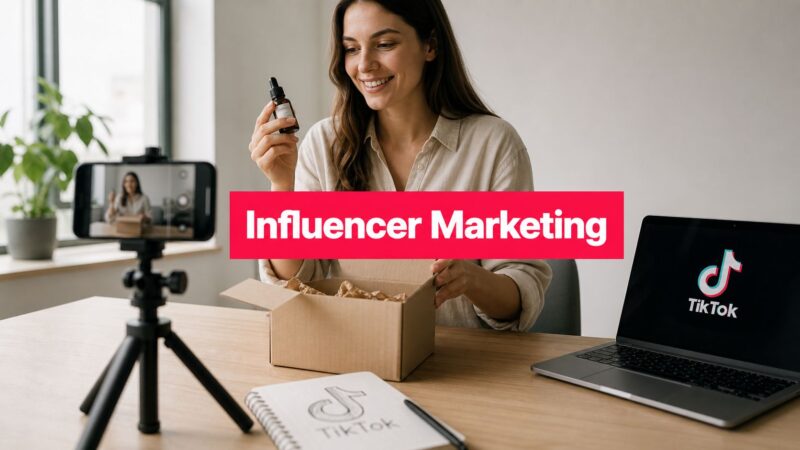
Most advice about influencer marketing on TikTok starts in the wrong place. It tells brands to hunt for bigger creators, negotiate one expensive post, and hope reach turns into revenue.
That approach burns budget because it assumes the creator is the variable that matters most. In practice, the winning variable is usually the creative angle. If the hook, use case, or product story misses, a larger audience just helps you fail faster.
TikTok rewards resonance, not prestige. The brands that scale on the platform usually act more like performance marketers than sponsorship buyers. They test multiple creators, multiple hooks, and multiple audience fits before they scale spend. That shift is why creator strategy on TikTok now looks less like celebrity endorsement and more like rapid creative validation.
Table of Contents
The New TikTok Playbook for Growth
The old playbook said to start with a mid-tier or big-name creator because they bring instant reach. That logic sounds safe. It usually isn't. One creator gives you one interpretation of your product, one set of audience signals, and one expensive lesson if the content falls flat.
A more useful model is the Inverted Influencer Strategy. Instead of starting large, you start with a broad set of smaller creators, learn which messages convert, and only then put paid media behind the winners.

Why the inverted model works
The clearest description of this approach comes from Sagum's breakdown of the Inverted Influencer Strategy on TikTok, which outlines a two-phase system: 15–25 micro-creators with 5K–15K followers in Month 1, all working from the same talking points but with creative freedom, followed by scaling only the top 3–5 validated creative approaches with mid-tier creators at 50K–200K followers in Month 2, while also using Spark Ads to amplify winners.
That structure matters because it separates two jobs that brands often mash together:
| Phase | What you're actually testing | What success looks like |
|---|---|---|
| Initial creator wave | Hooks, objections, product framing, audience fit | Clear patterns in watch time, comments, saves, shares, and sales intent |
| Scale phase | Distribution efficiency | Higher volume from proven content, not guesses |
Many organizations don't need more creator content. They need better evidence about which content deserves more spend.
What this changes in real campaigns
The practical advantage is risk control. A portfolio of smaller creator tests gives you multiple shots on goal without forcing the whole budget through a single personality. You learn whether "problem-solution," "routine demo," "before-after," "voiceover review," or "found this on TikTok Shop" is the angle people respond to.
Practical rule: Don't use your first creator brief to chase scale. Use it to surface creative truth.
This is also where channel strategy gets sharper. If you're selling online and need a broader commerce view alongside creator campaigns, Effective TikTok strategies for shops is a useful companion read because it helps frame TikTok as part of the store growth engine, not a standalone awareness channel.
For teams that want a workflow layer for sourcing, briefing, approvals, product shipment, and creator activation, JoinBrands is one way to operationalize that process without managing the whole campaign in spreadsheets and DMs.
A simple operating rhythm
A disciplined inverted campaign usually follows this rhythm:
Set one conversion goal
Pick the outcome first. Product trials, first purchases, add-to-cart volume, TikTok Shop sales, or content for Spark Ads.Write one message spine
Every creator gets the same core talking points, objection handling, and CTA. The delivery stays flexible.Vary only the creative wrapper
Let creators choose their filming style, pacing, hook line, and setting. That's where the winning patterns emerge.Promote the proven angles
Once a few concepts repeatedly outperform, move budget into amplification instead of commissioning random second-round content.
Brands that treat influencer marketing on TikTok like a testing system usually spend smarter. Brands that treat it like a one-off endorsement usually just buy reach.
Finding Creators Who Actually Convert
Follower count is the easiest filter and the worst first filter. It tells you who has accumulated audience. It doesn't tell you who moves buyers.
The better lens is engagement density. That means looking at saves + shares + meaningful comments, divided by post count over 30 days. According to IQFluence's influencer marketing best practices, brands should look for 4%+ engagement density instead of relying on raw likes alone.

Why engagement density beats vanity metrics
Likes are cheap. Saves, shares, and meaningful comments usually signal stronger intent. On TikTok, that often means the content taught something, solved a problem, or felt worth revisiting.
A creator with moderate views but strong save and share behavior can outperform a bigger account that attracts passive scrolling. That's especially true in DTC categories where purchase decisions come from utility and trust, not celebrity.
Use this vetting logic:
Look for saves and shares first
A product demo that gets bookmarked or forwarded usually has more downstream value than a post with lightweight likes.Read the comments for buying language
Comments like product questions, shade matching, sizing questions, shipping questions, and usage questions often matter more than generic praise.Check consistency
One breakout video can hide a weak account. You want repeatable signs across a body of work.
A creator vetting workflow that holds up
Start with a shortlist, then review each creator manually. Platforms can speed up sourcing, but they don't replace judgment. A creator marketplace profile like Abby Does UGC on JoinBrands can help you review style fit, content samples, and platform presence faster, but the essential work is still in pattern recognition.
Here are the red flags I screen for before outreach:
Suspicious follower growth
Sudden spikes without a clear content reason can signal low-quality audience inflation.Weak audience response relative to size
A creator with a large following and very thin comment depth often won't convert.Comment sections filled with noise
Repetitive emoji comments and vague praise can hide low purchase intent.Poor following behavior
If the account looks built around follow-for-follow tactics rather than audience pull, skip it.Mismatch between niche and product
A creator can be talented and still be wrong for the offer.
The right creator isn't the one with the biggest audience. It's the one whose audience behaves like buyers.
What to evaluate in the first 10 minutes
When I review a creator, I don't start by asking, "How big are they?" I ask:
| Question | Why it matters |
|---|---|
| Do they explain products clearly? | Clarity lifts conversion more than aesthetics |
| Do they make products feel native to TikTok? | Forced ad reads die fast |
| Does the audience ask follow-up questions? | Questions indicate active interest |
| Can they handle objections naturally? | Good creators sell without sounding salesy |
A quick creator education clip can also help teams align internally before they approve a roster:
The main trap here is outsourcing taste to dashboards. Metrics narrow the field. They don't choose the winner. In influencer marketing on TikTok, conversion usually comes from creators who make the product feel useful, familiar, and low-friction to buy.
Crafting Your Campaign and Creative Brief
Once the roster is set, the brief becomes the lever that either produces great content or kills it. Most weak campaigns fail here.
Brands usually make one of two mistakes. They either hand creators a rigid script that sounds like paid social from five years ago, or they provide almost no direction and end up with content that looks nice but doesn't sell.

What the brief must control
Your brief needs firm guardrails in a few areas:
Core product claim
Give creators the exact message they can't distort.Use case
Show when, where, and why the product belongs in the customer's life.Call to action
Be explicit about the next step. Visit site, shop TikTok Shop, use affiliate link, or save for later.Non-negotiables
Include legal disclosure requirements, prohibited claims, competitor exclusions, and visual do-not-use notes.
Everything else should stay flexible. Hook line, shooting style, room setup, pacing, and creator phrasing should remain theirs.
What the brief should leave open
TikTok content works when it feels like creator content first and ad content second. That means brands have to stop over-polishing the concept.
For Gen Z campaigns, this matters even more. Amra & Elma's TikTok influencer statistics report that nano-influencers with 1,000–10,000 followers average 21.3% engagement, and beauty and wellness niches reach 26.8%, while mega-influencers average 0.8–2% engagement. Smaller creators usually outperform because they speak in a more native, less rehearsed way.
A strong first-round brief often includes:
The problem to dramatize
Example: messy routine, poor fit, slow prep, irritation, clutter, inconsistency.The product proof
Texture demo, side-by-side test, routine integration, unboxing, or first-use reaction.The objection to answer
Price, ease of use, speed, skin type, sizing, or whether it's worth switching.The CTA
Soft CTA for top-of-funnel, stronger shopping CTA for lower-funnel content.
A practical brief template
This is the structure I like for test campaigns:
| Brief element | Keep it tight |
|---|---|
| Brand intro | One short paragraph |
| Product summary | What it is and who it's for |
| Talking points | Three to five max |
| Creative direction | A few angle options, not a script |
| Deliverables | Post format, deadline, raw files if needed |
| Usage rights | Organic only, paid usage, or both |
Field note: If you need three pages to explain the product, the creator won't make a clear TikTok.
Sound matters too. If the video concept depends on a music-led trend or artist-style pacing, tools like the Vocuno platform for TikTok artists can help teams think more deliberately about how audio and creative direction fit the concept without forcing a generic template.
If you want a benchmark for what creator-led product storytelling looks like in practice, a profile like Alex Creates Content on JoinBrands is useful as a style reference for how different creators frame products in native short-form formats.
The final test is simple. If your brief reads like legal copy, your content will feel like an ad. If your brief gives a creator a clear problem, clear proof, and room to sound like themselves, you usually get stronger material.
Activating Content with Spark Ads and Shop Affiliates
The best TikTok creator post shouldn't stay trapped in organic. Once a video proves it can hold attention and trigger buying behavior, the next move is amplification.
Many brands falter. They identify a winner, but they keep treating it like influencer content instead of paid creative. That leaves scale on the table.

Why Spark Ads work so well
Spark Ads let you run paid media through existing creator posts. That matters because users respond better to content that already looks and behaves like TikTok, not like polished brand creative trying to imitate it.
According to Teleprompter's TikTok marketing statistics, ads featuring TikTok creators yield 26% higher brand favorability, raise brand recall by about 27%, and can boost view-through rates by up to 193%. This highlights the case for Spark Ads. You're not just boosting reach. You're preserving the trust signal of creator-native content.
How to activate winning posts
The process is operational, not complicated:
Pick winners based on business intent
Strong retention is useful, but comments, clicks, product questions, and purchases matter more.Get creator authorization
Make Spark Ads usage part of the agreement upfront so you don't scramble later.Launch with minimal edits
If the organic post worked, don't over-correct it into ad-speak.Build ad sets around audience hypotheses
Test broad, interest-based, and retargeting structures separately.
A creator example like Allar Collabs on JoinBrands gives a practical sense of the kind of creator content brands often convert into paid assets once it proves itself organically.
Where Shop Affiliates fit
Spark Ads solve distribution. TikTok Shop Affiliates solve purchase friction. Together, they create a cleaner path from discovery to transaction inside the platform.
Here's the operating difference:
| Tool | Main job | Best use |
|---|---|---|
| Spark Ads | Scale proven creator content | Turn validated posts into paid acquisition assets |
| Shop Affiliates | Tie creator content directly to product purchase | Reduce steps between interest and checkout |
This pairing works because each tool covers a different gap. Spark Ads help a proven post reach more of the right people. Shop Affiliates tighten the handoff between attention and sale.
Good TikTok scaling doesn't start with ad budget. It starts with a post that already earned the right to be amplified.
One practical way to run this is to let your first creator wave generate a stack of affiliate-eligible content, review which posts produce the clearest buying signals, then whitelist the best few for Spark Ads while keeping the rest in the organic and affiliate mix. That gives you a paid lane, a creator lane, and a commerce lane without asking one post to do every job.
Measuring What Matters and Proving ROI
Views don't equal growth. Likes don't equal profit. If a TikTok creator program can't connect spend to revenue, it won't survive budget scrutiny for long.
The discipline here is simple. Track creator content the way you would track paid acquisition. Every campaign needs attribution logic before launch, not after results start coming in.

The numbers that matter
For Gen Z audiences, Gitnux's influencer marketing effectiveness statistics report that TikTok influencer marketing averages 8.6x ROI, with optimized campaigns delivering $18–$20 for every $1 spent, compared with a baseline average of $5.78 ROI across platforms.
Those figures are useful as directional benchmarks, but they only help if your own dashboard separates performance by creator, offer, content angle, and amplification method.
The dashboard I want to see includes:
Spend by creator
Fee, product cost, shipping, usage rights, and ad spend.Revenue by asset
Organic sales, affiliate sales, and paid sales from Spark Ads.Efficiency metrics
CAC, ROAS, conversion rate, and cost per purchase.Content metrics with context
Save rate, share rate, comment quality, hold rate, and click behavior.
Attribution without guesswork
The biggest reporting mistake is lumping everything together. If ten creators post and three assets get paid amplification, those results need separate lines.
Use a framework like this:
| Layer | What to measure |
|---|---|
| Organic creator posts | Sales from creator links, affiliate activity, comment intent |
| Spark Ads | Paid conversions, CAC, ROAS, assisted purchases |
| Landing experience | Product page conversion, checkout drop-off, bundle uptake |
If you also sell through marketplaces, attribution gets messier. For brands trying to connect TikTok activity to marketplace performance, this full guide to Amazon Attribution is worth reviewing because it shows how to close one of the most common reporting gaps in social commerce.
How to diagnose weak performance
Not every underperforming campaign has the same problem. That's why raw ROAS alone is a bad diagnostic tool.
Use this logic instead:
High engagement, low sales
The content is entertaining but not persuasive. The hook may be right, but the offer or CTA is weak.Strong clicks, weak conversion
The creator did their job. Your landing page, product page, pricing, or checkout flow likely broke the momentum.Low watch quality across multiple creators
The core angle is weak. Go back to messaging, not media buying.
Revenue check: If the post gets attention but doesn't answer the buying objection, it isn't a winner yet.
The best reporting systems don't just prove ROI. They tell you what to make next. In influencer marketing on TikTok, measurement should feed creative decisions, not just finance slides.
Legal Compliance and Long-Term Optimization
A creator program gets expensive fast when the legal foundation is sloppy. Compliance isn't admin work. It's campaign protection.
Every sponsored TikTok post needs clear disclosure. Brands should require creators to disclose paid relationships in a way that's easy to understand, and that requirement should live in both the brief and the contract. If your team leaves disclosure to chance, you're creating risk for the brand and the creator.
Contract terms that shouldn't stay vague
Keep the contract language plain and specific. At minimum, cover:
Usage rights
Can the brand repost the content, run it as paid media, edit it, or use it on other channels?Approval process
Define whether the creator submits drafts, how many revisions are included, and what happens if the content misses the brief.Payment terms
Spell out fee timing, product seeding terms, affiliate commissions if relevant, and what triggers payment.Exclusivity
If you don't want the creator posting a competing product right away, write that in.
Optimization comes from systems, not luck
The long-term advantage of the inverted model is that it creates a repeatable testing loop. You don't need every creator post to become a breakout hit. You need a system that keeps generating learnings about hooks, objections, creators, offers, and formats.
A healthy TikTok creator program usually does three things well:
- It keeps a rolling bench of test creators by niche.
- It tracks top-performing creative angles, not just top-performing people.
- It refreshes paid creative using validated organic content instead of rebuilding from scratch every month.
Many brands mature at this stage. They stop thinking in campaigns and start thinking in creative pipelines. The creators change. The products change. The testing discipline stays the same.
The brands that win at influencer marketing on TikTok aren't the ones that guess bigger. They're the ones that learn faster, document better, and scale only what earns it.
If you're building a TikTok creator program and want a cleaner way to source creators, manage briefs, ship product, review content, and activate paid usage, JoinBrands is a practical option to evaluate. It fits teams that need more structure than DMs and spreadsheets, especially when influencer testing is becoming a repeatable growth channel instead of a one-off experiment.