



 A Guide to Social Media Video Production
Instagram just made its biggest move into social commerce since 2019. Creators can now tag products directly in Reels and earn affiliate commissions when viewers buy. No link-in-bio workarounds. No clunky third-party tools. Native product tagging is built right into the content format that dominates the platform.
Meta’s Head of Global Business, Nicola Mendelsohn, put it plainly at Shoptalk Spring: “The era of link in bio is finally over.”
But before you rearrange your entire marketing strategy, there is a critical detail most coverage is glossing over: checkout still happens off Instagram. That single architectural choice changes everything about how this feature compares to TikTok Shop, and it should shape exactly how your brand approaches it.
Here is what is actually happening, what it means for brands and creators, and how to position yourself to win as social commerce fragments across platforms.
Table of Contents
What Exactly Did Instagram Launch?
Adam Mosseri, Head of Instagram, announced the feature in late March 2026 with a straightforward message: “You can now use affiliate links to tag products in your reels and earn a commission when people shop your content.”
Here is how the mechanics work in practice. A creator records a Reel featuring a product. Before publishing, they can tag up to 30 individual products by pasting a product URL or searching a brand’s verified catalog inside Meta’s commerce system. When a viewer watches the Reel and taps a tagged product, they get redirected to the brand’s website, app, or Amazon listing to complete the purchase. If they buy, the creator earns a commission.
The feature is live now in five markets: the United States, Brazil, India, Indonesia, and Thailand. Meta has confirmed expansion to all 22 Instagram commerce markets through spring 2026. This is not a limited beta. It is a full production launch.
One detail that matters for brands weighing this against TikTok Shop: Meta is currently taking zero commission on affiliate tag sales. The full commission goes from the brand to the creator with no platform cut.
How Does the Money Actually Flow?
This is where most of the confusion lives, so let’s break it down clearly.
Brands set their commission rates through one of several systems. They can use Meta’s native Commerce Manager to configure rates directly. Or, if they already run affiliate programs through third-party platforms like Impact, Rakuten, or Shopify Collabs, those existing programs plug right in. This means that a brand already running an affiliate program on Impact with 500 creators does not need to rebuild anything. Those creators can start tagging products in Instagram Reels and earning commissions through the same infrastructure.
When a viewer taps a tagged product, the affiliate tracking link follows them through the redirect to the brand’s checkout. When the purchase is confirmed, the commission gets attributed to the creator and paid out through whichever platform the brand uses.
It works. But as Jordan West, founder of Social Commerce Club, pointed out in his breakdown of the launch, the payment flow is “clunky” compared to TikTok Shop, where commissions are tracked natively inside the app with no external attribution layer needed.
Why This Is Not the Same as TikTok Shop
The single most important thing to understand about Instagram’s new feature is that it has a fundamentally different architecture from TikTok Shop. And that difference is not just technical. It directly impacts conversion rates, creator incentives, and brand economics.
TikTok Shop is a closed ecosystem. A viewer watches a video, taps a product, adds it to the cart, and checks out without ever leaving TikTok. The entire journey from discovery to payment happens within a single app. This eliminates the friction that kills conversions in traditional e-commerce funnels. The result: TikTok Shop consistently achieves conversion rates of 5-12% on shoppable content, with high-performing categories pushing them even higher.
Instagram’s model redirects viewers to an external website. Every redirect is a dropout point. The viewer leaves the app they were scrolling. A browser opens. They land on an unfamiliar checkout page. They need to enter payment details (or log into Amazon). Each of these steps adds friction, suppressing conversion. The standard e-commerce conversion rate from social referrals sits at 2-4%.
Here is how the two stack up across the metrics that matter most:
Checkout experience: TikTok Shop keeps it all in-app. Instagram redirects to the brand’s website or Amazon.
Conversion rate: TikTok Shop drives 5-12%. Instagram’s off-platform model will likely land at 2-4%.
Platform commission: TikTok Shop takes a percentage of each sale. Instagram currently takes zero.
Attribution: TikTok Shop tracks everything natively. Instagram relies on third-party affiliate networks or Meta Commerce Manager.
Creator payment: TikTok Shop pays creators directly through the platform. Instagram routes payments through whichever affiliate system the brand uses.
Content integration: Both allow native product tagging in short-form video. Instagram allows up to 30 products per Reel. TikTok Shop allows product links plus a full in-app storefront.
None of this means Instagram’s feature is bad. It means it serves a different purpose.
Why Instagram Keeps Trying (and Why This Time Might Stick)
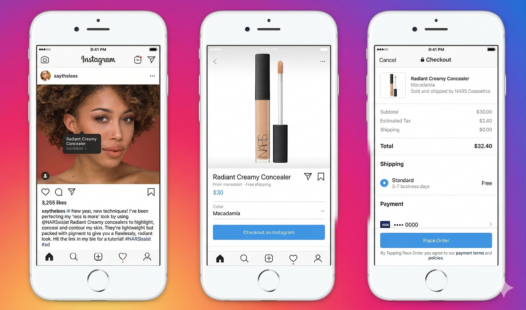
Instagram has a complicated history with shopping features. In 2019, they launched Instagram Checkout, an in-app purchase flow that tried to compete directly with Shopify and Amazon. Brands were skeptical about sharing payment data, adoption was low, and it quietly faded. In 2020, they added a dedicated Shop tab to the main navigation, replacing the popular Activity tab. Users did not want to browse a product catalog when they came to Instagram for content. The Shop tab was removed from primary navigation in February 2023.
So why should anyone believe this attempt will work?
Because Instagram learned from what TikTok got right. The previous attempts tried to turn Instagram into a marketplace. This feature does something fundamentally different: it turns creators into the shopping channel. Instead of asking users to browse a catalog, it lets them shop directly within the content they are already watching. That is exactly the model TikTok Shop proved at scale.
There are also structural advantages working in Instagram’s favor this time. First, Reels now account for over 50% of total time spent on Instagram. That is where the attention lives, and now that is where the commerce lives too. Second, the affiliate model removes the technical burden from Instagram. They do not need to handle payments, logistics, or customer data. Brands keep their existing checkout infrastructure. Third, 61% of Instagram’s user base falls in the 18 to 34 age bracket. That is the exact demographic driving TikTok Shop’s explosive growth.
Instagram also introduced a “Trial Reels” feature that lets creators test content with non-followers before pushing it to their existing audience. For commerce content, this means creators can validate which product Reels actually drive clicks before committing their reputation to a recommendation. That is a smart, creator-friendly touch that TikTok does not currently offer.
Where YouTube Shopping Fits In
Instagram is not the only platform chasing TikTok Shop’s model. YouTube has been quietly building its own affiliate commerce program since 2022, and in March 2026 they lowered the eligibility threshold from 1,000 subscribers to just 500, dramatically expanding who can participate.
YouTube Shopping lets creators tag products in videos, Shorts, and live streams. Commission rates typically range from 2 to 18%, depending on category, with beauty and personal care at the higher end. YouTube says that videos with timestamped product tags plus description links generate 43% more clicks than links alone.
YouTube’s advantage is intent. Viewers go to YouTube to research purchases, watch reviews, and compare products. That makes it a natural fit for considered purchases and higher-AOV products. The audience also skews slightly older than Instagram and TikTok, which matters for brands selling premium products.
The broader picture is clear: every major social platform is moving toward creator-led affiliate commerce. TikTok proved the model. Instagram, YouTube, and likely others are copying it with their own variations. For brands, this is not about picking one platform. It is about building the creator infrastructure that works across all of them.
What This Means for Brands Right Now
If you are a brand trying to figure out what to do with this news, here is how to think about it based on where you are today.
If You Already Have an Affiliate Program
You are in the best position. If your brand runs affiliate tracking through Impact, Rakuten, or Shopify Collabs, your existing creators can start tagging products in Instagram Reels immediately. The infrastructure is already in place. Your action items are simple: make sure your product catalog is verified in Meta’s Commerce Manager, communicate the new feature to your creator network, and set competitive commission rates for Instagram (industry benchmarks sit between 10 and 20% for most DTC categories).
If You Are on TikTok Shop
Do not shift budget away from TikTok Shop. The conversion rates and closed-loop economics are still significantly stronger. Instead, think of Instagram as an expansion channel. Your best-performing TikTok creators likely have Instagram audiences too. Let them repurpose top-performing content as Reels with product tags. You get incremental reach with minimal additional effort.
If You Are Not Doing Social Commerce Yet
Start with TikTok Shop. TikTok’s in-app checkout, algorithm-driven discovery, and mature creator affiliate ecosystem make it the fastest path to validating whether social commerce works for your product. Use TikTok to learn what content converts, which creators drive sales, and what commission structures make sense. Then take those learnings and activate on Instagram and YouTube.
The worst thing you can do is wait for the “perfect” platform. Portland Leather Goods waited 2 years to try TikTok Shop because people told them their average order value of $120 was too high. When they finally launched, they did $1.1 million in GMV in 11 days. Every month of waiting was revenue left on the table.
What This Means for Creators
For creators, Instagram’s new feature opens a significant revenue stream, especially if you already create product-focused content. You no longer need to funnel followers to a link in bio or negotiate custom brand deals for every post. If a brand has an affiliate program, you can tag their products and earn commissions directly from your Reels.
Products shown in action outperform product-feature formats. Tutorials, unboxings, and “day in my life” content where the product appears naturally will convert better than content that feels like an ad.
Authenticity matters more than ever. Research shows 52% of consumers reduce engagement when content feels AI-generated or overly polished. The creator-led shopping model works precisely because audiences trust real recommendations from real people.
Think multi-platform from day one. If you create a Reel featuring a product, that same content can work as a TikTok with a Shop link and a YouTube Short with an affiliate tag. One piece of content, three revenue streams.
The Bigger Picture: Social Commerce Is Fragmenting
Step back from the individual feature announcements, and a clear pattern emerges. In 2023, TikTok Shop launched in the US and proved that creator-driven affiliate commerce could work at a massive scale, hitting $9 billion in US sales in its first 16 months. By 2025, TikTok Shop had reached $66 billion in global GMV with over 15 million active sellers worldwide and 475,000 US shops.
Now every platform wants a piece of that. YouTube expanded Shopping eligibility. Instagram launched native affiliate tagging. The social commerce market is projected to hit $112 billion on TikTok alone by the end of 2026.
The brands that will win in this environment are the ones that invest in building their own creator community. Not a TikTok Shop creator list. Not an Instagram affiliate roster. A real community of creators who know your brand, love your product, and will show up wherever you need them.
The Bottom Line
Instagram’s native affiliate feature for Reels is real, live, and the strongest signal yet that social commerce is becoming a multi-platform reality. It is not a TikTok Shop killer. The off-platform checkout creates conversion friction that TikTok’s closed loop simply does not have. But it gives brands and creators another meaningful channel to monetize content.
The playbook has not changed. Build your creator community. Start with TikTok Shop, where the economics are strongest. Activate on Instagram and YouTube to expand reach. Own the creator relationship so you can move with them to any platform that matters.
As Jordan West put it: “The brands still debating TikTok Shop are going to be three platforms behind.”
He is probably right.
Ready to build your creator network across TikTok, Instagram, and beyond? JoinBrands connects brands with vetted content creators across every platform and category. Start finding creators today.