
 Creator Content Strategy: What to Do After Creators Post
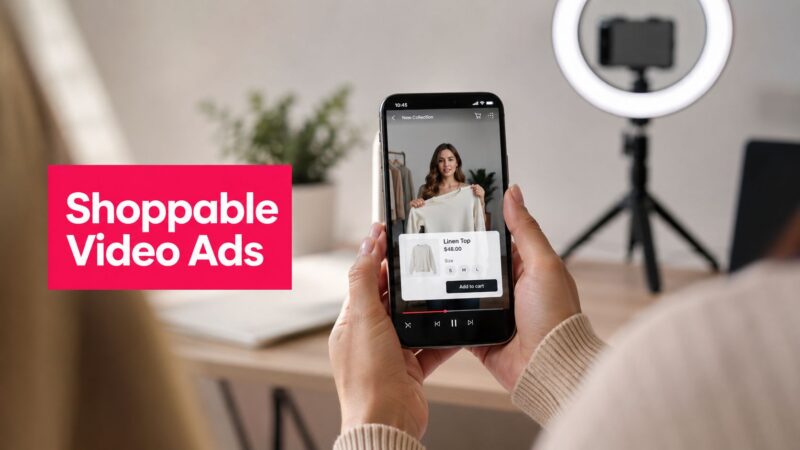
At 11 p.m., Maya, a DTC skincare founder, is half-watching TikTok when a creator demonstrates a serum she's been considering. The creator taps the product sticker, Maya checks the ingredients, completes checkout, and never leaves the For You feed. That's the commercial promise of shoppable video ads: attention, product proof, and purchase can happen inside one viewing experience.
The opportunity is real, but most brands still measure it badly. They count views as awareness, clicks as intent, and last-click orders as the whole story. That approach hides assisted conversions, undervalues creator content, and makes profitable campaigns look weak. The brands that win treat shoppable video as a direct-response system with creator permissions, product-feed accuracy, and an attribution model built before launch.
Table of Contents
Why Shoppable Video Ads Now Feel Inevitable

Maya's behavior once required several separate steps. She might have seen a creator's recommendation, searched for the product, opened a brand site, compared alternatives, and returned later to buy. A native shopping layer removes much of that delay. The creator supplies the demonstration and social proof, while the platform supplies the product card and checkout surface.
That shift has moved shoppable content beyond novelty. A 2024 Statista snapshot reported that one-third of U.S. brands and agencies said shoppable content, especially video, was already part of their ad campaigns, placing the format inside routine marketing planning rather than experimental media budgets. The industry summary reviewed by ATTN Agency also described a separate 2026 projection that shoppable video generated $15.6 billion in sales in 2025 and could reach $45 billion by 2028, alongside 78% platform adoption among major social networks and 64% active usage among e-commerce brands.
Growth rule: If a viewer can understand the product and buy it without changing context, you've removed a conversion tax.
The macro case matters, but it doesn't excuse sloppy execution. Static feed advertising faces pressure from rising competition, while short-form video gives brands more room to demonstrate use, texture, fit, taste, or outcome. The strongest units don't merely add a product tag to a video. They connect a credible demonstration to a product catalog, a clear offer, and a measurable transaction.
That's why platform-native commerce is becoming central to DTC planning. TikTok Shop, Instagram shopping features, YouTube Shopping, and live commerce each shorten the path differently. Your job isn't to publish everywhere. It's to decide which path matches the buying behavior of your category, then measure the path beyond the final click.
What Shoppable Video Ads Actually Are
Shoppable video ads are video creative with persistent, tappable product entry points. Those entry points can include product stickers, pinned items, interactive overlays, QR codes, or an in-app checkout surface. The defining feature is transactional access inside or directly alongside the viewing experience.
Standard social video can generate awareness or send a viewer to a landing page, but the purchase happens somewhere else. A static shoppable ad adds a product tag to an image, yet it lacks motion, demonstration, and the trust that comes from watching someone use the product. Shoppable video combines those elements in one unit.
The three components that must work together
A video asset. The creative needs to show the product in a way that answers a buying question. A skincare creator might apply the serum, explain its texture, and show the packaging. A fashion creator might demonstrate fit and movement.
A product catalog connection. The tagged item must lead to the correct SKU, price, variant, and availability. If the video shows a specific serum size but the product card opens a different bundle, the interaction creates friction instead of removing it.
A checkout surface. The viewer needs a product detail panel, cart, checkout flow, or another purchase path. The closer that surface stays to the video, the fewer opportunities the buyer has to abandon the journey.
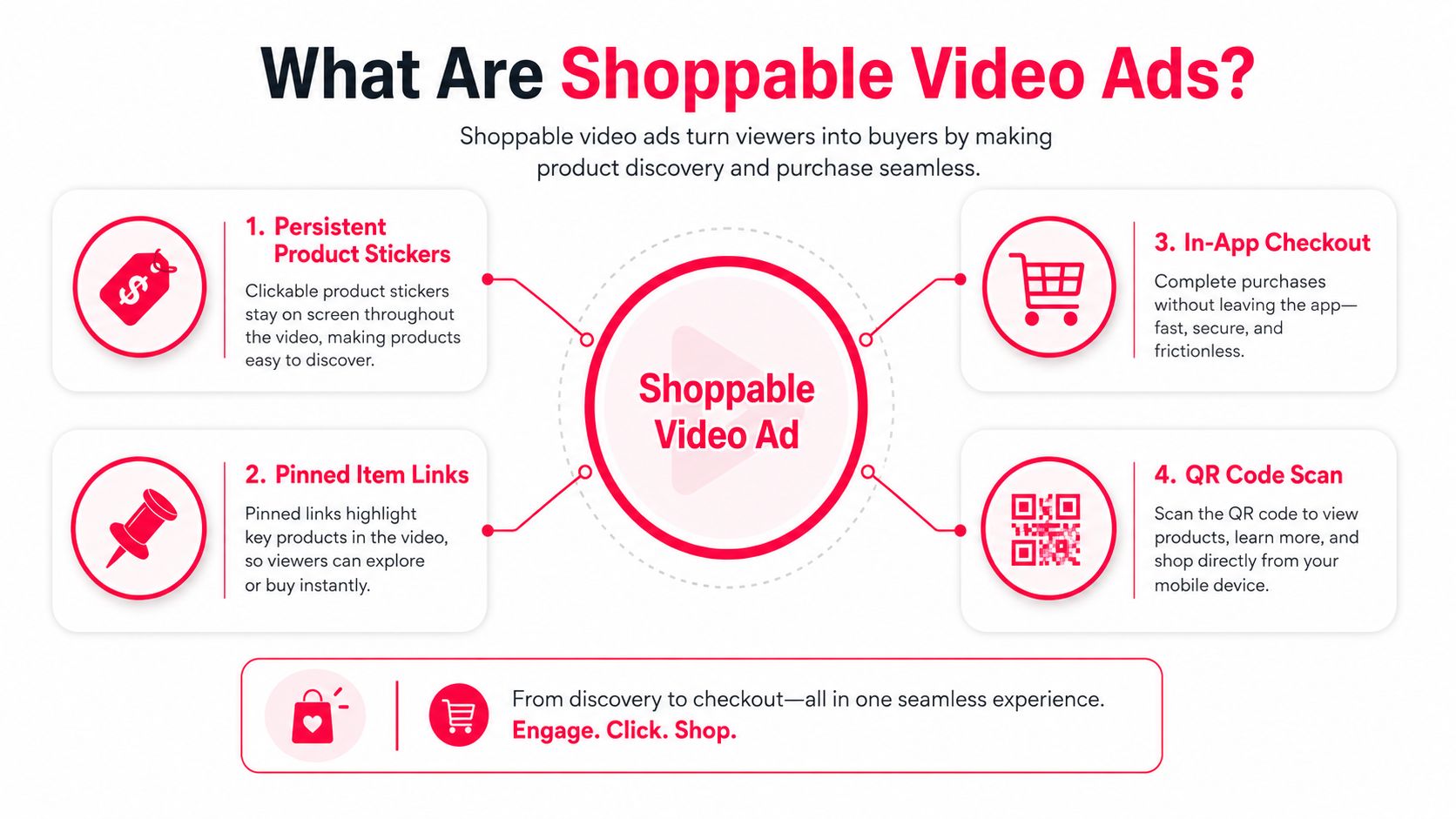
Consider a TikTok Shop scenario. A creator's video plays, the viewer taps the serum sticker, a product panel opens, and the buyer selects the relevant option before completing payment through the platform's shopping flow. The brand then needs to reconcile the order with its commerce system and campaign reporting. The exact interface differs by platform, but the operating logic remains the same.
Each platform owns a different mix of the stack. TikTok Shop can combine creator content, affiliate attribution, and native shopping. Instagram can connect product tags and branded content workflows. YouTube Shopping can associate products with eligible video content. CTV often relies on QR codes or a second-screen action, so the viewer still completes part of the journey elsewhere.
The important distinction is operational. A video isn't shoppable because it mentions a product. It's shoppable when the viewer has a clear, trackable route from product proof to purchase.
The Four Formats Every Brand Should Know
Separate shoppable video formats by buying context. Discovery viewers and on-site shoppers need different creative, attribution logic, and conversion windows. That classification should shape the media plan before a brand chooses platforms or sets targets.
Social in-feed shoppable video
TikTok Shop videos, TikTok Spark Ads with product stickers, Instagram Reels with product tags, and YouTube Shorts with Shopping features serve discovery and paid creator amplification. They suit products that become easier to understand through demonstration, including beauty, apparel, food, accessories, and other categories with quickly visible benefits.
Use short, native-looking clips, then amplify the strongest creator variations. Keep the product card visible, make the offer legible, and report creator-assisted orders separately from direct purchases. A last-click-only dashboard will understate the format when the video creates demand and the buyer returns through search, direct traffic, or another channel.
The measurement gap matters here. Review creative-level revenue, assisted conversions, and the delay between exposure and purchase instead of judging every order by its final click.
Livestream commerce
Amazon Live, TikTok Live Shopping, and Whatnot-style broadcasts create room for questions, objections, bundles, and urgency. They fit high-consideration products, launches, drops, and categories where community participation affects the purchase decision.
Livestream commerce requires a clear operating plan. Assign people to moderate comments, answer product questions, monitor inventory, pin the correct item, and keep the offer understandable. A live event can produce a sales spike, but compare that spike with a control period or holdout before crediting every concurrent order to the broadcast.
Track the event as a distinct commerce unit. Separate orders during the broadcast from delayed purchases, then inspect whether the event created incremental demand or concentrated orders that would have happened anyway.
Shoppable CTV and YouTube on TV
Connected-TV placements usually rely on a QR code or a second-screen action. They introduce products to household audiences while giving interested viewers a route to browse. Their strongest role is a brand-to-funnel handoff, not an assumption that every viewer will purchase immediately.
Google says Demand Gen can support Shoppable CTV, allowing viewers to browse and purchase products while watching YouTube ads on a big screen, as described in Google's Demand Gen product update. Treat a QR scan as an engagement event, not proof of a sale. Match scans, site sessions, branded searches, and later orders against a defined attribution window.
On-site product video
PDP-embedded clips, product explainers, and interactive quizzes target shoppers who already show intent. Build these assets around checkout objections: fit, feel, function, use, and comparison with alternatives. A discovery ad can attract attention, but an on-site video must resolve the question blocking the SKU purchase.
| Format | Best Platforms | Typical Use Case | Ideal Length | Attribution Window |
|---|---|---|---|---|
| Social in-feed shoppable | TikTok Shop, Instagram Reels, YouTube Shorts | Discovery and paid creator amplification | Short, tightly edited clips | Immediate purchase plus assisted conversion review |
| Livestream commerce | TikTok Live Shopping, Amazon Live, Whatnot | Launches, drops, demonstrations, community selling | Extended live session | Live-event period plus delayed conversion review |
| Shoppable CTV | YouTube on TV, CTV environments with QR support | Household reach and brand-to-funnel handoff | Brand-led short-form spot | Longer view-through and search-assisted window |
| On-site product video | Shopify PDPs and product detail pages | Converting warm traffic already evaluating a SKU | Product-specific clips | Session and post-visit purchase window |
Set a different success measure for each format. Social in-feed needs creative-level revenue and assisted-conversion review. Livestream needs event-level incrementality. CTV needs QR and search-assisted measurement. On-site video needs product-page conversion analysis tied to the exposed SKU.
Creator-Led Shoppable Commerce vs Brand-Produced Shoppable Ads
Creator-led and brand-produced shoppable ads solve different problems. Creator content supplies lived experience and native platform behavior. Brand production supplies control, consistency, and a reliable visual system. Treating one as a universal replacement for the other creates unnecessary tradeoffs.
| Dimension | Creator-Led Shoppable | Brand-Produced Shoppable |
|---|---|---|
| Trust signal | Personal demonstration, opinion, and audience familiarity | Controlled claims, polished presentation, and brand authority |
| Creative volume | More variations from multiple creators | Fewer, more deliberate assets |
| Testing speed | Fast iteration across hooks and use cases | Slower revisions but tighter consistency |
| Media use | Native posts, affiliate content, Spark Ads, and collaborations | Paid social, catalog campaigns, retargeting, and CTV |
| Conversion quality | Strong when the creator matches the product and audience | Strong when the buyer needs clarity, proof, or reassurance |
| Best calendar phase | Launch discovery and creative testing | Scale, retargeting, and coordinated brand moments |
Where creators usually win
A creator can show the messy middle that polished advertising removes. They can explain why they reached for a product, demonstrate a result, and address a concern in everyday language. That context often matters more than production quality for a viewer deciding whether the product fits their life.
Affiliate tagging gives the creator's contribution an operational connection to the order. TikTok Shop, Amazon Live, and Instagram collaboration workflows can associate content with a product or creator, but brands still need to verify permissions, commission rules, catalog matching, and reporting access.
TikTok Shop Ads supports two authorization mechanics for affiliate videos. Affiliate Mass Authorization covers all posts from an affiliate creator, while a video code authorizes an individual affiliate post. TikTok says sellers can use the same affiliate post through either method, and only videos promoting the seller's products qualify, as documented in TikTok's affiliate creative guidance.
Where brand production earns its place
Brand-produced clips are useful after the team understands which product claims, demonstrations, and objections perform. They give media buyers dependable assets for retargeting, catalog campaigns, and placements where a consistent visual identity matters.
A hybrid operating model usually works best. Use creators to generate angles and proof, then turn the strongest raw material into approved paid variants. Keep creator-led assets for native placements and trust-sensitive audiences. Use brand-produced versions when the buyer needs detail, comparison, or a more controlled explanation.
Creative Best Practices That Decide Performance
Targeting can't rescue a video that fails to earn attention or explain the product. Feed algorithms can find likely buyers, but the creative still has to stop the scroll, create desire, and make the next action obvious. For shoppable video ads, the product card is part of the creative, not a separate media setting.
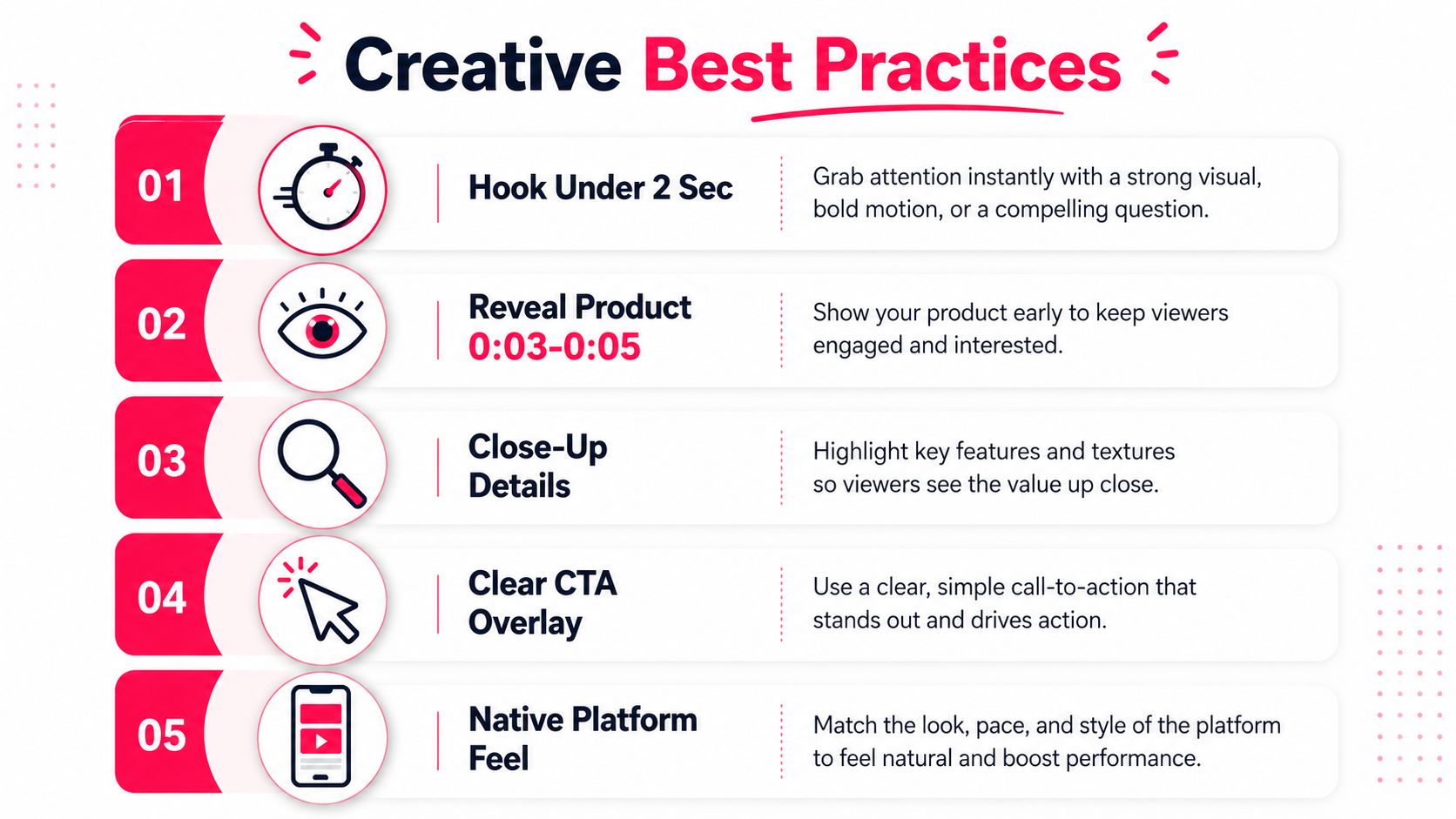
Start with a hook that lands in under two seconds. Lead with a problem, result, surprising texture, visible fit issue, or direct product claim. The product reveal should arrive between second three and second five, after the viewer understands why the demonstration matters.
A skincare clip might open with, “My makeup stopped separating after I changed this step.” It can then show the serum, demonstrate the texture, and finish with the product card and a clear instruction to tap. A fashion clip might begin with the fit problem, show the garment in motion, then reveal the product details before the viewer loses context.
Build the edit around buying questions
Use close-ups where the buyer needs evidence. Show texture, stitching, packaging, application, fit, or the before-and-after process without relying on vague superlatives. Put price, bundle information, and the primary benefit on screen when those details reduce hesitation.
Creative test: Change the first sentence before changing the audience. A new hook often tells you more than another targeting adjustment.
Use captions even when the audio is strong. Design for sound-on viewing, but make the message understandable without sound. Pin the CTA to the product card, not to a distant verbal instruction that disappears before the viewer can act.
A simple production checklist:
- Hook immediately: Put the problem or payoff in the opening moment.
- Reveal early: Show the product before the viewer has to guess what the video sells.
- Demonstrate a detail: Use a close-up to prove the feature that matters.
- Keep the CTA visible: Align the spoken action, on-screen text, and product card.
- Preserve native tone: Let the creator sound like a person, not a corporate script.
Polished brand voice often loses to credible creator language at checkout because shoppers want practical reassurance, not a slogan. Keep the claims accurate, the disclosure visible, and the product path frictionless.
Measuring Shoppable Video as Direct-Response
Measure shoppable video ads against revenue, not applause. Views and engagement help diagnose the creative, but the business decision depends on spend, attributed sales, margin, and incremental lift.
Start with a measurement stack that separates four fields:
- Spend and delivery: Record spend, impressions, product views, clicks, and platform placement.
- Video quality: Track view-through rate, or VTR. Instacart defines VTR as 2-second views divided by gross impressions, as explained in its shoppable video measurement documentation.
- Commerce events: Capture product-card taps, add-to-cart events, checkout starts, purchases, and attributed revenue.
- Incrementality signals: Use creator-specific UTMs, post-purchase surveys, and holdout audiences to identify assisted demand and orders that wouldn't have happened without the exposure.
The attribution window matters because a viewer may watch a creator demonstration, wait, search for the brand, and purchase later. Instacart's guidance notes that view-through conversions can represent 30% to 50% of total conversions, making a 7 to 14 day attribution window important when measuring upper-funnel exposure and delayed purchase behavior.
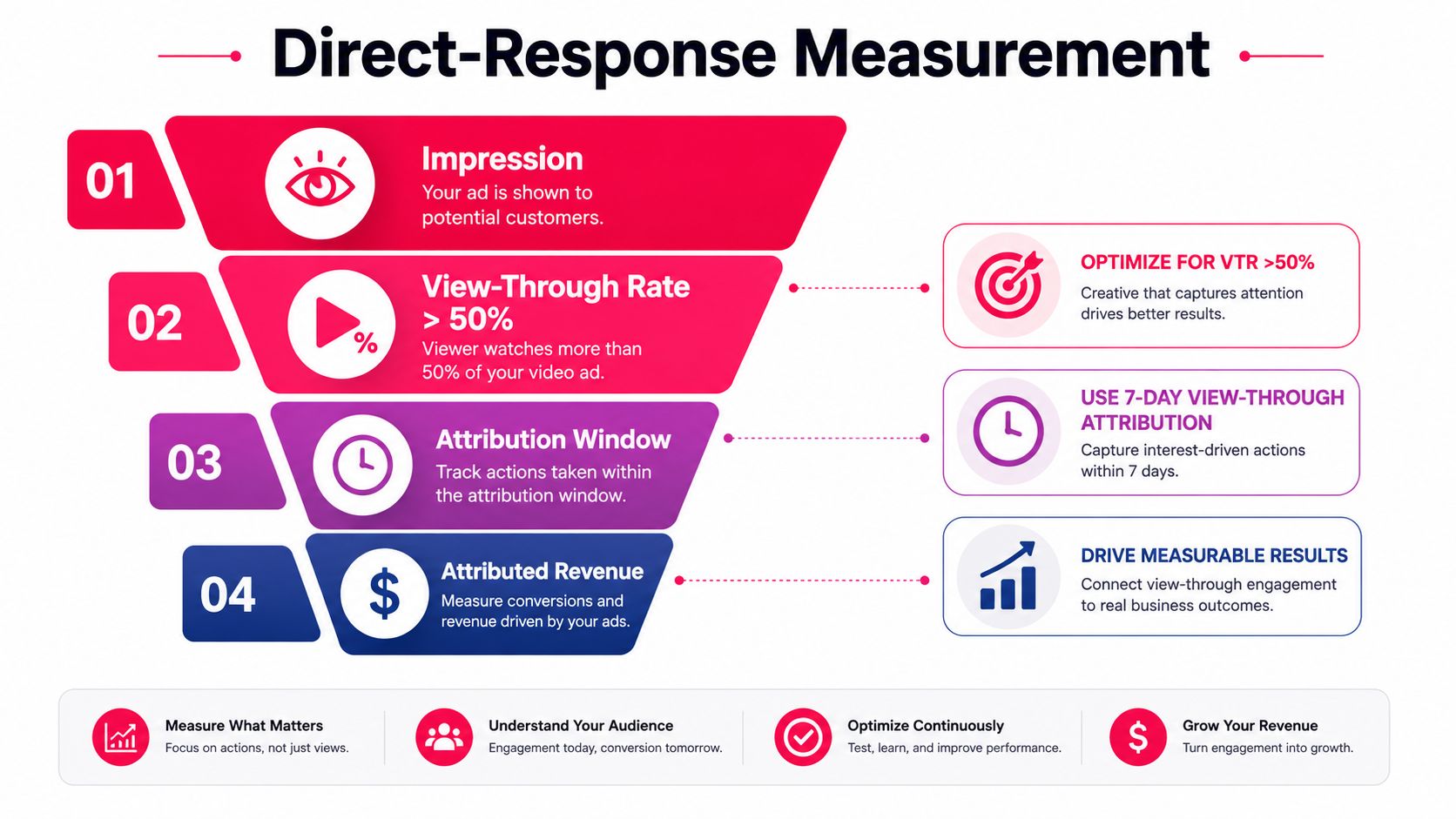
Don't collapse every conversion into one ROAS number. Report click-through sales, view-through sales, assisted creator orders, and incrementality separately. A creator may influence a purchase that another channel receives as the final click. That doesn't mean you should award the creator all revenue, but it does mean last-click reporting alone is incomplete.
Teams also need a consistent cross-platform framework. TikTok Shop, YouTube, Instagram, and CTV expose different events, so define a shared taxonomy before comparing them. If one platform reports a product-card tap and another reports a landing-page visit, map both to a common funnel stage without pretending they're identical actions.
DTC Implementation Checklist With Creator Marketplaces
Treat implementation as a staged operating process rather than a single campaign launch. The first phase is an asset and SKU audit. Find the products with clear demand, reliable inventory, strong reviews, and a demonstration that can make sense in a short video. Remove products whose margins, shipping limits, or variant complexity make creator-led selling difficult.
Days 1 through 30
- Audit video assets: Sort existing clips by hook, product, creator, platform, and permission status.
- Identify priority SKUs: Select products with proven conversion behavior and an obvious visual demonstration.
- Write the measurement plan: Define purchase events, creator identifiers, UTMs, view-through rules, and the reporting owner.
- Check compliance: Prepare disclosure language and confirm that affiliate links work in every target geography.
Days 31 through 60
Use JoinBrands to filter creators by niche, audience geography, and past GMV, then brief each creator on the hook, product demonstration, required disclosure, framing, and CTA. Request raw vertical clips alongside edited versions so your team can test alternative openings without commissioning a new shoot for every variation.
Approve content against a buying checklist, not personal taste. Ask for captions, product close-ups, clear pricing where appropriate, and a product-card action that matches the spoken CTA. Confirm that creators don't show competitor products in frame and that every affiliate relationship is disclosed clearly.
Days 61 through 90
- Activate proven assets: Whitelist top performers as TikTok Spark Ads or Instagram Branded Content Ads after confirming authorization and usage rights.
- Add affiliate tracking: Layer UTM-tagged affiliate links onto the native product connection and set a commission that keeps creators motivated. A 10% to 20% commission range is commonly used in this workflow, but validate it against margin and category economics.
- Run weekly holdouts: Compare exposed audiences with a control group where possible. Don't treat platform-reported attribution as the same thing as incremental revenue.
- Scale with discipline: Kill creatives below 1.5x ROAS by day 7 only when the campaign has enough delivery and conversion volume to make that decision responsibly. Move validated winners into catalog ads and retargeting.
- Update the briefs: Feed winning hooks, objections, formats, and product angles back into your JoinBrands templates.
TikTok's creator workflow adds a useful control loop. Creators can authorize sellers to use affiliate videos from Creator Center or a product detail page, and switching authorization off stops active seller video shopping ads. Creators can also review ad-driven commission and affiliate orders through Creator Center, Toolkit, and Earnings, as described in TikTok's seller education material.
Common failures are avoidable: missing FTC disclosures, geo-restricted affiliate links, mismatched product variants, and competitor products appearing in the frame. Fix those before you spend media budget. The fastest path to better ROAS is usually better permissions, cleaner product mapping, and stronger creative feedback loops.
JoinBrands connects brands with creators for shoppable content workflows, including creator matching, campaign briefs, content approval, and activation-ready assets for formats such as TikTok Shop, Instagram, YouTube, and Amazon. Visit JoinBrands to source creators, structure your next shoppable video test, and turn winning content into measurable commerce campaigns.