



 Your Guide to an Ironclad Influencer Marketing Contract
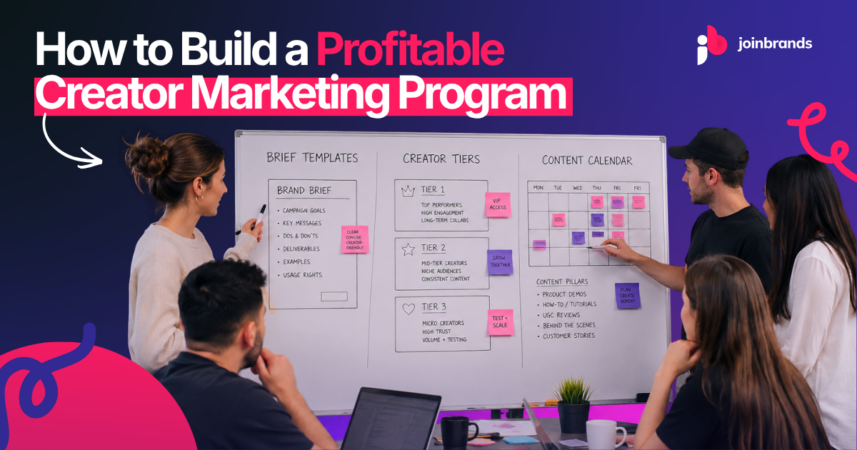
A creator marketing program that scales is not a list of creators you hired once. It is a system — a repeatable process for briefing, producing, testing, and scaling creator content that feeds your paid channels and product listings consistently. This guide covers how to build that system from scratch, including how to structure creator tiers, set a sustainable budget, and measure whether the program is actually profitable.
Before building a program, make sure your brief process is solid. A creator marketing program is only as good as the briefs feeding it. Read our creator brief template guide and use it as your starting document.
Table of Contents
What a Creator Marketing Program Actually Is
A creator marketing program is an ongoing operational system for sourcing, briefing, and deploying creator content — not a one-time campaign. The difference matters because campaigns have a start and end date, while programs generate a continuous content supply. Brands running programs think in monthly content cycles: how many pieces do we need this month, which creators are producing them, and what is the cost per piece at our current scale?
How to Structure Your Creator Marketing Program
Most effective programs follow a three-layer structure:
- Discovery layer: Ongoing intake of new creators through a platform like JoinBrands. You continuously test new creators against your brief requirements and content categories.
- Production layer: Your active roster of approved creators who receive regular campaign briefs. These are creators who have completed at least one successful campaign for your brand.
- Retainer layer: A small group of top-performing creators on monthly retainers — fixed content volume at fixed rates. This is your most reliable content supply.
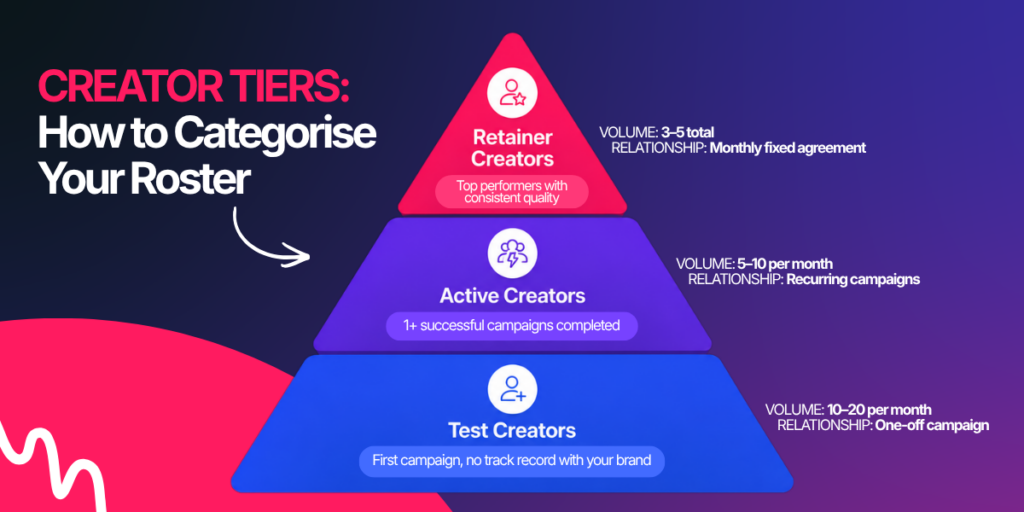
Creator Tiers: How to Categorise Your Roster
| Tier | Definition | Volume | Relationship |
| Test creators | First campaign, no track record with your brand | 10–20 per month | One-off campaign |
| Active creators | 1+ successful campaigns completed | 5–10 per month | Recurring campaigns |
| Retainer creators | Top performers with consistent quality | 3–5 total | Monthly fixed agreement |
Setting a Sustainable Program Budget
A sustainable creator marketing program budget is built around cost per content piece, not total spend. Calculate your target monthly content volume — for most e-commerce brands this is eight to twenty pieces per month — then multiply by your average creator rate to get your creator fee budget. Add platform costs and product fulfillment for gifting campaigns. A starting monthly budget of $1,500 to $3,000 will give most Shopify or Amazon brands enough content to run meaningful paid ad testing.
Scale the budget when your best-performing content generates ROAS above 3x. At that point, more content volume directly feeds more profitable ad spend. See our creator marketing ROI guide to set the benchmarks before scaling.
Building the Content Production Engine
The production engine is the repeatable workflow that takes a new product from brief to live ad creative. Each cycle should include:
- Monthly brief creation: One master brief template per content category, updated each month with current messaging priorities.
- Creator application and approval: New creators tested each month. Active roster briefed directly.
- Content review and QA: Standard review checklist applied to every piece before approval. See how to vet creators to build your QA checklist.
- Asset library management: All approved content stored in a shared folder organised by platform, format, and date.
- Performance tracking: Monthly report comparing creator content ROAS against paid search and branded social benchmarks.
How to Measure Program Profitability
A creator marketing program is profitable when the revenue attributable to creator content — through UTM tracking, affiliate codes, and Amazon attribution — exceeds the total program cost including platform fees, creator fees, and product costs. Track this monthly. Most programs reach profitability within two to three months once you have identified your top-performing content formats and creators.
JoinBrands makes running a creator marketing program at scale straightforward — post briefs, manage your roster, and track results in one dashboard. Start building your program at joinbrands.com/brands
Frequently Asked Questions
How many creators do I need in my program to start?
Start with five to ten creators across two to three content categories. This gives you enough creative variation to test what works in your paid channels without overcomplicating the management overhead. Once you have identified which content formats and creator styles perform best, scale the roster in those specific categories.
Should every creator in my program be on a retainer?
No. Retainers work best for your top three to five performers — creators who have delivered consistently across multiple campaigns and whose content style fits your brand’s current ad creative needs. Keep the majority of your roster on a campaign-by-campaign basis so you can rotate new creators in and test different approaches without being locked into fixed agreements that no longer serve performance goals.
What is the biggest mistake brands make when building a creator program?
Treating it like a campaign rather than a system. A creator marketing program requires the same operational discipline as a content calendar or a media buying plan. Brands that approach it as a series of one-off campaigns never build the roster depth, brief consistency, or measurement infrastructure needed to make it profitable at scale.
Ready to build a creator marketing program that delivers consistent content and measurable returns? joinbrands.com/brands