
 Mastering Digital Creator Facebook for DTC Growth
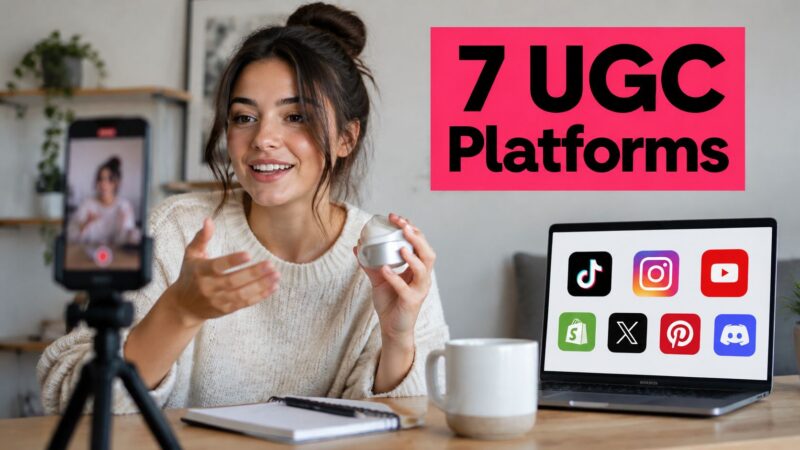
Gen Z doesn't stop for your polished ad. She stops for a messy, creator-voiced hook that sounds like a friend filming in her dorm, then keeps watching if the product proves itself in seconds. That split second is why your Gen Z UGC creator platform matters more than your media budget. Hire through a marketplace built for polished testimonials and you'll get polished testimonials. Hire through one built for native hooks and rapid testing and you'll get creative you can scale.
There's no shortage of supply. In a 2024 report covered in the Boston Globe's reporting on YouTube's Gen Z survey, 65% of U.S. Gen Z respondents aged 14 to 24 described themselves as video content creators. Follower count isn't the filter. Hook quality, platform fit, and authenticity are.
Below are 7 platforms judged on one lens, how well each helps you source and test Gen Z-native hooks that convert. You'll get casting, brief, and testing tips for each, plus a workflow for pressure-testing winners in paid social.
Table of Contents
1. JoinBrands
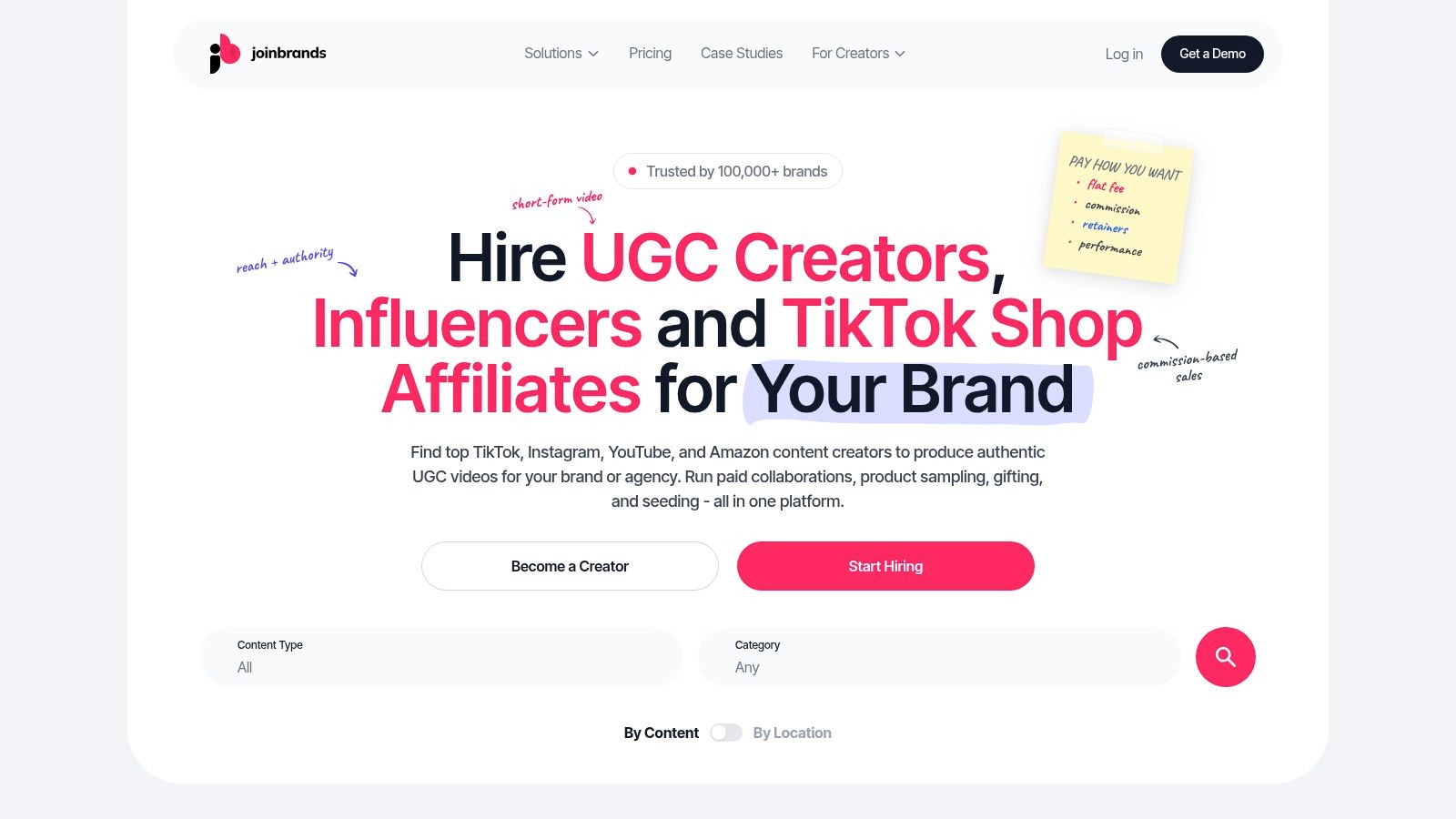
If you need volume and control in one workflow, start with JoinBrands. It's an end-to-end platform covering UGC, TikTok, TikTok Shop, Instagram, Amazon, and YouTube creators, so you aren't rebuilding your creator list every time you change channels. You can run content-only projects where creators film and deliver the asset for you to post from your own account, or collaborations where they publish to their own TikTok, Instagram, or YouTube.
That content-only model is the hook-testing advantage. You own the file, you control the edit and the ad account, and you can recut the first three seconds without renegotiating a post. You set targeting by niche, location, gender, age, ethnicity, and special requirements, browse verified portfolios, ratings, and past work, then chat directly with creators before you commit. Need scale? Blasts push one brief to 10, 25, 50, or 100 creators at once.
What Makes It Work for Hook Testing
Delivered assets move through a content approval step, and commissioned work comes with full ownership and licensing rights, so every video can run as Meta, Google, or programmatic ad creative. You can track multiple creators across GMV, views, likes, comments, and shares, then activate Spark Ads on the winners. Creators level up from beginner to pro based on completed work and ratings, so proven performers keep surfacing for your next brief instead of you starting casting over. Agencies get multi-brand tools to keep client work separate.
The casting tip is simple. Don't brief one script. Brief one creator for three hook intents, a problem hook, a routine hook, and a comparison hook, then let her keep her own phrasing. Research on younger buyers supports that restraint. A 2025 study in Future Business Journal of 340 people aged 18 to 30 found Gen Z viewed UGC as more authentic and relatable than macro-influencer content, with stronger trust and purchase intentions.
Pro tip: Ask for the raw hook takes as separate files. You'll test openings faster and you won't pay for a full reshoot when only the first line fails.
Trade-offs are real. UGC videos start at $25 on every plan, but creator tier and project scope still shape your cost per asset, so price the test design before you brief. Results depend on creator fit too. Review portfolios for native delivery, not just pretty thumbnails.
Best for brands and agencies that want high-volume, owned assets they can test across paid social, TikTok Shop, and Amazon from one dashboard.
2. Billo
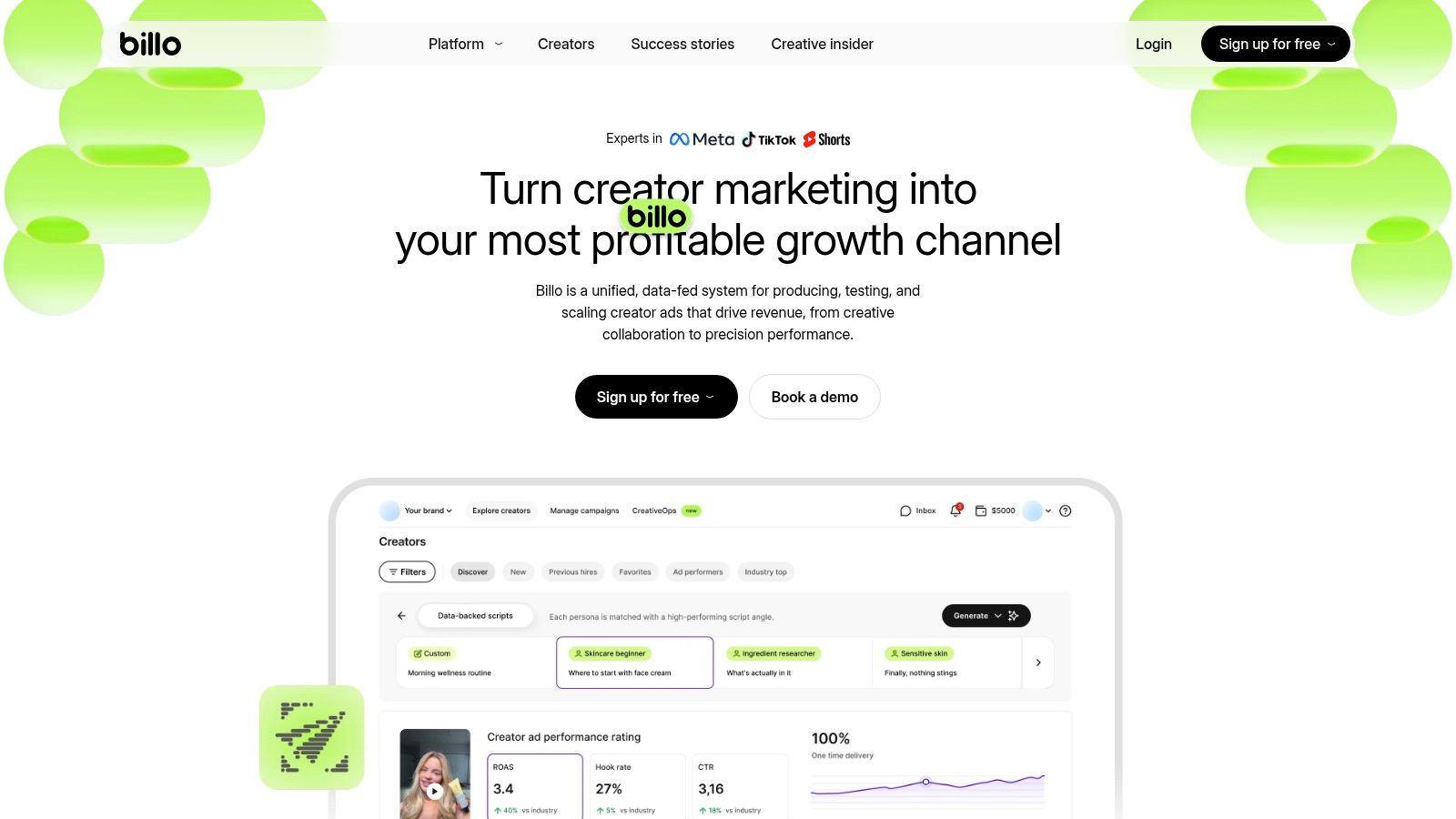
Billo is the self-serve, no-fuss option. You pick creators, write the brief, and order short-form video built for TikTok and Meta ads, not for organic reach. That focus is useful when your only question is which hook holds attention.
The mechanics suit small tests. A published per-video starting price makes budgeting easier, and the basic ordering product has no mandatory subscription. You can add hooks, creative variations, and creator-account posting, plus an optional CreativeOps subscription if you want performance data layered on top.
Where Billo gets expensive is where budgets get sloppy. Creator tier, video length, and add-ons stack up, so lock your test design before you order. Billo won't decide your concepts for you. That's fine if you already know your angles, less fine if you're hoping the platform will supply strategy.
How I'd Brief It
Give each creator the same middle demo and a different opening line. For a skincare product, test "I stopped doing this in the morning" against "POV your makeup keeps pilling" against a straight before-and-after. That isolates the hook variable. For deeper audience context before you write those lines, this guide to marketing to Gen Z is worth a read.
Gen Z creators also bring production habits worth screening for. Deloitte's 2023 Connected Consumer survey found 31% of U.S. Gen Z respondents had used or experimented with generative AI. Ask how a creator uses AI for captions or variants, then require human review so speed doesn't flatten her voice.
Best for ecommerce teams that want fast, ad-ready video without manual recruiting.
3. Insense
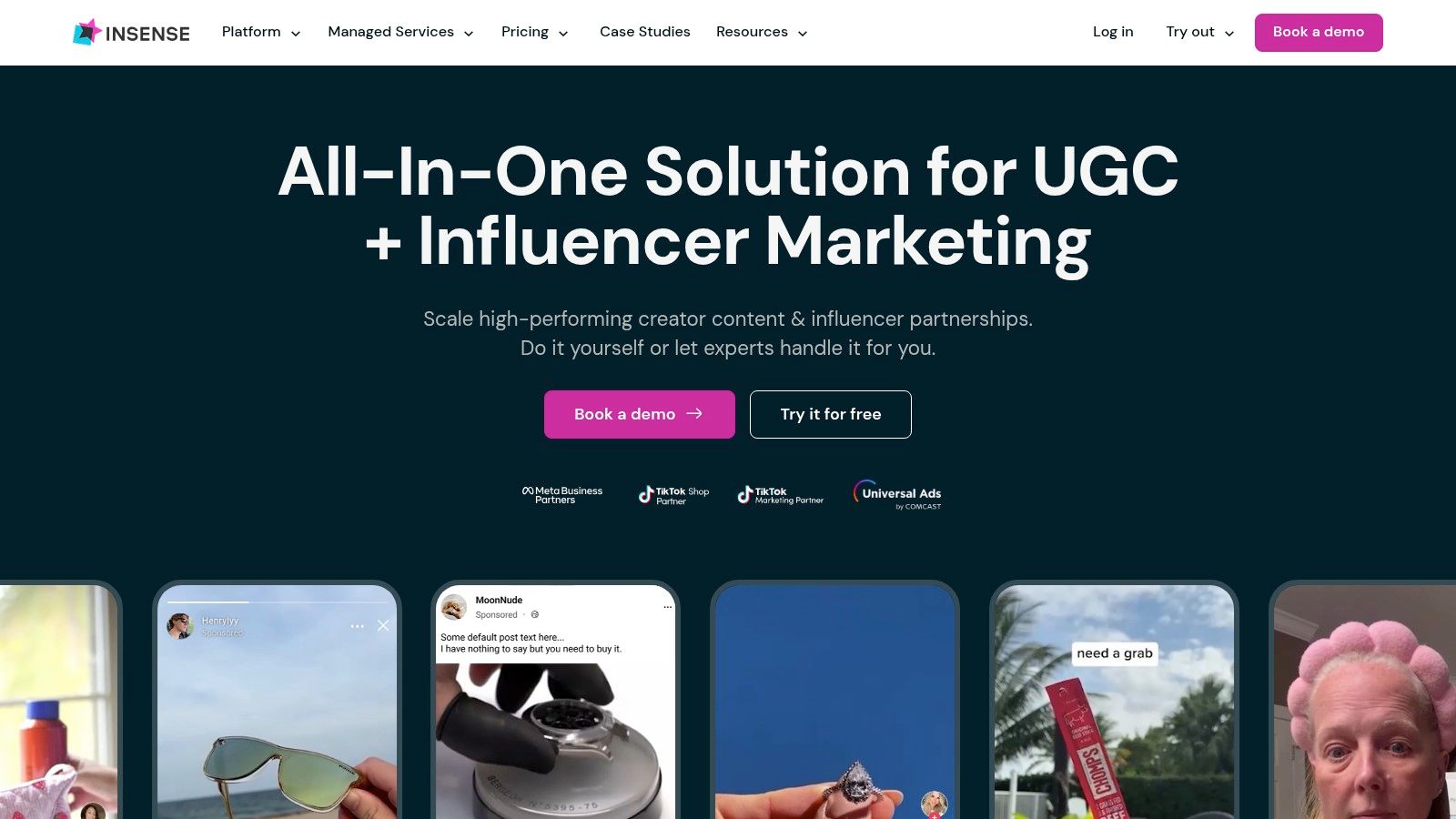
Need the asset and the ad permission? Insense combines UGC sourcing, influencer campaigns, and creator-ad workflows in one place. That matters when a hook works organically on a creator's account and you want to amplify it rather than recreate it.
You get a marketplace, campaign briefs, creator chat, content review, and payments, plus TikTok and Meta workflows for Spark Ads and partnership ads. Managed services are available if your team doesn't want to run operations day to day. Self-serve and hands-on options in one product is flexible.
Budget carefully. The platform subscription and creator compensation are separate, and core plans are shown with quarterly billing. For two one-off videos, that's more infrastructure than you need. For a rolling program, the overhead starts to pay for itself.
Where It Fits Best
Use Insense when distribution rights are part of the test. Run the same hook as a dark ad and as a creator-posted Spark Ad, then compare watch time and click-through rate. You're testing trust in the handle, not just the creative. If you're sorting creators from true audience holders, this breakdown of Gen Z influencers helps you cast the right tier.
One caution on AI shortcuts. According to IAB insights on AI and consumer response, 73% of Gen Z and Millennial consumers say knowing an ad was created with AI would either increase or not change their purchase likelihood. Acceptable isn't the same as invisible. Disclose synthetic visuals or voice cloning clearly, and keep a human-shot variant in every test cell.
Best for brands that need content files plus posting and ad authorization.
4. soona UGC
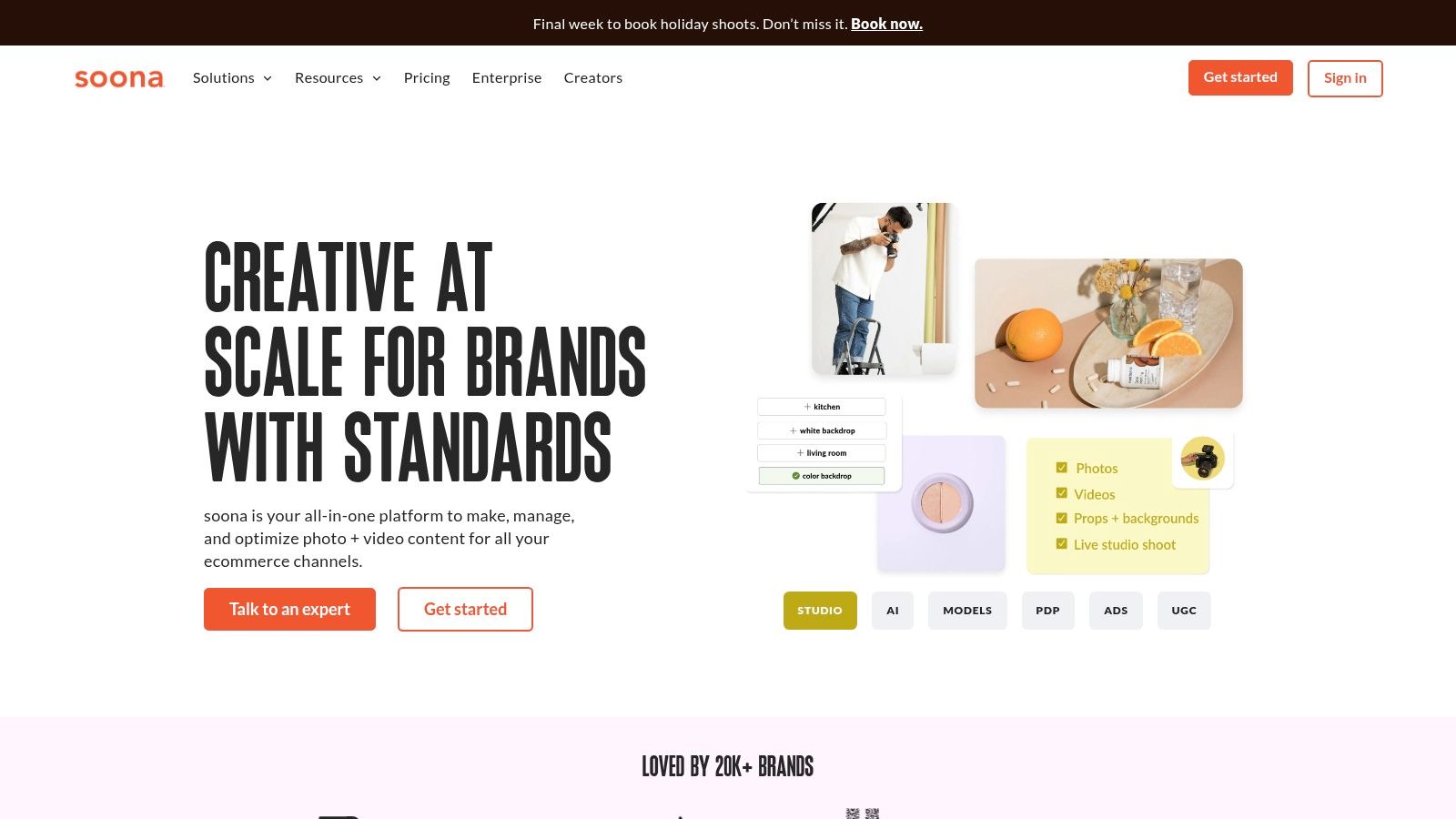
soona approaches UGC from the product-content side. Its creator service sits inside a broader platform that also handles product photography and studio work, so it's a natural pick when your product page needs as much help as your ad account.
You brief creators for short video for social, ecommerce, and ads. Creator levels and rates are preset, participation is U.S.-wide, and some campaigns require shipping product to the creator. A public starting price helps you scope a small test, and the vetted pool lowers casting risk.
Gen Z fit isn't automatic here. The network spans ages and backgrounds, which is a strength for broad brands and a trap for lazy briefs. Specify age, setting, and platform-native delivery in writing. If you're new to the format, brush up on what a UGC creator actually does before you cast.
A Practical Test Setup
Order the same demo at two creator levels and compare hook retention, not production polish. Gen Z relevance often beats gloss. Deloitte data cited in eMarketer's coverage of creator content and younger audiences found 56% of Gen Z respondents in 2025 said social media content was more relevant to them than traditional content such as television shows and movies. Native beats cinematic.
A clean studio shot proves what the product is. A creator's bathroom mirror proves who it's for. You usually need both, in that order.
Watch total cost. Rates climb by creator level, the base rate may not cover the full campaign, and creator access involves an application or selection process. Confirm whether posting to the creator's own audience is included, because it often isn't the point here.
Best for brands that want UGC video alongside product photography and studio content.
5. Cohley
Cohley is built for teams that want a program, not a purchase. It covers UGC, influencer partnerships, photography, and text reviews, so one brief can feed your ads, your product page, and your review engine at once.
You can review creator portfolios and social analytics before casting, and perpetual content rights are listed in its plan comparison. The bigger draw is managed services. If you lack in-house capacity, Cohley can help with strategy, creator selection, briefing, and content review, which is where most hook quality is won or lost.
That support costs money, and pricing is custom. You'll need a sales conversation, creator compensation sits on top of the platform license, and typical brief budgets may be steep for a small business testing three videos. I wouldn't start here for a one-off.
Use It When Volume Meets Variety
Cohley makes sense when one product needs multiple proof formats. Say you're launching a supplement. Commission a morning-routine video for paid social, lifestyle photography for the product page, and written reviews for retail syndication from the same creator pool. The hook you test in video can become the headline on the image.
Compliance is essential across all of it. The FTC's Disclosures 101 guide for social media influencers requires disclosure of any material connection, including payment or free products, placed with the endorsement itself. Managed services help, but your brand still shares responsibility for clear "Ad" or "Paid partnership" language.
Best for established DTC teams and agencies running multi-format creator programs with operational support.
6. Influee
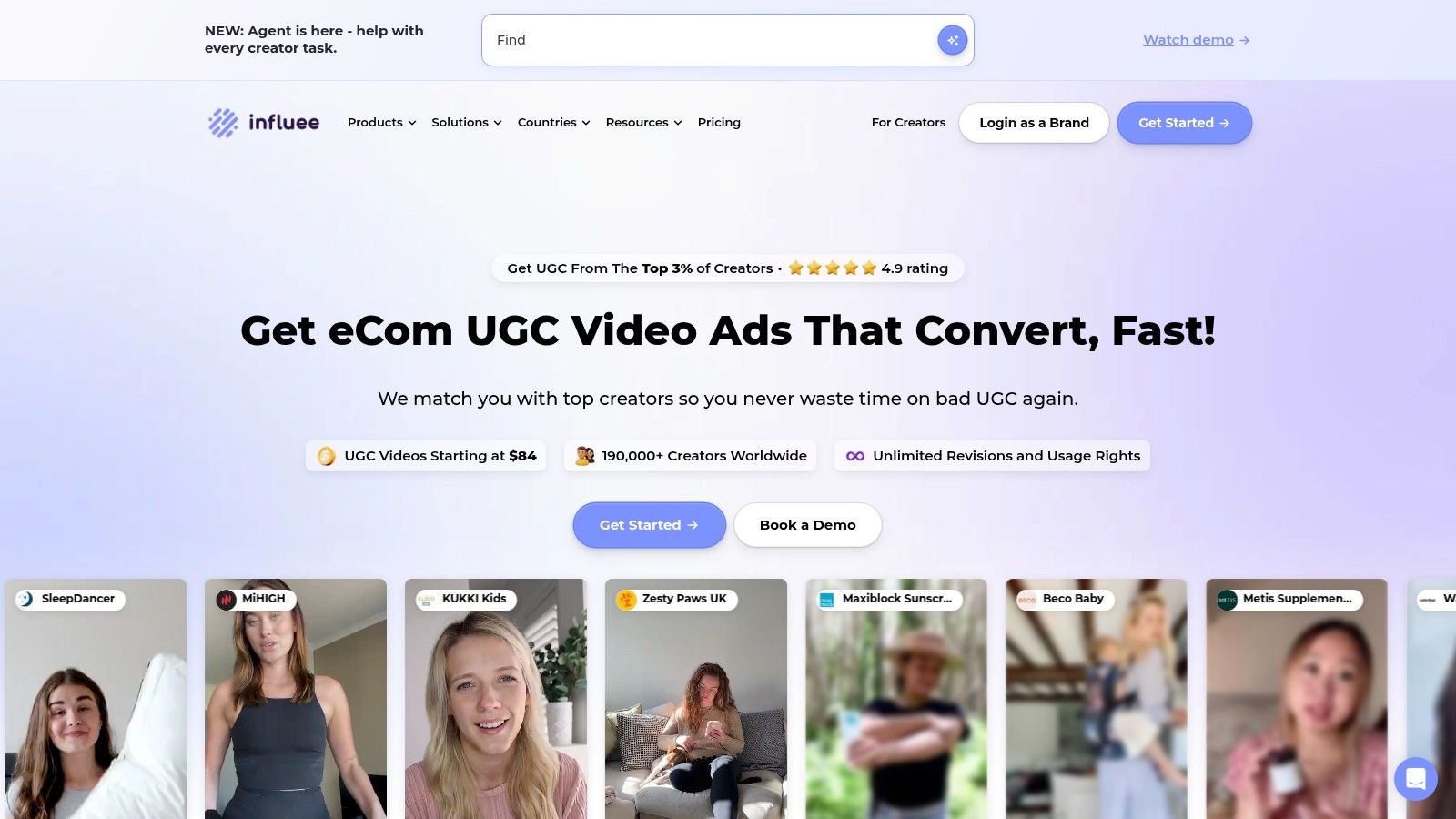
Influee sells range. Its broad international network gives you many creator styles and niches to choose from, with public profiles and pricing you can compare before you commit. For hook testing, that range lets you cast contrasting deliveries of the same script quickly: the same thirty-second brief read by a deadpan reviewer, an over-caffeinated enthusiast, and a skeptical friend gives you three distinct openings to put spend behind.
Campaign management, payment protection, and platform-handled creator payments run through the system, so you're not chasing invoices across borders. Visible pricing is the standout practical feature. You can sanity-check a creator's rate against her portfolio in one screen, which makes it easy to spot who is overcharging for weak hooks.
The global reach cuts both ways. If you're targeting U.S. Gen Z buyers, filter hard for location, accent, cultural references, and audience fit. A hook built on U.S. dorm life or back-to-school shopping won't land from a creator whose context reads differently. Creator fees and platform fees may be separate, and regional pricing can differ, so confirm your U.S. total before you approve a batch.
Casting Tip That Saves Money
Shortlist by first-three-seconds energy, not by full portfolio. Watch only openings, mute the sound, and note who still communicates the problem visually. The creators who survive that test are the ones worth paying for, because a strong silent opener usually survives TikTok's sound-off scroll and paid placement alike.
On Gen Z feeds, the opening frame is the audition. Cast for it, brief for it, and pay for it.
Also check disclosure setting discipline. TikTok treats combinations of incentives, brand mentions, demonstrations, and calls to action as commercial content, so your chosen creator must know how to label a demo that feels like lifestyle content.
Best for brands that want wide creator choice and transparent per-creator pricing.
7. UGC Studio
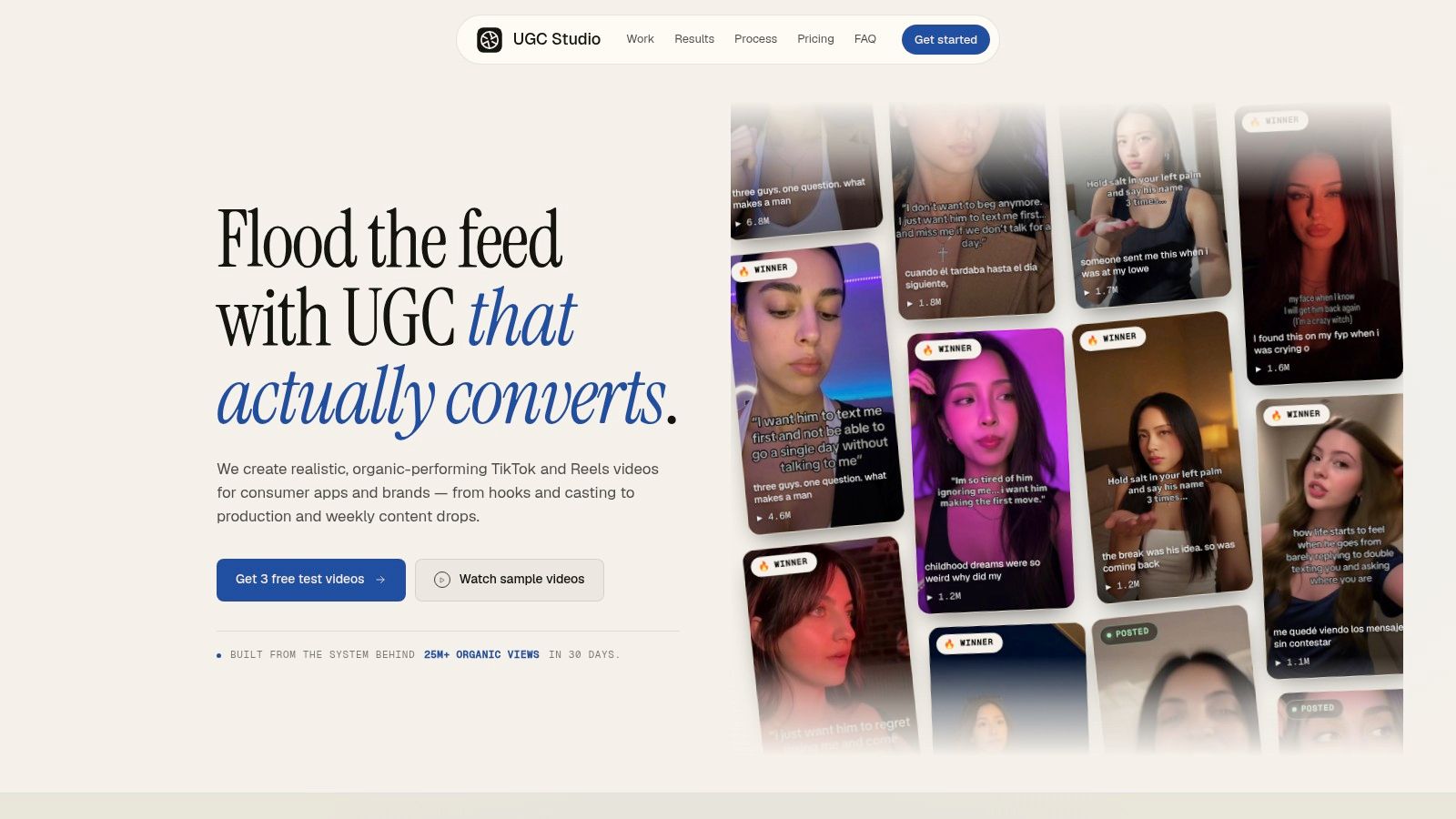
UGC Studio isn't a marketplace. It's an agency-style operation that handles casting, scripting, production, and posting on accounts it operates, focused on TikTok and Instagram Reels. You're buying ongoing organic distribution, not just files for your ad account.
That changes the hook math. Organic hooks live or die on trend timing, sound selection, and posting cadence, and a managed team grinding weekly output can find a format through sheer reps. Public monthly packages make scope easier to compare, weekly reporting keeps you close to performance, and three pilot videos let you test fit before a longer commitment.
It's also the most expensive way to learn. Monthly packages require substantially more spend than one-off UGC videos, and the core service is organic posting, so paid-ad creative needs separate scoping. Before you sign, pin down account ownership, who controls the handles if you leave, and how success is measured.
Before You Commit
Ask for hook-level reporting, not just views. You want to know which opening formats repeat, which die, and whether winning organic concepts get handed to you as usable ad assets. Compare that against commissioning owned content directly, and sanity-check your budget using current UGC creator rates.
Disclosure still applies when a third party runs the accounts. TikTok's guidance on the content disclosure setting for creators says the commercial-content disclosure setting must be enabled when content promotes a brand, product, or service. A "three ways I use this" tutorial with a purchase prompt counts, even when it feels organic.
Best for consumer apps and brands that want managed, always-on organic short-form publishing.
Gen Z UGC Creator Platforms at a Glance
| Platform | Best For | Pricing Transparency | Content Formats |
|---|---|---|---|
| JoinBrands | Managing creator campaigns and UGC in one workflow | UGC videos start at $25 on every plan | UGC, TikTok, TikTok Shop, Instagram, Amazon, YouTube |
| Billo | Ordering short-form video ads for TikTok and Meta | Public per-video starting price; add-ons may increase costs | Short-form video ads, hooks, testimonials, product demos |
| Insense | Combining UGC production with influencer and creator-ad campaigns | Subscription and creator fees are separate; quarterly billing | UGC, influencer posts, TikTok and Meta creator ads |
| soona UGC | Creating UGC alongside product photography and studio content | Public starting price; rates vary by creator level | Short-form video, product photography, studio content |
| Cohley | Established teams managing varied creator campaigns | Platform pricing is custom; creator compensation is separate | UGC, video, photography, text reviews, influencer content |
| Influee | Finding international creators and comparing profiles and prices | Creator pricing is visible; total costs may vary by region and fees | UGC video and other creator content |
| UGC Studio | Ongoing managed organic publishing on social accounts | Public monthly packages; pilot videos available | TikTok and Instagram Reels video content |
Read the "Best For" column first. A platform that excels at one-off owned assets will waste your time if you need managed organic publishing, and the reverse holds too. Then check pricing transparency. Platforms with public starting prices let you model a test budget before a sales call, while custom pricing usually means the cost depends on scope you cannot see yet.
The cheapest row is rarely the cheapest test. Factor in add-ons, subscription fees, and how many hook variants your budget actually buys.
Pick Your Platform, Then Pressure-Test the Hooks
Don't pick one platform forever. Shortlist two or three based on budget and format. A self-serve marketplace for owned ad assets, plus a managed option if you're short on operators, covers most DTC situations.
Then run the same test everywhere. Brief each creator batch with three to five hook variants built on different intents, a pain point, a routine moment, a myth or mistake, a comparison, and a direct result. Keep the demo and offer identical. That way, when one version wins, you know the hook did it.
Put every variant into paid social with small, equal budgets before you scale anything. Judge on thumb-stop rate, watch-through, click-through, and cost per purchase, in that order. Organic views alone won't prove revenue, especially now that UGC supply is crowded. Figures compiled in Revid's UGC statistics roundup report UGC campaigns grew from 15% to 35% of influencer campaigns in 2025, while creator supply rose 93% year over year into 2025. More content chasing the same feeds means your measurement has to separate hook, offer, audience, and distribution effects.
Use unique links or codes per creator batch and a post-purchase survey question so a winning video gets credit beyond last click. Winners get rehired, recut, and versioned for TikTok Shop, product pages, and retargeting. Losers get one new hook, not a full reshoot.
Owned-asset workflows make that iteration cheapest. With a content-only model, the creator films and delivers the asset, your brand owns it and posts it wherever you like, and the same video can run as Meta, Google, or programmatic ad creative. That's why platforms built around ownership tend to win the cost-per-test battle. You aren't renting a post that disappears. You're building a library of hooks you can keep testing long after the first campaign ends.
Practical rule: Scale the hook, not the video. When an opening wins, shoot it again with two new creators before you raise budget on the original.
Pick your two platforms this week, cast for native delivery over follower count, and let paid data, not opinions, choose your winners.
Ready to find your next winning hook? JoinBrands connects you with vetted Gen Z UGC creators across TikTok, Instagram, YouTube, and Amazon, with protected payments and full ownership of every asset you commission. Launch a campaign, brief multiple hook variants, and start testing creator-native creative this week.