

 Snapchat Influencer Marketing Agency – Top 14 Agencies, FAQs & More
Running a creator marketing campaign that generates real revenue requires more than sending product and hoping for good content. It requires a clear brief, the right creators, a defined content format, a tracking setup in place before launch, and a process for scaling what works. This guide walks through the full campaign process, from brief to results, so your next creator marketing campaign produces content you can actually use in paid channels.
Before running a campaign, make sure your creator brief is solid. A campaign is only as good as the brief driving it. See our creator brief template and build from there.
Table of Contents
Before the Campaign: What to Define
Every creator marketing campaign needs four things defined before the brief goes live: the campaign objective (awareness, conversion, or content production), the target platform (TikTok, Meta, Amazon, or multiple), the content format required, and the tracking mechanism. Campaigns that skip this definition stage produce content that cannot be measured and often cannot be used in paid channels because the format or usage rights were not specified upfront.
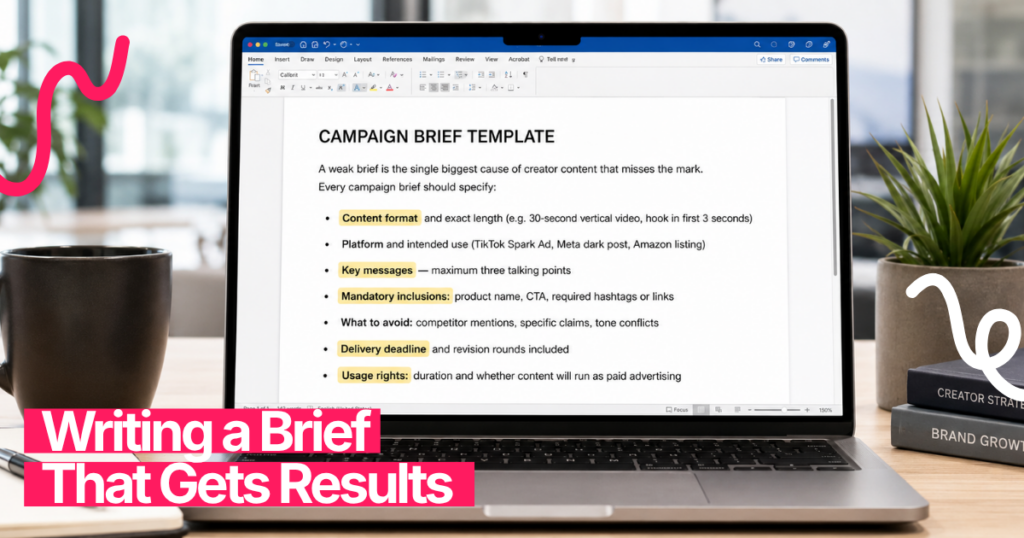
Writing a Brief That Gets Results
A weak brief is the single biggest cause of creator content that misses the mark. Every campaign brief should specify:
- Content format and exact length (e.g. 30-second vertical video, hook in first 3 seconds)
- Platform and intended use (TikTok Spark Ad, Meta dark post, Amazon listing)
- Key messages — maximum three talking points
- Mandatory inclusions: product name, CTA, required hashtags or links
- What to avoid: competitor mentions, specific claims, tone conflicts
- Delivery deadline and revision rounds included
- Usage rights: duration and whether content will run as paid advertising
Selecting the Right Creators
For paid ad creative, prioritise content quality and brief adherence over audience size. A creator who has produced great content for similar products is more valuable than a larger creator with no relevant track record. Review portfolio samples for: hook quality (strong first three seconds), production consistency, and authenticity of delivery. For a detailed vetting checklist, see our guide on how to choose the right creator for your brand. On JoinBrands, creators apply to your campaign — you review samples and approve only the creators who meet your quality standard.
Launching and Managing the Campaign
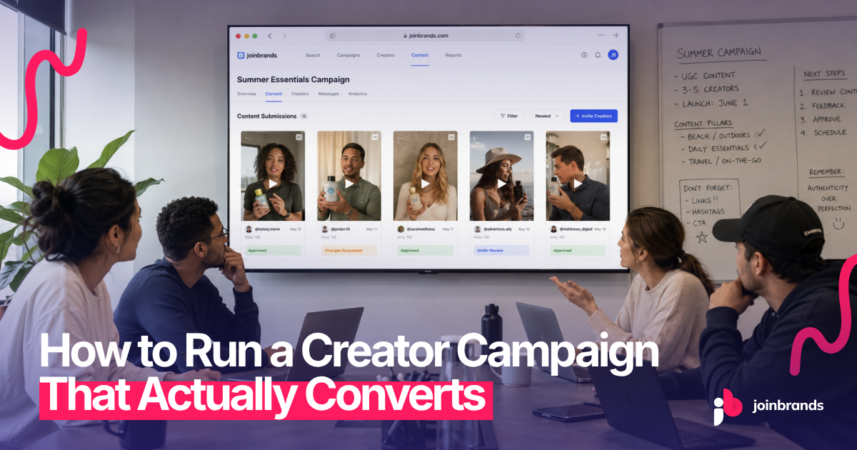
Once creators are approved and product is shipped (for gifting campaigns), set a clear delivery deadline and check in at the midpoint. Creators who have not filmed or have questions about the brief usually raise issues at the halfway point, addressing these early prevents late delivery. On JoinBrands, the campaign dashboard shows delivery status per creator so you can see at a glance which creators are on track.
Reviewing and Approving Content
Apply a consistent review checklist to every content submission: Did the creator follow the brief format? Is the key message present and clearly communicated? Is the hook strong in the first three seconds? Is the production quality acceptable for your intended use? Request revisions if the brief was not followed, do not accept content that does not meet your requirements. Most platforms including JoinBrands include a defined number of revision rounds in the campaign terms.
Deploying Content Across Channels
Once content is approved, tag each piece before deployment with: the creator handle, the campaign name, the content format, and the platform it was made for. Store all assets in a shared folder organised by category and date. For paid ad deployment, tag each piece with UTM parameters or a unique creator code before it goes live so performance is trackable back to the source creator. For TikTok Spark Ads, request Spark Codes from creators as part of the brief before the campaign closes.
Measuring Performance and Scaling
After two to three weeks, review performance by content piece: CTR, conversion rate, and cost per acquisition for paid deployments. Identify your top two or three performers. Brief those creators for a second content round using the same format and messaging. This is how you scale a campaign into a creator marketing program. For the full measurement framework, see our creator marketing ROI guide.
JoinBrands manages your entire creator campaign workflow: brief, applications, content delivery, and tracking — in one dashboard. Launch your next campaign at demo.joinbrands.com/outreach-agents
Frequently Asked Questions
How long does a creator marketing campaign take from brief to content delivery?
For gifting campaigns where product needs to be shipped, allow three to four weeks from brief publication to content delivery — one week for creator applications and approval, one to two weeks for shipping, and one to two weeks for filming and delivery. For campaigns where creators use product they already have, or for paid campaigns with no physical product, two to three weeks is typical.
How many creators should I run in one campaign?
For a first campaign, three to five creators allows enough creative variation to identify what works without overwhelming your review process. Once you have a clear sense of which content format and creator style performs best for your brand, scale to ten to twenty creators per campaign to build a comprehensive content library.
What if a creator submits content that does not match the brief?
Request a revision and specify exactly what needs to change using the brief as reference. Be specific, not “this does not feel right” but “the hook does not appear in the first three seconds as specified” or “the product name was not mentioned as required.” Most revision issues come from ambiguous briefs, if you find yourself requesting similar revisions from multiple creators, the brief needs to be more specific.
Ready to run a creator campaign that delivers content you can actually use? joinbrands.com/brands