
 Compare Instagram Followers: Unlock True Growth
Follower count alone doesn't make an Instagram campaign successful. A large audience can create attention, but the strongest Instagram influencer marketing examples match creator credibility and content format to a specific business objective. A skincare brand may need relatable UGC, a product launch may need concentrated celebrity reach, and a considered purchase may depend on expert education rather than glamour.
The nine models below cover Reels, Stories, feed posts, customer content, affiliate promotions, creator collectives, and experiential storytelling. Each example is assessed through the same practical lens: objective, audience fit, creative execution, measurable outcome, trade-off, and next action. That distinction matters because Instagram performance varies sharply by creator tier and format. Benchmark reporting places nano-influencer engagement around 6.23%, micro-influencer engagement around 3.86%, and macro-influencer engagement around 0.61% on Instagram (benchmark reporting on Instagram influencer performance).
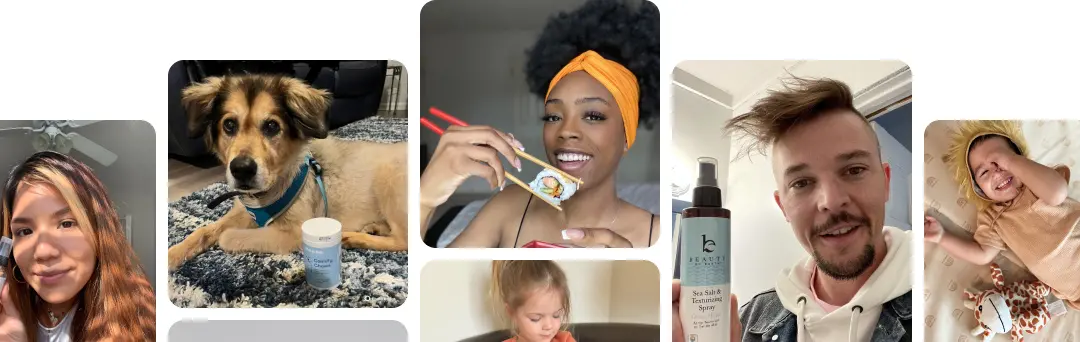
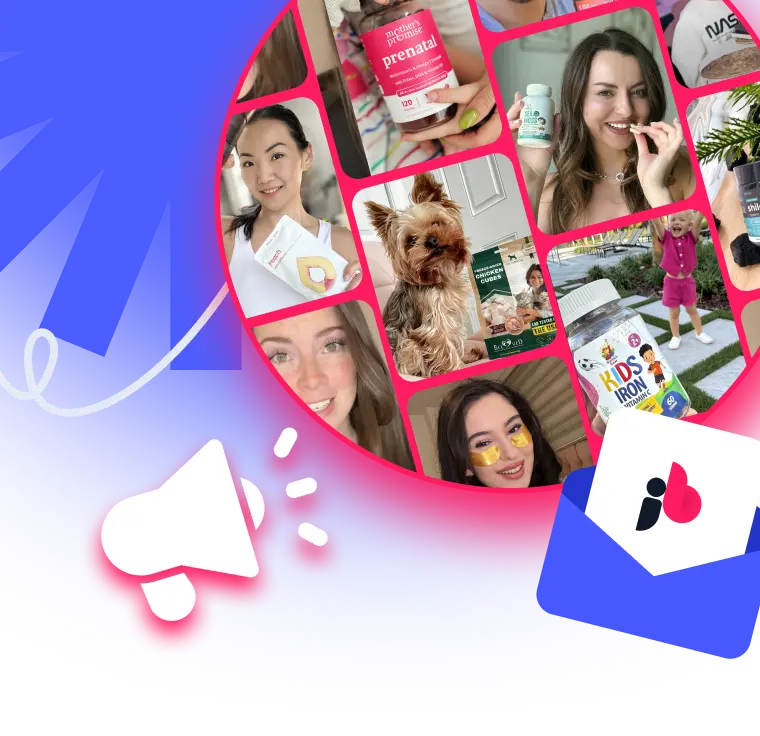
Brands that need production and campaign scale can use creator platforms such as JoinBrands to source, brief, manage, approve, and repurpose Instagram content. The useful question isn't “Which influencer has the most followers?” It's “Which creator-content system can produce the action this campaign needs?”
Table of Contents
1. Glossier's User-Generated Content Revolution
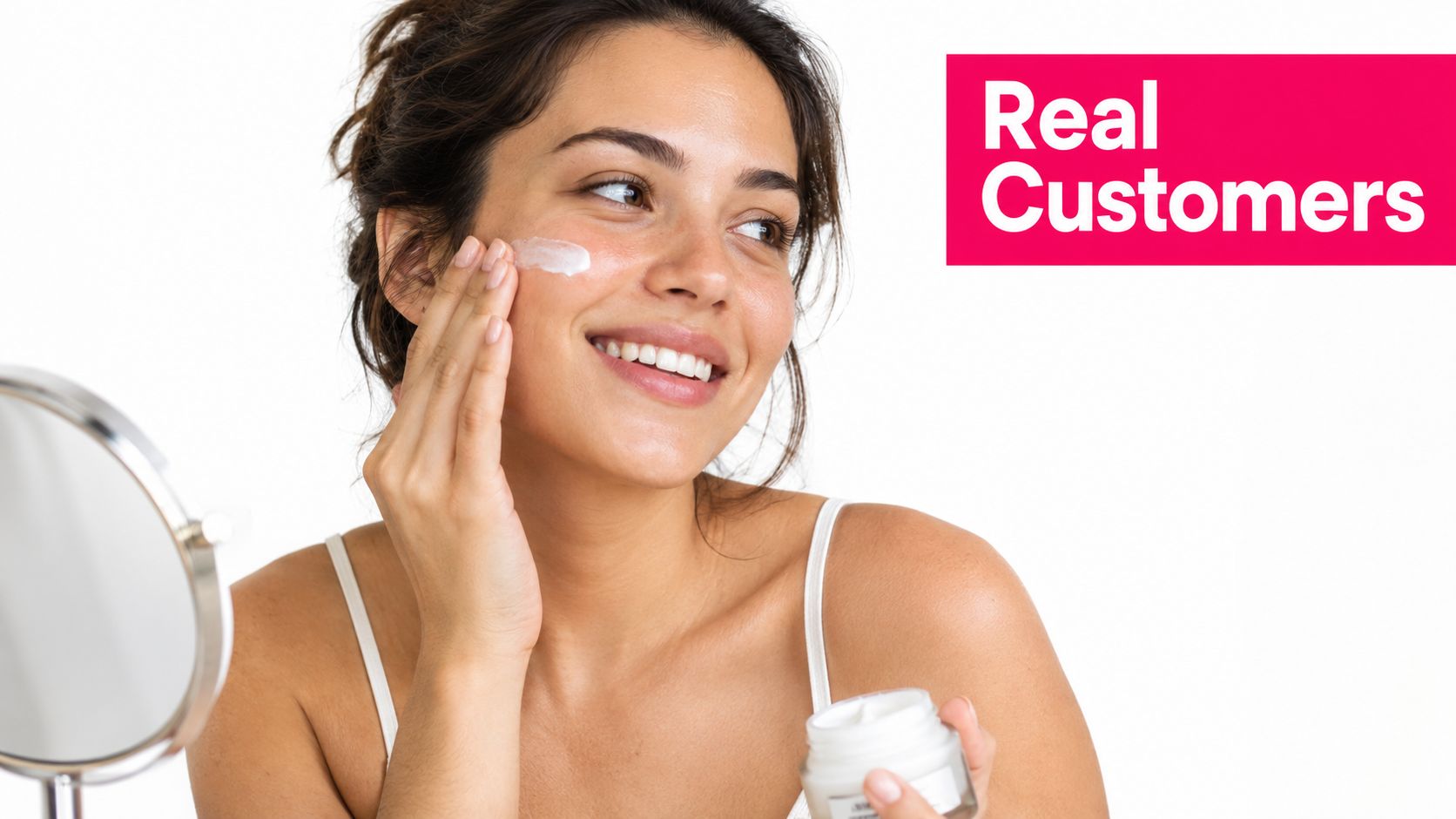
Glossier turned customers into visible participants in its brand story. Its Instagram content centered on real routines, personal recommendations, and product use in everyday settings. Customers appeared in Stories, Reels, and feed posts, while reviews, unboxings, and transformation content provided social proof that polished studio campaigns can struggle to reproduce.
The creative tactic was low-friction participation followed by public recognition. A branded hashtag helps people find related posts, but featuring customers gives the system its momentum. The featured customer has a reason to contribute again, while prospective buyers see products used by people who resemble them.
Measure the content engine, not just reach
Glossier's objective extends beyond visibility. Teams can track usable submissions, approval speed, saves, shares, product-page interactions, and conversions from customer content reused in paid or owned placements. Instagram engagement can be calculated as (Likes + Comments + Saves + Shares) ÷ Followers × 100 (HubSpot's guide to Instagram engagement rate).
The trade-off is reduced control over lighting, claims, product presentation, and brand fit. A fast approval workflow limits delays, while explicit rights are required before reposting content or placing it in advertising.
Practical rule: Use a short branded hashtag, give customers a clear reason to participate, and secure usage rights before amplifying the first post.
A modern adaptation is to turn one review into several assets: a customer Reel for discovery, a Story sequence addressing objections, and a product-page testimonial supporting conversion. A platform such as JoinBrands can help aggregate and organize creator content once manual collection becomes difficult.
2. Daniel Wellington's Micro-Influencer Army
Daniel Wellington's watch strategy shows why a distributed creator network can work better than a single celebrity endorsement when the product needs repeated visual exposure. Fashion and lifestyle creators could place the watch naturally in flat-lays, travel posts, daily outfits, and coffee-shop scenes. The brand kept a recognizable aesthetic while letting each creator keep their own setting.
The objective went beyond awareness. Repeated exposure made the watch feel like an accessible style signal, while discount codes gave the brand a way to connect individual posts to purchases. Instagram became a trackable acquisition channel, not just a place to collect impressions.
Why creator tier changes the economics
Smaller accounts often bring stronger interaction relative to follower count. Benchmarks cited earlier point to lower overall engagement at scale and a creator base that is heavily weighted toward smaller accounts, which supports the case for micro-influencer programs without proving that every creator will convert.
The practical question is not whether small creators are famous. It is whether their audience context matches the product.
A practical adaptation is to recruit creators by audience context, not only by size:
- Match visual style: Assign minimalist, adventurous, casual, or premium product angles to creators whose existing feeds already support them.
- Use source-level tracking: Give every creator a unique code and UTM link, then compare revenue, conversion quality, and repeat purchase behavior.
- Review creative patterns: Identify whether flat-lays, outfit Reels, Stories, or travel integrations produce the strongest downstream action.
The risk is operational fatigue. Hundreds of small partnerships can create inconsistent communication and approval delays. Batch briefs, shipping, and reporting, then keep a short list of high-performing creators for ongoing relationships.
3. Kylie Cosmetics' Mega-Influencer Launch Formula
Celebrity campaigns solve a different problem from micro-influencer campaigns. Kylie Cosmetics uses the cultural reach of major personalities to make a product release feel like an event, especially when a collection has a visual identity, limited availability, or a strong fan community behind it.
The creative tactic is most effective when the celebrity participates in a story rather than publishing a product image. Coordinated launch content can include a product reveal, behind-the-scenes development, tutorials, Stories with early access, and a co-created narrative that gives the audience a reason to care before the purchase window opens.
Reach needs a conversion bridge
The objective is concentrated attention, but attention alone isn't a sales system. Affiliate links, unique discount codes, landing pages, and creator-specific product bundles can connect launch visibility with action. Industry summaries place Instagram influencer returns around $4.12 to $5.78 per dollar invested, with beauty campaigns reported at about $9.12 and B2B software campaigns closer to $2.34. The spread is a reminder to set category-specific expectations rather than one universal ROI target (Instagram advertising and influencer benchmarks).
A celebrity launch carries clear trade-offs. Costs are concentrated, audience fit can be broad rather than precise, and a public controversy can transfer risk to the brand. Content rights also need careful negotiation, including permission to reuse launch material in organic posts, advertising, and partnership placements.
For a smaller brand, borrow the structure without borrowing the celebrity budget. Partner with one respected category creator, give them genuine input into the product story, and sequence a Reel, Stories, and affiliate follow-up instead of buying one isolated post.
4. Gymshark's Creator Collective
Gymshark's creator model is built around belonging. Athletes, trainers, and fitness creators don't just display apparel. They participate in a recognizable vertical community where training identity, product use, and audience motivation reinforce one another.
That makes the campaign objective durable advocacy rather than a short burst of impressions. A creator collective can support product drops, workout education, local events, community challenges, and feedback loops for new products. The Instagram content may be the visible layer, but the underlying asset is the relationship between creators and a shared audience identity.
Design progression, not just sponsorship
A collective becomes more credible when creators understand how participation develops. Brands can define contribution standards, benefits, access, and opportunities without forcing every creator into the same voice. Exclusive products, early access, co-designed drops, and direct feedback sessions can give membership practical meaning.
Measurement should include:
- Advocacy: Track recurring mentions, creator retention, branded searches, and community participation.
- Commercial contribution: Use creator links or codes for attributable sales, while recognizing that some advocacy assists purchases without receiving the final click.
- Product intelligence: Record recurring creator and audience feedback, then connect it to product decisions.
The risk is unequal treatment. If only the largest creators receive meaningful access, smaller members may see the program as a promotional database rather than a community. A transparent progression framework helps, but it must be paired with real opportunities.
A creator collective works when membership changes what creators can do, not only what they have to post.
Modern brands can start with a focused group in one vertical. Invite creators to a recurring product feedback session, supply a shared content brief, and test whether repeated, creator-led formats produce stronger trust than one-off sponsorships.
5. Fashion Nova's Affiliate Army
Fashion Nova sits at the performance-heavy end of Instagram influencer marketing. Its affiliate model spreads promotion across a wide creator network and pays for tracked sales instead of depending only on fixed sponsorship fees.
The content often looks plain on purpose. Outfit posts, try-ons, product tags, Stories, and repeat recommendations do the work because the model depends on reach, timing, and fit between creator audience and purchase intent.
Turn attribution into creator guidance
A code alone is not enough. Effective affiliate programs show creators which products are live, which angles are approved, where shoppers drop off, and which formats bring qualified visits. That turns attribution from a reporting tool into a feedback loop.
Instagram still matters because brands keep spending there. 80.8% of U.S. marketers used Instagram for influencer campaigns, and U.S. Instagram influencer spending was estimated at $2.21 billion in 2024, ahead of TikTok at $1.25 billion and YouTube at $1.07 billion (influencer marketing channel and spending data).
The trade-off is control. A network built only around performance can push creators toward too many posts, weak disclosures, or exaggerated claims. Brands need approved guidance, comment monitoring, landing-page checks, and rewards for useful content, not just output.
A practical test is simple. Give new affiliates one product, one audience problem, one approved claim, and one tracked destination. Then compare sales, returns, customer quality, and compliance. If a creator drives clicks but poor-fit orders, the issue is audience matching, not traffic volume.
6. Liquid Death's Controversial Brand Integration
Liquid Death built attention by choosing creators who already belonged to gaming, fitness, and alternative lifestyle communities. The fit depended less on broad popularity than on shared tone. Unfiltered, irreverent content could feel native to those audiences, while a polished corporate script would weaken the positioning.
The objective was niche distinction. A creator's post didn't need to explain every product feature if it made the brand recognizable inside a specific cultural group. That can be powerful for products competing against familiar categories because the brand becomes a signal of taste, humor, or membership.
Give autonomy boundaries
Creator freedom doesn't mean abandoning governance. Brands should define the values they want protected, the claims creators can't make, and the subjects that could create legal or reputational exposure. Instagram's branded-content rules prohibit promotion of certain products, including drugs and weapons, while alcohol promotion carries restrictions. The policy also disallows pre-, mid-, or post-roll ads in videos or audio and banner ads in videos or images (Instagram branded-content policy).
The central trade-off is volatility. Controversy can earn attention, but it can also alienate customers, retailers, employees, or advertising partners. Measure sentiment and qualified actions alongside reach, and define escalation procedures before creators publish.
For a modern adaptation, select a small group of highly aligned niche creators and let each interpret the brand through their established format. A gaming integration, a fitness joke, and an alternative-culture Reel shouldn't look identical. Consistency should come from shared positioning, not identical scripts.
7. Hims & Hers' Education-First Influencer Model
Hims & Hers illustrates why expert creators can matter more than entertainment value in sensitive categories. Doctors, therapists, dermatologists, and nurse practitioners can explain conditions, treatment considerations, privacy questions, and common misconceptions in a way that reduces uncertainty.
The creative execution is education-first content. An expert might answer a recurring audience question in a Reel, explain a treatment pathway through Stories, or address objections in a carousel. The product appears as part of the solution context, not as a substitute for the explanation.
Trust requires stricter measurement
A health campaign shouldn't judge success only by views or comments. Track qualified visits, completed consultations or signups where appropriate, content saves, questions that indicate understanding, and compliance with medical and advertising requirements. Review scripts and captions for accuracy, disclosure, and prohibited claims before publication.
The trade-off is speed. Expert review and compliance processes can slow production, while a creator's credibility can be damaged quickly by an oversimplified or inaccurate statement. Give experts room to speak naturally, but provide approved evidence, escalation contacts, and a documented review workflow.
A useful adaptation for SaaS, finance, or technical products is to replace generic “influencer” selection with practitioner selection. Choose someone who already teaches the problem your product solves. Then build a series around questions buyers ask before purchase, rather than starting with product features.
If trust is central to the purchase, the creator's ability to clarify risk may matter more than the size of the audience.
Measure whether educational content helps people move from confusion to an informed next step. That outcome is often more valuable than a large but shallow burst of attention.
8. Airbnb's Experiential Influencer Model
Travel products become more persuasive when audiences can see the experience unfold. Airbnb's travel creator model uses property stays and destination storytelling to turn an accommodation into a lived narrative. The creator isn't only showing a room. They can show arrival, neighborhood context, daily routines, amenities, and the emotional reason for choosing that place.
The objective is discovery with commercial intent. A travel Reel may attract new viewers, Stories can answer practical questions, and a saved post can influence later planning. Creator collections can also organize individual properties around a theme, such as family travel, urban weekends, or nature escapes.
Match experience to audience promise
The most important selection decision is not follower count. It's whether the property delivers the experience the creator's audience expects. A family creator needs family-relevant details, while a solo travel creator may focus on location, safety, and independence.
Use a structured measurement plan:
- Discovery: Reels views, reach, profile visits, and shares.
- Consideration: Saves, replies, property-page visits, and questions about amenities.
- Action: Tracked booking links, creator codes where appropriate, and assisted conversions.
- Quality: Creator feedback on the stay, listing accuracy, and audience objections.
The trade-off is production complexity. Travel content depends on availability, weather, logistics, and the actual quality of the property. A disappointing experience can create negative content that is more credible than a positive advertisement.
Start with one property and one creator whose audience matches its likely guests. Give the creator a loose story brief, not a scripted itinerary, and request both polished discovery content and practical details that help viewers decide.
9. GoPro's User-Generated Content Platform
GoPro turns customers into a continuing source of visual proof. Adventure footage, family travel, sports moments, and creative experiments demonstrate what the product enables more convincingly than a list of specifications. The brand's awards approach adds a reason for customers to submit their strongest work and gives the company a structured way to feature contributors.
This model's objective is a scalable content engine. Instead of commissioning every asset, GoPro can discover use cases through its community, select standout work, and distribute it across social channels and other owned surfaces.

Build participation into the program
Awards work best when the submission process is clear and the content rights are transparent. Categories, recurring themes, and featured-creator recognition can encourage different customer groups to participate. A brand shouldn't assume that only professional athletes produce valuable material. A family moment or inventive everyday use can sell the product to a different audience.
Measure submissions, usable assets, rights-cleared content, saves, shares, product-page activity, and assisted sales. Also record which use cases appear repeatedly. Community content can reveal product applications that the brand hadn't prioritized.
The trade-off is selection bias. The most dramatic footage may generate attention but fail to represent typical customers. Balance spectacle with practical demonstrations so the content library supports both brand desire and purchase confidence.
A smaller brand can run a monthly theme around one use case, feature selected submissions, and request permission for paid reuse. The program becomes more sustainable when customers understand exactly how participation benefits them and where their content may appear.
9 Instagram Influencer Marketing Strategies Compared
| Approach | Implementation Complexity | Resource Requirements | Speed / Efficiency | ⭐ Expected Outcomes | Ideal Use Cases & Key Advantages |
|---|---|---|---|---|---|
| Glossier, User‑Generated Content Revolution | Medium, heavy curation & rights workflows | Moderate, community managers, UGC platform, incentives | Medium, fast content volume, approval can lag | ⭐⭐⭐ High authenticity & conversion; strong loyalty | DTC/e‑commerce: scalable, low production cost, peer validation |
| Daniel Wellington, Micro‑Influencer Army | Medium‑High, decentralized ops & tracking | Moderate, product seeding, dashboard/CRM, logistics | High, rapid content output & market testing | ⭐⭐⭐ Strong engagement & ROI at scale | Brand growth & regional scaling; cost‑efficient reach |
| Kylie Cosmetics, Mega‑Influencer Launch Formula | High, complex negotiations & co‑creation | High, celebrity fees, legal, PR, product dev | Medium, long lead time, fast sales spike on launch | ⭐⭐⭐⭐ Massive reach, FOMO-driven sales | High‑margin product launches, PR moments, trend creation |
| Gymshark, Creator Collective | High, program design, tiers, legal & support | High, platform, dedicated support, revenue share | Medium, slower to build, durable long‑term growth | ⭐⭐⭐ Sustained advocacy and community revenue | Established brands: retention, moat via creator ecosystem |
| Fashion Nova, Affiliate Army | Low‑Medium, onboarding & leaderboard ops | Low, performance‑only payouts, affiliate tools | Very High, fast onboarding, rapid network scaling | ⭐⭐⭐ High revenue contribution with low CAC | Low‑margin e‑commerce: performance‑driven, scalable |
| Liquid Death, Controversial Brand Integration | Medium, niche matching & risk management | Moderate, niche outreach, PR/legal preparedness | Variable, viral spikes possible; scaling limited | ⭐⭐ High differentiation and cult loyalty | Niche brands: viral earned media, strong subculture fit |
| Hims & Hers, Education‑First Expert Creators | High, vetting, compliance, research | High, expert fees, compliance oversight, long‑form production | Low, longer production but compounding ROI | ⭐⭐⭐⭐ Exceptional trust, high conversion in regulated markets | Healthcare/wellness: credibility‑driven conversions, long‑term value |
| Airbnb, Experiential Influencer Model | Medium, coordination, attribution challenges | Moderate, free/discounted stays, logistics, dashboards | Medium, travel timelines affect speed | ⭐⭐⭐ Cost‑effective bookings & earned media | Travel/hospitality: experience discovery, evergreen content |
| GoPro, UGC Platform & Awards | Medium‑High, rights management & curation scale | Moderate, prize funds, curation team, licensing systems | Very High, continuous, high‑volume content supply | ⭐⭐⭐ High authenticity, frequent viral moments | Adventure/outdoor brands: ongoing UGC pipeline, cost savings |
Turn These Campaign Patterns Into Your Instagram Plan
The nine examples point to different jobs, not one universal formula. Choose the model according to the bottleneck in your marketing system.
Use UGC and customer awards when you need a scalable content engine. These programs can supply a broad range of real-world demonstrations, reviews, and visual assets, but they require rights management, moderation, and a clear path from submission to publication.
Choose micro-creators and affiliates when sales attribution matters. Smaller creators often deliver stronger engagement efficiency than larger accounts, and tracked links or codes connect content with action. That doesn't make every affiliate profitable. Compare creator-level conversion quality, returns, repeat purchase behavior, and content compliance.
Build a creator collective when you want durable advocacy in a defined category. A collective needs progression, access, feedback loops, and benefits that feel meaningful beyond a sponsorship fee. Use experts when trust, education, or risk reduction is central to the purchase. Use experiences when the product becomes more persuasive through story-rich demonstration.
Choose celebrity co-creation when a launch needs concentrated reach and cultural relevance. The strongest version includes genuine creative participation, coordinated formats, clear conversion paths, and explicit content rights. It also requires a risk plan because concentrated attention can concentrate downside.
A practical planning checklist includes:
- Objective: Define whether the campaign prioritizes awareness, education, community, content production, or attributable sales.
- Creator fit: Check audience relevance, content quality, comment substance, values, and prior brand behavior.
- Format mix: Assign each idea to the format that suits it. Benchmark reporting has found carousels around 0.50%, Reels around 0.48%, and static posts around 0.33% in one analysis, although results vary by dataset and audience (Instagram engagement by content format).
- Rights: Specify organic reposting, paid usage, partnership ads, duration, territories, and editing permissions.
- Tracking: Use unique links, codes, landing pages, and creator-level reporting.
- Approval workflow: Review claims, disclosures, product eligibility, and brand safety before publication.
- Optimization: Reuse winning hooks and formats, replace weak audience matches, and scale the creator-content combination that produces both attention and action.
Start with one focused model rather than launching all nine at once. Measure the first campaign against its stated objective, then use the strongest evidence to expand. Instagram accounted for an estimated 29.25% of global influencer marketing revenue in 2025, or about $9.09 billion, according to industry reporting (global influencer marketing channel data). That scale creates opportunity, but it also makes disciplined selection more important.
JoinBrands can support campaigns that need creator discovery, Instagram content production, briefing, approval, and asset management in one workflow. Use the platform to test a focused creator-content combination, keep ownership and tracking clear, and build a repeatable program from the results rather than copying a famous campaign at face value.
JoinBrands connects brands with creators for Instagram Reels, UGC, affiliate activity, and broader social campaigns, with tools for creator matching, briefs, communication, content approval, and performance workflows. Visit JoinBrands to find creators suited to your niche and turn these Instagram influencer marketing models into a measurable campaign.